

Close-up portrait of a woman with her hand to her faceCategoriesEsente Skincare

Breakouts After 40: Why They Happen and What Helps

Short answer: Breakouts in your forties and fifties are common, more common in women than in men, and often different from teenage acne. They may appear along the jaw and chin, may come and go with hormonal shifts, and often sit on skin that is also getting drier. That last part matters: the harsh, drying products that worked at 16 tend to make things worse at 46. Gentle cleansing, products that suit your skin, and patience do more. Persistent or painful acne is a medical condition and belongs with a dermatologist.

Here is what is going on, and how to care for skin that is somehow dry and breaking out at the same time.

How common it is

More common than people admit. In a survey of just over a thousand adults, about a quarter of women aged 40 to 49 reported having acne, and about one in seven women aged 50 and over. Men reported it far less at every adult age. The survey relied on people’s own descriptions rather than a doctor’s exam, so treat the exact numbers loosely; the pattern is clear enough. If you are breaking out at 45, you have plenty of company.

Why it happens

Adult acne has more than one cause, and for most people it is a mix.

Hormones. In the years around perimenopause and menopause, the balance between estrogen and androgens shifts. Androgens drive oil production, and when their relative influence rises, skin that has been calm for decades can start to break out, often along the lower face. Hormonal change can be an important contributor to new breakouts in midlife, and it is one reason they often come and go, but it is rarely the whole story.

Products. Skin gets drier with age, so people reach for richer creams. Some products, including some creams, hair products, makeup and sunscreens, can contribute to blocked pores, and that depends on the complete formulation rather than on how rich or light it feels. A breakout that started when you changed a product is a clue.

Over-cleansing. This is the trap. Breakouts make people scrub harder and reach for stripping cleansers. Aggressive scrubbing and stripping cleansers can worsen irritation and make an acne-prone routine harder to tolerate, which is the opposite of what you want. Why Your Cleanser Matters explains the mechanism.

Stress, sleep and the rest. These are real contributors and hard to measure. They are worth noticing without turning them into a project.

What is different about adult breakouts

Teenage acne is often oily skin plus blocked pores across the forehead, nose and cheeks. Adult breakouts may be deeper, slower bumps, and in adult women they often involve the jawline and chin, on skin that is not especially oily. That pattern is common but not universal. Either way, the old playbook of drying everything out usually does not fit.

Adult skin is also slower to recover. A blemish that would have faded in days at 20 can leave a dark mark that lingers for weeks at 50. That is why gentle handling, no picking, and daily sunscreen matter more now than they did then: sun darkens those marks. Dark Spots and Uneven Skin Tone covers the aftermath.

What helps

Cleanse gently, and no more than the skin needs. A mild, non-stripping cleanser in the evening, and a warm-water rinse or a gentle cleanse in the morning. No scrubbing.

Choose products formulated for blemish-prone skin. Texture alone does not tell you whether a product will block pores; that depends on the complete formulation. “Non-comedogenic” on a label has no official standard, so it is a hint rather than a guarantee. Judge a product by how your skin responds to it over a few weeks, and let that, rather than how rich or light it feels, decide.

Keep exfoliation gentle and occasional. A mild acid or an enzyme product, used as its directions say, can help keep the surface clear. Daily scrubbing does not. Enzyme Peel vs Chemical Peel helps you choose.

Do not pick. Picking is how a two-day blemish becomes a two-month mark.

Wear sunscreen. Every morning. It helps keep marks from darkening and it protects skin that is already irritated.

Look at what changed. New hair product, new pillow fabric softener, new moisturizer, new medication. Breakouts often have a start date.

Give it time. Keep to a consistent routine and avoid changing products every week. Skin responds to steadiness, and frequent switching makes it impossible to tell what is helping.

When to see a dermatologist

Acne is a medical condition. If breakouts are painful, deep, scarring, spreading, or persistent despite gentle, consistent care, see a dermatologist. Prescription options exist that no over-the-counter product can match, and midlife acne in particular sometimes has causes a doctor should rule out. This article is about caring for skin that breaks out; it is not a substitute for that appointment.

Victoria’s approach

Victoria Nash, founder of Esenté Skincare and Younger You Clinique, has been a licensed aesthetician since 2004 and is an experienced skincare educator. She draws on her professional experience at Younger You Clinique when evaluating skincare products and their performance. In the Esenté routine, a toner or antioxidant spray follows every cleanse, whatever the skin type.

For blemish-prone skin, the Esenté range includes the Citrisal Purifying Cleanser, the Bio-Facil Acne Fluide and the Blemish Control Crème. Each is developed collaboratively by Victoria Nash with Esenté’s professional formulation and manufacturing partners, with Victoria providing product direction, ingredient research, professional-use feedback and performance requirements. If you are not sure which textures suit skin that is both dry and breaking out, the Ask Victoria page is there for that question.

Frequently asked questions

Why am I getting acne in my 40s?

Adult acne has several causes, and it is usually a mix. Hormonal changes, particularly during perimenopause and menopause, can be an important contributor. Products that do not suit your skin, over-cleansing, stress and other factors also play a part. Breakouts in midlife are common, especially in women.

Is adult acne different from teenage acne?

Often. Adult breakouts may be deeper, slower bumps, often along the jaw and chin in women, on skin that is not very oily, and they tend to leave marks that fade more slowly. The pattern varies from person to person. Drying, harsh treatments that suited teenage skin often make adult skin worse.

Should I use a strong cleanser for breakouts?

No. Stripping cleansers and hard scrubbing can worsen irritation and make a routine for blemish-prone skin harder to tolerate. A gentle cleanser used with light pressure is the better starting point.

What moisturizer should I use if I have breakouts?

One formulated to suit blemish-prone skin. Texture alone does not tell you whether a product will block pores. Treat “non-comedogenic” as a hint, not a guarantee, and judge by how your skin responds over a few weeks.

Do breakouts after 40 leave scars?

They can leave dark marks that fade slowly, and picking makes scarring more likely. Daily sunscreen helps keep marks from darkening.

When should I see a dermatologist about acne?

If it is painful, deep, scarring, spreading, or persistent despite gentle, consistent care. Acne is a medical condition with prescription options no over-the-counter product matches.

About the author. Victoria Nash, founder of Esenté Skincare and Younger You Clinique, has been a licensed aesthetician since 2004 and is an experienced skincare educator.

Reviewed by Victoria Nash, licensed aesthetician and founder of Esenté Skincare & Younger You Clinique. This article is educational and is not medical advice. Ask your dermatologist or licensed skincare professional about products appropriate for your own skin and medical history.

A hand reaching toward sunlight at a windowCategoriesEsente Skincare

Do You Need Sunscreen Every Day? (Even Indoors, Even in Winter)

Short answer: Yes, on the days you will be in daylight, which for most people is every day. The sun’s UVA rays, the ones most linked to visible aging, are there year-round, come through clouds, and can pass through some window glass. A broad-spectrum sunscreen of SPF 30 or higher, applied every morning to the face, neck, chest and hands, is a daily habit that has been shown, in a multi-year randomized trial, to slow measurable skin aging. It is also the least glamorous product in your routine, which is why so many people skip it.

Here is why it matters, what the label words mean, and how to make it a habit you keep.

The one study to remember

In Queensland, Australia, researchers followed 903 adults for four and a half years. Half were asked to apply broad-spectrum SPF 15 or higher sunscreen every day; the other half used it whenever they felt like it. At the end, the daily-sunscreen group showed no detectable increase in skin aging, measured on the back of the hand, and 24% less skin aging overall than the discretionary group.

That is a randomized trial, in real people, over years. Few skincare habits have been tested that carefully. It is the reason dermatologists sound like a broken record about sunscreen: it has been shown to work in exactly the kind of study most skincare never gets.

Why “every day” and not “sunny days”

There are two kinds of ultraviolet light that reach you. UVB is the burning kind. It is strongest in summer and in the middle of the day, and it is what SPF numbers measure. UVA is the aging kind. It is present all year, at fairly steady levels from morning to evening, and it passes through clouds and, depending on the type of glass, through windows.

That last point catches people out, and it is worth being precise about it. How much UVA gets through glass varies a great deal with the glass. A study of 29 cars found that laminated windshields blocked about 96% of UVA, while side windows, which are usually not laminated, blocked only about 71% on average, and some far less. So a long daily drive with the sun on your side window, or hours spent close to a sun-exposed window, is a legitimate consideration. Simply being indoors in a well-lit room is not the same thing, and does not by itself mean meaningful UVA exposure. The left side of the face and the left arm in countries that drive on the right are a pattern dermatologists have documented for exactly this reason.

Winter, cloud and indoors all reduce UVB. They reduce UVA less. That is why the answer is “every day you will be in daylight” rather than “when it is sunny.”

What the words on the label mean

Sunscreen in the United States is regulated as an over-the-counter drug, so the words on the label are controlled. A few are worth knowing.

SPF measures protection against sunburn, which is mostly a UVB effect. SPF 30 or higher is the usual recommendation.

Broad Spectrum means the product has passed a test for UVA protection as well. This is the word to look for. A sunscreen without it is protecting you against sunburn but not necessarily against the rays that age skin.

“Helps prevent sunburn” is a claim every compliant sunscreen may make. Only a Broad Spectrum sunscreen with SPF 15 or higher may also say that, used as directed with other sun protection measures, it decreases the risk of skin cancer and early skin aging caused by the sun. That wording is set by regulation, and it is the honest ceiling on what any sunscreen can promise.

“Water resistant (40 minutes)” or “(80 minutes)” are the only permitted water-resistance claims and they mean the product was tested for that long in water. “Waterproof” and “sunblock” are not allowed on labels, because no sunscreen is either.

How much, and how often

The label directions are the same on every sunscreen for a reason: apply liberally 15 minutes before sun exposure, and reapply at least every two hours, and after swimming or sweating. The SPF number assumes a generous application, more than many people use. For the face and neck, a generous layer that takes a moment to rub in is closer to right than a thin film that vanishes at once.

On a day spent mostly indoors, most of the benefit comes from the morning application. On a day outside, reapplying is what keeps the protection real.

Making it a habit

Put it last in your morning routine, after moisturizer and before makeup, and keep it where you will see it. Choose a texture you like, because the best sunscreen is the one you will actually wear. If you use retinol, exfoliating acids or any other product whose directions emphasize sun protection, daily broad-spectrum sunscreen is a particularly important part of that routine. And remember the neck, the chest and the backs of the hands, which age visibly precisely because they get sun and get forgotten. Does Your Body Need a Skincare Routine Too? covers the rest of the body.

What sunscreen cannot do

Its primary role is preventing additional UV damage; it is not a treatment for sun damage that is already established. It cannot replace shade, clothing and a hat. And it does not make other skincare unnecessary. What it does is help keep the account from getting worse, every day, which over years is the difference the Queensland study measured.

Victoria’s approach

Victoria Nash, founder of Esenté Skincare and Younger You Clinique, has been a licensed aesthetician since 2004 and is an experienced skincare educator. She draws on her professional experience at Younger You Clinique when evaluating skincare products and their performance, and daily sun protection is a standing part of the Esenté approach to caring for skin at any age.

Esenté treats sun protection as part of a complete routine rather than an afterthought; its formulations are developed collaboratively by Victoria Nash with Esenté’s professional formulation and manufacturing partners, with Victoria providing product direction, ingredient research, professional-use feedback and performance requirements. For questions about fitting sunscreen into your own routine, the Ask Victoria page is open.

Frequently asked questions

Do I need sunscreen every day?

On any day you will be in daylight, yes. UVA, the aging kind of ultraviolet light, is present all year and passes through clouds and, depending on the glass, through windows. A four-and-a-half-year randomized trial found daily sunscreen users showed 24% less measurable skin aging than occasional users.

Do I need sunscreen indoors?

It depends on your day. If you spend substantial time close to a sun-exposed window, UVA through the glass is a legitimate consideration; how much gets through varies a lot with the type of glass. Simply being in a well-lit room is not the same thing. A morning application is a sensible habit either way; reapply if you are outdoors.

Do I need sunscreen in winter?

Yes. Winter reduces UVB, the burning rays, but reduces UVA, the aging rays, less.

What does Broad Spectrum mean?

That the sunscreen has passed a test for UVA protection as well as UVB. It is the word to look for on the label.

How often should I reapply sunscreen?

Label directions say at least every two hours, and after swimming or sweating. Indoors, most of the benefit comes from the morning application.

Does a moisturizer with SPF count?

Only if you apply it as generously as a sunscreen and reapply when outdoors. A thin layer of an SPF moisturizer gives much less protection than the number suggests.

About the author. Victoria Nash, founder of Esenté Skincare and Younger You Clinique, has been a licensed aesthetician since 2004 and is an experienced skincare educator.

Reviewed by Victoria Nash, licensed aesthetician and founder of Esenté Skincare & Younger You Clinique. This article is educational and is not medical advice. Ask your dermatologist or licensed skincare professional about products appropriate for your own skin and medical history.

Morning sunlight falling across a bedCategoriesEsente Skincare

Day Cream vs Night Cream: Do You Really Need Both?

Short answer: Not everyone needs two, but the idea behind them is sound. During the day, skin needs protection and a texture that sits well under sunscreen and makeup. At night, measured water loss tends to be higher and skin is not in the sun, so many people use a richer cream then, and it is when ingredients such as retinol are generally used. Day creams are commonly lighter and night creams commonly richer, but that is a convention rather than a rule; the right texture depends on the formulation, your skin and the product’s directions. If you only want one moisturizer, choose one your skin is comfortable with around the clock and add sunscreen in the morning. If your skin feels dry by morning or greasy by noon, two creams may suit you better than one.

That is the decision. Here is what sits behind it.

What changes between day and night

Your skin is not doing the same thing at 9 a.m. and 9 p.m. A study that measured skin every two hours around the clock found a daily rhythm in how much water evaporates through the skin: it is higher in the evening and at night than in the morning. That is one argument for a richer product at night, when measured water loss is higher and there is more time for a cream to sit undisturbed.

During the day, the priorities flip. The sun is up, so protection comes first. You may be wearing makeup, so the cream underneath needs to be light and quick to settle. And you are moving, sweating and touching your face, so a heavy cream tends to slide.

What a day cream is for

A day cream is commonly a lighter moisturizer built to sit under sunscreen, or in some cases to contain sunscreen itself. It typically hydrates without shine, settles fast, and often includes antioxidants, which is a sensible thing to have on skin that is about to spend the day in light and air.

If your day cream has an SPF number on it, it is regulated as a sunscreen and should be applied the way a sunscreen is: generously, and reapplied when you are outdoors. A thin layer of any SPF product gives less protection than the number suggests; apply it as generously as the directions say. If it does not have SPF, a separate broad-spectrum sunscreen goes on top. Do You Need Sunscreen Every Day? makes the case.

What a night cream is for

A night cream is commonly richer. It often has more of the smoothing and sealing ingredients that slow water loss, which is useful in the hours when measured water loss tends to be highest. It is not fighting makeup or shine, so it can afford to be heavier, though how rich it should be depends on the formulation, your skin and the product’s directions. Night is also when certain ingredients are generally used.

Retinol is the obvious one. It is generally used at night; follow the directions for your own product, and wear broad-spectrum sunscreen during the day. Many exfoliating acids are also used in the evening. A night cream applied over them adds comfort. How to Choose a Retinol Serum explains the timing.

Do you need two?

Two jars are not always necessary. The two situations are real: protection and a texture that works under sunscreen by day, and an undisturbed stretch of hours by night. Whether that calls for two products, and how light or rich each should be, depends on your skin and on the formulations you are using.

One cream is probably enough if your skin is comfortable all day and all night with the same product, and you are happy adding sunscreen in the morning.

Two creams make sense if your skin feels dry or tight by morning on your day cream, or your night cream is too heavy under makeup, or you use retinol or acids at night and want something richer over them.

Mature skin, which tends to make less oil and lose water more easily, often falls into the second group. How to Choose a Moisturizer for Mature Skin goes into the texture question.

How to use them

Morning: rinse or cleanse, toner or antioxidant spray, any serum, day cream, sunscreen. Evening: cleanse, toner or antioxidant spray, any serum or treatment, night cream. Esenté’s recommended routine is to apply moisturizer following the toner or antioxidant mist, while the skin is still slightly damp. That is Esenté’s approach rather than a rule about how moisturizer works; follow the directions on your own products. Skincare Order and Product Storage lays out the full sequence, and What Does Toner Actually Do? explains the toner step.

Victoria’s approach

Victoria Nash, founder of Esenté Skincare and Younger You Clinique, has been a licensed aesthetician since 2004 and is an experienced skincare educator. In the Esenté routine, a toner or antioxidant spray follows every cleanse, morning and night. Victoria draws on her professional experience at Younger You Clinique when evaluating skincare products and their performance.

Esenté makes the pair: the Hydra Day Crème and the Hydra-Plus Night Crème, along with the Night Renewal Set. Both are developed collaboratively by Victoria Nash with Esenté’s professional formulation and manufacturing partners, with Victoria providing product direction, ingredient research, professional-use feedback and performance requirements. Esenté recommends a clean cosmetic spatula for any cream taken from a jar. If you are deciding whether one cream or two suits your skin, the Ask Victoria page is the place to ask.

Frequently asked questions

Do I need both a day cream and a night cream?

Not necessarily. One moisturizer your skin is comfortable with, plus morning sunscreen, works for many people. Two creams may suit skin that feels dry by morning, or greasy under makeup, or that uses retinol or acids at night.

What is the difference between day cream and night cream?

Commonly, day cream is lighter, sits under sunscreen and makeup, and often contains antioxidants, while night cream is richer and slows water loss during the hours when it tends to be highest. Those are typical formulation approaches rather than rules; the right texture depends on the formulation, your skin and the product’s directions.

Can I use night cream during the day?

You can, if it is comfortable under makeup, though it will not protect you from the sun. If it contains retinol, follow the product’s directions; retinol is generally used at night.

Can I use day cream at night?

Yes, if your skin is comfortable with it by morning. If it has SPF, there is no benefit to wearing that overnight.

Why does skin lose more water at night?

Skin’s water loss follows a daily rhythm, measured in people as higher in the evening and at night than in the morning. That is one reason a richer cream at night makes sense.

Should I apply cream to damp skin?

Esenté recommends it. In the Esenté routine, moisturizer follows the toner or antioxidant mist while the skin is still slightly damp. That is Esenté’s recommended approach; follow the directions on your own product.

About the author. Victoria Nash, founder of Esenté Skincare and Younger You Clinique, has been a licensed aesthetician since 2004 and is an experienced skincare educator.

Reviewed by Victoria Nash, licensed aesthetician and founder of Esenté Skincare & Younger You Clinique. This article is educational and is not medical advice. Ask your dermatologist or licensed skincare professional about products appropriate for your own skin and medical history.

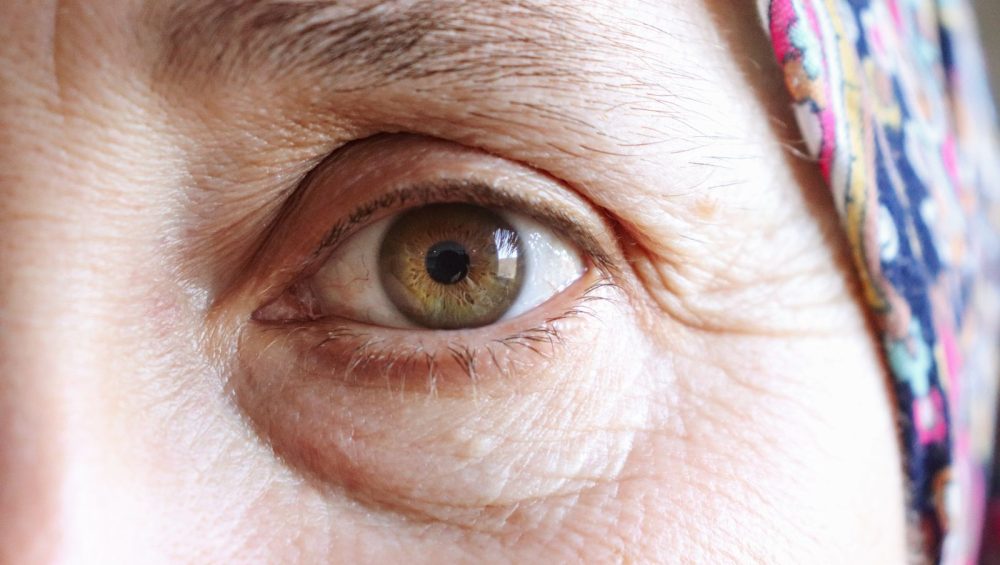
Close-up portrait of an older woman with the eye area in focusCategoriesEsente Skincare

Do Eye Creams Actually Do Anything?

Short answer: A good eye product does real, modest things: it hydrates the thin skin around the eyes, softens the look of fine lines, and can make puffiness look less obvious for a while. It cannot correct every cause of dark circles, lift the eyelid or erase crow’s feet. The case for a dedicated eye product is that the skin there is particularly thin, has fewer oil glands than many other parts of the face, and sits next to your eyes, so it wants a formula made specifically for that area. Judge one by what it is made of, not by the size of the jar.

Eye creams are an argued-about category. Here is the plain, fair version.

Why the eye area is different

The skin around your eyes is particularly thin. It has fewer oil glands than many other areas of the face, which can contribute to dryness. It moves thousands of times a day as you blink, squint and smile. And it sits directly against the eye itself, which means anything you put there can migrate into it.

Those four facts explain most of what an eye product is for. Thin skin shows lines early and shows dryness fast. Fewer oil glands means it often benefits from moisture supplied from outside. Constant movement means the fine lines there are partly a record of expression, which no cream removes. And proximity to the eye means the formula should be gentler and less fragranced than the average face cream, with a texture that stays where you put it.

What an eye product can do

Hydrate. This is the main job and the one that shows fastest. Well-hydrated skin around the eyes looks smoother and the fine dry lines look less obvious, and hydration tends to be the first thing you notice.

Soften the look of fine lines. Over weeks, hydrating and smoothing ingredients, and in some products peptides or gentle retinoids, can improve the appearance of fine lines. The lines that come from expression will still be there when you smile. The ones that come from dryness can look noticeably better.

Reduce the look of puffiness, for a while. Cooling and lightly tightening ingredients can make morning puffiness look less obvious. The effect is temporary, and it is not the same as fixing whatever caused the fluid to gather.

What it cannot do

Fix every cause of dark circles. Under-eye darkness has several causes: thin skin showing blood vessels beneath it, pigment, dryness that makes the area look crepey and shadowed, and the shadow cast by the shape of the socket. A topical product can help with some of those. Hydration can improve the look of dryness-related darkness, and certain ingredients may improve the appearance of pigmentation over time. What no cream can do is correct every cause or change the anatomy underneath, so the result depends on why your circles are there.

Lift a drooping lid or tighten sagging. That is tissue that has moved. A cream is a cosmetic product. It can improve the appearance of firmness and smoothness; it cannot reposition anything.

Erase crow’s feet. These are expression lines. A cream can soften how they look when your face is at rest. It cannot remove them.

Anyone promising more than this is promising more than a topical product can deliver.

Do you need a separate product, or will face cream do?

Here is the fair answer. Some eye creams share many of their ingredients with a face cream. A gentle, fragrance-free face moisturizer will hydrate the eye area to a degree, provided it is light enough not to migrate into your eyes.

The case for a dedicated eye product is that it is specifically formulated for use around the eye area: often lower in fragrance and other potential irritants, often tested for use near the eyes, and often in a texture that stays put. That does not mean it is inert. Eye products may well contain active ingredients of their own, including peptides, retinoids or brightening ingredients; the difference is that they are formulated with the eye area in mind. It also gives you a reason to actually put something there, which many people forget to do with their face cream.

So: a dedicated eye product is not the only way to care for the area, and there are good reasons to use one. The product should be judged on its formula, not on the words “eye cream” on the label.

How to use one

Use a small amount. Tap it on with a light fingertip along the bone of the eye socket rather than right up to the lash line. Do not rub or drag; the skin here does not need the workout. Apply after serums and before your moisturizer or sunscreen, and let it settle before makeup. If you take it from a jar, use a clean spatula rather than a finger.

Victoria’s approach

Victoria Nash, founder of Esenté Skincare and Younger You Clinique, has been a licensed aesthetician since 2004 and is an experienced skincare educator. She draws on her professional experience at Younger You Clinique when evaluating skincare products and their performance.

The eye area gets its own attention in the Esenté range: the Eye Contour Complex, the Defining Eye Serum, the Defining Eye Silk, the DNA Eye Repair Gel, and sets such as the Perfect Eyes Set and the Youthful Eyes Set. Each is developed collaboratively by Victoria Nash with Esenté’s professional formulation and manufacturing partners, with Victoria providing product direction, ingredient research, professional-use feedback and performance requirements. Esenté recommends a clean cosmetic spatula for any product taken from a jar. If you are choosing between a gel and a cream for your own eye area, the Ask Victoria page is there to help.

Frequently asked questions

Do eye creams really work?

They hydrate the thin skin around the eyes, soften the look of fine dry lines, and can make puffiness look less obvious for a while. Those are real effects. They cannot correct every cause of dark circles, lift the lid or erase expression lines.

Can I use my regular moisturizer around my eyes?

You can, if it is gentle, low in fragrance and light enough not to migrate into your eyes. A dedicated eye product is specifically formulated for use around the eye area and is usually tested for use near the eyes; it may contain active ingredients of its own.

Do eye creams get rid of dark circles?

It depends on the cause. Dark circles come from thin skin, visible blood vessels, pigment, dryness and shadow. Hydration can improve the look of dryness-related darkness, and some ingredients may improve the appearance of pigmentation over time. A topical product cannot correct every cause or change the anatomy underneath.

When should I apply eye cream?

After serums and before moisturizer or sunscreen, morning and night, or whenever the product directs.

How much eye cream should I use?

A small amount for both eyes. Tap it on lightly along the bone of the socket; do not rub.

At what age should I start using eye cream?

There is no right age. The eye area dries out easily at any age, so hydrating it is sensible whenever you notice it feeling tight or looking lined.

About the author. Victoria Nash, founder of Esenté Skincare and Younger You Clinique, has been a licensed aesthetician since 2004 and is an experienced skincare educator.

Reviewed by Victoria Nash, licensed aesthetician and founder of Esenté Skincare & Younger You Clinique. This article is educational and is not medical advice. Ask your dermatologist or licensed skincare professional about products appropriate for your own skin and medical history.
Woman washing her face at a bathroom sinkCategoriesEsente Skincare

Why Your Cleanser Matters More Than You Think

Short answer: A cleanser is on your face for thirty seconds, so it is easy to assume it cannot matter much. It does, because it is a product that can undo the work of all the others. A cleanser that is too harsh leaves skin tight, dull and reactive. The right cleanser removes what needs removing and leaves the skin’s own protection in place. That is not about price. It is about the formula, and how you use it.

Here is how to tell a good one from a harsh one, and how to use it so it helps rather than hurts.

What a cleanser is supposed to do

Two things. Remove what does not belong on your skin: sunscreen, makeup, the day’s oil and grime. And leave behind what does: the thin layer of natural oils and the mildly acidic surface that keeps skin comfortable and helps it hold water.

A harsh cleanser does the first job too well and the second not at all. It strips everything, including the layer you wanted to keep. Skin feels squeaky and tight, which many people learned to read as “clean.” It is closer to “stripped.”

The squeaky-clean myth

Healthy skin normally has a mildly acidic surface. Traditional soaps and some alkaline cleansers can sit around pH 9 to 10, and a cleanser can significantly influence the skin’s surface pH, particularly when the cleanser itself is alkaline. That does not mean your skin takes on the pH of the bar; it means an alkaline wash can shift the surface away from its mildly acidic state for a time. Research comparing skin at its natural acidity with skin sitting at a higher pH has found the acidic state measures better on barrier and moisture.

That is why the tight, squeaky feeling after washing is a warning rather than a reward. A cleanser that cleanses without unnecessarily disrupting the skin’s mildly acidic environment leaves the skin closer to where it wants to be.

Esenté treats cleansing and toning as separate but complementary steps. The cleanser’s job is to cleanse without unnecessarily disrupting that mildly acidic surface. Victoria then considers a toner or an appropriate antioxidant mist after cleansing an important part of Esenté’s routine, to help the skin restore and maintain that balance. That is Esenté’s professional approach; Esenté does not measure a client’s skin pH or guarantee a particular reading. What Does Toner Actually Do? covers the toner side.

Foaming, cream, gel, oil, balm

The format tells you something, but less than the complete formulation does.

Foaming cleansers rely on surfactants that make lather. Some are gentle, some are not; the foam itself does not tell you which. They are often chosen for oilier skin, though a well-formulated foaming cleanser can be comfortable on other skin types too.

Cream and milk cleansers are non-foaming and clean with a mix of gentle emulsifiers and moisturizing ingredients. They are often chosen for drier, more sensitive or mature skin.

Gel cleansers sit between the two in feel: usually lighter than a cream, and gentle or not depending on what is in them.

Cleansing balms and oils dissolve makeup and sunscreen well and are often used as a first step before a second, lighter cleanse.

There is no single right format, and no format is automatically mild or harsh. Suitability depends on the complete formulation and on your own skin. The right cleanser for you is usually the one that leaves your face comfortable rather than tight.

How you wash matters as much as what you use

Rubbing irritates skin. The general dermatology advice is to wash with light pressure and lukewarm water, then pat dry, rather than scrubbing. A cleanser needs seconds of gentle contact, not a workout.

Esenté’s preference is to cleanse with an aesthetic facial sponge or a gauze pad rather than fingertips or a scrubbing brush. That is Esenté’s approach; independent testing has not shown that a cleansing brush harms the skin more than hand washing, so treat the tool as a preference and the light pressure as the point.

Morning and evening are not the same

In the evening, the sunscreen, makeup and the day’s build-up come off, so that cleanse is worth doing properly.

Morning is different. If the evening cleanse was thorough, there is little on the skin by morning beyond a night’s worth of natural oil. Victoria’s recommended approach for most skin is a warm-water rinse in the morning rather than a second full cleanse, followed by a toner or antioxidant mist, with a morning cleanser kept for oilier skin. That is Esenté’s recommended routine rather than a universal rule. General dermatology guidance is to wash morning and night, and individual needs vary; anyone whose skin feels tight after a water rinse may simply prefer a gentle cleanser in the morning too.

Signs your cleanser is wrong for you

  • Your skin feels tight or squeaky after washing.
  • It stings, especially around the nose and eyes.
  • Your skin looks dull or flaky even though you moisturize.
  • Redness or irritation that settles down when you switch to something gentler.

Any of these is a reason to try a milder formula before you change anything else in your routine.

Victoria’s approach

Victoria Nash, founder of Esenté Skincare and Younger You Clinique, has been a licensed aesthetician since 2004 and is an experienced skincare educator. Victoria draws on her professional experience at Younger You Clinique when evaluating skincare products and their performance.

Esenté’s cleansers cover the range of skin types: the Orchid Reviving Cleanser, a non-foaming cleanser; the Marine Plus Cleanser; the Citrisal Purifying Cleanser; the Very Berry Exfoliating Cleanser; and the Eye-Onizer Gentle Makeup Remover for the eye area. Each is developed collaboratively by Victoria Nash with Esenté’s professional formulation and manufacturing partners, with Victoria providing product direction, ingredient research, professional-use feedback and performance requirements. Esenté also offers Professional Facial Sponges for the sponge-or-gauze approach described above. If you are not sure which cleanser suits your skin, the Ask Victoria page is the place to ask.

Frequently asked questions

Does it matter what cleanser I use?

Yes. A harsh or alkaline cleanser can strip the skin’s natural oils and shift its surface away from its natural mild acidity for a time, leaving it tight, dull and reactive. A gentle one removes what needs removing without unnecessarily disrupting the rest.

Should my face feel squeaky clean after washing?

No. A squeaky, tight feeling means the cleanser removed too much. Comfortable and clean is the aim.

Is a foaming cleanser bad?

Not in itself. Foaming does not tell you whether a cleanser is harsh, and it does not mean the product is only for oily skin. Some foaming cleansers are gentle and some are not; what matters is the complete formulation and how your skin feels afterward.

Should I wash my face in the morning?

General dermatology guidance is to wash morning and night. Victoria’s recommended approach for most skin is a warm-water rinse in the morning followed by a toner or antioxidant mist, with a morning cleanser reserved for oilier skin. Do what leaves your skin comfortable.

Is an expensive cleanser better?

Price does not tell you how gentle a formula is. Judge by the ingredients, the format and how your skin feels afterward.

Should I use a cleansing brush?

Independent testing has not shown that a brush harms the skin more than washing by hand. Esenté’s preference is a soft facial sponge or gauze pad with light pressure. Whatever you use, do not scrub.

About the author. Victoria Nash, founder of Esenté Skincare and Younger You Clinique, has been a licensed aesthetician since 2004 and is an experienced skincare educator.

Reviewed by Victoria Nash, licensed aesthetician and founder of Esenté Skincare & Younger You Clinique. This article is educational and is not medical advice. Ask your dermatologist or licensed skincare professional about products appropriate for your own skin and medical history.

Woman using cotton pads on her faceCategoriesEsente Skincare

What Does Toner Actually Do? (And Do You Need One?)

Short answer: A modern toner is a light, water-based liquid you apply after cleansing and before everything else. It is its own step, not part of the cleanse. It leaves a layer of water on the skin so the products that follow go onto slightly damp skin, it adds whatever hydrating or soothing ingredients it is built with, and, in Esenté’s approach, it helps support the skin’s naturally mildly acidic surface after cleansing. Whether you need one depends on your routine. In Esenté’s routine, a toner or antioxidant mist follows every cleanse, and Victoria would not leave it out of her own.

Toner has a confusing history, which is why so many people are unsure what it is for. Here is the plain version.

The two kinds of toner

The old kind was an astringent: mostly alcohol, designed to strip oil and make skin feel tight and “clean.” That is the toner many people remember from their teens, and it is the reason toner has a reputation for being harsh. Astringents still exist and still suit some oily skin, but they are a small corner of the category now.

The new kind is closer to a very light serum. It is water-based, usually alcohol-free, and built around hydrating and soothing ingredients: glycerin, plant extracts, sometimes hyaluronic acid or mild exfoliating acids. It is applied after cleansing to leave the skin damp and comfortable. This is what most people mean by toner today, and it is what this article is about.

An antioxidant mist or facial spray is a related idea in a spray bottle: water plus hydrating and, often, antioxidant ingredients, misted on rather than wiped on. The two overlap in what they do, but the intended function of any toner or mist depends on its formulation, so read the product rather than assuming one is simply the other in a different bottle. A mist is easier to reapply during the day.

What a toner does

It is a step of its own. Cleansing and toning are separate steps. The cleanser’s job is to cleanse. The toner’s job begins once that is done: it prepares the skin for what comes next.

It puts water on the skin. A toner leaves the skin slightly damp at the moment the next product goes on. Many serums and moisturizers are applied to damp skin for that reason, though how any product should be applied is a question for its own directions. Hyaluronic Acid Is Not a Moisturizer explains why application matters so much for one ingredient in particular.

It adds whatever it is built to add. Hydration, soothing extracts, antioxidants, or a mild acid for gentle daily exfoliation. A toner is a delivery format; what it delivers depends on the bottle.

Toner and the skin’s pH

Healthy skin normally has a mildly acidic surface, and a range of roughly pH 4.7 to 5.5 is often described as typical, though skin varies from person to person and there is no single number that is right for everyone. Cleansing, particularly with soap or an alkaline cleanser, can shift the surface away from that mildly acidic state for a time.

Victoria’s view, and Esenté’s, is that a toner or an appropriate antioxidant mist after cleansing is an important step in helping the skin restore and maintain that mildly acidic balance, which is why it sits in the Esenté routine after every cleanse and why she would not leave it out of her own. That is a statement of Esenté’s professional skincare approach, not a claim that Esenté measures anyone’s skin pH or guarantees a particular reading. A cleanser that respects the skin’s mildly acidic surface in the first place is the other half of the same approach; Why Your Cleanser Matters covers that.

What toner does not do

It does not shrink pores. No cosmetic product changes the size of your pores in any lasting way; what changes is how they look. An astringent can make pores look tighter for a short while by drying the skin around them.

It does not replace a serum or a moisturizer. It is the step before them.

Do you need one?

It depends on your routine. If your skin feels tight after cleansing, or if you like the feel of a prepared, damp face before the next step, a toner earns its place. If you already apply your serum and moisturizer to damp skin straight after a gentle cleanse, you are part of the way there, and a toner adds the hydrating or soothing ingredients it is built with.

Esenté’s position is clear and it is worth stating plainly as Esenté’s approach rather than a universal rule: a toner or antioxidant mist follows every cleanse, morning and night. In the morning, the Esenté routine for most skin is a warm-water rinse rather than a full cleanse, followed by the toner or spray, so the skin is damp for whatever comes next. Individual needs vary, and someone whose skin feels tight after a water rinse may prefer a gentle cleanser instead. Skincare Order and Product Storage shows where the toner sits in the full sequence.

How to choose one

Judge the whole formulation against what your skin needs, rather than by any single ingredient. Read what the product says it is for: hydrating, soothing, gently exfoliating, or astringent. Look for hydrating ingredients such as glycerin if your skin runs dry, and skip strong fragrance if your skin is easily irritated. Alcohol is one ingredient among many; a small amount in a well-built formula is a different thing from an old-style astringent, so let the product’s purpose and your own skin decide. Then decide between a pad and a mist by preference: the pad wipes, the mist is quicker and can be used over makeup during the day.

Victoria’s approach

Victoria Nash, founder of Esenté Skincare and Younger You Clinique, has been a licensed aesthetician since 2004 and is an experienced skincare educator. Toner is one of the steps Esenté treats as standing in its routine: after every cleanse, a toner or antioxidant mist goes on before anything else, as a distinct step that helps support the skin’s naturally mildly acidic surface. Victoria draws on her professional experience at Younger You Clinique when evaluating skincare products and their performance.

Esenté offers this step in more than one form: the Octet Herbal Toner, the Mineral Plus Toner, the Hydro-Derm Infusion, and the Hydro-Mist Emulsion Antioxidant Spray for those who prefer a mist. Each is developed collaboratively by Victoria Nash with Esenté’s professional formulation and manufacturing partners, with Victoria providing product direction, ingredient research, professional-use feedback and performance requirements. Not sure whether a toner or a spray fits your routine? The Ask Victoria page is for that.

Frequently asked questions

What does toner do for your face?

It is a separate step after cleansing. It leaves the skin slightly damp for the products that follow, adds whatever hydrating or soothing ingredients it is built with, and, in Esenté’s approach, helps support the skin’s naturally mildly acidic surface after cleansing.

Do I need a toner?

It depends on your routine. Applying serum and moisturizer to damp skin gets you part of the way; a toner adds the hydrating or soothing ingredients it is built with. Esenté’s approach is to use a toner or antioxidant mist after every cleanse as a distinct step; individual routines vary.

Does toner balance skin pH?

Healthy skin normally has a mildly acidic surface, and cleansing can shift it for a time. Victoria considers a toner or appropriate antioxidant mist after cleansing an important step in helping restore and maintain that balance, and it is part of the Esenté routine for that reason. That is Esenté’s professional approach; Esenté does not measure or guarantee a particular skin pH.

Is a facial mist the same as a toner?

Not exactly. Their functions can overlap, and both are water-based liquids applied after cleansing, but what each is intended to do depends on its formulation. A mist is sprayed rather than wiped, and is easier to reapply during the day.

Can toner shrink pores?

No. Pore size is set by your skin. An astringent toner can make pores look tighter briefly by drying the surrounding skin.

When do I apply toner?

Right after cleansing, as its own step, before serums and moisturizer. Follow the directions on the products that come after it.

About the author. Victoria Nash, founder of Esenté Skincare and Younger You Clinique, has been a licensed aesthetician since 2004 and is an experienced skincare educator.

Reviewed by Victoria Nash, licensed aesthetician and founder of Esenté Skincare & Younger You Clinique. This article is educational and is not medical advice. Ask your dermatologist or licensed skincare professional about products appropriate for your own skin and medical history.
Moisturizing cream being applied to skin on the bodyCategoriesEsente Skincare

Does Your Body Need a Skincare Routine Too?

Short answer: Yes, and a much simpler one than your face. Oil-gland distribution varies a lot across the body, and many areas, such as the shins, forearms and hands, have fewer than the face and tend to dry out more easily. Most body skin needs three things: a gentle wash rather than a harsh soap, a moisturizer applied while the skin is still damp from the shower, and sunscreen on whatever the sun reaches. Add gentle exfoliation now and then, and that is the whole routine.

People spend a fortune on their face and then scrub their body with a bar of soap and forget about it. Here is why that is backwards, and what to do instead.

Why body skin is different

Oil glands are not spread evenly. The face, scalp, chest and upper back have a dense supply, which is why those areas can get shiny. Many other areas, including the shins, forearms and hands, have far fewer, so they make less of their own oil and tend to dry out faster. Shins and forearms are the classic trouble spots: itchy, flaky, ashy-looking in winter.

Body skin is also thicker than facial skin in most places, and it spends much of its time covered by clothing that rubs against it. So it needs less in the way of active ingredients and more in the way of basic care: keep it clean without stripping it, keep it moisturized, keep it protected.

Step one: wash gently

A traditional bar soap is alkaline and can leave skin feeling tight and squeaky. That squeak is the sound of your skin’s natural oils going down the drain. A gentle body wash or a mild cleansing bar leaves more of them in place.

Water temperature matters too. Long, very hot showers feel wonderful and are hard on dry skin. Warm rather than hot, and shorter rather than longer, makes a noticeable difference in winter.

Step two: moisturize while damp

This is the habit worth keeping if you keep only one. Pat yourself half-dry after the shower and apply moisturizer while the skin is still slightly damp. It helps hold in the water that is already there. Moisturizer still does its job on dry skin; applying it to damp skin is a simple way to get a little more from it.

Many people prefer a lighter texture in summer and a richer one in winter, and a richer cream or butter-based product on shins, elbows, heels and hands; let how your skin feels decide. The same three-part logic that applies to a face moisturizer applies here: something to attract water, something to smooth, something to seal. How to Choose a Moisturizer for Mature Skin explains those three jobs.

Step three: sunscreen where the sun reaches

Arms, the backs of hands, the chest and the neck get years of sun, and they show it. Daily broad-spectrum sunscreen on the parts of your body that are exposed has strong evidence behind it: in a four-and-a-half-year randomized trial in Queensland, Australia, adults assigned to daily broad-spectrum SPF 15 or higher sunscreen showed 24% less measurable skin aging on the back of the hand than adults who used it as they pleased. Do You Need Sunscreen Every Day? explains why. The neck and chest in particular deserve the same care as the face; Crepey Skin on the Neck and Décolleté goes into that.

Step four: exfoliate, gently, sometimes

Dead cells build up on the body just as they do on the face. There are several ways to help them along, and they are alternatives, not a set to combine: a body polish with fine particles, or a dry body brush used lightly before the shower, or a pair of exfoliating gloves. Pick one. Gentle is the word: the aim is smoother skin, not red skin. Follow the directions for the product or tool you are using, both for pressure and for how often, and always moisturize afterward.

What to skip

You do not need a different product for every limb, and you do not need to exfoliate daily. Body skin asks for consistency more than complexity.

Victoria’s approach

Victoria Nash, founder of Esenté Skincare and Younger You Clinique, has been a licensed aesthetician since 2004 and is an experienced skincare educator. She draws on her professional experience at Younger You Clinique when evaluating skincare products and their performance.

Esenté’s body range includes the Cellaris Body Crème, a rich body crème; the Shea Butter Ultra Rich Hydra Crème; the Shea Butter Exfoliating Body Polish; and two tools, a Body Brush and Exfoliating Massage Gloves. Each is developed collaboratively by Victoria Nash with Esenté’s professional formulation and manufacturing partners, with Victoria providing product direction, ingredient research, professional-use feedback and performance requirements. If you are not sure whether your skin wants a lotion or a crème, the Ask Victoria page is open.

Frequently asked questions

Do I really need a body skincare routine?

Yes, a simple one. Many areas of body skin have fewer oil glands than the face and dry out more easily. A gentle wash, moisturizer on damp skin and sunscreen on exposed areas covers most needs.

Should I moisturize my body every day?

Most people benefit from daily moisturizing, especially in winter and on the shins, arms and hands. Applying it right after the shower, while skin is still slightly damp, helps hold that water in.

Can I use my face moisturizer on my body?

You can, but it is an expensive way to do it. Body skin needs a simpler, often richer product, and there is a lot more of it to cover.

Why are my shins so dry?

Shins have very few oil glands and thin skin over bone. They are a classic dry spot. A richer cream applied to damp skin, and warmer rather than hot showers, help most.

How often should I exfoliate my body?

Follow the directions on your product or tool. The right frequency depends on the method, the product and your own skin, and red or stinging skin means too much.

Does body skin need sunscreen?

Anywhere the sun reaches, yes. Hands, forearms, neck and chest show sun damage early because they get so much of it.

About the author. Victoria Nash, founder of Esenté Skincare and Younger You Clinique, has been a licensed aesthetician since 2004 and is an experienced skincare educator.

Reviewed by Victoria Nash, licensed aesthetician and founder of Esenté Skincare & Younger You Clinique. This article is educational and is not medical advice. Ask your dermatologist or licensed skincare professional about products appropriate for your own skin and medical history.

Fresh cucumber slices on a pale backgroundCategoriesEsente Skincare

Cucumber Face Masks: What They Really Do for Your Skin

Short answer: A cucumber mask cools, calms and hydrates the surface of the skin. That is a real and pleasant effect, and it is why cucumber has been on faces for generations. What it does not do is shrink pores, erase dark circles or feed the skin with special nutrients. Cucumber is more than 95% water. Its gift is coolness and moisture. A well-made cucumber mask is a complete formulation that builds on that with other functional ingredients, which is a different thing from a slice.

Here is what is actually happening when your face feels wonderful under one.

Why cucumber feels so good

Three things are going on.

It is cold. A cucumber from the fridge, or a mask kept cool, lowers the temperature of the skin’s surface. That calms the feeling of heat and helps puffiness look less obvious for a while, the same way a cool cloth does.

It is wet. Cucumber is mostly water. Resting it on the skin, or spreading a water-rich mask over it, puts moisture at the surface where dry, tight skin wants it.

It is soothing. Cucumber extract is commonly used in soothing skincare formulations, and most cucumber masks are built around other calming ingredients too: aloe, glycerin, plant extracts. Whether the result feels comfortable on your skin depends on the complete formulation and on your own skin, not on the cucumber alone.

That is the whole mechanism, and it is enough.

What a cucumber mask cannot do

It does not shrink pores. Pore size is largely set by your skin. Cooling can make them look tighter for a short while; nothing in a cucumber changes them.

It does not remove dark circles. Under-eye darkness comes from thin skin, blood vessels showing through, pigment and shadow. A cool slice can reduce the look of puffiness for a while. The color stays.

It does not “nourish” the skin from outside. Cucumber contains vitamins in the way any vegetable does, but there is no good evidence that those vitamins do anything in particular once a slice is resting on your cheek. Eat the cucumber for the vitamins. Wear it for the cool.

None of this makes a cucumber mask a gimmick. It makes it exactly what it is: a soothing, hydrating mask that feels lovely and leaves skin calmer and softer. Set your expectations there and you will be happy with it.

Slices versus a mask

A slice of cucumber is free and offers coolness and water for about ten minutes, until it warms up and dries out. A cucumber mask is a different thing: a complete formulation in which cucumber extract sits alongside other functional ingredients, each doing its own job, in a base designed to hold water on the skin and stay comfortable for the time the directions give. It also has a preservative system, which a slice does not, so it is safer to keep on a shelf.

If you want a quick fix after a long day, the slice is fine. If you want a product formulated to calm and hydrate, that is what the mask is for.

Who cucumber masks may suit

That depends on the finished product rather than on cucumber. Cucumber masks are often formulated for sensitive, easily reddened skin, for dry and tight skin, and for skin that has had too much sun or wind, and lighter versions are often comfortable on oilier skin. Whether a particular mask suits you comes down to its complete formulation and your own skin. Check the product’s own description, and patch test if you are prone to reactions or have a known allergy to cucumber or to any other ingredient in it.

How to use one

Cleanse first. Apply a thin, even layer; a mask brush makes this easy and keeps fingers out of the jar. Leave it on for as long as the directions say, then rinse with lukewarm water. Follow with your toner or antioxidant spray and a moisturizer to keep the water the mask put there. How to Use a Mask Brush has the technique.

How often? Follow the product’s directions. Hydrating masks are generally formulated to be mild, and many people use one whenever their skin feels tired, but the label is the guide.

Victoria’s approach

Victoria Nash, founder of Esenté Skincare and Younger You Clinique, has been a licensed aesthetician since 2004 and is an experienced skincare educator. She draws on her professional experience at Younger You Clinique when evaluating skincare products and their performance.

Esenté’s Hydrating Cucumber Mask combines cucumber and melon extracts in a rinse-off mask; its directions call for a thin film on clean skin, left for seven to ten minutes, and describe it as suitable for all skin types and ages, including sensitive. It was developed collaboratively by Victoria Nash with Esenté’s professional formulation and manufacturing partners, with Victoria providing product direction, ingredient research, professional-use feedback and performance requirements. Esenté also offers a Professional Face Mask Brush, and applying with a clean tool keeps fingers out of the jar. Questions about how it fits your routine can go to the Ask Victoria page.

Frequently asked questions

What does a cucumber face mask do?

It cools, calms and hydrates the skin’s surface. Skin feels softer and less tight, and puffiness looks reduced for a while. It does not change pores, dark circles or the structure of the skin.

Is cucumber good for your face?

Yes, as a soothing and hydrating ingredient. Cucumber is more than 95% water. Its benefit is moisture and coolness, not nutrition.

Does cucumber remove dark circles?

No. A cool slice can reduce the look of puffiness for a short time. The darkness itself comes from thin skin, blood vessels and pigment, which cucumber does not affect.

How long should I leave a cucumber mask on?

Follow the directions on the product. Esenté’s Hydrating Cucumber Mask, for example, directs seven to ten minutes.

Can I use a cucumber mask every day?

Hydrating masks are generally formulated to be mild, and many people use them often. Check the product’s directions and let your skin guide you.

Is a cucumber mask better than cucumber slices?

They are different things. A slice is a fine ten-minute source of coolness and water. A formulated mask is a complete product: cucumber extract alongside other functional ingredients, in a base designed to stay on the skin, with a preservative system for shelf life.

About the author. Victoria Nash, founder of Esenté Skincare and Younger You Clinique, has been a licensed aesthetician since 2004 and is an experienced skincare educator.

Reviewed by Victoria Nash, licensed aesthetician and founder of Esenté Skincare & Younger You Clinique. This article is educational and is not medical advice. Ask your dermatologist or licensed skincare professional about products appropriate for your own skin and medical history.
Seaweed underwater in a kelp forestCategoriesEsente Skincare

Seaweed in Skincare: Is It Actually Good for Your Skin?

Short answer: Seaweed is a useful skincare ingredient, though not for the reasons the marketing usually gives. Its real strengths are practical. “Seaweed” covers many different algae and extracts, and many seaweed-derived ingredients have useful water-binding, film-forming or texture-giving properties, though what any of them does depends on the specific ingredient and the finished formula. The bigger claims, about detoxifying the skin, are ahead of the evidence. Judge a seaweed product the way you would judge any other: on the whole formula.

That is the honest version. Here is the longer one.

What “seaweed” means on a label

Seaweed is not one thing. It is a broad name for thousands of marine algae, grouped loosely by color: brown, red and green. Different types give skincare different ingredients.

Brown seaweeds, such as kelp, wakame and bladderwrack, are the source of alginate, a thickener you will find in everything from face masks to ice cream, and of a group of sugar-like compounds that hold water well. On a label you may see names such as Laminaria, Undaria pinnatifida, Fucus or Macrocystis.

Red seaweeds give us carrageenan, another thickener and film-former, and various extracts sold as Chondrus crispus or Asparagopsis.

Green seaweeds and microalgae appear as Ulva, Chlorella and Spirulina, and as sources of pigments and antioxidants. Astaxanthin, a red-orange antioxidant pigment, comes from a microalga.

So “seaweed skincare” might mean a hydrating gel built on alginate, a mask thickened with carrageenan, or an antioxidant serum using an algal pigment. Those are quite different products.

What seaweed actually does in a formula

It can help hold water. This is the most common reason seaweed-derived ingredients are used. The long sugar chains in many seaweed extracts are humectants: they attract water and help keep it at the skin’s surface. A gel or mask built on them often feels cool and hydrating for exactly this reason. How much of that you feel depends on the specific extract and on the rest of the formula.

It gives texture. Alginate and carrageenan are what make a mask set, a gel feel bouncy, and a cream feel cushioned. That is not a skin benefit, but it is part of why seaweed products feel pleasant, and feel is part of whether you keep using something.

It is often used in soothing formulas. Many products aimed at calming the skin include seaweed-derived ingredients alongside the hydration. Whether a given product feels soothing on your skin depends on the complete formulation, not on the seaweed alone.

Some algal compounds show antioxidant activity. That activity has mostly been demonstrated in the laboratory, on the compounds themselves, rather than in trials on people’s faces. Antioxidants in a formula can help protect the formula itself. Whether a finished product delivers an antioxidant benefit to the skin depends on the ingredient, the formulation and the evidence behind that specific product, so treat “powerful antioxidant” on a label as a claim to check rather than a given.

What the marketing says that the evidence does not

“Detoxifying.” Skin does not store toxins in a way a mask can pull out. What a “detoxifying” product usually delivers is a clearer-looking surface: a mask that sets lifts surface oil and debris away as it comes off. That is a real, visible result. The word is simply bigger than the mechanism.

“Ocean minerals feed the skin.” Seaweed is rich in minerals, and mineral-rich formulas can feel hydrating and comfortable on the skin. Claims that go beyond that, about feeding or nourishing the skin from outside, are ahead of the evidence.

“Marine collagen.” This usually means collagen from fish, not seaweed, and it is a different topic entirely. Do Collagen Supplements Work? covers it.

Who seaweed products may suit

That depends on the whole product rather than on the seaweed. A light seaweed-based gel may suit dehydrated or oilier skin that wants hydration without weight; a richer seaweed-containing cream may suit drier skin; a cooling mask may appeal to anyone who likes that texture after a day in the sun or the wind. In each case it is the complete formulation, including everything else in the bottle, that decides whether it suits dry, sensitive, dehydrated or oily skin. The caution is the same as for any botanical: if you have a known sensitivity, patch test first.

How to judge one

Look for the seaweed named properly on the ingredient list, not just “marine extract.” Look at what else is in the formula, because the seaweed is usually one part of a hydrating team alongside glycerin or hyaluronic acid. Look at the packaging. And look for a description of what the product does in plain terms. How to Read a Skincare Ingredient List helps.

Victoria’s approach

Victoria Nash, founder of Esenté Skincare and Younger You Clinique, has been a licensed aesthetician since 2004 and is an experienced skincare educator. Victoria draws on her professional experience at Younger You Clinique when evaluating skincare products and their performance.

On the Esenté shelf, the Marine Plus Cleanser and the Red Volcanic Seaweed Complex carry the marine theme in their names, and the Hydrating Cucumber Mask lists Japanese kelp among its ingredients. All are developed collaboratively by Victoria Nash with Esenté’s professional formulation and manufacturing partners, with Victoria providing product direction, ingredient research, professional-use feedback and performance requirements. If you want to know which one fits your skin, the Ask Victoria page is the place.

Frequently asked questions

Is seaweed good for your skin?

It can be, in a practical way. Many seaweed-derived ingredients help bind water, give products a pleasant texture, and are used in soothing formulas. What any one of them does depends on the specific extract and the finished product. Claims about detoxing go beyond what the evidence supports.

What does seaweed do in skincare?

Mostly it helps hydrate the skin’s surface and gives the product its texture. Some algal compounds show antioxidant activity, though most of that evidence is from the laboratory.

Is seaweed good for acne-prone skin?

A seaweed-containing product may suit oily or blemish-prone skin if its complete formulation is light and non-greasy; the seaweed on its own does not decide that. Seaweed products do not treat acne. Acne is a medical condition; persistent breakouts belong with a dermatologist.

Can seaweed skincare cause a reaction?

Any botanical can. Patch test if you have sensitive skin or known allergies.

Is marine collagen the same as seaweed?

No. Marine collagen usually comes from fish. Seaweed contains no collagen.

Does a seaweed mask detox skin?

Not in the literal sense; skin does not store toxins for a mask to remove. What a purifying mask does is hydrate the surface and, if it sets, lift surface oil and debris away when it comes off, which leaves skin looking clearer.

About the author. Victoria Nash, founder of Esenté Skincare and Younger You Clinique, has been a licensed aesthetician since 2004 and is an experienced skincare educator.

Reviewed by Victoria Nash, licensed aesthetician and founder of Esenté Skincare & Younger You Clinique. This article is educational and is not medical advice. Ask your dermatologist or licensed skincare professional about products appropriate for your own skin and medical history.

A client receiving a professional facial treatmentCategoriesEsente Skincare

What a Lactic Acid Peel Actually Does

Short answer: Lactic acid is often considered one of the gentler members of the alpha hydroxy acid family. It loosens the dead cells on the skin’s surface so they shed sooner, and, unlike most exfoliants, it also attracts water, so it hydrates while it exfoliates. That combination is why it may be a gentler option for some people with dry, sensitive or mature skin, though how any acid product behaves depends on the formulation and your own tolerance. It works at the surface, it needs sunscreen alongside it, and it does not need to sting to be working.

Lactic acid has been used on skin for a very long time; the milk-bath stories are about it. Here is what it does in plain terms, and what it does not.

What lactic acid is

Lactic acid is an alpha hydroxy acid, or AHA, the same family as glycolic acid. It occurs naturally in sour milk and in your own body. Skin, in fact, makes and uses lactic acid: it is one of the components of the skin’s own natural moisturizing factor, the mix of substances in the outer layer that holds water.

Compared with glycolic acid, lactic acid is a bigger molecule. Glycolic is the smallest of the AHAs, and it is generally the most active and the most likely to sting. Lactic is larger and is often gentler at the surface, though the formulation, the strength and the pH matter as much as the acid itself. For a lot of people, that gentler profile is exactly the point.

What it does

It helps dead cells let go. Old cells at the surface are held together by a kind of glue. Lactic acid loosens that glue, so the cells shed in an orderly way instead of piling up. The result is skin that looks brighter and feels smoother. Why Skin Looks Dull explains why that buildup makes skin look flat.

It attracts water. This is a quality lactic acid is particularly known for. It is a humectant, so it draws water into the surface of the skin. That is why a lactic acid product often leaves skin feeling softer rather than tight, and why it is often chosen for drier skin.

It can help the look of uneven tone. By speeding up the shedding of surface cells, AHAs can improve the appearance of dullness and surface unevenness over weeks. The FDA lists smoothing fine lines and surface wrinkles, improving skin texture and tone, and unblocking pores among the purposes AHA products are marketed for, and notes that the amount of exfoliation depends on the acid, its concentration, the pH and the other ingredients.

What it does not do

At the strengths sold for home use, it works on the surface. It does not change what the skin is made of underneath. It will not remove wrinkles or undo sun damage. What it does is make the surface look and feel better, which is worth having and is the honest claim.

It also does not need to hurt. A mild tingle for a few seconds is common. Burning, lasting redness or peeling means the product is too strong for your skin or you are using it too often. Discomfort is not evidence that a product is working.

Strength and pH

Two numbers decide how strong a lactic acid product is: the percentage, and the pH. A lower pH makes the acid more active. That is why two products with the same percentage can feel completely different.

For products you use at home, the industry’s safety panel concluded that glycolic and lactic acid are safe for consumers at 10% or less, at a pH of 3.5 or higher, with sun protection. Professional peels are a separate professional-use category, and the difference is not simply a higher concentration. Formulations, strengths, pH and treatment protocols can all differ, and professional peels are selected and administered by qualified, licensed practitioners who assess the skin first. Esenté supplies professional peels to approved licensed professionals only; they are not available for retail purchase.

A brand that tells you how strong its product is intended to feel, and how to introduce it, is giving you something useful, whether or not it publishes the exact numbers.

Sunscreen is part of the deal

AHAs carry a specific sun-protection consideration. FDA research found that four weeks of AHA cream use increased sensitivity to sunburn by about 18%, and that the effect faded about a week after stopping. That is why the FDA recommends a sunburn alert on AHA product labels, and why a lactic acid product and a morning sunscreen go together. Do You Need Sunscreen Every Day? makes the case.

How to use one

Apply to clean, dry skin, usually in the evening. Start with a low percentage and use it as often as the directions say, not more. Follow with a moisturizer. Using an exfoliating acid and retinol on the same night can increase irritation for some people, so take care with that combination and follow the directions for each product. Avoid layering several separate exfoliating products on top of one another; a professionally formulated product that contains more than one acid is a different matter from stacking three bottles. If you also use a scrub or an enzyme peel, go gently and do not pile them up. Enzyme Peel vs Chemical Peel helps you choose one lane.

Victoria’s approach

Victoria Nash, founder of Esenté Skincare and Younger You Clinique, has been a licensed aesthetician since 2004 and is an experienced skincare educator. She draws on her professional experience at Younger You Clinique when evaluating skincare products and their performance.

Esenté’s hydroxy-acid serum is the Liposome Alpha-Beta Serum, an 8% AHA/BHA serum, developed collaboratively by Victoria Nash with Esenté’s professional formulation and manufacturing partners, with Victoria providing product direction, ingredient research, professional-use feedback and performance requirements. In the Esenté routine, a toner or antioxidant spray follows every cleanse. If you are choosing between acids for your own skin, the Ask Victoria page is there.

Frequently asked questions

What does a lactic acid peel do?

It loosens dead cells at the skin’s surface so they shed sooner, and it draws water into the surface. Skin looks brighter and feels smoother and softer. It works at the surface only.

Is lactic acid better than glycolic acid?

Neither is better as a category. Lactic acid is a larger molecule, often gentler, and also hydrating, which is why it is frequently chosen for drier or more sensitive skin. Glycolic is smaller and generally more active, so it is often chosen where more exfoliation is wanted. Formulation, strength, pH and your own tolerance matter more than the name of the acid.

Can sensitive skin use lactic acid?

Often, yes, at a low percentage. It may be a gentler option for some sensitive skin, but tolerance varies. Patch test, start slowly, and stop if you see lasting redness.

Should lactic acid sting?

A brief tingle is common. Burning or lasting redness is not, and means the product is too strong or being used too often.

Do I need sunscreen with lactic acid?

Yes. AHAs carry a specific sun-protection consideration: FDA research found increased sensitivity to sunburn during use, lasting about a week after you stop. Wear broad-spectrum sunscreen every morning.

Can I use lactic acid with retinol?

With care. Combining exfoliating acids and retinol can increase irritation for some people, and many people alternate them on different nights. Follow the directions for each product, and let your skin tell you how often.

About the author. Victoria Nash, founder of Esenté Skincare and Younger You Clinique, has been a licensed aesthetician since 2004 and is an experienced skincare educator.

Reviewed by Victoria Nash, licensed aesthetician and founder of Esenté Skincare & Younger You Clinique. This article is educational and is not medical advice. Ask your dermatologist or licensed skincare professional about products appropriate for your own skin and medical history.