

Balanced stack of stones by the seaCategoriesEsente Skincare

Can You Use Too Many Skincare Products?

Short answer: Yes, but the number of products is rarely the whole story. Adding several new products at once makes it hard to identify which one may be causing a problem, and layering several exfoliating or retinoid products can add up to more irritation than any one would cause alone. Just as often, the problem is using too much of a single product, or using it too often. More product, or more frequent use, does not produce faster or better results. A longer routine is not wrong when each product has a clear purpose and is used in the right amount.

There is no correct number of products. There is whether each one is doing a job you can name, and whether you are using the right amount of it.

What actually goes wrong

More surfaces to react to. Every product is a set of ingredients your skin has not met before. Add enough of them and the odds that one causes trouble go up. That is arithmetic, not a judgement about anyone’s taste in skincare.

It gets harder to tell what is causing a problem. If you start several new products at once and your cheeks start burning, you have several suspects and no way to identify which product may be causing it. Introducing one new product at a time keeps that question answerable, however long the routine is.

Exfoliating and retinoid products can add up. Exfoliating acids and retinoids both ask something of the skin. Used together, they can increase irritation for some people, and the same goes for layering several separate exfoliating products in the same routine. That is not a universal ban, and it is not the same as a formulation that contains more than one acid by design. Check the directions for the individual products, and if you are not sure, ask a licensed skincare professional or your dermatologist.

A routine you cannot keep up is the first thing to go. People rarely abandon a routine because it stopped working. More often they abandon it because it takes too long on a night when they are tired. Consistency is most of what makes skincare do anything, so a routine you actually complete beats one you perform twice a week.

Less is best means amount and frequency

Victoria’s “less is best” philosophy is often misread as “use fewer products.” It is mainly about the appropriate amount and frequency of each individual product.

Retinol is the clearest example. Using more than the directions call for, or applying it more often than directed, will not speed anything up. It can lead to excessive dryness, flaking, redness or sensitivity instead. The same logic applies to exfoliating products: more often, or more of it, is not better. Each product has an amount and a frequency that suit it, and those are set out in its directions.

The fair counter-argument

A longer routine is not inherently worse, and the scorn aimed at ten-step routines is mostly fashion.

If you have several concerns at once, several products is a reasonable answer. Dryness, uneven tone and breakouts are different problems, and one cream is not obliged to solve all three. Someone using a cleanser, a toner, a targeted serum, an eye product, a moisturizer and sunscreen is not doing anything excessive. They have six jobs and six products.

The real question is never the count. It is whether you can say what each product is for, and whether you would notice if it disappeared. A routine of four products where two are doing nothing is worse designed than a routine of eight where all eight have a purpose. Building a Daily Regimen Around Your Skin works through that properly.

How to cut back without losing what works

Do not strip everything out at once. If you remove six products on a Sunday and your skin improves, you have learned nothing about which five you could have kept.

Take one out at a time and give the change a fair run before you judge it, which takes longer than most people expect. How Long Should Skincare Take to Work? explains why the answer varies with the product and the person.

The first candidates are easy to spot once you look. Duplicates, where two products are doing the same job under different names. Anything bought for a concern you no longer have. Anything you keep out of guilt because it was expensive. Anything you cannot explain.

Keep whatever is carrying your barrier: your cleanser, whatever keeps your skin comfortable, and your sunscreen. Those are the load-bearing walls. What Is the Skin Barrier? covers why irritation is usually the thing that undoes a routine.

What a routine is built on

Cleansing, something that supports hydration and comfort, and daily broad-spectrum sunscreen in the morning. That is the frame most routines hang on, and almost everything else is an addition to it rather than a replacement for it.

Esenté’s professional approach adds one step there that often gets dropped: a toner or an appropriate antioxidant mist after cleansing, as a distinct step rather than part of the cleanse. Victoria considers that step an important one because it helps support the skin’s normal mildly acidic surface. It is her recommended routine rather than a universal rule.

Where you put things also matters more than how many you own. Skincare Order and Product Storage covers sequence, and it will tell you more than another purchase would.

Victoria’s approach

Victoria Nash, founder of Esenté Skincare and Younger You Clinique, has been a licensed aesthetician since 2004 and is an experienced skincare educator. She draws on her professional experience at Younger You Clinique when evaluating skincare products and their performance. Her “less is best” philosophy concerns the appropriate amount and frequency of each product, not how many products a well-designed regimen should contain. Esenté’s approach is organized around steps rather than a shelf: cleanse, tone, then hydrate, with targeted products added where there is a reason for them, and each used as directed.

For those steps, Esenté makes the Orchid Reviving Cleanser, a non-foaming cleanser, the Octet Herbal Toner, which contains no alcohol, and the Hyaluronic Hydration Crème. Each is developed collaboratively by Victoria Nash with Esenté’s professional formulation and manufacturing partners, with Victoria providing product direction, ingredient research, professional-use feedback and performance requirements. If you want a second opinion on what to keep and what to retire, the Ask Victoria page is the place to ask.

Frequently asked questions

How many skincare products is too many?

There is no number. A routine has a problem when you can no longer say what each product is for, when you cannot identify which product may be causing a problem, or when you stop finishing it. Six products with six jobs is fine. Four products where two do nothing is not.

Can using too many products damage your skin?

It can irritate it, which is the thing that undoes most routines. Layering several separate exfoliating or retinoid products can increase irritation for some people, and so can using more of one product, or using it more often, than its directions say. Follow the directions for each product and stop if your skin is red, stinging or sore.

Is a ten-step routine bad?

Not by itself. If each step has a purpose and your skin is comfortable, the length is not the problem. If you added steps because you saw them online and could not say what any of them does, the length is a symptom.

What should I cut first?

Duplicates doing the same job, products bought for a concern you no longer have, and anything you cannot explain. Keep the cleanser, whatever keeps your skin comfortable, and your sunscreen. Remove one thing at a time so you can tell what the change did.

Can I use an exfoliating product and a retinoid together?

Sometimes, and it depends on the products and on your skin. Combining exfoliating acids with retinoids can increase irritation for some people. Read the directions for each product, introduce one at a time, and ask a dermatologist or licensed skincare professional if you are unsure.

About the author. Victoria Nash, founder of Esenté Skincare and Younger You Clinique, has been a licensed aesthetician since 2004 and is an experienced skincare educator.

Reviewed by Victoria Nash, licensed aesthetician and founder of Esenté Skincare & Younger You Clinique. This article is educational and is not medical advice. Ask your dermatologist or licensed skincare professional about products appropriate for your own skin and medical history.
An outstretched inner forearm and open handCategoriesEsente Skincare

How to Patch Test a New Product

Short answer: Informed product selection comes first. Before a new product goes anywhere, understand what it is meant to do, whether it suits your skin, how it should be used and what it contains. A patch test is an additional precaution on top of that, most useful if your skin is particularly reactive, you have a history of sensitivity, or you have a concern about a particular formulation. Test a small amount in an area that makes sense for how the product will be used, follow the product’s own directions for application and removal, and introduce one new product at a time.

A small test can be useful. It does not replace choosing the right product in the first place.

Start with the product, not the patch

Most advice about patch testing skips the step that does the most work: choosing a product that is right for you to begin with.

That means knowing what the product is for and whether that matches what you want. It means reading how it should be used, including whether it stays on or rinses off, and whether it is meant for the face, the eye area or the body. And it means reading the full ingredient list, then paying attention to the key ingredients and what the brand says they are there to do. How to Read a Skincare Ingredient List is a useful place to start.

Aroma is worth a note here, because it causes confusion. Esenté does not add perfume simply to give a product a cosmetic fragrance. Some formulations have a natural aroma from their botanical ingredients, and certain formulations use botanical essential oils for their intended skincare contribution, which can also give them an aroma. A botanical aroma is not automatically irritating, and it is not automatically gentle either. If a particular ingredient has bothered you before, the ingredient list is where to look.

When a test makes sense

A patch test is not a ritual every product needs. It earns its place in particular situations.

Particularly reactive skin. If your skin flushes, stings or tightens readily, a small test first is a reasonable extra step. A Routine for Sensitive Skin covers the rest of that picture.

A history of sensitivity. If you have reacted to skincare before, or you know an ingredient that tends to bother you, a test gives you one more check.

A concern about a particular formulation. Retinoid formulations and exfoliating formulations are the common examples, because of what they are designed to do. A product from a brand you have not used before can fall here too.

For someone with comfortable, unreactive skin choosing a product carefully, a test is optional. It is a precaution, not a requirement.

Where to test

There is no single correct spot. The test area should make sense for the product’s intended use.

A product meant for the face tells you most when it is tested on a small, discreet area of facial skin. A body product belongs on the body. Where a product’s own directions describe how or where to test it, those directions take precedence over anything general, including this article.

Whatever the area, use clean, unbroken skin. Skin that is already irritated, sunburned or freshly exfoliated will not give you an answer you can trust.

How to go about it

Use a small amount. You are looking for a reaction, not results.

Then follow the individual product’s directions for application and removal. A rinse-off product, such as a cleanser or a mask, comes off at the point its directions say. A leave-on product stays on the way it would in normal use. Testing a rinse-off product by leaving it on all day tells you nothing useful about how you will actually use it.

Do not add other new products to the same spot while you are watching it, so only one thing is in play. Some products, particularly staged retinol systems and exfoliating formulations, carry their own instructions for gradual introduction, and those take precedence.

Introduce one new product at a time. This is the part people skip and the part that matters. Start three things in the same week, go red, and you have three suspects and no way to pick between them. Can You Use Too Many Skincare Products? covers the wider picture.

A reaction, and a tingle that is not one

Confusing the two leads people either to abandon a suitable product or to keep using one that is bothering them.

Some exfoliating and retinoid formulations are described in their own directions as producing a brief, mild tingling for some people when first applied. That is expected behavior for those products, and it settles.

A reaction is different. It builds instead of settling: persistent redness, itching, burning, swelling, small bumps, a rash, or skin that feels raw. It can show up soon after application or appear later. If any of that happens, wash the product off and do not continue using it.

If a reaction is severe, spreads, involves swelling or does not settle after you stop, speak to a dermatologist. The same goes if you react to several unrelated products, or if you have a history of allergy or skin conditions. Knowing what is in a product helps that conversation.

What a small test cannot promise

It cannot promise you will never react.

A clear test tells you that this product, in that amount, on that area of skin, did nothing bad. That is worth knowing. It is not a guarantee. Some reactions develop only after repeated use, and a product can behave differently across different areas of skin.

So treat a patch test as a way to catch obvious problems early, and keep paying attention once you start using the product as directed.

Victoria’s approach

Victoria Nash, founder of Esenté Skincare and Younger You Clinique, has been a licensed aesthetician since 2004 and is an experienced skincare educator. She draws on her professional experience at Younger You Clinique when evaluating skincare products and their performance. Victoria believes informed product selection comes first. Before introducing a new skincare product, understand what it is intended to do, whether it is appropriate for your skin, how it should be used and what ingredients it contains. For someone with particularly reactive skin, a history of sensitivity or concern about a particular formulation, a small test in an appropriate area may provide an additional precaution. Patch testing can be useful, but it does not replace choosing the right product in the first place.

Esenté’s exfoliating and retinoid products, including the Liposome Alpha-Beta Serum and the Retinol Progressive 60-Day Renewal System, carry their own printed directions, and the system is staged for gradual introduction. They are developed collaboratively by Victoria Nash with Esenté’s professional formulation and manufacturing partners, with Victoria providing product direction, ingredient research, professional-use feedback and performance requirements. If you are unsure whether a product is right for your skin, the Ask Victoria page will take the question.

Frequently asked questions

How do you patch test skincare at home?

Choose the product carefully first. Then apply a small amount to clean, unbroken skin in an area that suits the product’s intended use, follow its directions for application and removal, and watch the area. If the skin reacts, wash it off and do not continue.

Where is the best place to patch test?

There is no single best place. The area should make sense for how the product will be used, so a face product is best tested on a small area of the face and a body product on the body. If the product’s directions say where to test, follow them.

Do I need to patch test every product?

No. Patch testing is an additional precaution when it is appropriate: for particularly reactive skin, a history of sensitivity, or a concern about a particular formulation such as a retinoid or exfoliating product. Informed product selection matters more.

What does a bad reaction look like?

Redness that persists, itching, burning, swelling, small bumps, a rash, or skin that feels raw. A brief mild tingle from an exfoliating or retinoid product whose directions describe it is a different thing. Anything that builds instead of settling is a reason to stop.

If the patch test is clear, am I safe?

Reassured, not guaranteed. A clear test rules out an obvious immediate problem with that product in that area. Some reactions appear only after repeated use. Keep paying attention once you start using it as directed.

About the author. Victoria Nash, founder of Esenté Skincare and Younger You Clinique, has been a licensed aesthetician since 2004 and is an experienced skincare educator.

Reviewed by Victoria Nash, licensed aesthetician and founder of Esenté Skincare & Younger You Clinique. This article is educational and is not medical advice. Ask your dermatologist or licensed skincare professional about products appropriate for your own skin and medical history.
Sand running through an hourglassCategoriesEsente Skincare

How Long Should Skincare Take to Work?

Short answer: It depends on what you are asking the product to do. A moisturizer that makes skin feel comfortable and look smoother is working on something you can notice soon after you use it. A product bought for the appearance of fine lines, uneven tone or rough texture is working on things that change slowly, and those show with consistent use over time. There is no single number that covers skincare: the timeline varies with the cause, the product and the person. Anyone who hands you one figure for everything is guessing.

Skincare products do different jobs, and those jobs run on different clocks. Which job you bought the product for decides what counts as evidence.

What can show up quickly, in principle

Some of what a product does is immediate and physical. It sits on the surface, holds water there, softens.

Comfort. Tightness after cleansing, a stinging feeling, a rough patch that catches on a towel.

Hydration. Skin holding water at the surface looks plumper and feels softer. That is real, and it is also reversible: it returns with use and fades when you stop.

The look of smoothness. Fine lines look less obvious when the skin around them is not dehydrated. A change in appearance rather than in structure.

Makeup sitting better. The practical sign people notice first.

None of that is trivial. Comfortable, hydrated skin is most of what anyone means by skin looking good. It is also the part that arrives soonest and leaves soonest.

What needs consistent use over a longer stretch

The appearance of fine lines. The look of uneven tone. Rough texture. The look of firmness. Anything that depends on the skin renewing itself rather than simply holding water.

These move slowly. The concern usually built up over years and will not answer to one wash. How long a difference takes to show depends on what is driving it, on the product and its complete formulation, and on the individual. Two people using the same product will not arrive at the same place on the same schedule.

Peptide products and retinol products are both commonly bought for this slower category, and both ask for consistency rather than a stopwatch. How to Choose a Peptide Serum covers what to look for in one.

The habit that makes the question unanswerable

Changing products constantly.

Drop a serum after a short trial, add two new things the same week, switch your cleanser because a video told you to, and you have no way of knowing what did what. Every variable moved at once. A good product and a useless one look identical under those conditions.

This is the most common reason people decide nothing works. Often something was working and never got a fair run, or something else in the routine caused the trouble and the newest purchase took the blame. Can You Use Too Many Skincare Products? covers what a crowded routine costs you.

What “it stopped working” usually means

Rarely what it sounds like.

The first thing people notice is often the quick, reversible kind of change, and once skin is comfortable it becomes the new normal. You stop seeing the improvement because you are comparing against yesterday rather than against where you started.

The baseline moves too. Skin changes with the season, with sleep, with stress, with hormones and with age, and a routine that suited it at one point may not suit it later. Consistency slips, and routines quietly shorten over time. And products themselves can change, particularly after opening or if they have been stored somewhere warm or bright. If a product has significantly changed, separated or developed an unusual odor, stop using it or check with the manufacturer. Any of these can be the explanation, and often more than one is involved.

When to conclude a product is not for you

If it is causing a problem. Stinging that does not settle, redness, itching, burning or a rash are reasons to stop. If a reaction persists or is severe, speak to a dermatologist or licensed skincare professional. Do not push through discomfort on the theory that skin must get used to it. Some retinoid products do come with guidance on being introduced gradually, printed in the directions for the individual product, and Starting Retinol Without Wrecking Your Barrier covers the version of that question people ask most.

If it is simply doing nothing. You have used it consistently and as directed, long enough to be fair to the kind of change you expected. Nothing else in the routine changed underneath it. You still see no difference in the thing you bought it for. That is a reasonable point to stop. What counts as long enough is a judgement about the job, not a number anyone can hand you.

A fair test means holding everything else still, and judging in the same light at the same time of day.

Victoria’s approach

Victoria Nash, founder of Esenté Skincare and Younger You Clinique, has been a licensed aesthetician since 2004 and is an experienced skincare educator. She draws on her professional experience at Younger You Clinique when evaluating skincare products and their performance.

Victoria views good skincare as a lifelong commitment to improving and maintaining healthy-looking, well-conditioned skin. Individual products may produce noticeable changes over different periods of time, but there is no point at which good skincare is simply “finished.” As skin changes throughout life, the products and treatments used to support it may change as well. The objective is to improve skin condition where appropriate and then maintain the best condition possible through consistent, appropriate care.

Esenté’s range includes the Penta-Peptide Serum, the Hyaluronic Hydration Crème, and the Retinol Progressive 60-Day Renewal System, a staged system that carries its own directions for gradual introduction. Each is developed collaboratively by Victoria Nash with Esenté’s professional formulation and manufacturing partners, with Victoria providing product direction, ingredient research, professional-use feedback and performance requirements. If you are weighing whether to stay with something or move on, the Ask Victoria page is there for that.

Frequently asked questions

How long does it take to see results from skincare?

It depends on the job. Comfort, hydration and the look of smoothness come from what a product does at the surface, so they can show soon. The appearance of lines, tone and texture needs consistent use over time, and that timeline varies with the cause, the product and the person.

How long should I use a product before deciding it does not work?

Long enough to be fair to the kind of change you expected, used consistently and as directed, with nothing else in the routine moving at the same time. That is a judgement, not a fixed period. If it is irritating your skin, stop.

Why did my skincare stop working?

There are several possible explanations. The first improvement may have become your new normal, so you stopped noticing it. Your skin may have changed with the season, sleep, stress or age. Use may have quietly become less regular. The product itself may have changed after opening or in storage. Often more than one is involved.

Is it bad to switch skincare products often?

Not dangerous, but it makes results unreadable. If several things change at once you cannot tell what helped, what did nothing and what irritated you. Changing one thing at a time is slower, and it is the only way to learn anything.

How do I know if my skin is adjusting or reacting?

A mild, brief tingle with some exfoliating or retinoid products is common and is described in their directions. Persistent stinging, redness, itching, burning or a rash is not something to work through. Stop, and speak to a dermatologist or licensed skincare professional if it does not settle.

About the author. Victoria Nash, founder of Esenté Skincare and Younger You Clinique, has been a licensed aesthetician since 2004 and is an experienced skincare educator.

Reviewed by Victoria Nash, licensed aesthetician and founder of Esenté Skincare & Younger You Clinique. This article is educational and is not medical advice. Ask your dermatologist or licensed skincare professional about products appropriate for your own skin and medical history.

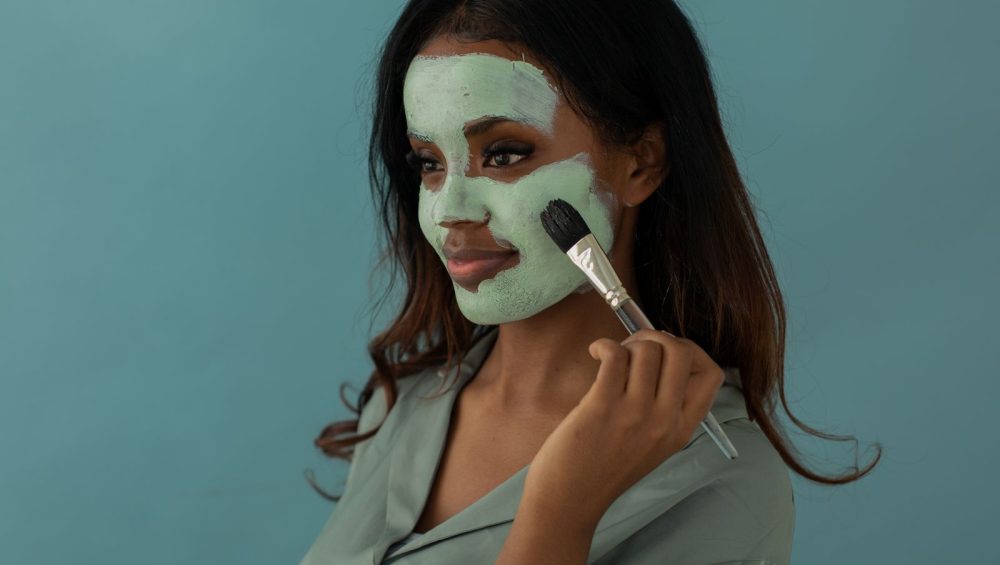
Smiling woman wearing a clay face maskCategoriesEsente Skincare

Face Masks: Which Type, and How Often?

Short answer: A mask is a concentrated treatment you leave on the skin for a short, defined time and then remove. It is not a step your routine needs. Cleanser, toner or mist, moisturizer and daily sun protection cover the basics, and a mask is an addition on top of that. Which kind you want depends on what you want the treatment to do: add hydration, absorb surface oil, exfoliate, or simply sit against the skin for ten quiet minutes. No frequency is right for everyone, and the directions on the product you own outrank any general rule.

Masks are the most over-explained category in skincare, so here is the short version.

What a mask actually is

Every other step in a routine is designed either to be left on or to be rinsed straight off. A mask sits in between. You apply a thicker layer than you would with a serum, leave it for a set number of minutes, then remove it, usually by rinsing.

That short window of high contact is the whole point of the format. It is also why the timing on the label matters. A mask left on well past its directions is not working harder. Depending on what it is built from, it may just be drying on your face.

Calling a mask optional is not an argument against masks. It is what makes them worth choosing deliberately, for a reason, rather than out of habit.

The four kinds worth knowing

Sorted by what they are for, which is more useful than sorting by skin type. What suits you depends on the complete formulation and on how your own skin responds, not on the category the product sits in.

Hydrating masks. Built around humectants and soothing ingredients, applied as a layer and usually rinsed after a set time. The aim is a short, concentrated dose of water-binding ingredients and a comfortable surface afterwards.

Clay and purifying masks. Built around clays such as kaolin or bentonite, or around charcoal. Clay absorbs oil and surface debris as it sets, and that setting is exactly why timing matters. The directions tell you when to rinse.

Exfoliating masks. These carry acids or enzymes, in a leave-on-then-rinse format. Count one as an exfoliating step in your routine rather than an extra on top of one.

Sheet masks. A soaked fabric or gel sheet that holds a serum against the skin for a set time. The sheet is a delivery format, not an ingredient. What you get out of it depends entirely on what it has been soaked in.

How often

There is no universal answer, and anyone who offers you one is guessing. It depends on the mask, on the rest of your routine and on your own skin.

Three things hold regardless. A mask is an addition, so count it against what you already do: an exfoliating mask on top of an exfoliating serum and an exfoliating cleanser is three exfoliating steps, whatever the packaging calls them. Follow the timing printed on the product. And if your skin feels tight, stings or looks unusually red afterwards, that is the signal to space them out or stop, not to push through.

Getting it on and off

Application is the part most people skip past, and it is where the hygiene lives.

Use a mask brush rather than your fingers. A brush spreads a mask more evenly than fingertips do, and it keeps your fingers out of the product. That is part of Victoria’s hygiene guidance for masks, and How to Use a Mask Brush covers the technique.

Take product from an open jar with a clean cosmetic spatula. Use a clean spatula each time product is removed from an open jar. Esenté recommends this as good hygiene practice. The Spatula Rule explains why it is worth the extra two seconds.

Apply to clean skin, in an even layer, for the time the directions give. Thicker is not stronger. Longer is not stronger either.

Victoria’s approach

Victoria Nash, founder of Esenté Skincare and Younger You Clinique, has been a licensed aesthetician since 2004 and is an experienced skincare educator. She draws on her professional experience at Younger You Clinique when evaluating skincare products and their performance. Her guidance on masks centers on hygiene: a mask brush rather than fingers, and a clean cosmetic spatula each time product is taken from an open jar.

In professional treatments at Younger You Clinique, Victoria may also use other professional topical masks, and collagen sheet masks infused with serums selected according to the individual’s skin condition. Those are part of a professional treatment, chosen by a trained practitioner, and are separate from anything sold for home use.

For home use, Esenté’s retail facial masks are the Hydrating Cucumber Mask, part of the Legacy Collection, and the Rosemary Mint Masque, part of Elite Skincare. The Hydrating Cucumber Mask is a rinse-off mask with cucumber and melon extracts. Its directions call for a thin film on clean skin left for seven to ten minutes, and describe it as suitable for all skin types and ages, including sensitive. Cucumber Face Mask Benefits looks at that ingredient more closely. The masks are developed collaboratively by Victoria Nash with Esenté’s professional formulation and manufacturing partners, with Victoria providing product direction, ingredient research, professional-use feedback and performance requirements. The Legacy Collection also carries a Face Mask Brush, an accessory from an outside supplier. If you are not sure whether a mask fits your routine, the Ask Victoria page is for that.

Frequently asked questions

What are the different types of face masks?

The common ones are hydrating masks, clay and purifying masks, exfoliating masks carrying acids or enzymes, and sheet masks. Sorting them by what the treatment is for is more useful than sorting by skin type, because what suits you depends on the complete formulation.

How often should you use a face mask?

No frequency is right for everyone. It depends on the mask, on the rest of your routine and on your own skin. Follow the directions on the product, and count an exfoliating mask as one of your exfoliating steps rather than an extra.

Do I need a face mask in my routine?

No. A mask is an optional, concentrated treatment rather than a required step. That is not an argument against them. It is the reason to choose one deliberately, for something you actually want from the treatment.

How long should you leave a face mask on?

For the time the product’s directions give. Leaving it on longer does not make it work harder, and with a clay mask that sets as it dries, it can leave the skin feeling uncomfortable.

Should I apply a mask with my fingers or a brush?

A brush spreads an even layer and keeps your fingers out of the product. Victoria’s hygiene guidance is a mask brush rather than fingers, and a clean cosmetic spatula each time product is taken from an open jar.

About the author. Victoria Nash, founder of Esenté Skincare and Younger You Clinique, has been a licensed aesthetician since 2004 and is an experienced skincare educator.

Reviewed by Victoria Nash, licensed aesthetician and founder of Esenté Skincare & Younger You Clinique. This article is educational and is not medical advice. Ask your dermatologist or licensed skincare professional about products appropriate for your own skin and medical history.

Close-up of fresh blueberriesCategoriesEsente Skincare

What Antioxidants Actually Do for Your Skin

Short answer: Antioxidants are ingredients meant to help defend the skin against everyday environmental stress. Normal life, sunlight, pollution and ordinary metabolism all produce unstable molecules called free radicals, and antioxidants are compounds that neutralize them before they react with something else. In skincare the idea is to add some of that defense at the surface. They are a complement to sun protection, never a substitute for it. What any finished product does depends on the ingredient, the formulation and the evidence behind both, and much of that evidence is laboratory work rather than trials of finished products.

The word is on almost every label now, which is why it is worth being precise.

Why antioxidants are in skincare at all

The chemistry, kept short. Free radicals are molecules missing an electron. That makes them unstable, so they take an electron from whatever is nearest, which leaves that molecule unstable in turn. The process is oxidation. It is the same process that browns a cut apple.

Your body produces free radicals simply by running. Sunlight, pollution, smoke and ordinary metabolism all add to the total, and the body has its own systems for handling them.

An antioxidant donates an electron without becoming reactive itself, which stops the chain. That is the whole idea, and it is why the ingredient class exists in skincare: to support the skin’s own defenses at the surface against the stress it meets all day. Vitamin C, vitamin E, ferulic acid, niacinamide, green tea polyphenols and resveratrol are the names you will meet most often.

They work with sun protection, not instead of it

This is the point most worth making plainly. An antioxidant is not a sunscreen and is not regulated as one. No amount of antioxidant in your routine replaces daily broad-spectrum sun protection. Do You Need Sunscreen Every Day? takes that question on its own terms.

What antioxidants are proposed to do is something different: to address some of the oxidative stress that gets through anyway. The two sit in the same routine doing different jobs. One filters ultraviolet light. The other is a complement to it.

What the evidence does and does not show

Antioxidant chemistry itself is well established. What is far less settled is how much a given compound, at a given concentration, in a given cosmetic base, does on human skin in ordinary use.

A great deal of the published support for individual antioxidant ingredients comes from laboratory studies: cell cultures, test tubes, model systems. That work is real, and it is where the interest comes from. It is not the same as a trial of a finished product on people. Some compounds have more human evidence behind them than others, and vitamin C in its various forms is among the more studied. Buying a Vitamin C Serum That Works goes through what to look at.

So the honest position is this. What a product does depends on the ingredient, on the formulation built around it, and on the evidence behind both. The word “antioxidant” on a label describes a chemical property, not a result.

Why antioxidants are the fussiest ingredients on the shelf

Here is the practical consequence of that chemistry. An antioxidant works by giving up an electron. That is what makes it useful, and it is also what makes it unstable. The same reactivity that lets it neutralize a free radical on your skin lets it react with oxygen and with light energy inside the product.

So antioxidant formulas are the ones most likely to change over time. Some can darken or shift in color. Some lose potency quietly with no visible sign at all. That is why these products tend to carry more specific storage directions than a plain moisturizer. Keep them in a cool, dry place away from direct light and excessive heat or humidity, following the manufacturer’s directions. On which subject: The Bathroom Is the Worst Place to Store Skincare.

Packaging: light and air are two different problems

These get muddled constantly, and the packaging answers are not interchangeable.

Air. An airless pump principally addresses air. It dispenses product without drawing air back into the container. It does nothing about light.

Light. Violet glass principally addresses light. On its own, the glass is not the answer to air.

The point that gets lost most often: no packaging keeps air out completely once a container has been opened. The moment you start using a product, it meets some air. What good packaging does is help protect the formulation during storage and use. It does not make a product permanent.

Esenté’s Elite line uses Miron violet glass packaging designed to help protect formulations from excessive light exposure. The complete packaging system, including the container and its closure or dispenser, also plays a role in protecting the formulation during storage and use. In the manufacturer’s own terms, Miron works as a filter rather than a shield: it reduces the wavelengths that drive degradation while passing a balanced range of light, and how any violet glass performs depends on its composition, thickness and structure. The Miron violet glass page sets out the detail.

Victoria’s approach

Victoria Nash, founder of Esenté Skincare and Younger You Clinique, has been a licensed aesthetician since 2004 and is an experienced skincare educator. She draws on her professional experience at Younger You Clinique when evaluating skincare products and their performance. In the Esenté routine, antioxidants complement daily broad-spectrum sun protection rather than replace it. An antioxidant mist can be one option for the step after cleansing, and whether it suits your routine, and how often, depends on your skin.

Esenté puts antioxidant ingredients into more than one format. Hydro Mist is a spray that can be used after cleansing. The Vital Rx – Vitamin C+E Serum sits in the serum step. The Red Volcanic Seaweed Complex sits with Esenté’s moisturizers and complexes. The Elite line uses Miron violet glass packaging designed to help protect formulations from excessive light exposure. Each is developed collaboratively by Victoria Nash with Esenté’s professional formulation and manufacturing partners, with Victoria providing product direction, ingredient research, professional-use feedback and performance requirements. If you want help working out where an antioxidant step belongs in your routine, the Ask Victoria page is for that.

Frequently asked questions

What do antioxidants do for your skin?

The idea is that they help defend against everyday environmental stress by neutralizing unstable molecules called free radicals before those molecules react with something else. They are a complement to sun protection rather than a replacement for it.

Do antioxidant skincare products actually work?

It depends on the ingredient, the formulation and the evidence behind both. Much of the published support for individual antioxidant compounds is laboratory work rather than trials of finished cosmetic products, so read confident claims with care.

Can antioxidants replace sunscreen?

No. An antioxidant is not a sunscreen and is not regulated as one. Daily broad-spectrum sun protection stays in the routine regardless of which antioxidants you use.

Why do some antioxidant products change color?

Antioxidant ingredients react with light and air, which is the same property that makes them interesting. A change in color does not by itself prove a product has degraded. If a product has significantly changed, separated or developed an unusual odor, discontinue use or check with the manufacturer.

Does violet glass keep air out?

The glass itself principally addresses light. Air exposure depends on the complete packaging system, including the closure or dispenser, and an airless pump principally addresses air. No packaging keeps air out completely once a container has been opened.

About the author. Victoria Nash, founder of Esenté Skincare and Younger You Clinique, has been a licensed aesthetician since 2004 and is an experienced skincare educator.

Reviewed by Victoria Nash, licensed aesthetician and founder of Esenté Skincare & Younger You Clinique. This article is educational and is not medical advice. Ask your dermatologist or licensed skincare professional about products appropriate for your own skin and medical history.

A single drop falling into violet liquidCategoriesEsente Skincare

What Is a Serum, and Do You Actually Need One?

Short answer: Serums are often formulated to deliver selected ingredients for a particular skincare objective, usually in a lighter-textured formulation designed to sit under a moisturizer rather than replace it. That is the practical difference. A moisturizer softens the surface and helps hold water in. A serum is the step where you add something specific. “Serum” is a format rather than a regulated category, so the word on the label tells you the texture and where the product goes in your routine, not how good it is. Whether you need one depends on what you want it to do, and plenty of sound routines have none.

The category has grown enormously, and the word has stretched with it.

What makes a serum a serum

Three things, in practice.

It is thinner. Most serums are water-based or light fluids that spread easily and absorb quickly, without the richer emollients that give a cream its body.

It has a particular purpose. Serums are often formulated to deliver selected ingredients for a particular skincare objective, where a moisturizer is usually doing several jobs at once.

It goes underneath. A serum is designed to be applied first and covered by a moisturizer. It is not built to do the moisturizer’s work.

None of that is a rule. Textures overlap: a rich serum and a light lotion can feel almost identical. But those three things describe what most products using the word have in common.

“Serum” is a marketing word, not a legal one

There is no regulatory definition of a serum. No agency sets a minimum concentration, a maximum thickness or a required ingredient before a product can use the term. A brand can call a thin lotion a serum and break no rule.

That matters for one reason. The word tells you the format, not the quality. Two products both labeled serum can be completely different things. The judgement has to be made on the formula, on the ingredients it is built around and on the company that made it, never on the noun on the front of the label.

Where a serum goes in the order

After cleansing, and after your toner or mist, before moisturizer. The general order runs thinnest to thickest, so the light fluid goes on first and the heavier product goes over it. Skincare Order and Product Storage sets out the full sequence.

Many serums are applied to slightly damp skin, though how any product should be applied is a question for its own directions. If yours seems to sit on the surface and never absorb, Why Your Serum Is Not Absorbing covers the common reasons.

Do you actually need one?

The honest answer is that not everyone does.

A serum is the step where you add something specific. If there is nothing specific you are trying to address, then a cleanser, a toner or mist, a moisturizer and a daily broad-spectrum sunscreen make a complete routine. Every product in a routine should have a reason for being there, and each should be used in the right amount and at the right frequency. Using more of a serum, or using it more often than directed, does not make it work faster.

If there is something specific, the serum is the most direct place to put it. That is what the format exists for: peptides, vitamin C, exfoliating acids, hydrating ingredients, something for the eye area. How to Choose a Peptide Serum works through one of those decisions in detail.

So the useful question is not “do I need a serum.” It is “what do I want this step to do.” If you cannot answer that yet, you do not need one yet.

How many is too many

There is no number, and a routine with several products is not a problem when each has a clear purpose. What goes wrong is rarely the count. It is the combination and the amount: several products doing similar work, several separate exfoliating products layered together, or a product used more heavily or more often than its directions say.

The signs are easy to spot. Your routine takes so long you skip it. Your skin has turned reactive and you cannot tell which product is responsible. You own three things that do the same job. Too Many Skincare Products goes further into all of that.

How to judge one

Start with what the product says it is for, then ask whether that matches what you want from the step. Read the whole formulation rather than hunting for a single ingredient, and read the directions, because a serum meant for nightly use and one meant for occasional use are different commitments.

A word on percentages. Many brands, Esenté among them, generally do not publish the concentrations of their proprietary formulations, and that absence is not a negative signal. A number on a label tells you little on its own, because how an ingredient behaves depends on the pH, the base, what it is paired with and how stable it stays. Formulation design, sourcing, stability work, manufacturing standards, packaging and compatibility with the rest of the formula all contribute to what you end up putting on your face.

Victoria’s approach

Victoria Nash, founder of Esenté Skincare and Younger You Clinique, has been a licensed aesthetician since 2004 and is an experienced skincare educator. She draws on her professional experience at Younger You Clinique when evaluating skincare products and their performance. Her “less is best” philosophy is about using the appropriate amount of each product at the appropriate frequency, not about keeping a routine artificially small. A serum earns its place when it has a clear purpose, and then it should be used as directed rather than more generously or more often.

Esenté’s serums cover several parts of the routine. The Penta-Peptide Serum and the Bio-Lift Peptide Serum are peptide serums. The Matrix-Cell 3000 Concentrate and the Vital Rx – Vitamin C+E Serum sit in the same step. The Liposome Alpha-Beta Serum is an 8% AHA/BHA serum, which puts it on the exfoliation side of the shelf with its own directions. For the eye area there is the Defining Eye Serum. Each is developed collaboratively by Victoria Nash with Esenté’s professional formulation and manufacturing partners, with Victoria providing product direction, ingredient research, professional-use feedback and performance requirements. If you are not sure which step your routine is missing, the Ask Victoria page is for that.

Frequently asked questions

What is a serum in skincare?

A product often formulated to deliver selected ingredients for a particular skincare objective, usually in a lighter texture, applied after cleansing and toning and before moisturizer. It is designed to sit under a moisturizer rather than replace one. The word describes a format, not a regulated category.

Do I really need a serum?

Not necessarily. A cleanser, a toner or mist, a moisturizer and a daily broad-spectrum sunscreen make a complete routine. A serum is the step where you add something specific, so it earns its place when you can say what you want it to do.

Can a serum replace moisturizer?

Usually not. Most serums are light fluids without the emollients that give a moisturizer its body. Some people find a serum enough on its own. That is a personal call, and the product’s directions are the place to check.

Do you apply serum before or after moisturizer?

Before. The general order runs thinnest to thickest, so the serum goes on first and the moisturizer over it. Follow the directions on the individual products, which take precedence over any general rule.

How many serums can I use at once?

There is no set number. The problem is rarely the count and usually the combination, especially several separate exfoliating products layered together. Give each serum a clear purpose and use the amount its directions give.

About the author. Victoria Nash, founder of Esenté Skincare and Younger You Clinique, has been a licensed aesthetician since 2004 and is an experienced skincare educator.

Reviewed by Victoria Nash, licensed aesthetician and founder of Esenté Skincare & Younger You Clinique. This article is educational and is not medical advice. Ask your dermatologist or licensed skincare professional about products appropriate for your own skin and medical history.

A spoonful of fine sugar crystalsCategoriesEsente Skincare

Physical vs Chemical Exfoliation: What Is the Difference?

Short answer: Physical exfoliation uses something with texture to lift dead cells off the surface: a fine particle in a crème, a body polish, a textured glove. Chemical exfoliation uses an acid or an enzyme to loosen the bonds holding those cells together so they release on their own. That is the whole difference in mechanism. Neither one is gentler or harsher by definition. How a product behaves depends on the complete formulation, the particle or the acid it uses, the strength it is built to, and how often and how hard you use it.

Most of the argument online skips that last sentence.

What physical exfoliation is

Physical exfoliation, sometimes called manual or mechanical exfoliation, means something with texture does the work: a fine particle suspended in a crème, a polish for the body, or a textured glove.

Friction lifts loose cells from the surface, and you control it directly: the pressure, the number of passes, the time you spend. That cuts both ways. It makes physical exfoliation easy to get right and easy to overdo. Pressing harder does not make it work better.

A washcloth, a sponge or another textured cleansing tool also creates some mechanical action through friction. That does not make every cleansing tool an exfoliation treatment. Pressure, texture and frequency decide how much it does. A soft facial sponge or gauze used gently is Victoria’s preferred approach to cleansing. An automatic facial brush is a different case: used vigorously every day, it can exfoliate without anyone intending it to, which is why Esenté does not recommend one for routine cleansing.

What chemical exfoliation is

Chemical exfoliation uses an ingredient to loosen the bonds between surface cells, so the cells release without being rubbed off. Three groups cover most of what you will see.

Alpha hydroxy acids. Glycolic and lactic acid are the common ones. They are water-soluble and act on the surface. What a Lactic Acid Peel Does covers one in detail.

Beta hydroxy acid. Usually salicylic acid. It is oil-soluble, so it can also act inside the opening of a pore.

Enzymes. Often from fruit sources such as papaya or pineapple. They act on the protein bonds between surface cells. Enzyme Peel vs Chemical Peel shows where enzymes sit next to acids.

“Chemical” sounds aggressive. It is not a strength rating. It only means an ingredient is doing the loosening instead of friction.

Neither method is categorically gentler

Here is where most advice goes wrong. You cannot rank the two methods for gentleness, because gentleness is not a property of the method. It belongs to the finished product and to how that product is used.

A chemical exfoliant can be mild or strong depending on the acid, the concentration, the pH and everything else in the formula. A physical exfoliant can be mild or strong depending on the size, shape and hardness of the particle, what it is suspended in, and the pressure your hand applies. A fine particle in a rinse-off crème is a different experience from a coarse, irregular one.

So the honest answer to “which is gentler” is this: judge the product, not the category.

Professional mechanical exfoliation is its own category

Some mechanical exfoliation belongs in a treatment room, not a bathroom, and the terms are easy to confuse.

Microdermabrasion is a controlled professional mechanical exfoliation.

Dermaplaning uses an appropriate sterile blade or tool in trained hands.

Dermabrasion is a substantially more aggressive medical resurfacing procedure. It is not the same thing as microdermabrasion, and it has nothing in common with a home facial brush.

These are selected for the individual by a trained practitioner. None of them is a stronger version of something you do at home, and none is a reason to scrub harder at the sink.

Where the objection to scrubs came from

The case against physical exfoliation is real. Some older scrubs used coarse, hard, irregularly shaped particles, including crushed shells. Used with force, particles like that can cause more surface disruption than anyone intended.

What that was not is an argument against texture as a mechanism. Physical exfoliants are now formulated around particle size, shape and hardness, and the base the particle sits in matters as much as the particle does. The sensible conclusion is narrower than “never scrub.” It is: choose on the formulation, and go easy with your hand.

How often, and how to avoid overdoing it

No frequency is right for everyone. It depends on your age, your skin’s condition, the method and how your skin responds, and more often is not better. How Often Should You Exfoliate? takes that question apart properly.

Watch your skin rather than the calendar. Tightness, stinging, unusual redness or an over-polished feel are reasons to ease off. Visible change comes from consistent use over time, and the timeline varies with the product and the person.

Pressure is not the active ingredient. With a physical exfoliant, the particle does the work. Your hand only moves it around.

Contact time is a direction, not a suggestion. With an acid or enzyme product, the time on the label is part of how the formulation was designed. Longer is not stronger.

Using exfoliants alongside other products

What most often causes trouble is layering several separate exfoliating products into one routine: an acid toner, plus an acid serum, plus a scrub. More than one acid inside a single formulated product is different, because the formulator balanced those ingredients on purpose.

Exfoliating acids and retinoids used together can increase irritation for some people. That is not a rule against it for everyone. Look at the directions for the individual products you own, and ask a licensed professional if you are unsure. Retinol is generally used at night, and daily broad-spectrum sunscreen is recommended as part of the routine either way.

Victoria’s approach

Victoria Nash, founder of Esenté Skincare and Younger You Clinique, has been a licensed aesthetician since 2004 and is an experienced skincare educator. She draws on her professional experience at Younger You Clinique when evaluating skincare products and their performance. Victoria does not work to a fixed exfoliation schedule. She considers the individual’s age, skin condition, method of exfoliation and how the skin is responding, with the directions on the individual product taking precedence. Her preference for a soft sponge or gauze applies to cleansing. Leave-on products are generally applied with clean fingertips, following the directions for each formulation.

The Esenté range includes both kinds, as separate options rather than one combined routine. The Oligo-Peel Exfoliation Crème is a rinse-off product with fine particles, and its directions describe it as suitable for all skin types including sensitive. The Liposome Alpha-Beta Serum is an 8% AHA/BHA serum. The Very Berry Exfoliating Cleanser puts the step inside a cleanse. For the body there is the Shea Butter Exfoliating Body Polish. Each is developed collaboratively by Victoria Nash with Esenté’s professional formulation and manufacturing partners, with Victoria providing product direction, ingredient research, professional-use feedback and performance requirements. The range also includes Exfoliating Massage Gloves for the body. If you are not sure which single route fits your routine, the Ask Victoria page is for that.

Frequently asked questions

Is chemical exfoliation better than physical exfoliation?

Neither is better as a category. They use different mechanisms to do a similar job on the surface. What matters is the specific product: its formulation, the strength it is built to, and how you use it.

Which type is gentler?

That depends on the product, not the method. A fine-particle rinse-off crème and a coarse scrub are both physical. A mild enzyme product and a high-strength professional peel are both chemical. Read what the product says it is for and follow its directions.

Can I use a physical and a chemical exfoliant?

They are different options, not a pair you need to combine. Stacking several separate exfoliating products into one routine raises the chance of irritation for some people, and more exfoliation does not mean faster results. Check the directions on each product you own, and ask a licensed professional if you are unsure.

What is the difference between AHA and BHA?

Alpha hydroxy acids such as glycolic and lactic acid are water-soluble and act on the surface. Beta hydroxy acid, usually salicylic acid, is oil-soluble, so it can also act inside the opening of a pore. Many products combine both.

Do exfoliating acids make skin more sensitive to the sun?

Some exfoliating ingredients can increase sun sensitivity, and the product’s own label is the place that tells you. Daily broad-spectrum sunscreen is recommended as part of a routine regardless of what else you use.

About the author. Victoria Nash, founder of Esenté Skincare and Younger You Clinique, has been a licensed aesthetician since 2004 and is an experienced skincare educator.

Reviewed by Victoria Nash, licensed aesthetician and founder of Esenté Skincare & Younger You Clinique. This article is educational and is not medical advice. Ask your dermatologist or licensed skincare professional about products appropriate for your own skin and medical history.
Fine rippled sandCategoriesEsente Skincare

How Often Should You Exfoliate?

Short answer: There is no universal exfoliation schedule, and anyone who hands you one is guessing about your skin. The right interval depends on your age, your skin’s condition, the method of exfoliation and how your skin responds. Skin-cell turnover generally changes with age, so an interval that suits one person may be entirely wrong for another. Follow the directions for whatever you are using, because they were written for that formula. The aim is to exfoliate when your skin needs it, not because a certain number of days has passed, and more often or more aggressively is not better.

Here is why the number varies so much, and how to tell when you have gone further than your skin wanted.

There is no single right frequency

Exfoliation is a category, not one thing. A rinse-off product with fine particles, a leave-on acid serum and a treatment performed by a licensed professional are different in strength, in how long they stay on the skin and in what they ask of it.

A frequency that suits one tells you nothing useful about another. Add the fact that skin differs from person to person and changes over a lifetime, and there is no single number to give.

One thing does carry across all of them: exfoliation works on the surface layers, and those layers only take so much attention before they object.

Skin renewal is not a timetable

You will read that skin renews on a fixed schedule and that exfoliation should be timed to match it. Treat that with caution.

Skin-cell turnover generally changes with age, and it varies considerably from one person to the next. That is exactly why no single schedule works for everyone. It is a reason to individualize, not a calendar to follow.

Exfoliate when needed, not by the calendar

There is no universal exfoliation schedule. Victoria considers the individual’s age, skin condition, method of exfoliation and how the skin is responding. Skin-cell turnover generally changes with age, so an appropriate interval for one person may be entirely inappropriate for another. The objective is to exfoliate when needed, not simply because a certain number of days has passed.

Where a product’s own directions give specific guidance, follow them.

Why more is not better

Exfoliating is one of the few routine steps where enthusiasm does real harm. The logic that catches people is simple: skin looks dull, exfoliating makes it look brighter, so more must be better.

It does not work that way. Past a point, the skin’s surface gets irritated, and irritated skin often looks flat and feels uncomfortable. People then exfoliate harder to fix the dullness they created. Why Skin Looks Dull covers the other causes worth ruling out first, and What the Skin Barrier Actually Is explains what the surface is doing when it starts to complain.

Signs you have gone too far

  • Skin that feels tight, and a shine that looks tight rather than healthy.
  • Stinging from products that never used to sting.
  • Redness that does not settle between uses.
  • Rough, papery flaking, easy to mistake for a reason to exfoliate again.
  • Skin that suddenly reacts to wind, cold or heat.

If several of those describe your face, pause exfoliating and go back to basics: a mild cleanse, a moisturizer, daily broad-spectrum sunscreen. Skin generally settles when it is left alone. If it does not, ask a licensed skincare professional or your dermatologist rather than adding another product. When you do start again, exfoliate less often or less aggressively than before, rather than simply switching to a different exfoliant at the same frequency.

The method and the product set the pace

Mechanical exfoliation uses texture or friction to lift surface cells, as with a fine-particle crème or a body polish. Topical exfoliation uses an ingredient, such as an acid or an enzyme, to loosen them. Neither is categorically gentler than the other. What decides that is the complete formulation, the strength and how it is used. Physical vs Chemical Exfoliation compares the two properly.

Professional treatments are a separate category again. Microdermabrasion is a controlled form of professional mechanical exfoliation, and professional acid peels are a different class from home products. Both are selected by a trained practitioner for the individual’s skin, and neither is a reason to exfoliate more at home.

Either way, read the directions for your individual product and follow them. A rinse-off product and a leave-on acid serum are not interchangeable, and a frequency borrowed from one does not carry to the other. Body skin is its own case too, and a body product’s directions will not match a face product’s. A Body Skincare Routine covers that side.

Combining exfoliants with other products

Two worries get muddled here. More than one acid inside a single formulated product is a decision that product was designed around. Layering several separate exfoliating products is a different matter, and it is not something to aim for: you lose track of how much your skin is getting. Choose one exfoliating approach that suits you.

Combining exfoliating acids and retinoids can increase irritation for some people. That is not a ban, and plenty of routines include both. Follow the directions for each individual product, and if your skin reacts, simplify. Retinol is generally used at night, and daily broad-spectrum sunscreen is recommended as part of the routine. Starting Retinol Without Wrecking Your Barrier goes further into introducing one.

Victoria’s approach

Victoria Nash, founder of Esenté Skincare and Younger You Clinique, has been a licensed aesthetician since 2004 and is an experienced skincare educator. She draws on her professional experience at Younger You Clinique when evaluating skincare products and their performance. For Victoria, the goal is appropriate exfoliation at an appropriate interval for the individual, not more frequent or more aggressive exfoliation, and the interval can change as the skin changes over the years.

Esenté’s exfoliating products include the Oligo-Peel Exfoliation Crème, a rinse-off product with fine particles whose directions describe it as suitable for all skin types including sensitive; the Liposome Alpha-Beta Serum, an 8% AHA/BHA serum; the Very Berry Exfoliating Cleanser; and, for the body, the Shea Butter Exfoliating Body Polish. They are different options rather than a combined routine, and each carries its own directions, which are the instruction to follow. Each is developed collaboratively by Victoria Nash with Esenté’s professional formulation and manufacturing partners, with Victoria providing product direction, ingredient research, professional-use feedback and performance requirements. If you are not sure how exfoliation should fit your own routine, the Ask Victoria page is the place to ask.

Frequently asked questions

How often should you exfoliate?

There is no universal answer. Victoria considers age, skin condition, the method of exfoliation and how the skin is responding, and the directions on the product you are using come first. Exfoliate when your skin needs it, not because a set number of days has passed.

Can you exfoliate too much?

Yes, and it is a common mistake. Too often, too aggressively, or several exfoliating products layered together will leave the skin’s surface irritated. The fix is to pause, then exfoliate less often or less aggressively, not to switch to a gentler product used just as often.

What does over-exfoliated skin look like?

Commonly: tight, shiny in an uncomfortable way, red, flaking in rough patches. Products that used to feel fine start to sting. If that describes your face, pause exfoliation and go back to a mild cleanse, a moisturizer and daily sunscreen, then reduce how often you exfoliate when you resume.

Can I use an exfoliating acid and a retinol?

Combining them can increase irritation for some people, so follow the directions for each individual product and watch how your skin responds. Retinol is generally used at night, and daily broad-spectrum sunscreen is recommended as part of the routine.

Should I exfoliate if my skin is flaking?

Not automatically. Flaking can be a sign of too much exfoliation rather than too little, and scrubbing at irritated skin makes it worse. Ease off first, and if it continues, ask a licensed skincare professional or your dermatologist.

About the author. Victoria Nash, founder of Esenté Skincare and Younger You Clinique, has been a licensed aesthetician since 2004 and is an experienced skincare educator.

Reviewed by Victoria Nash, licensed aesthetician and founder of Esenté Skincare & Younger You Clinique. This article is educational and is not medical advice. Ask your dermatologist or licensed skincare professional about products appropriate for your own skin and medical history.

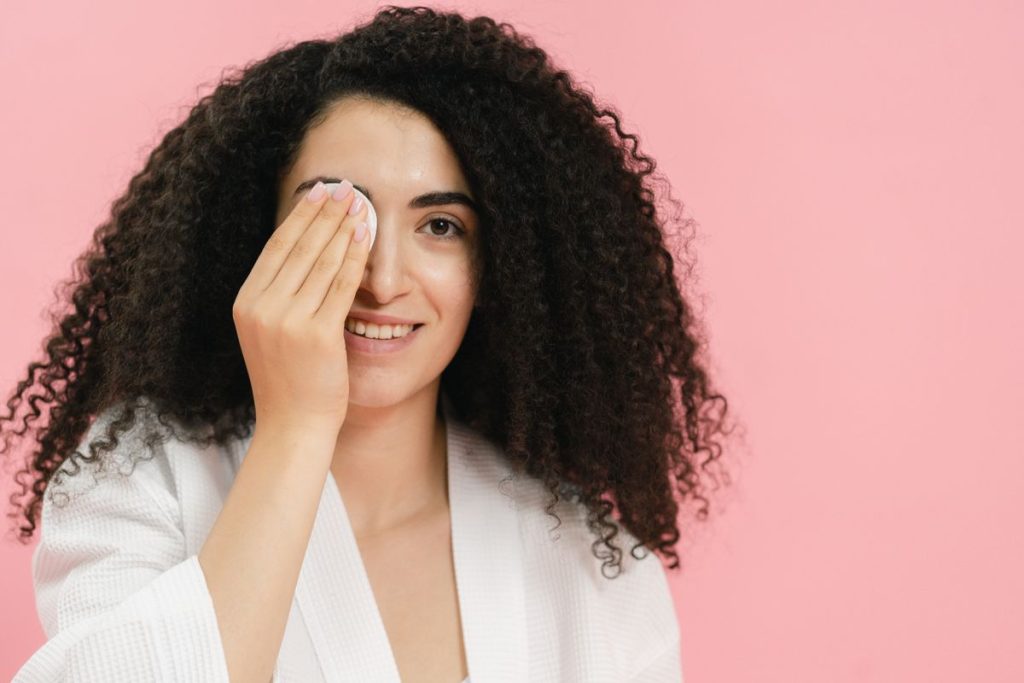
Woman in a bathroom mirror wiping her face with a cotton padCategoriesEsente Skincare

How to Take Your Makeup Off Properly

Short answer: Take it off in the right order, with the right pressure, and never go to sleep wearing it. Start with the eyes, using a dedicated eye makeup remover and a gentle hand, because the skin there is particularly thin. Then remove makeup from the rest of the face in sections, and finish with a gentle cleanse. Use a soft sponge or gauze with light pressure instead of dragging at your skin, and rinse until the water runs clear. Wipes are a convenience for emergencies, not the everyday method: they work by friction and leave residue behind.

The method matters more than the product. Here is the order that works.

Why leaving it on is a problem

Makeup is designed to stay where you put it. Left on overnight, it sits on your skin with the day’s oil and airborne dirt, and a good deal of it ends up on your pillowcase.

Eye makeup is its own case. Mascara and liner migrate as you sleep: into the lash line, into the corners of the eyes, onto the pillow. That is why removal starts at the eyes rather than rushing them.

The eyes come first, and they want a lighter hand

The skin around the eyes is particularly thin, and it shows friction sooner than the rest of the face. So slow down here.

Soak a pad or a folded piece of gauze with a remover made for the eye area. Hold it closed over the lid and lashes for a few seconds before you move it. That pause is the part most people skip, and it is the part that does the work. The remover softens the makeup so it lifts instead of needing to be scrubbed off.

Then draw the pad downward and outward, once, with almost no pressure. Repeat with a clean side rather than working the same patch harder. Waterproof and long-wearing mascara asks for patience, not force.

If the area around your eyes stays irritated, itchy or sore, or something about it concerns you, have it looked at by a medical professional rather than guessing at the cause.

What Do Eye Creams Actually Do? covers why that area gets treated differently in the rest of the routine too.

Why wipes make a poor everyday method

A wipe removes makeup by dragging. You push pigment around your face with a cloth and hope it comes away on the fabric. Some does. The rest gets spread, along with whatever the wipe was soaked in, and stays there unless you rinse.

That is the honest trade-off: friction and residue. On a hotel night or after a late flight, a wipe beats leaving a full face on. As the everyday method, it asks your skin to tolerate rubbing every single night, and it leaves a film that the next products have to sit on top of.

If you use one, treat it as a first pass and follow with a proper cleanse and a rinse.

Work in sections

Do not smear everything at once. Makeup pushed around a face ends up where you did not want it: the hairline, the jaw, the corners of the eyes.

Eyes first, then lips, then forehead, cheeks, nose and jaw. Use a clean surface of the sponge or gauze for each section so you are lifting makeup away rather than redistributing it. Short, light strokes in one direction beat circular scrubbing every time. Once the makeup is off, cleanse the whole face gently with the same light touch.

Mind the edges: along the jaw, under the chin, in front of the ears, around the nostrils. That is where foundation quietly stays behind.

Rinse properly, and then check

Rinse with lukewarm water until it runs clear, and keep going a little longer than feels necessary. Cleanser residue is its own problem, and so is the film a remover leaves.

Wipe a clean damp pad over your jaw and hairline afterward. If it comes away colored, you are not finished, and it is worth deciding whether that night’s makeup warranted a second cleanse. Do You Need to Double Cleanse? covers when it does and when it does not.

Pat dry rather than rubbing. Then the step that follows cleansing in the Esenté routine: a toner or an appropriate antioxidant mist, as its own distinct step. What Does Toner Actually Do? explains what it is for, and it is not there to pick up what the cleanser missed.

The tool matters less than the pressure

Victoria’s preferred approach is a soft facial sponge or a gauze pad used gently, because a soft tool lifts makeup off the surface instead of working it in. Esenté does not recommend automatic facial brushes for this, because they add friction to a job that should involve very little. Whatever you reach for, the pressure is what counts, and removal should never turn into scrubbing. If your skin is pink when you finish, ease off the pressure next time. Why Your Cleanser Matters goes further into gentle cleansing.

Victoria’s approach

Victoria Nash, founder of Esenté Skincare and Younger You Clinique, has been a licensed aesthetician since 2004 and is an experienced skincare educator. She draws on her professional experience at Younger You Clinique when evaluating skincare products and their performance. Her central message on this subject is simple: whatever your routine, don’t go to sleep wearing makeup. Remove eye makeup thoroughly, cleanse the face gently, and go to bed with clean skin.

For the eye area, Esenté makes the Eye-Onizer Gentle Makeup Remover. For the face, there is the Orchid Reviving Cleanser, a non-foaming cleanser. They are developed collaboratively by Victoria Nash with Esenté’s professional formulation and manufacturing partners, with Victoria providing product direction, ingredient research, professional-use feedback and performance requirements. The range also includes Professional Facial Sponges, supplied by another company, for the gentle sponge approach described above. If you are not sure what your own routine should look like, the Ask Victoria page is the place to ask.

Frequently asked questions

What is the best way to remove makeup?

Eyes first, with a dedicated eye makeup remover held in place for a few seconds before you move it. Then the rest of the face in sections, light strokes in one direction, a clean surface for each part, followed by a gentle cleanse. Rinse with lukewarm water until it runs clear, then pat dry.

Are makeup wipes bad for your skin?

They are not a disaster, but they are a convenience rather than the preferred everyday method. Wipes remove makeup by friction and leave residue behind unless you rinse afterward. Keep them for travel and emergencies, and follow with a proper cleanse when you can.

Can I just use my face cleanser to remove makeup?

Often yes, particularly with lighter makeup. Waterproof and long-wearing formulas, water-resistant sunscreen and eye makeup usually come off more easily with a dedicated remover first, which also means less rubbing.

How do I remove waterproof mascara without pulling out my lashes?

Patience rather than pressure. Hold a soaked pad over closed lashes for a few seconds so the makeup softens, then draw it downward and outward in one light stroke. Repeat with a clean side of the pad instead of scrubbing the same spot.

Should I remove makeup before or after washing my face?

Before. Take the makeup off first, then cleanse. Washing over a full face mostly moves makeup around rather than lifting it.

Do I need to remove makeup if I am only wearing a little?

Yes. Even light makeup sits on your skin with the day’s oil and airborne dirt. A light day simply needs a lighter removal, not none. How Often Should You Wash Your Face? covers what the evening cleanse is really for.

About the author. Victoria Nash, founder of Esenté Skincare and Younger You Clinique, has been a licensed aesthetician since 2004 and is an experienced skincare educator.

Reviewed by Victoria Nash, licensed aesthetician and founder of Esenté Skincare & Younger You Clinique. This article is educational and is not medical advice. Ask your dermatologist or licensed skincare professional about products appropriate for your own skin and medical history.

Hands being rinsed under running water at a sinkCategoriesEsente Skincare

Do You Need to Double Cleanse?

Short answer: No, not everyone. Double cleansing is a technique, not a requirement. The rule that matters more is going to bed with a thoroughly clean, makeup-free face. If you wear eye makeup, removing it with a dedicated eye makeup remover before you cleanse the rest of your face already gives you a two-step routine. On a day with little or nothing on your skin, one thorough, gentle cleanse serves plenty of people well. Judge it by what comes off and how your face feels afterward, not by the label on the method.

Here is what the method actually is, where it came from, and how to tell whether your skin wants it.

What double cleansing actually means

Two washes, back to back. The first is usually an oil-based or balm cleanser, or a dedicated makeup remover, and its job is to break down what water will not lift: makeup, sunscreen, and the oils they sit in. The second is a water-based cleanser that takes off the first along with whatever is underneath.

That is the whole idea. It is not two of the same cleanser, and it is not a stronger wash. One step dissolves, one step cleans.

Where the practice came from

The two-step method is most associated with Korean and Japanese skincare routines, where an oil cleanse followed by a water-based cleanse has been ordinary practice for a long time. It arrived in Western routines through that route and picked up a reputation as a rule on the way.

It was never a rule. It was a sensible answer to a specific problem: heavy or long-wearing makeup does not come off with a splash and a quick wash.

Who it genuinely suits

A full face of makeup. Foundation, and anything sold as long-wearing or transfer-resistant, is designed to stay put.

Water-resistant sunscreen. Same principle. A formula built to survive sweat and swimming is built to survive a rushed wash.

A long day. Heat, wind, city air, a workout somewhere in the middle. More on your skin means more to take off.

Eye makeup. Mascara and liner generally warrant a dedicated eye makeup remover before you cleanse the rest of your face, and the area wants a lighter hand. That alone makes a two-step routine without anyone calling it a double cleanse. How to Take Your Makeup Off Properly covers that in detail.

Who does not need it

If you wore no makeup, or a light tinted product, or nothing but sunscreen on a day spent indoors, one thorough cleanse will very likely handle it. A second wash on top is not dangerous. It is just not doing much.

This is not a skin-type call. What matters is the complete formulation of whatever you are using and what is actually on your face, not whether your skin gets labeled dry, oily or combination.

A second cleanse is not permission to scrub

Here is where double cleansing goes wrong. Two washes with light pressure are fine. Two washes with real friction, hot water and a stripping formula on the second pass give your skin two chances to get irritated instead of one.

The signs you have overdone it are the familiar ones: tightness the moment you dry your face, stinging, flaking, redness that settles when you ease off. Why Your Cleanser Matters covers telling a gentle formula from a harsh one, and What the Skin Barrier Actually Is explains why the surface reacts that way.

The goal is thorough removal, not scrubbing. A soft facial sponge or gauze used gently is Victoria’s preferred approach for cleansing, and Esenté does not recommend automatic facial brushes, which add friction every time you wash. The light pressure is the point.

What comes after is the same either way

Whether you washed once or twice, the next step does not change. Esenté keeps cleansing and toning as separate but complementary steps, and in the Esenté routine a toner or an appropriate antioxidant mist follows cleansing as its own distinct step. It is not there to remove what the cleanser left behind. What Does Toner Actually Do? covers what the step is for.

Victoria’s approach

Victoria Nash, founder of Esenté Skincare and Younger You Clinique, has been a licensed aesthetician since 2004 and is an experienced skincare educator. She draws on her professional experience at Younger You Clinique when evaluating skincare products and their performance.

For Victoria, the more important rule isn’t whether you call the routine a double cleanse. It is going to bed with a thoroughly clean, makeup-free face. If you wear eye makeup, removing it with a dedicated eye makeup remover before cleansing the rest of your face naturally creates a two-step routine. And if you remove your makeup earlier in the day and apply it again for an evening out, cleanse again before bed. Whatever your schedule, bedtime should mean clean skin and no makeup.

What you reach for depends on what is on your face. For eye makeup, Esenté makes the Eye-Onizer Gentle Makeup Remover. For the face, its cleansers include the Orchid Reviving Cleanser, a non-foaming cleanser, the Marine Plus Cleanser and the Citrisal Purifying Cleanser. These are choices to match to your skin and your day, not a sequence of cleansers to use one after another. Each is developed collaboratively by Victoria Nash with Esenté’s professional formulation and manufacturing partners, with Victoria providing product direction, ingredient research, professional-use feedback and performance requirements. The range also includes Professional Facial Sponges, supplied by another company, for gentle cleansing. If you want a second opinion on what your own evening routine needs, the Ask Victoria page is the place to ask.

Frequently asked questions

Do I really need to double cleanse?

No. It is a technique rather than a requirement, and one thorough cleanse is enough for many people on many days. It becomes worth doing when there is more on your face than a single wash will lift, such as a full face of makeup or a water-resistant sunscreen.

What counts as a double cleanse?

Two washes in a row. The first is usually an oil, balm or dedicated makeup remover that breaks down makeup and sunscreen. The second is a water-based cleanser that removes the first along with anything left underneath. Two rounds of the same cleanser is not really the method.

Should I double cleanse every night?

Only on the nights when what is on your face calls for it. What should happen every night is going to bed with clean, makeup-free skin. There is no benefit in adding a second facial wash to a bare-faced day, and washing more than your skin needs can leave it tight and reactive.

Can double cleansing dry out my skin?

It can, if the pressure, the water temperature or the formula is harsh. The method itself is not the problem. Use lukewarm water, light pressure and a cleanser that leaves your face comfortable rather than squeaky.

Do I need to double cleanse in the morning?

There is rarely anything on your skin in the morning that needs two washes. Esenté’s professional approach for most skin is a warm-water rinse in the morning, typically followed by a toner or an antioxidant mist. How Often Should You Wash Your Face? goes into the morning question.

Will double cleansing clear up congestion?

Removing makeup and sunscreen properly is good practice, and it is worth doing well. A second wash is not a treatment for congestion, though, and congestion has many possible causes. If it persists, ask a licensed skincare professional or your dermatologist rather than washing harder.

About the author. Victoria Nash, founder of Esenté Skincare and Younger You Clinique, has been a licensed aesthetician since 2004 and is an experienced skincare educator.

Reviewed by Victoria Nash, licensed aesthetician and founder of Esenté Skincare & Younger You Clinique. This article is educational and is not medical advice. Ask your dermatologist or licensed skincare professional about products appropriate for your own skin and medical history.