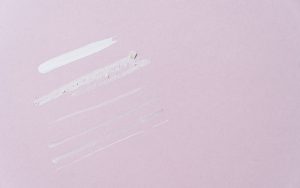

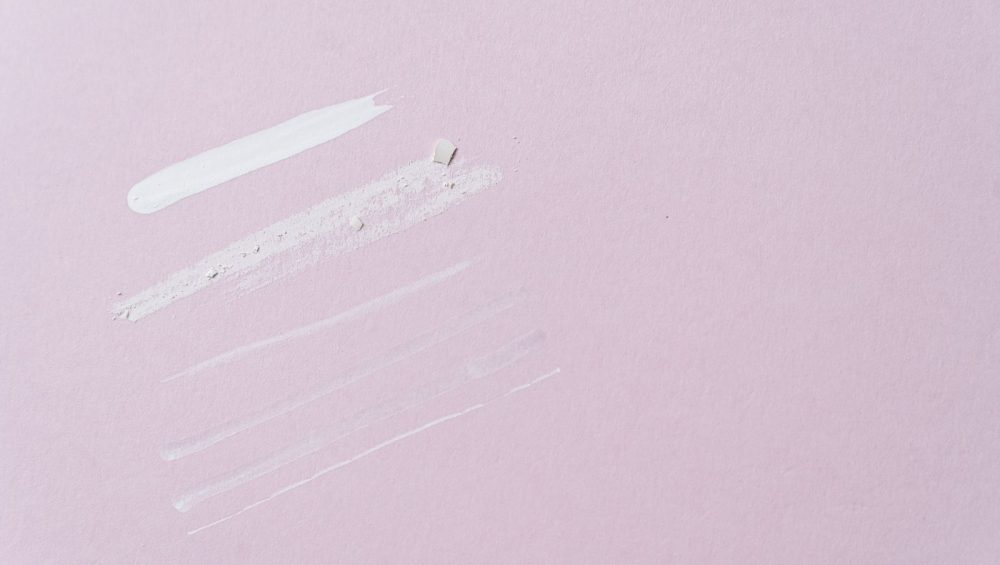
Short answer: The four formats tend to differ in their balance of water and oil, and in how they feel. A gel is often water-based and tends to feel lightest. A lotion is usually thinner and spreads easily. A cream tends to be thicker and often contains more oil than a lotion. A balm usually contains little or no water and is made mostly from oils, butters and waxes. These are general tendencies, not rules. The complete formulation, its purpose and your own skin matter more than the format, so no format belongs to a particular skin type.
The format tells you something about how a product will feel, and much less about whether it suits you.
Gels and lotions
Gel. Gels are generally water-based and thickened so they hold their shape. They tend to feel light on the skin.
Lotion. Lotions and creams are usually emulsions: oil and water held together by emulsifiers so they do not separate. A lotion is generally the thinner of the two, often thin enough to pour.
Creams and balms
Cream. A cream is generally thicker than a lotion and usually holds its shape when you take it out. Creams often contain more oil than lotions, though the balance varies from one formulation to the next. “Crème” is the French word for cream, and some brands, Esenté among them, use it in product names.
Balm. Brands use the word “balm” in different ways. It usually means a product made mostly or entirely from oils, butters and waxes, with little or no water, so it feels dense. The closest pharmacy relative is the ointment, which dermatology sources describe as the thickest format of all.
What each format tends to be used for
These are common uses, not rules.
- Gels are often chosen for a light layer under sunscreen or makeup, for warm, humid weather, or by people who dislike the feel of a heavier product.
- Lotions are popular for the body, because they spread quickly over arms and legs.
- Creams are common for the face, for night use and for areas that feel dry.
- Balms often turn up for small, dry areas such as lips, cuticles and heels, and some are made to melt makeup off before cleansing.
Why the format does not decide your skin type
It is tempting to sort formats by skin type: gels for oily skin, rich creams for dry skin. Texture tells you something about feel, but on its own it is not a reliable guide to suitability.
A gel can contain ingredients that support hydration, and a cream can be formulated to feel light. What decides how a product performs on your skin is the complete formulation: which ingredients it contains, in what amounts, how they work together and what the product is designed to do.
You also cannot tell how gentle a product is from its texture, or whether it will clog pores from how rich it feels. “Non-comedogenic” on a label is a manufacturer’s claim, so read it as a guide rather than a guarantee and watch how your own skin responds.
Heavier formats often feel more substantial, and whether that suits you depends on the formulation, your skin and your conditions. Humectants, Emollients and Occlusives explains the ingredient groups that do the work inside any format.
How to choose between them
Start with how your skin feels. Notice it after you apply a product and again later in the day. Comfortable and settled is a good sign. Tight, rough or greasy suggests trying a different formulation; stinging or redness is a reason to stop.
Consider your environment. Dry indoor air, a dry climate or a cold spell can change what feels comfortable, and so can a humid summer. Let your skin’s condition guide you rather than the calendar.
Think about the time of day. Many people like something that sits well under sunscreen and makeup in the morning and something more substantial at night. Day Cream vs Night Cream covers that choice.
Read the directions. They tell you where a product belongs and how much to use. Apply moisturizer after cleansing and any appropriate preceding steps, following its directions. Using more than directed does not make a product work better.
Jars and spatulas
Creams and balms often come in jars. Take product out with a clean cosmetic spatula each time, so fingers stay out of the open jar, and apply it with clean fingertips. The Spatula Rule explains why.
Victoria’s approach
Victoria Nash, founder of Esenté Skincare, has been a licensed aesthetician since 2003. She also owns and operates Younger You Clinique and is an experienced skincare educator. She draws on her professional experience at Younger You Clinique when evaluating skincare products and their performance. In Esenté’s approach, ingredients are selected for their suitability and contribution to the complete formulation, and the same thinking applies when you choose a product: the whole formulation and its purpose matter more than its format. Victoria believes informed product selection comes first: understand what a product is intended to do, whether it suits your skin, how to use it and what it contains.
Esenté’s examples here sit in the crème category only: the Hydra Day Crème, the Hydra-Plus Night Crème, the Hyaluronic Hydration Crème and the Recovery Crème. They are examples from a broader range rather than the only choices, and which one suits you depends on your skin, your routine and your budget. All four come in jars, so use a clean spatula, and follow the directions for whichever you choose. Esenté works with boutique manufacturers to develop and select formulations that meet the brand’s ingredient, performance and quality criteria. Weighing one texture against another? Put the question to Victoria on the Ask Victoria page.
Frequently asked questions
Both are usually emulsions of oil and water. A lotion tends to be thinner and spreads easily, while a cream tends to be thicker and often contains more oil. Which suits your skin depends on the complete formulation.
Not automatically. A cream tends to feel more substantial, but suitability depends on the complete formulation and on your skin. Choose by how your skin feels over the day.
A gel may feel lighter, which some people with oily skin prefer. Feel is not the same as suitability, though, so judge the whole product rather than its texture.
Usually a product made mostly from oils, butters and waxes, with little or no water. Brands use the word in different ways, so what a balm contains varies. Balms often turn up for lips, cuticles, heels and makeup removal.
Not necessarily. That depends on the complete formulation and on your skin, not on how rich a product feels.
About the author. Victoria Nash, founder of Esenté Skincare, has been a licensed aesthetician since 2003. She also owns and operates Younger You Clinique and is an experienced skincare educator.
Reviewed by Victoria Nash, licensed aesthetician, founder of Esenté Skincare and owner of Younger You Clinique. This article is educational and is not medical advice. Ask your dermatologist or licensed skincare professional about products appropriate for your own skin and medical history.