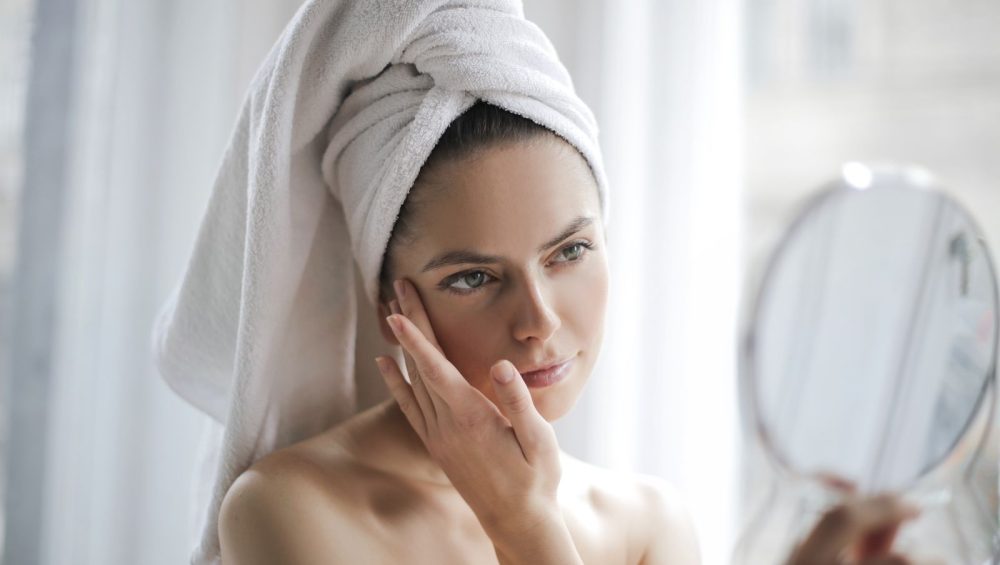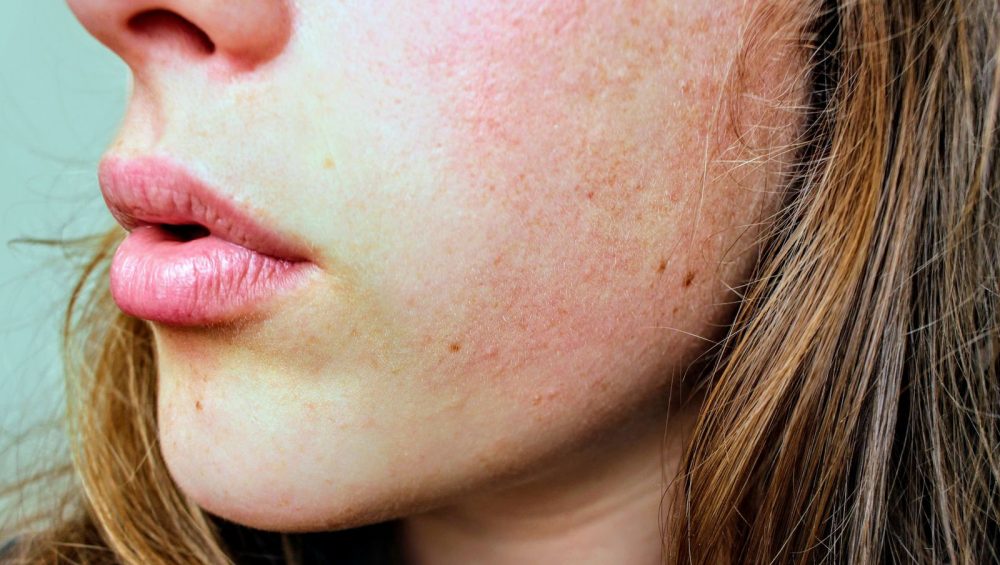

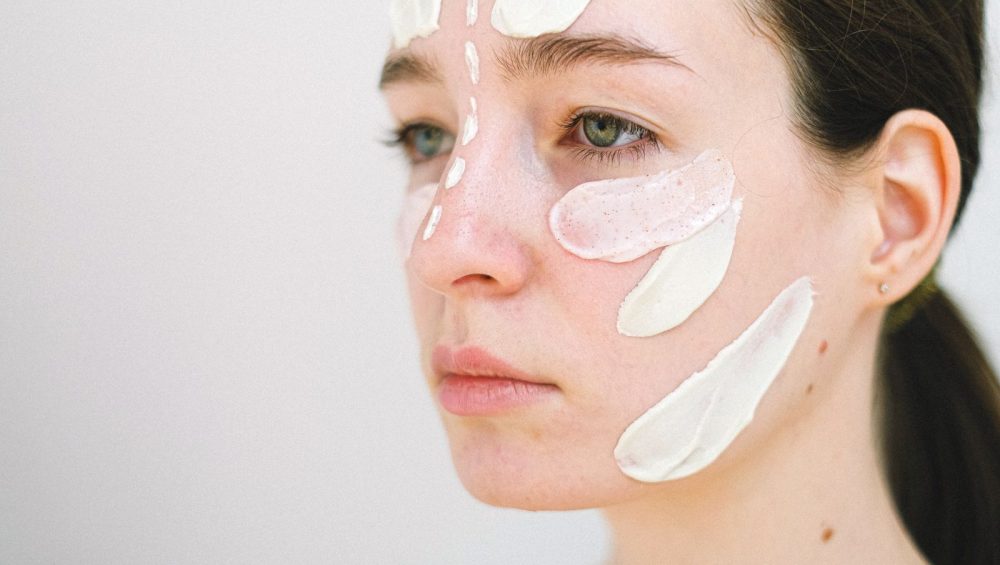
Woman with a towel wrapped in her hair looking at her skinCategoriesEsente Skincare

How Often Should You Wash Your Face?

Short answer: Most of the answer sits in the evening. That cleanse takes off sunscreen, makeup, the day’s oil and the airborne dirt that settles on a face, so it is the one worth doing properly. Morning is the more interesting question. Esenté’s professional approach is a warm-water rinse rather than a second full cleanse, which is appropriate for most skin rather than a universal rule. General dermatology guidance is to wash morning and night, and individual needs vary. Let your skin settle the rest. Tight and stripped means too much. Coated and congested means too little.

Here is what each wash is for, and how to read the signals your own skin gives you.

The evening cleanse carries the load

Think about what lands on a face between waking and bed. Sunscreen, which is designed to stay put. Makeup, often in layers. The oil your skin produces through the day. And a fine film of airborne dirt nobody notices until it comes off on a cloth.

None of that belongs on your skin overnight. The evening cleanse removes it, and it is the wash most worth taking your time over. If you get only one cleanse right, make it that one.

Morning is the interesting question

By morning, most of that is gone. What sits on your skin is a night’s worth of natural oil and whatever you put on before bed.

Esenté’s professional approach for most skin is a warm-water rinse in the morning rather than a second full cleanse, typically followed by a toner or an antioxidant mist. That is Esenté’s recommended routine for most skin, not a universal rule. General dermatology guidance is to wash morning and night, and plenty of people are perfectly happy doing exactly that.

This one varies. Skin that feels oily by morning may prefer a cleanser; skin that feels tight after washing may prefer water. The test is how your face feels an hour later.

Signs you are washing too often

  • Skin feels tight or squeaky as soon as you dry it.
  • Products sting that never used to sting.
  • Flaking or rough patches that moisturizer does not settle.
  • Redness that calms down on the days you wash less.

Any of these is a reason to wash less often, more gently, or with a milder formula before changing anything else. What the Skin Barrier Actually Is explains what is going on underneath.

Signs you are not washing enough

  • Makeup or sunscreen showing up on your pillowcase.
  • Skin that feels coated or filmy in the morning.
  • A dull, gray look that does not shift. Why Skin Looks Dull covers the other common causes.
  • Congestion around the nose and chin.

These are common patterns rather than a diagnosis. Skin behaves this way for plenty of reasons, and washing is one of them.

Washing after exercise

Sweat is not dirt. It is mostly water and salt. What makes a workout worth a rinse is what sweat mixes with: sunscreen, makeup, the band of a cap, the hands that push hair off a forehead.

Water handles most of that, and a cleanse makes sense if you were wearing makeup or sunscreen. Victoria regards regular exercise that raises the heart rate as part of an overall skincare and lifestyle philosophy, supporting circulation including blood flow to the skin, rather than a fix in itself. Sleep, Exercise and Your Skin goes further.

Cleansing and toning are two separate steps

A toner is not there to pick up what the cleanser missed. If a toner pad comes away gray, the answer is a better cleanse, not more toner.

Healthy skin normally has a mildly acidic surface. For most skin, Victoria considers a toner or an appropriate antioxidant mist after cleansing an important step, because it helps support the skin’s normal mildly acidic surface. Which one, and how often, depends on the individual. Cleansing and toning are separate but complementary: one removes, the other follows. Esenté does not measure anyone’s skin pH or promise a particular reading. What Does Toner Actually Do? covers the step in detail.

How you wash counts as much as how often

Light pressure. Lukewarm water rather than hot. Pat dry rather than rub. General dermatology advice has been consistent on this for years, and it matters more than the number of washes in a day.

Victoria prefers gentle cleansing and does not recommend automatic facial brushes for routine cleansing. Although these devices are marketed as cleansing tools, vigorous use can also mechanically exfoliate the skin. Because cleansing is usually performed every day, aggressive use can result in unintended daily exfoliation and unnecessary irritation. A soft facial sponge or gauze used gently is Victoria’s preferred approach. Why Your Cleanser Matters covers gentle formulas versus harsh ones.

Victoria’s approach

Victoria Nash, founder of Esenté Skincare and Younger You Clinique, has been a licensed aesthetician since 2004 and is an experienced skincare educator. Her approach puts the emphasis on the evening: a thorough, gentle cleanse before bed, and for most skin a warm-water rinse in the morning rather than a second full cleanse, with a toner or an antioxidant mist as a distinct step afterward. She draws on her professional experience at Younger You Clinique when evaluating skincare products and their performance.

Esenté’s cleansers include the Orchid Reviving Cleanser, a non-foaming cleanser, and the Citrisal Purifying Cleanser. For the step that follows, there is the Octet Herbal Toner, which contains no alcohol, and Hydro Mist. Each is developed collaboratively by Victoria Nash with Esenté’s professional formulation and manufacturing partners, with Victoria providing product direction, ingredient research, professional-use feedback and performance requirements. The Esenté range also includes Professional Facial Sponges, supplied by another company, for the gentle sponge approach to cleansing described above. If you are not sure what your own skin wants in the morning, the Ask Victoria page is the place to ask.

Frequently asked questions

Should I wash my face in the morning?

General dermatology guidance is to wash morning and night. Esenté’s professional approach for most skin is a warm-water rinse in the morning, typically followed by a toner or an antioxidant mist, with a cleanser in the morning for skin that wants one. Do what leaves your skin comfortable rather than tight.

Is washing twice a day too much?

Not for most people, and general guidance is morning and night. It becomes too much when your skin says so: tightness, stinging, flaking or redness that settles when you wash less. A harsh formula or heavy pressure can irritate skin at any frequency.

Can I just use water?

Water alone will not remove sunscreen or makeup, so the evening still needs a cleanser on any day you wore either. In the morning, a warm-water rinse suits plenty of people, and it is Esenté’s approach for most skin.

Does washing more often help oily skin?

Not reliably. Oily skin generally keeps making oil, and over-washing can leave it tight and irritated on top of that. A gentler cleanse and a consistent routine tend to do more than extra washes.

Should I wash my face after the gym?

A rinse handles sweat. A cleanse makes sense if you were wearing makeup or sunscreen. Use light pressure, and do not scrub at skin that is already flushed.

Do I need to wash if I did not wear makeup?

Sunscreen, natural oil and the day’s airborne dirt are still there, so the evening cleanse is still worth doing. What that day needs can simply be lighter than what a full face of makeup asks for.

About the author. Victoria Nash, founder of Esenté Skincare and Younger You Clinique, has been a licensed aesthetician since 2004 and is an experienced skincare educator.

Reviewed by Victoria Nash, licensed aesthetician and founder of Esenté Skincare & Younger You Clinique. This article is educational and is not medical advice. Ask your dermatologist or licensed skincare professional about products appropriate for your own skin and medical history.
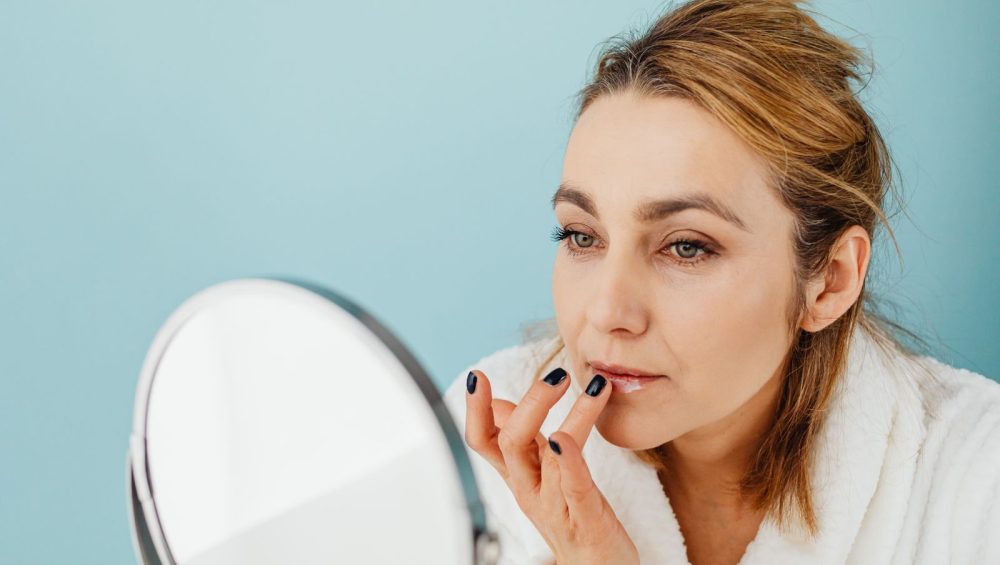
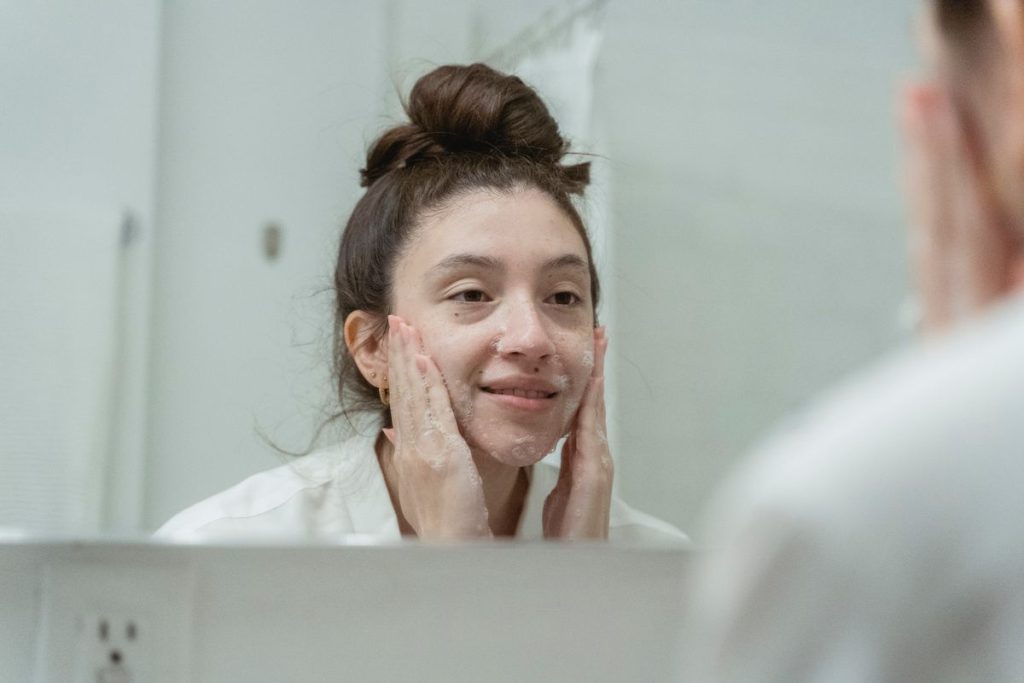
Close-up of skin surface textureCategoriesEsente Skincare

Large Pores: What You Can Change and What You Cannot

Short answer: Pore size is mostly out of your hands. It is largely genetic, set by how big your oil glands are and how thick your skin is, and nothing you put on your face shrinks a pore permanently. Pores also do not open and close, because they have no muscle to do it with, so the hot-water-opens, cold-water-closes idea is a myth. What you can change is how noticeable they look: keep them clear so they do not read as dark dots, exfoliate at an interval that suits your skin, manage surface oil, wear sunscreen, and watch how light and makeup work on your skin.

That is the honest version. Here is the reasoning behind each part of it.

What a pore actually is

A pore is an opening. Specifically it is the opening of a hair follicle, and most of the ones you notice on your nose and cheeks have an oil gland emptying into them. That is why they are biggest and busiest in exactly the places people complain about.

Two things mainly decide how big yours look. The first is the size of the oil gland underneath, which is largely inherited. The second is the thickness and support of the surrounding skin, which holds the opening in shape. Neither is something a cream changes.

This is not a counsel of despair. It does mean the honest goal is appearance, and appearance responds to quite a lot.

Pores do not open and close

They are openings, not doors. There is no muscle around the opening that widens it with heat and shuts it with cold, so steam does not open your pores and a splash of cold water does not close them.

The myth survives because warm water does something real: it softens the oil and dead skin sitting in the opening, which makes that material easier to clear. Cold water briefly tightens the look of skin overall, which people read as closed pores. Neither changes the size of anything.

The same logic applies to products. Anything promising to shrink or close pores is describing an appearance, whether or not it says so.

What makes them look larger

A pore that is full. Oil and dead skin collect in the opening, stretch it slightly, and the surface of that plug darkens as it meets the air. That is why blackheads are dark. It is not dirt, and scrubbing harder does not help.

Years of sun. Sun exposure gradually reduces the support in the surrounding skin. With less support, openings look larger and more stretched, often along the cheeks. This is slow and cumulative, and daily habits can influence it.

Age. Skin thins and loses firmness over time, and pores tend to look more obvious as it does.

Light and makeup. Raking side light throws a shadow into every opening. Heavy foundation settles into them and makes them more obvious rather than less.

What genuinely changes the look

Keep them clear. Regular cleansing that suits your skin, and taking makeup off properly, are the foundation of the whole thing. Whether a cleanser suits you depends on the complete formulation rather than on whether it foams. Why Your Cleanser Matters covers how to judge one.

Exfoliate when your skin needs it. Removing built-up dead skin makes openings look smaller and less shadowed. There is no universal schedule: the right interval depends on your age, your skin’s condition, the method and how your skin responds, and more often is not better. Follow the directions for your individual product, and choose one exfoliating approach rather than layering several separate exfoliating products. Combining exfoliating acids with retinoids can increase irritation for some people, so go by the directions for each. How Often Should You Exfoliate and Physical vs Chemical Exfoliation go further into both.

Manage surface oil. Oil sitting in and around the opening catches light and makes it more visible. Blotting during the day and a matte finish under makeup both reduce the look of it, with no promises about tomorrow.

Wear sunscreen. This is the long game. Daily broad-spectrum sunscreen is a preventive habit that helps protect against the accumulated exposure that leaves skin with less support. It will not change how your pores look this week. Do You Need Sunscreen Every Day makes the case.

Use light and makeup deliberately. A smoothing primer, a lighter hand with foundation, and softer light all reduce how obvious pores look. Cosmetic, immediate, and honest about what it is.

Pore strips lift some of the surface plug and the effect is temporary. Some people find them irritating. They do not change the size of anything.

What no product can do

It cannot shrink a pore permanently, close one, or give you someone else’s skin. Esenté’s retail products, like other cosmetics, act on the surface layers of the skin, and a cosmetic that claimed to resize a follicle would be claiming something a cosmetic does not do.

Visible improvement in how pores look comes from consistent care over time, and how much you see depends on the cause, the product and the person.

Victoria’s approach

Victoria Nash, founder of Esenté Skincare and Younger You Clinique, has been a licensed aesthetician since 2004 and is an experienced skincare educator. She draws on her professional experience at Younger You Clinique when evaluating skincare products and their performance. Where pores are the concern, exfoliation is often part of the answer, but Victoria does not work to a fixed schedule. She considers the individual’s age, skin condition, method of exfoliation and how the skin is responding, because skin-cell turnover generally changes with age and an interval that suits one person may not suit another.

For skin where pores are the concern, the Esenté range includes the Citrisal Purifying Cleanser; the Very Berry Exfoliating Cleanser; the Oligo-Peel Exfoliation Crème, a rinse-off exfoliant with fine particles; and the Liposome Alpha-Beta Serum, an 8% AHA/BHA serum. These represent different approaches, not a routine to use together, and choosing one that suits your skin is better than stacking several exfoliating products. Each is developed collaboratively by Victoria Nash with Esenté’s professional formulation and manufacturing partners, with Victoria providing product direction, ingredient research, professional-use feedback and performance requirements. If you are deciding which approach fits your skin, the Ask Victoria page is there.

Frequently asked questions

How do I minimize pores?

You minimize the appearance, not the pore. Keep them clear with cleansing that suits your skin and proper makeup removal, exfoliate when your skin needs it and according to your product’s directions, manage surface oil, wear daily sunscreen, and use lighter makeup and softer light.

Can you shrink pore size permanently?

No topical product does that. Pore size is largely inherited, set by oil gland size and the thickness and support of the surrounding skin. What changes is how noticeable pores look, which responds to a good deal.

Does hot water open pores and cold water close them?

No. Pores have no muscle to open and shut with. Warm water softens the oil and dead skin inside the opening, which makes it easier to clear, and cold water briefly tightens the look of skin. Neither changes pore size.

Why do my pores look bigger as I get older?

Skin thins and loses firmness with age, and years of sun exposure reduce the support around each opening. With less support, pores look larger and more stretched. Daily sun protection is the part of this you can influence.

Are blackheads dirt in my pores?

No. A blackhead is oil and dead skin filling the opening, and the surface darkens when it meets the air. Scrubbing harder will not remove it and tends to irritate skin instead.

About the author. Victoria Nash, founder of Esenté Skincare and Younger You Clinique, has been a licensed aesthetician since 2004 and is an experienced skincare educator.

Reviewed by Victoria Nash, licensed aesthetician and founder of Esenté Skincare & Younger You Clinique. This article is educational and is not medical advice. Ask your dermatologist or licensed skincare professional about products appropriate for your own skin and medical history.

Woman with flushed cheeks wrapped in a scarf outdoors in the snowCategoriesEsente Skincare

Redness on the Face: Common Causes and What Helps

Short answer: Facial redness has many causes, and this article covers the common ones. Temporary flushing from heat, exercise or emotion arrives and leaves on its own. Irritation from products or over-exfoliation, and dryness on skin whose barrier is under strain, usually settle when you do less. Sun exposure adds to the picture over years. Redness that persists can also be a skin condition such as rosacea or eczema, and diagnosing and managing those is a job for a dermatologist. Cosmetic products can reduce the look of redness. That is a different thing.

Here are the common causes, and the changes that genuinely make a difference to how red a face looks.

Common causes, not all of them

Redness is a symptom, not a diagnosis, and plenty of things produce it. These are the ones that come up most often. If yours is not here, that is a reason to ask a professional rather than read further.

Flushing. Heat, a warm room, exercise and strong emotion can all bring color to the face. The color rises, then fades. This is ordinary physiology, and it settles on its own.

Irritation from your routine. The most common preventable cause. Exfoliating more often or more aggressively than your skin needs, several exfoliating or retinoid products stacked at once, a new formula that does not suit you, or scrubbing with a rough cloth or a cleansing device. If the redness arrived shortly after something changed on your shelf, start there.

Dryness and a strained barrier. When the outer layer is not holding water well, skin looks pinker and reacts to more things. What Is Your Skin Barrier covers the signs and what eases them.

Sun exposure. Accumulated over years, sun exposure contributes to visible redness and to small visible vessels on the cheeks and nose. This one is slow, and it is the one people notice last.

Where rosacea and eczema fit

Some persistent facial redness is a medical condition. Rosacea and eczema are two common examples, and they are diagnosed and managed by a dermatologist. So are several other conditions that look similar in a bathroom mirror.

That distinction matters for a practical reason, not a legal one. A condition has a management plan, sometimes including prescription medication, and a cosmetic product is neither part of that plan nor a replacement for it. If your redness is persistent, keeps returning, comes with stinging, bumps, scaling or swelling, or simply worries you, the useful next step is an appointment rather than another product.

Do not work out which condition you have from an article. Photographs online are a poor diagnostic tool, and the conditions overlap.

What genuinely helps at the cosmetic level

None of this is medical care. All of it changes how red skin looks, and several items remove something that was making it worse.

Less friction. Stop scrubbing. Pat dry instead of rubbing. Put the exfoliating cloths and stiff brushes away. Esenté does not recommend automatic facial brushes for routine cleansing, because they add friction every time you wash. A soft facial sponge or gauze, used gently with lukewarm water, is Victoria’s preferred approach.

Gentler washing. Fewer washes, less time, and a cleanser that leaves your face comfortable five minutes later. Why Your Cleanser Matters goes into how to judge that.

Lukewarm water, not hot. Hot water widens surface vessels and takes more of the surface oils with it. A free change, and people notice it.

Daily broad-spectrum sunscreen. Sun exposure is one of the common contributors, so sun protection belongs in the routine year-round. Do You Need Sunscreen Every Day answers the obvious follow-up.

A simpler routine. Every product you remove is a suspect eliminated. Cleanse, tone, moisturize, protect. Add back one at a time. Sensitive Skin: How to Build a Routine That Does Not Fight Back sets out the method.

Green-toned makeup. Purely cosmetic, and effective on the day. Green sits opposite red on the color wheel, so a green-tinted primer or corrector under foundation makes redness less obvious. It changes nothing underneath, and was never meant to.

What a cosmetic product can honestly say

This is worth being precise about, because the category is full of loose language.

A cosmetic can reduce the look of redness, improve the appearance of skin, hydrate, soften, smooth and help skin retain moisture. Those are real, and for everyday redness that comes from dryness or from a routine that is asking too much, they are often enough.

A cosmetic does not diagnose, and it is not a management plan for a condition. If a product promises to fix what a dermatologist would be managing, that promise is the problem.

Victoria’s approach

Victoria Nash, founder of Esenté Skincare and Younger You Clinique, has been a licensed aesthetician since 2004 and is an experienced skincare educator. She draws on her professional experience at Younger You Clinique when evaluating skincare products and their performance. Regular exercise is an important part of Victoria’s overall approach to healthy living. Exercise naturally increases circulation and may temporarily cause facial flushing, particularly in people who are already prone to redness. Victoria views exercise as part of supporting overall wellbeing rather than as a treatment for facial redness.

For a simplified routine, the Esenté range includes the Orchid Reviving Cleanser, a non-foaming cleanser; the Octet Herbal Toner, which contains no alcohol; the Recovery Crème; and the Hydrating Cucumber Mask, a rinse-off mask made with cucumber and melon extracts whose directions call for a thin film on clean skin left for seven to ten minutes. Each is developed collaboratively by Victoria Nash with Esenté’s professional formulation and manufacturing partners, with Victoria providing product direction, ingredient research, professional-use feedback and performance requirements. For questions about your own routine, the Ask Victoria page is there.

Frequently asked questions

How do I reduce redness on my face?

Cut the friction, wash less and more gently, switch hot water for lukewarm, simplify the routine, and wear daily broad-spectrum sunscreen. Green-toned makeup reduces the look of redness on the day. Persistent redness deserves a professional opinion, not another product.

Why is my face red all the time?

Common causes include flushing, irritation from products or over-exfoliation, dryness on a strained barrier, and years of sun exposure. Redness that never lets up can also be a skin condition. A dermatologist can tell you which.

Can skincare make redness worse?

Yes, and often does. Exfoliating more than your skin needs, stacking several exfoliating or retinoid products, hot water, rough cloths, cleansing devices and scrubbing all contribute. If redness appeared soon after a new product or habit, remove that first and see.

Does sunscreen help with redness?

Sun exposure is one of the common contributors to facial redness, which is one reason daily broad-spectrum sunscreen is recommended as part of the routine. It is a preventive habit rather than something that changes how red your face looks today.

Does green-toned makeup actually work?

For appearance, yes. Green is opposite red on the color wheel, so a green-tinted primer or corrector under foundation makes redness less obvious. It is a cosmetic effect only, and it does nothing to the skin underneath.

About the author. Victoria Nash, founder of Esenté Skincare and Younger You Clinique, has been a licensed aesthetician since 2004 and is an experienced skincare educator.

Reviewed by Victoria Nash, licensed aesthetician and founder of Esenté Skincare & Younger You Clinique. This article is educational and is not medical advice. Ask your dermatologist or licensed skincare professional about products appropriate for your own skin and medical history.
Woman resting her hand against her cheek by a windowCategoriesEsente Skincare

Sensitive Skin: How to Build a Routine That Does Not Fight Back

Short answer: Sensitive skin is skin with a low threshold for reacting. It is not a skin type, and it has nothing to do with how much oil you produce: oily skin can be sensitive, dry skin can be entirely untroubled, and combination or otherwise balanced skin can go either way. The routine that works is simple: cleanse gently, tone, moisturize, protect from the sun, and add anything new one product at a time so you can tell what caused what. Fewer changes at once means fewer mysteries.

The advice people usually get is to buy something labeled for sensitive skin. That is not where to start.

Sensitivity is not a skin type

This is the part that gets muddled everywhere. Oil production is what people mean by skin type: dry, oily, combination. Sensitivity runs on a different axis: how easily your skin reacts, not how much oil it makes.

So sensitivity can sit alongside any of them. Skin can be oily and sensitive. It can be dry and not remotely sensitive. It can be combination, or otherwise balanced and unremarkable, and still sting the moment you try a new acid. If you have been shopping by skin type alone and getting nowhere, that is probably why. How to Tell Your Skin Type covers the oil question.

Two different kinds of sensitive

Lumping them together is why so much advice misses.

Skin that reacts to specific things. You are fine with almost everything, then one ingredient or one product sets you off every time. The answer is finding the trigger, not overhauling your shelf.

Skin that reacts to most things. The threshold itself is low. New products sting, old products start stinging, and nothing points at a single culprit. Here the answer is to strip the routine back, because a barrier already under pressure reacts to things it would otherwise shrug off. What Is Your Skin Barrier explains why.

Most people sit somewhere between. Which end you are nearer tells you whether to hunt a trigger or simplify.

The short, boring routine

Sensitive skin does not need a clever routine. It needs a simple one, with each product used in the amount and at the frequency its directions give.

Cleanse gently. Lukewarm water, a light hand, and a soft facial sponge or gauze used gently, which is Victoria’s preferred approach. Esenté does not recommend automatic facial brushes, which can add friction that reactive skin does not need. Judge a cleanser by how your face feels five minutes afterward.

Tone. A toner or an appropriate antioxidant mist after cleansing is its own step in the Esenté routine. For most skin, Victoria considers it an important step because it helps support the skin’s normal mildly acidic surface. Which one suits you depends on the formulation and on your skin.

Moisturize. Every day, whether or not skin feels dry. This step does the quiet work.

Protect from the sun. Daily broad-spectrum sunscreen belongs in the routine.

That is the core. Serums, masks and exfoliating or retinoid products are additions to a working routine, and each one should have a reason to be there. If skin is unhappy now, the fastest way forward is to take out whatever was added most recently. Too Many Skincare Products makes that case.

One product at a time

This is the rule that actually solves things. Add one new product. Leave everything else alone. Give it long enough that a reaction would have shown itself, then add the next.

Change three products in a week and a reaction tells you nothing. Change one and it tells you far more. Choosing well comes first: know what a product is meant to do, how it should be used and what it contains. For particularly reactive skin, a small test in an appropriate area can be an additional precaution. How to Patch Test a New Product explains when it helps.

The same applies in reverse. If you strip back and skin settles, add things in one at a time, or you end up where you started.

What the word “gentle” tells you

Very little. Gentle is a marketing word, not a regulated one, and nothing is gentle for everybody. Whether a product suits you depends on the complete formulation and on your own skin, not on the word on the front.

Natural is not a guarantee either. Plenty of plant extracts irritate some people, and an aroma that comes from botanical ingredients is not automatically kinder than any other. Esenté does not add perfume simply to give a product a cosmetic fragrance. Some formulations have a natural aroma from their botanical ingredients, and certain formulations use botanical essential oils for their intended skincare contribution, which can also give them an aroma.

Exfoliation is not automatically off the table when skin is generally sensitive. There is no universal schedule: the right interval depends on your age, your skin’s condition, the method of exfoliation and how your skin responds. Skin that is currently irritated, inflamed or compromised is a different case. That is the time to pause exfoliation, not to look for a gentler way to keep doing it. The directions for your product come first.

When to stop and see a professional

Stop and get advice if a reaction involves swelling, blistering, hives, broken skin or real pain, or if it keeps happening and you cannot work out why. Persistent redness, itching or flaking can be a skin condition that a dermatologist diagnoses and manages, and no cosmetic routine substitutes for that. Photograph the labels and take the list with you; it is often more useful to a clinician than a description of how it felt.

Victoria’s approach

Victoria Nash, founder of Esenté Skincare and Younger You Clinique, has been a licensed aesthetician since 2004 and is an experienced skincare educator. She draws on her professional experience at Younger You Clinique when evaluating skincare products and their performance. For sensitive skin, Victoria believes informed product selection comes first: understanding what a product is intended to do, whether it is appropriate for your skin, how it should be used and what ingredients it contains.

The Esenté range includes the Orchid Reviving Cleanser, a non-foaming cleanser, and the Octet Herbal Toner, which contains no alcohol. The Hydrating Cucumber Mask is a rinse-off mask whose directions call for a thin film on clean skin left for seven to ten minutes, and describe it as suitable for all skin types and ages, including sensitive. The Oligo-Peel Exfoliation Crème is a rinse-off exfoliant with fine particles, and its directions describe it as suitable for all skin types including sensitive. That refers to skin that is generally sensitive, not skin that is currently irritated or reactive. Each is developed collaboratively by Victoria Nash with Esenté’s professional formulation and manufacturing partners, with Victoria providing product direction, ingredient research, professional-use feedback and performance requirements. If you are working out where to start, the Ask Victoria page is there.

Frequently asked questions

Is sensitive skin a skin type?

No. Skin type describes oil production. Sensitivity describes how easily skin reacts. Oily skin can be sensitive and dry skin can be untroubled, which is why shopping by skin type alone so often disappoints.

What should a sensitive skin routine look like?

Short. A cleanser, a toner or antioxidant mist, a moisturizer, and daily broad-spectrum sunscreen. Add anything beyond that one product at a time, so a reaction tells you what caused it.

How do I find out what my skin is reacting to?

Change one thing at a time, so a reaction points to one product. If your skin is particularly reactive, a small test in an appropriate area before full use can be an extra precaution. If the trigger will not show itself, or the reactions are severe, that is a question for a dermatologist.

Can I use exfoliants if my skin is sensitive?

Often, yes, if your skin is generally sensitive rather than currently irritated. How often depends on your age, skin condition, the method and how your skin responds. Follow the directions for your individual product, avoid stacking several separate exfoliating products, and pause if skin starts stinging on things that were fine before.

Does sensitive skin need fragrance-free products?

For some people fragrance is the trigger and avoiding it helps. It is not a universal rule, and an aroma from botanical ingredients is not automatically kinder than any other. Reading the full ingredient list and understanding what the key ingredients are there to do tells you more than a label claim.

About the author. Victoria Nash, founder of Esenté Skincare and Younger You Clinique, has been a licensed aesthetician since 2004 and is an experienced skincare educator.

Reviewed by Victoria Nash, licensed aesthetician and founder of Esenté Skincare & Younger You Clinique. This article is educational and is not medical advice. Ask your dermatologist or licensed skincare professional about products appropriate for your own skin and medical history.
Water droplets resting on bare skinCategoriesEsente Skincare

What Is Your Skin Barrier? (And How to Look After It)

Short answer: Your skin barrier is the outermost layer of your skin, and it does two jobs at once: it holds water in and it keeps irritants out. When it is working well, skin feels comfortable and looks even. When it is struggling, skin feels tight after washing, stings on products that were fine last month, flakes, looks pink and turns sensitive for no obvious reason. The cause is usually something ordinary: washing too often or too vigorously, exfoliating more than your skin needs, water that is too hot, or too many exfoliating or retinoid products at once. Doing less of whatever is straining it is usually the fix.

Here is what the barrier actually is, how to tell when yours is unhappy, and what to change.

What the barrier actually is

Picture the top of your skin as a brick wall. The bricks are flattened skin cells that have finished their working life and are on their way off your face. The mortar between them is a mix of fats: ceramides, cholesterol and fatty acids. Skin professionals call this layer the stratum corneum, and it is thinner than a sheet of paper.

That wall does two things at once. It slows the water inside your skin from evaporating into the air, and it keeps most of what lands on the outside from getting in. Hold water in, keep irritants out. Almost everything else here follows from those two jobs.

Sitting on top of the wall is a thin film of oil and sweat, and healthy skin normally has a mildly acidic surface.

What it feels like when it is struggling

There is no test you can run at home. What you get instead is a cluster of signs.

Tightness. Skin feels tight after washing and stays tight. Not for a minute while it dries. For an hour.

Stinging on products that used to be fine. The serum you have used for a year starts to prickle. Nothing changed in the formula. Something changed in your skin.

Flaking and rough patches. Sometimes in the obvious places, sometimes only where you shave or where your glasses sit.

Redness that hangs around. Not the flush of a warm room, which fades on its own. A pinkness that is there most mornings.

Sudden sensitivity. Skin that was unremarkable for years begins reacting to things it never used to.

One of these alone may be nothing. Three or four together is a pattern worth acting on. Skin that is painful, swelling, blistering or weeping belongs with a dermatologist.

What strains it

Almost all of it is ordinary, and most of it is habit.

Over-washing. More washing is not more clean, and every wash takes some of the surface oils with it. How Often Should You Wash Your Face has the sensible version.

Over-exfoliating. Exfoliation has a real place. The trouble starts when it is done more often or more aggressively than your skin needs. The right interval depends on the person, and How Often Should You Exfoliate explains why.

Very hot water. A hot shower feels wonderful on a cold morning, and it takes more of the surface oils with it than lukewarm does.

Harsh cleansers. Whether a cleanser leaves your skin comfortable depends on the complete formulation, not on whether it foams. The test is how your face feels five minutes after you dry it. Why Your Cleanser Matters goes deeper.

Cold, dry air. Cold outside, heated inside, low humidity in both places.

Doing too much at once. Retinol on Monday, an acid on Tuesday, a scrub on Wednesday, a new vitamin C on Thursday. Any one might suit you. All four in a week is a lot to ask of one face. Using more of a product, or using it more often than its directions say, does not speed anything up either.

What supports it

Here is the part people find disappointing. Skin does the recovering. You do not repair a barrier with a product. You stop straining it, and support the conditions while your skin does the work.

Wash gently. Use lukewarm water and light pressure. Esenté does not recommend automatic facial brushes or other scrubbing devices, which can encourage excessive pressure and friction that may leave skin irritated and inflamed. A soft facial sponge or gauze used gently is Victoria’s preferred approach.

Moisturize consistently. A moisturizer that suits your skin helps skin retain moisture and supports the skin’s moisture barrier. Consistency does more than price.

Ease off exfoliating and retinoid products for a while. Put the acids, the scrubs and the retinol aside while skin is reactive, keep cleansing and moisturizing, then bring things back one at a time. How long that takes varies with the cause, the product and the person, so go by how your skin feels.

Keep the routine simple while skin is reactive. Cleanser, toner and moisturizer, each used in the right amount, give skin less to react to while it settles. Too Many Skincare Products explains why the amount and frequency of each product matter as much as the number of products.

In the Esenté routine a toner or an appropriate antioxidant mist after cleansing is its own step, not a finishing touch. Victoria considers it an important part of the routine for most skin because it helps support the skin’s normal mildly acidic surface. Which product suits you depends on the formulation and on your skin.

One honest limit: a moisturizer cannot rebuild anything from underneath. Esenté’s retail products, like other cosmetics, act on the surface layers. What a good one does is slow the loss of water there, and make flaking and fine dry lines look better over time.

Victoria’s approach

Victoria Nash, founder of Esenté Skincare and Younger You Clinique, has been a licensed aesthetician since 2004 and is an experienced skincare educator. She draws on her professional experience at Younger You Clinique when evaluating skincare products and their performance. Her approach to a strained barrier starts with how skin is cleansed: lukewarm water, light pressure, and a soft facial sponge or gauze used gently rather than a device that encourages scrubbing.

For skin that is feeling tight and reactive, the Esenté range includes the Orchid Reviving Cleanser, a non-foaming cleanser; the Octet Herbal Toner, which contains no alcohol; the Hyaluronic Hydration Crème; and the Recovery Crème. Each is developed collaboratively by Victoria Nash with Esenté’s professional formulation and manufacturing partners, with Victoria providing product direction, ingredient research, professional-use feedback and performance requirements. If you are not sure which of them suits your skin, the Ask Victoria page is there for that question.

Frequently asked questions

What is the skin barrier?

The outermost layer of your skin, made of flattened skin cells held together by a mix of fats. It slows water from evaporating out of your skin and keeps most irritants from getting in.

How do I know if my skin barrier is compromised?

There is no home test. Look for a cluster of signs: tightness that does not pass, stinging on products that used to be fine, flaking, a pinkness that stays, new sensitivity. Several together tell you more than one alone.

How long does it take for skin to recover?

It varies with the cause, with what you change and with the person, so nobody can honestly hand you a number. Go by how your skin feels rather than a deadline.

Can a moisturizer fix a compromised skin barrier?

Your skin does the recovering. A moisturizer that suits you helps skin retain moisture and supports the skin’s moisture barrier while that happens. That is support, not a repair job.

Should I stop using retinol if my skin feels sensitive?

Easing off exfoliating and retinoid products while skin is reactive is reasonable, and you can bring them back gradually. Retinol is generally used at night; follow the directions for your individual product. Daily broad-spectrum sunscreen is recommended as part of the routine either way.

About the author. Victoria Nash, founder of Esenté Skincare and Younger You Clinique, has been a licensed aesthetician since 2004 and is an experienced skincare educator.

Reviewed by Victoria Nash, licensed aesthetician and founder of Esenté Skincare & Younger You Clinique. This article is educational and is not medical advice. Ask your dermatologist or licensed skincare professional about products appropriate for your own skin and medical history.

Woman resting in a dimly lit roomCategoriesEsente Skincare

Why Skin Looks Dull (and the Simple Things That Help)

Short answer: Dull-looking skin can have several causes, including dryness, rough texture, a build-up of dead surface cells and uneven pigmentation, and part of the explanation is how the surface handles light. Smooth, evenly hydrated skin reflects light more evenly and tends to look brighter; a rough, dry or unevenly toned surface scatters it and reads as flat. That is why the fixes are simple in principle: help the old cells shed, support hydration, and protect from the sun that makes tone uneven. How quickly you notice a difference depends on the cause, the products and your own skin. It is one of the more fixable complaints in skincare.

Here is what is going on, and the order to tackle it in.

What “dull” actually means

When people say their skin looks dull, they usually mean one or more of these: it looks flat rather than luminous, gray or sallow rather than fresh, rough rather than smooth, and tired even after sleep. Makeup sits on it instead of blending in.

Several things can contribute: dryness, rough texture, a build-up of dead surface cells, uneven pigmentation, and sometimes the routine itself. One useful way to understand why they all read as “dull” is light. A smooth, well-hydrated surface reflects light back evenly, which reads as glow. A surface that is rough, dry or uneven in tone scatters light in every direction, which reads as flat. Light reflection is part of the explanation rather than the whole of it, but it is why improving the surface tends to improve the look.

The four usual causes

Dead cells that have not shed. Skin renews itself constantly, with old cells flaking away at the surface. As we get older, that shedding slows, and dead cells build up into a thin, rough layer that scatters light. This is a common cause of dullness on mature skin, and one of the easier ones to address.

Not enough water. Dehydrated skin, which can happen to any skin type, looks flat and shows fine lines. Supporting hydration with a suitable routine tends to improve how it looks. How to Tell Your Skin Type at Home explains the difference between dry and dehydrated.

Uneven tone. Sun spots, marks left by old blemishes and general patchiness break up the surface visually, so light does not reflect evenly. This one takes longer to improve. Dark Spots and Uneven Skin Tone covers it.

The routine itself. Harsh cleansers, hot water, over-exfoliating and skipped moisturizer all leave the surface rough and short of water. Sometimes the dullness is the routine, not the skin. Why Your Cleanser Matters is a good place to start.

What helps, in order

1. Exfoliate, gently. A mild acid, an enzyme product or a fine physical exfoliant, used as its directions say, helps the old cells leave. Some people notice a cosmetic difference sooner than others; the point is regular, gentle use over time. The word is gentle: over-exfoliated skin is red and shiny, not glowing. Enzyme Peel vs Chemical Peel helps you pick one.

2. Tone, then hydrate. In the Esenté routine, a toner or antioxidant mist follows every cleanse as a distinct step, then a hydrating serum, then a moisturizer over the top. Follow the directions on each of your own products for how to apply it. What Does Toner Actually Do? explains the toner step.

3. Seal it. A moisturizer with enough richness for your skin helps hold water at the surface. Many people with mature skin find they want more than they expected. How to Choose a Moisturizer for Mature Skin covers texture.

4. Protect it. Daily broad-spectrum sunscreen helps stop tone getting more uneven. Certain exfoliating ingredients, AHAs in particular, carry their own sun-protection considerations, which is one more reason to keep the morning sunscreen. Do You Need Sunscreen Every Day? makes the case.

5. Give the slower ingredients time. Vitamin C, niacinamide and retinoids can improve the appearance of tone and texture over weeks and months. They are worth adding once the basics are in place, not instead of them.

What does not help much

Scrubbing harder. Skipping moisturizer because skin “looks oily.” Drinking a lot of extra water in the hope it shows on your face; staying hydrated is good for you, but drinking excess water has not been established as a simple way to make skin glow, and how hydrated the skin’s surface looks depends on your complete skincare routine. And expecting a tone-focused product to do the whole job on its own; tone is the slowest part of dullness to change, so those products work best on top of exfoliation and hydration.

How fast to expect results

It varies. Some people notice a cosmetic improvement from exfoliation and hydration fairly soon; for others it takes longer, and the timetable depends on the cause, the products and your own skin. Uneven tone is the slowest part to change and is usually a matter of months. If a change in how your skin looks persists or is unexplained, particularly if it comes with fatigue or other symptoms, that is a question for a healthcare professional rather than a jar.

Victoria’s approach

Victoria Nash, founder of Esenté Skincare and Younger You Clinique, has been a licensed aesthetician since 2004 and is an experienced skincare educator. In the Esenté routine, a toner or antioxidant mist follows every cleanse. Victoria draws on her professional experience at Younger You Clinique when evaluating skincare products and their performance.

A dull or tired-looking complexion is one of the concerns Victoria hears about most often from clients, and her approach to it goes beyond the bottle. One of her principal recommendations is regular, appropriate exfoliation. Skin-cell renewal changes with age and varies considerably from one person to the next, so she does not assign a fixed turnover period to any age group; as a simple practical guideline, she commonly recommends exfoliating on approximately a monthly basis to help remove accumulated surface cells and maintain a brighter-looking complexion. Regular physical exercise is another important part of her approach. Exercise that raises the heart rate supports circulation, including blood flow to the skin. She presents both as elements of an overall skincare and lifestyle philosophy rather than as fixes in themselves; neither monthly exfoliation nor exercise alone will correct dull-looking skin.

The Esenté range covers each step: exfoliation with the Oligo-Peel Exfoliation Crème, the Liposome Alpha-Beta Serum or the Very Berry Exfoliating Cleanser; the toner step with the Octet Herbal Toner or the Hydro-Mist Emulsion Antioxidant Spray; and hydration with the Hyaluronic Hydration Creme among others. Each is developed collaboratively by Victoria Nash with Esenté’s professional formulation and manufacturing partners, with Victoria providing product direction, ingredient research, professional-use feedback and performance requirements. If you are not sure which step your skin is missing, the Ask Victoria page is a good place to start.

Frequently asked questions

Why does my skin look dull?

Commonly a build-up of dead cells on the surface, dryness or dehydration, rough texture, uneven pigmentation, or a routine that is too harsh, and often more than one at once. Part of why they all read as dull is that they make the surface scatter light instead of reflecting it evenly.

How do I get rid of dull skin fast?

Gentle exfoliation, then a toner or antioxidant mist, a hydrating serum and a moisturizer to hold it, used consistently. Some people notice a difference sooner than others; it depends on the cause and your skin. Tone takes longer.

Does exfoliating help dull skin?

Often, yes. Use a mild acid, an enzyme product or a fine physical exfoliant as directed, keep it regular and gentle, and do not scrub. Victoria commonly suggests roughly monthly exfoliation as a simple practical guideline.

Does drinking water make skin glow?

Staying hydrated is good for you, but drinking excess water has not been established as a simple way to make skin glow. How hydrated the skin’s surface looks depends on your complete skincare routine.

Why does skin get duller with age?

Skin tends to shed old cells more slowly as it ages, make less oil and hold water less well, though the pace varies from person to person. All three roughen the surface. Gentle exfoliation and supportive hydration address all three.

Is dull skin a sign of a health problem?

Usually not; it is usually the surface. If a change in your skin’s appearance persists or is unexplained, particularly with fatigue or other symptoms, ask a healthcare professional.

About the author. Victoria Nash, founder of Esenté Skincare and Younger You Clinique, has been a licensed aesthetician since 2004 and is an experienced skincare educator.

Reviewed by Victoria Nash, licensed aesthetician and founder of Esenté Skincare & Younger You Clinique. This article is educational and is not medical advice. Ask your dermatologist or licensed skincare professional about products appropriate for your own skin and medical history.

Woman examining her skin in a round mirrorCategoriesEsente Skincare

How to Tell Your Skin Type at Home (and Why It Changes)

Short answer: A simple observation you can make at home: cleanse gently, apply nothing, and wait an hour. If your whole face feels tight, you are probably on the drier side. If it is shiny everywhere, probably oily. If the nose and forehead shine and the cheeks feel normal or tight, probably combination. If it just feels like your face, probably what is usually called normal. It is a useful starting point rather than a definitive test, because what you see is also shaped by the cleanser you used, the room you are in, what you put on your skin yesterday and how your skin is doing this week. Two things people get wrong: dehydrated is not the same as dry, and your skin type is not fixed for life. It can change with age, season and hormones, and the routine can change with it.

Here is how to read the result, and what to do with it.

The one-hour observation

Wash your face with a gentle cleanser, pat it dry, and put nothing on it. Go and do something else for an hour. Then look and touch. Bear in mind that what you see is influenced by the cleanser, the air around you, whatever you used on your skin recently and the state your skin is in that day, so repeat it on a couple of ordinary days rather than trusting one reading.

Tight, maybe a little flaky, no shine anywhere: likely on the dry side. Your skin is probably making less oil than it would like.

Shiny across the whole face, feels slick: likely oily.

Shiny down the middle, nose and forehead and chin, but the cheeks feel normal or tight: likely combination. A very common result.

Comfortable, not shiny, not tight: what is usually called normal. Enjoy it.

That is the basic type, and it is mostly about oil. It is shaped by your genes, your age and your circumstances, and it is one useful input into choosing products, though not the only one.

Dry versus dehydrated

This is the distinction that matters most and gets confused most.

Dry skin is short of oil. It is a type. It tends to be fine-pored, tight after washing, and prone to flaking. Many people with dry skin find richer textures more comfortable.

Dehydrated skin is short of water. It is a condition, and any type can have it, including oily. Dehydrated skin feels tight but can still be shiny, looks dull, and shows fine lines that seem to appear overnight and soften after a good moisturizer.

“Dry lacks oil, dehydrated lacks water” is a useful shorthand, but the reality is more involved than replacing oil or pouring water back in. Skin dryness, hydration and barrier function are connected, and a routine that supports all three, gentle cleansing, a toner or antioxidant mist as a distinct step after cleansing, hydrating ingredients and a moisturizer to help hold water at the surface, tends to do more than any single product.

Oily-but-dehydrated is common, and harsh cleansing makes it more likely. The skin makes oil and is still short of water. Treating it as simply oily, with more stripping, makes it worse. Why Your Cleanser Matters explains how that happens, and Hyaluronic Acid Is Not a Moisturizer explains the water side.

Sensitive is a different question

“Sensitive” describes how skin reacts, and it is not determined by how much oil the skin makes. Sensitivity can occur alongside dry, oily, combination or otherwise balanced skin: stinging with new products, flushing easily, reacting to fragrance. If that is you, the rule is fewer ingredients, less fragrance, and a patch test for anything new. Persistent redness or reactions are worth a dermatologist’s opinion, because some conditions look like sensitivity and need proper diagnosis.

Why your skin type changes

Age. Oil production and skin characteristics can change as the years pass, and for many people skin becomes drier with age. That is a tendency, not a timetable: oily skin does not predictably turn into combination and then dry, and individual responses vary. The routine that suited you at 30 may not suit you at 55. How to Choose a Moisturizer for Mature Skin is about that shift.

Hormones. The years around menopause can change oil production and water-holding, sometimes quickly, and the effect differs from person to person. Menopause and Skin: What Changes goes into it.

Season and climate. Dry winter air and indoor heating can pull water out of skin; humid summers can make skin feel oilier. Many people prefer a richer cream in January than in July.

Your routine. Harsh cleansers, over-exfoliating and skipping moisturizer can make any type look drier and more reactive than it is. Sometimes the “type” you are seeing is the routine, not the skin.

The practical point: repeat the one-hour observation when the seasons change, when your routine changes, and any time your skin starts behaving differently. Let what your skin is doing now, not the label on last year’s jar, guide what you use.

What to do with the result

Skin type is a starting point for choosing products, not a rulebook. Cream versus gel, foaming versus non-foaming, rich versus light: none of these is assigned to a skin type. What suits you depends on the complete formulation, your own skin and the product’s directions. With that said, here is where many people start.

Dry: a gentle cleanser, toner or mist, a hydrating serum, a moisturizer your skin finds comfortable, which for many drier skins is a richer one, and sunscreen. Many people with dry skin prefer to avoid hot water.

Oily: a gentle cleanser, toner or mist, a serum, a moisturizer your skin finds comfortable, which for many oilier skins is a lighter one, and sunscreen. Do not skip the moisturizer; stripped skin is irritated skin, whatever its type.

Combination: a similar routine, with the option of a richer moisturizer on the cheeks if they want it. It is fine to use two moisturizers.

Normal: whatever keeps it comfortable. Sunscreen still.

Dehydrated, any type: support hydration and the barrier together. Gentle cleansing, then a toner or antioxidant mist as a distinct step after cleansing, a hydrating serum, and a moisturizer to help hold water at the surface. How quickly skin feels more comfortable varies from person to person.

Victoria’s approach

Victoria Nash, founder of Esenté Skincare and Younger You Clinique, has been a licensed aesthetician since 2004 and is an experienced skincare educator. Victoria draws on her professional experience at Younger You Clinique when evaluating skincare products and their performance. In the Esenté routine, whatever the skin type, a toner or antioxidant spray follows every cleanse.

Esenté’s range is built to cover a range of skin needs: from the Citrisal Purifying Cleanser to the Orchid Reviving Cleanser, a non-foaming cleanser, and from the Hyaluronic Hydration Creme to the Recovery Crème. Each is developed collaboratively by Victoria Nash with Esenté’s professional formulation and manufacturing partners, with Victoria providing product direction, ingredient research, professional-use feedback and performance requirements. If the one-hour observation leaves you unsure, the Ask Victoria page exists to answer exactly that question.

Frequently asked questions

How do I know my skin type?

A simple at-home observation: cleanse gently, apply nothing, wait an hour. Tight everywhere suggests dry; shiny everywhere suggests oily; shiny down the middle with normal or tight cheeks suggests combination; comfortable suggests what is usually called normal. It is a guide rather than a definitive test, since the cleanser, the environment, recent skincare and your skin’s condition that day all influence what you see.

What is the difference between dry and dehydrated skin?

As a shorthand, dry skin is short of oil and is a type, while dehydrated skin is short of water and is a condition any type can have, including oily. Dehydrated skin feels tight, looks dull and shows fine lines that soften with hydration. Dryness, hydration and barrier function are connected, so the fix is usually a supportive routine rather than one product.

Can oily skin be dehydrated?

Yes, and it is common, especially after years of harsh cleansing. The skin makes oil but is short of water. It needs hydration, not more stripping.

Does skin type change with age?

It can. Oil production and skin characteristics can change with age, hormones, climate and season, and many people find their skin drier as they get older, though the pattern varies and is not predictable. Repeat the observation when your skin starts behaving differently.

Is sensitive a skin type?

Sensitivity describes how skin reacts and is not determined by oil production. It can occur alongside dry, oily, combination or otherwise balanced skin. Fewer ingredients, less fragrance and patch testing are the rule.

Should oily skin use moisturizer?

Yes, one your skin finds comfortable; many people with oilier skin prefer a lighter texture. Skipping it leaves the skin stripped and uncomfortable, and oily skin can be short of water just like any other type.

About the author. Victoria Nash, founder of Esenté Skincare and Younger You Clinique, has been a licensed aesthetician since 2004 and is an experienced skincare educator.

Reviewed by Victoria Nash, licensed aesthetician and founder of Esenté Skincare & Younger You Clinique. This article is educational and is not medical advice. Ask your dermatologist or licensed skincare professional about products appropriate for your own skin and medical history.
Marble bathroom interior with a freestanding bathCategoriesEsente Skincare

Is Expensive Skincare Worth It? How to Judge What You’re Paying For

Short answer: Sometimes. Price on its own tells you almost nothing about whether a product will work on your skin. What it can tell you, if you look closely, is what the money went on: formulation expertise, the quality and sourcing of the ingredients, stability work, manufacturing standards, packaging, testing, the brand, and the shop it sits in. Many of those contribute to whether the finished product is good and reliable; some do not. The trick is to stop asking “is it expensive?” and start asking “what am I paying for, and what does the brand tell me about it?”

This is a fair look at a question everyone asks and few brands answer plainly.

Why price is such a poor guide

A skincare product’s price is the sum of many things: the ingredients and their quality and sourcing, the expertise that went into formulating them together, the work of keeping the formula stable, the standards it was manufactured to, the packaging, whether and how the finished product was tested, the cost of developing it, and the costs of bringing it to you.

Most of those contribute to the quality and reliability of what ends up on your skin, but from the price alone you cannot tell which ones dominate. A high price does not by itself mean a strong formula, and a low one does not by itself mean a thin one.

That is not a cynical point; it is how pricing works in any category. The answer is to look past the number.

“Clinical grade” and “medical grade” are positioning

You will see these words on expensive products constantly. In the United States, “clinical grade” and “medical grade” are not FDA-defined or FDA-certified cosmetic categories. There is no regulatory test a product passes to earn either label. What the words can describe is a brand’s formulation philosophy or positioning, which is a fair use of them as long as you know that is what they are. Esenté uses the phrase “clinical grade” for its own range and says plainly that it describes the brand’s approach rather than a regulatory certification. What Medical Grade Skincare Actually Means is the long version, and “Cosmeceutical”: A Word With No Legal Meaning covers a related term.

That does not make the words meaningless. It means they are a statement of approach rather than a certification, and the product still has to be judged on what the brand tells you about it.

What a price can legitimately pay for

Formulation. A finished product is more than a list of ingredients. Concentration can matter for certain ingredients, but so do the design of the formula, the quality of the raw materials, how stable the product is over its life, how the ingredients are delivered into the skin, whether they are compatible with one another, and how the complete formula performs. Many brands, Esenté among them, treat the concentrations in their proprietary formulations as confidential. Where a formulation is disclosed to a regulator, that is a separate matter from publishing it to consumers and competitors, and the absence of a percentage on the box is not a sign that something is missing.

Stability and packaging. Some ingredients, like vitamin C and retinol, break down in light, air and heat. Packaging that helps protect them costs more than a clear plastic bottle. Light and air are different problems. Esenté’s Elite line ships in Miron violet glass, which the manufacturer describes as filtering the wavelengths that drive degradation; that addresses light. Airless packaging addresses air exposure by limiting how much reaches the formula each time it is dispensed. A product may use one, the other or both. Does Retinol Expire? shows why this matters.

Ingredient quality. Two ingredients with the same name on a label can differ in purity and in how they were made. Esenté, for example, uses chirally corrected ingredients where appropriate, which raises the cost of the raw material. Where a chiral designator is printed on a label it is meaningful; where it is absent, the label alone does not tell you either way, which is why what a brand publishes about its ingredients matters.

Testing. Cosmetic claims do not need pre-market approval, but a brand is still expected to have a reasonable basis for any performance claim it makes. Look at what a brand says about how its finished formula was tested, not just about the ingredients in it. Dermatologist-Tested vs Clinically Proven decodes the phrases.

Fragrance and feel. Expensive products often feel and smell luxurious. That is a genuine pleasure and a reasonable thing to pay for, as long as you know that is what you are paying for. Fragrance adds nothing to how a product performs and can irritate some skin. Esenté does not use perfume in its products. Some Esenté formulations do have a scent, which may come from the ingredients themselves or from fragrance added as part of the formulation, and any scent can bother some sensitive skin.

What price cannot buy

No amount of money makes a cream do what an injection or a procedure does. Cosmetic topical skincare, at any price, can improve the appearance of fine lines, texture, tone and firmness. It should not be expected to reproduce the structural effects of injections, surgery or professional procedures. A product that promises otherwise is promising more than a topical product can do, whatever it costs.

Some useful questions to ask

You cannot fully assess a formulation from a label or a website, and no checklist replaces trying a product on your own skin. But before you buy, these five questions of the brand’s own website and label will tell you something:

  1. Does the brand provide useful information about the formula, its key ingredients, its intended benefits and how to use it?
  2. Is the packaging designed to help protect the formula?
  3. Does it say anything about how the finished product was tested?
  4. Is fragrance low on the list or absent?
  5. Are the claims about appearance, or about things a cream cannot do?

These are considerations, not a scorecard. A product that answers them well has told you something worth knowing. A product that answers some of them less fully is not necessarily inferior; the absence of a published concentration or a testing summary does not by itself establish that. How to Read a Skincare Ingredient List helps with the first question.

Victoria’s approach

Victoria Nash, founder of Esenté Skincare and Younger You Clinique, has been a licensed aesthetician since 2004 and is an experienced skincare educator. She draws on her professional experience at Younger You Clinique when evaluating skincare products and their performance, and Esenté’s whole argument, across its range, is that a product should be judged on what the brand tells you about it and on how it performs on your skin.

Esenté formulations are developed collaboratively by Victoria Nash with Esenté’s professional formulation and manufacturing partners, with Victoria providing product direction, ingredient research, professional-use feedback and performance requirements. If you want help deciding whether a particular product is the right spend for your skin, the Ask Victoria page is there to answer that.

Frequently asked questions

Is expensive skincare better?

Not automatically. Price reflects formulation, ingredient quality, stability work, manufacturing, packaging, testing, marketing and distribution together. Many of those contribute to a good finished product; the number alone does not tell you which. Judge what the brand tells you about the formula, how it is packaged, and how it performs on your skin.

Is medical grade skincare worth the money?

In the United States, “medical grade” and “clinical grade” are not FDA-defined or FDA-certified cosmetic categories. They can describe a brand’s formulation philosophy or positioning, but they are not regulatory certifications. A product using them still has to be judged on what the brand tells you about it and how it performs for you.

Why is some skincare so expensive?

Formulation expertise, ingredient quality and sourcing, stability work, manufacturing standards, protective packaging and testing all cost money. So do the costs of bringing a product to market. From the price alone you cannot tell which you are paying for.

Can cheap skincare work?

Yes. A well-formulated, well-packaged product can be excellent at a modest price. The same questions apply at every price.

What should I look for instead of price?

Useful information from the brand about the formula, its key ingredients, its intended benefits and how to use it; packaging designed to help protect the formula; whatever the brand says about testing; low or no fragrance; and claims that stay within what a topical product can do. None of these on its own settles the question.

Does a luxury cream do more than a drugstore cream?

Not because of the price. If it has a better formula, better packaging and better testing behind it, it may. If the difference is only the box and the name, it does not.

About the author. Victoria Nash, founder of Esenté Skincare and Younger You Clinique, has been a licensed aesthetician since 2004 and is an experienced skincare educator.

Reviewed by Victoria Nash, licensed aesthetician and founder of Esenté Skincare & Younger You Clinique. This article is educational and is not medical advice. Ask your dermatologist or licensed skincare professional about products appropriate for your own skin and medical history.

Close-up of freckled skinCategoriesEsente Skincare

Dark Spots and Uneven Skin Tone: A Simple Guide

Short answer: Dark spots and uneven tone, which dermatologists group under the word hyperpigmentation, have many possible causes. Three of the most common on adult skin are sun spots, marks left behind by a blemish, and melasma. Hyperpigmentation can also follow other UV exposure including tanning beds, inflammation, injury or surgical scarring, and it can be influenced by hormones, medications, skin conditions and your individual skin type and tone. Sun makes most kinds darker, so sunscreen is the first step for nearly all of them. Beyond that, gentle exfoliation and a few well-studied ingredients can improve the appearance of spots over time. Nothing works in days, and anything that promises to is overselling. This article is about the common cosmetic forms; it is not a way to diagnose your own skin, and any spot that changes shape or color, or any pattern you are unsure about, belongs with a dermatologist.

Here is how the three common kinds differ, what helps the look of each, and what to expect.

Three common kinds of dark spot

These are three of the most common forms, not a complete list, and they can overlap. If you are not sure which you are looking at, a dermatologist can tell you; guessing from an article is not a substitute.

Sun spots. Flat, tan-to-brown, usually on the face, chest, shoulders and backs of the hands, the places that have had the most sun over the years. They are the most common kind on mature skin, and they are what most people mean by “age spots.” They are less about age than about sun, accumulated over time.

Marks left by inflammation. After a blemish, a scratch, an injury, a procedure or any irritation, the skin can leave a flat brown or reddish mark that outlasts the original problem by weeks or months. These are more common and last longer on deeper skin tones. Picking makes them worse. Breakouts After 40 covers one common cause.

Melasma. Larger, symmetrical patches, often across the cheeks, forehead or upper lip. Melasma has more than one cause: hormonal influences can contribute, and exposure to UV and visible light is also important. It is a chronic pigmentary condition that tends to come back, and it often benefits from a dermatologist’s evaluation; skincare and diligent sun protection can be part of managing it. If your pattern looks like this, see a dermatologist before spending on products.

One more category matters: any spot that is new, growing, changing color, irregular in shape, or itching or bleeding should be seen by a doctor. This article is about cosmetic appearance, and that kind of spot is not a cosmetic question.

Step one, always: sunscreen

Most common kinds of dark spot are made darker by ultraviolet light. That means the first and cheapest step is the same for nearly all of them: broad-spectrum sunscreen, SPF 30 or higher, every morning, on the face, neck, chest and hands. Without it, whatever else you do is working against the sun. Do You Need Sunscreen Every Day? makes the full case.

What can improve the appearance of spots

These are the ingredients with real evidence, and honest expectations for each.

Niacinamide. In a 12-week study, a 5% niacinamide cream applied to one side of the face reduced the appearance of hyperpigmented spots compared with the plain cream on the other side, and was well tolerated by the people in that study. How well any niacinamide product is tolerated depends on its formulation and your own skin. Niacinamide: The Percentage That Matters goes into it.

Retinoids. Prescription tretinoin cream at 0.05% carries an FDA-approved use, as an addition to a full skin-care and sun-avoidance program, for the mitigation of mottled facial hyperpigmentation, and its label states it does not repair sun damage or reverse photoaging. Over-the-counter retinol is a gentler cousin; it is a cosmetic ingredient rather than the drug, and its own evidence is for the appearance of tone and texture over months. How to Choose a Retinol Serum explains the difference.

Vitamin C. An antioxidant widely used for the appearance of brightness and evenness. Its evidence for tone is modest, and the formula matters more than the percentage. Buying a Vitamin C Serum That Still Works explains why.

Gentle exfoliation. Speeding up the shedding of surface cells can help marks near the surface fade sooner and make tone look more even. An appropriately formulated exfoliating product may help; which one, and how often, depends on the formulation and on your own tolerance. What a Lactic Acid Peel Actually Does covers one commonly used option.

Time. Marks left by blemishes fade on their own over months, faster with sunscreen and gentle care. Sun spots rarely fade on their own, but their appearance can be improved with steady use of the ingredients above, and keeping the sun off stops new ones being added.

What to expect

Improvement in the appearance of spots usually takes consistent care over months rather than weeks, and the timeline varies a great deal with the cause, how deep the pigment sits, the approach you are using and your own skin. Products that promise results in days are either exfoliating the surface, which changes how light reflects and can look like brightening, or promising something they cannot deliver.

Deeper skin tones need particular care. The same ingredients work, but anything that irritates the skin can itself leave a mark, so gentle and gradual is the rule.

When to see a professional

If the pattern looks like melasma, if spots are not improving after several months of steady care, or if any spot has changed, see a dermatologist. Prescription treatments and in-office procedures exist that no over-the-counter product matches, and they are performed by licensed practitioners in a setting that is separate from anything sold for home use.

Victoria’s approach

Victoria Nash, founder of Esenté Skincare and Younger You Clinique, has been a licensed aesthetician since 2004 and is an experienced skincare educator. She draws on her professional experience at Younger You Clinique when evaluating skincare products and their performance, and daily sun protection is a standing part of the Esenté approach.

Esenté’s range includes the Bio-Vitale Lightening Serum, the Fade-Away Lightening Serum and the Even Tone Set, each developed collaboratively by Victoria Nash with Esenté’s professional formulation and manufacturing partners, with Victoria providing product direction, ingredient research, professional-use feedback and performance requirements. If you are unsure which kind of spot you are looking at, the Ask Victoria page is a good first step, and a dermatologist is the right second one.

Frequently asked questions

What causes dark spots on the face after 50?

Often sun, accumulated over years, showing up as flat brown sun spots on the face, chest and hands. Marks left by inflammation and melasma are two other common causes, and hyperpigmentation can also be influenced by hormones, medications, skin conditions and individual skin type. A dermatologist can tell you which you have.

Can dark spots be removed?

Their appearance can often be improved over time with daily sunscreen, gentle exfoliation and ingredients such as niacinamide and retinoids. Stubborn spots and melasma are a dermatologist’s territory. No cream removes them in days.

Does sunscreen help dark spots fade?

It is the first step for nearly all of them. Ultraviolet light darkens most common kinds of spot, so nothing else works well without it.

Does vitamin C get rid of dark spots?

It can help the appearance of brightness and evenness over time. Its evidence for tone is modest, and the formula matters more than the percentage.

How long does it take for dark spots to fade?

It varies. Marks left by inflammation often fade over months with sunscreen and gentle care. Sun spots can improve in appearance with steady use of the right ingredients, usually over months. The timeline depends on the cause, the depth of the pigment, the approach and your own skin.

When should I see a doctor about a dark spot?

If it is new, growing, changing color, irregular in shape, or itching or bleeding, or if a symmetrical patchy pattern suggests melasma. If you are unsure what a spot is, that is itself a reason to ask.

About the author. Victoria Nash, founder of Esenté Skincare and Younger You Clinique, has been a licensed aesthetician since 2004 and is an experienced skincare educator.

Reviewed by Victoria Nash, licensed aesthetician and founder of Esenté Skincare & Younger You Clinique. This article is educational and is not medical advice. Ask your dermatologist or licensed skincare professional about products appropriate for your own skin and medical history.

Close-up portrait of a woman with her hand to her faceCategoriesEsente Skincare

Breakouts After 40: Why They Happen and What Helps

Short answer: Breakouts in your forties and fifties are common, more common in women than in men, and often different from teenage acne. They may appear along the jaw and chin, may come and go with hormonal shifts, and often sit on skin that is also getting drier. That last part matters: the harsh, drying products that worked at 16 tend to make things worse at 46. Gentle cleansing, products that suit your skin, and patience do more. Persistent or painful acne is a medical condition and belongs with a dermatologist.

Here is what is going on, and how to care for skin that is somehow dry and breaking out at the same time.

How common it is

More common than people admit. In a survey of just over a thousand adults, about a quarter of women aged 40 to 49 reported having acne, and about one in seven women aged 50 and over. Men reported it far less at every adult age. The survey relied on people’s own descriptions rather than a doctor’s exam, so treat the exact numbers loosely; the pattern is clear enough. If you are breaking out at 45, you have plenty of company.

Why it happens

Adult acne has more than one cause, and for most people it is a mix.

Hormones. In the years around perimenopause and menopause, the balance between estrogen and androgens shifts. Androgens drive oil production, and when their relative influence rises, skin that has been calm for decades can start to break out, often along the lower face. Hormonal change can be an important contributor to new breakouts in midlife, and it is one reason they often come and go, but it is rarely the whole story.

Products. Skin gets drier with age, so people reach for richer creams. Some products, including some creams, hair products, makeup and sunscreens, can contribute to blocked pores, and that depends on the complete formulation rather than on how rich or light it feels. A breakout that started when you changed a product is a clue.

Over-cleansing. This is the trap. Breakouts make people scrub harder and reach for stripping cleansers. Aggressive scrubbing and stripping cleansers can worsen irritation and make an acne-prone routine harder to tolerate, which is the opposite of what you want. Why Your Cleanser Matters explains the mechanism.

Stress, sleep and the rest. These are real contributors and hard to measure. They are worth noticing without turning them into a project.

What is different about adult breakouts

Teenage acne is often oily skin plus blocked pores across the forehead, nose and cheeks. Adult breakouts may be deeper, slower bumps, and in adult women they often involve the jawline and chin, on skin that is not especially oily. That pattern is common but not universal. Either way, the old playbook of drying everything out usually does not fit.

Adult skin is also slower to recover. A blemish that would have faded in days at 20 can leave a dark mark that lingers for weeks at 50. That is why gentle handling, no picking, and daily sunscreen matter more now than they did then: sun darkens those marks. Dark Spots and Uneven Skin Tone covers the aftermath.

What helps

Cleanse gently, and no more than the skin needs. A mild, non-stripping cleanser in the evening, and a warm-water rinse or a gentle cleanse in the morning. No scrubbing.

Choose products formulated for blemish-prone skin. Texture alone does not tell you whether a product will block pores; that depends on the complete formulation. “Non-comedogenic” on a label has no official standard, so it is a hint rather than a guarantee. Judge a product by how your skin responds to it over a few weeks, and let that, rather than how rich or light it feels, decide.

Keep exfoliation gentle and occasional. A mild acid or an enzyme product, used as its directions say, can help keep the surface clear. Daily scrubbing does not. Enzyme Peel vs Chemical Peel helps you choose.

Do not pick. Picking is how a two-day blemish becomes a two-month mark.

Wear sunscreen. Every morning. It helps keep marks from darkening and it protects skin that is already irritated.

Look at what changed. New hair product, new pillow fabric softener, new moisturizer, new medication. Breakouts often have a start date.

Give it time. Keep to a consistent routine and avoid changing products every week. Skin responds to steadiness, and frequent switching makes it impossible to tell what is helping.

When to see a dermatologist

Acne is a medical condition. If breakouts are painful, deep, scarring, spreading, or persistent despite gentle, consistent care, see a dermatologist. Prescription options exist that no over-the-counter product can match, and midlife acne in particular sometimes has causes a doctor should rule out. This article is about caring for skin that breaks out; it is not a substitute for that appointment.

Victoria’s approach

Victoria Nash, founder of Esenté Skincare and Younger You Clinique, has been a licensed aesthetician since 2004 and is an experienced skincare educator. She draws on her professional experience at Younger You Clinique when evaluating skincare products and their performance. In the Esenté routine, a toner or antioxidant spray follows every cleanse, whatever the skin type.

For blemish-prone skin, the Esenté range includes the Citrisal Purifying Cleanser, the Bio-Facil Acne Fluide and the Blemish Control Crème. Each is developed collaboratively by Victoria Nash with Esenté’s professional formulation and manufacturing partners, with Victoria providing product direction, ingredient research, professional-use feedback and performance requirements. If you are not sure which textures suit skin that is both dry and breaking out, the Ask Victoria page is there for that question.

Frequently asked questions

Why am I getting acne in my 40s?

Adult acne has several causes, and it is usually a mix. Hormonal changes, particularly during perimenopause and menopause, can be an important contributor. Products that do not suit your skin, over-cleansing, stress and other factors also play a part. Breakouts in midlife are common, especially in women.

Is adult acne different from teenage acne?

Often. Adult breakouts may be deeper, slower bumps, often along the jaw and chin in women, on skin that is not very oily, and they tend to leave marks that fade more slowly. The pattern varies from person to person. Drying, harsh treatments that suited teenage skin often make adult skin worse.

Should I use a strong cleanser for breakouts?

No. Stripping cleansers and hard scrubbing can worsen irritation and make a routine for blemish-prone skin harder to tolerate. A gentle cleanser used with light pressure is the better starting point.

What moisturizer should I use if I have breakouts?

One formulated to suit blemish-prone skin. Texture alone does not tell you whether a product will block pores. Treat “non-comedogenic” as a hint, not a guarantee, and judge by how your skin responds over a few weeks.

Do breakouts after 40 leave scars?

They can leave dark marks that fade slowly, and picking makes scarring more likely. Daily sunscreen helps keep marks from darkening.

When should I see a dermatologist about acne?

If it is painful, deep, scarring, spreading, or persistent despite gentle, consistent care. Acne is a medical condition with prescription options no over-the-counter product matches.

About the author. Victoria Nash, founder of Esenté Skincare and Younger You Clinique, has been a licensed aesthetician since 2004 and is an experienced skincare educator.

Reviewed by Victoria Nash, licensed aesthetician and founder of Esenté Skincare & Younger You Clinique. This article is educational and is not medical advice. Ask your dermatologist or licensed skincare professional about products appropriate for your own skin and medical history.