
Short answer: A professional facial is built around your skin rather than a fixed script. It usually begins with a conversation about your skin and routine, then cleansing and a closer look at the skin. From there, a practitioner chooses among possible components, such as exfoliation, extractions, a mask, massage, serums, moisturizer and, for a daytime appointment, sun protection. Not every facial includes every step. The choices depend on your skin that day, your goals and what the practitioner is trained and licensed to do. The consultation at the start is what turns a set of possible steps into a facial chosen for you.
What you share at the start shapes everything that follows.
It starts with a conversation
Before anything touches your skin, a good practitioner asks about it, on an intake form, in conversation, or both. The questions usually cover what you would like from the appointment, what you use at home, and anything that changes what is appropriate today. Mention any retinoid or exfoliating formulations in your routine, prescription skincare or other medications, known allergies or past reactions, recent procedures and recent sun exposure. Say so if your skin is currently irritated, sunburned or sore, and mention anything you would rather skip.
Cleansing and a closer look
Makeup usually comes off first, with eye makeup removed using a dedicated eye makeup remover, followed by a gentle cleanse of the face.
Many practitioners then look at the skin more closely, often under a magnifying lamp, noting things like dryness, texture and congestion to plan the facial. Aestheticians do not diagnose skin conditions, and if they notice something that needs a medical opinion, the appropriate step is to suggest you see a doctor. What Aestheticians Can and Cannot Legally Do explains where that line sits.
Possible components, chosen for you
These are options a practitioner may choose from, in whatever combination suits your skin. A facial without one of them is not incomplete.
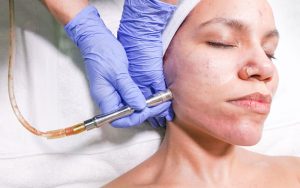
Exfoliation. Many facials include some exfoliation: perhaps an enzyme or acid product, a formulation with fine particles or, where the practitioner is trained and licensed for it, a professional mechanical method. Microdermabrasion, Dermaplaning and Dermabrasion: What Is the Difference? sets those apart. On skin that is irritated or compromised, the appropriate amount may be none, and more aggressive is not more effective. How Often Should You Exfoliate? covers why.
Extractions. Some facials include clearing congested pores, gloved, after the skin has been prepared. Not every skin needs them, and whether they are offered depends on the practitioner’s training and state license. If you would rather skip them, say so.
Masks. A mask may be chosen for what the skin needs that day. Some masks are brushed on, others are smoothed on, and sheet masks are placed over the skin. Face Masks: Which Type, and How Often? walks through the main types.
Massage. Where included, facial massage uses gentle pressure, and many people find it relaxing. Does Face Massage Do Anything? keeps expectations realistic. You can ask to leave it out.
Serums, moisturizer and sun protection. Products are applied one at a time, each according to its directions, and a daytime appointment usually finishes with sun protection.
How your skin may look afterward
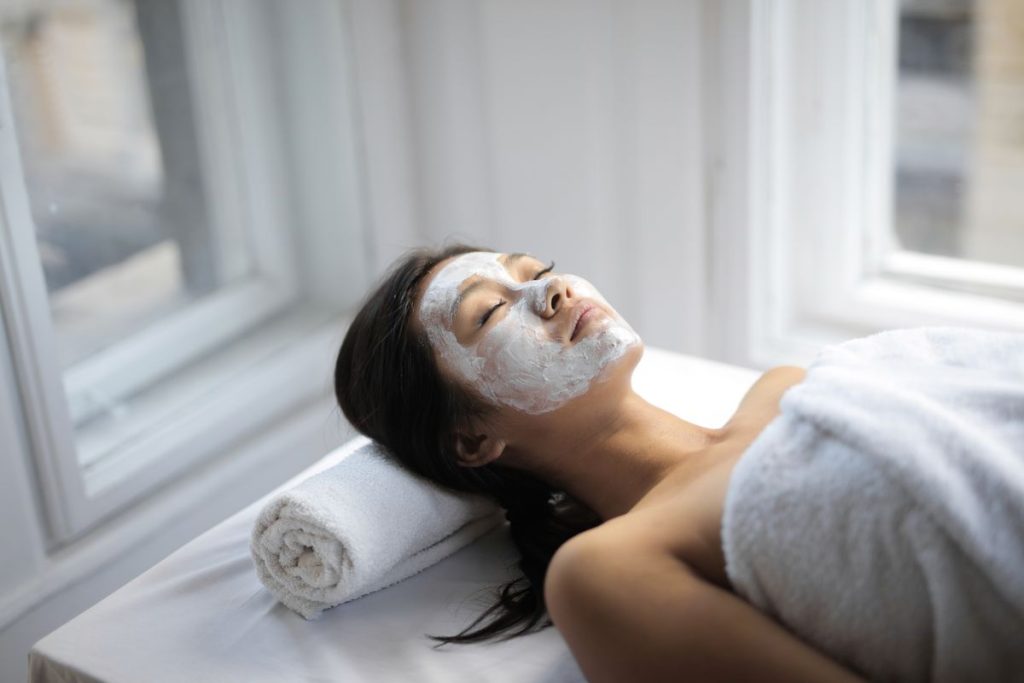
A thoughtful practitioner chooses treatments and products to keep visible redness and irritation to a minimum. Even so, how skin looks afterward varies with the person and the procedure: some people leave looking much as they arrived, while others notice temporary redness, particularly after more intensive treatments. Ask beforehand what to expect, including any downtime, and what to use at home afterward. Anything that concerns you is worth a call to the practitioner, and anything persistent or worrying belongs with a doctor.
Treatment products and home products
A facial can include products used only by trained practitioners, such as peels and other professional-strength exfoliants, alongside products that are also sold for home use. Practices differ, so it is reasonable to ask which products in your facial are professional-only and which you could use at home. A facial and your home routine work together, and your daily routine carries the day-to-day care. Choosing the person matters as much as choosing the treatment, and How to Choose an Aesthetician covers what to look for.
Victoria’s approach
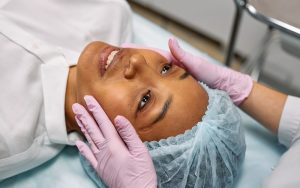
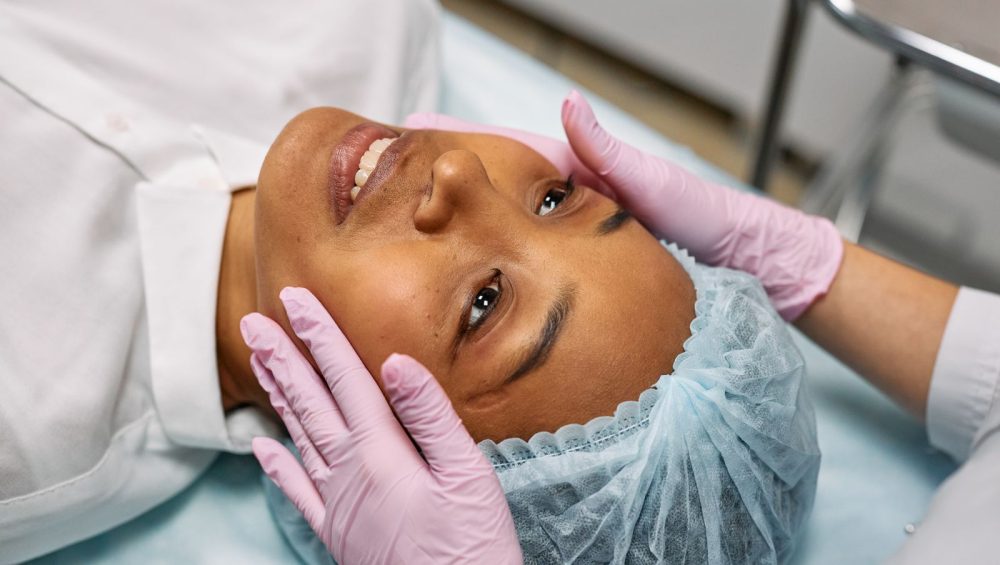
Victoria Nash, founder of Esenté Skincare, has been a licensed aesthetician since 2003. She also owns and operates Younger You Clinique and is an experienced skincare educator. She draws on her professional experience at Younger You Clinique when evaluating skincare products and their performance. Her approach to professional treatment is individualized, with treatments and products selected for each client’s skin and care taken to minimize visible redness and irritation. During treatments, Victoria wears gloves throughout and changes them as appropriate between treatment steps to help maintain careful hygiene and avoid cross-contamination. That is her own protocol; glove practices vary between practitioners, and state rules set their own requirements.
In one Younger You Clinique professional protocol, a serum is applied to the skin, a collagen mask is placed over it for approximately 20 to 30 minutes according to the treatment protocol, and the mask is removed. A different appropriate serum and a moisturizer may then follow. Each product is applied in sequence, never mixed together beforehand. This is a professional protocol at Younger You Clinique, not a home instruction. At Younger You Clinique, professional-strength peels and exfoliating treatments are among the products reserved for professional use. Many of the other skincare products used during treatments are also available for appropriate home use. If you have a question about what a facial involves before you book one, the Ask Victoria page is a good place to start.
Frequently asked questions
Usually a consultation, cleansing and a closer look at the skin, then components chosen for you, such as exfoliation, extractions, a mask, massage, serums and moisturizer. Not every facial includes every step.
What you use at home, including any retinoid or exfoliating formulations, prescription skincare or other medications, allergies or past reactions, recent procedures, and whether your skin is currently irritated or sunburned.
There is no universal interval. It depends on your skin, your goals, the type of treatment and how your skin responds. Ask your practitioner to explain any interval they suggest.
Some do and some do not, depending on your skin, the type of facial, the practitioner’s training and their state license. You can ask to skip them.
It depends on your skin and the treatment. Some people look much the same afterward, while others notice temporary redness. Ask what to expect before you book.
Some may be. At Younger You Clinique, for example, professional-strength peels and exfoliating treatments are among the products reserved for professional use, and many of the other skincare products used during treatments are also available for appropriate home use. Ask your practitioner which is which.
About the author. Victoria Nash, founder of Esenté Skincare, has been a licensed aesthetician since 2003. She also owns and operates Younger You Clinique and is an experienced skincare educator.
Reviewed by Victoria Nash, licensed aesthetician, founder of Esenté Skincare and owner of Younger You Clinique. This article is educational and is not medical advice. Ask your dermatologist or licensed skincare professional about products appropriate for your own skin and medical history.