

Short answer: The home tools that come up most often in a skincare routine are mask brushes, cosmetic spatulas and facial sponges, and they need the same basic care: wash with a gentle liquid soap, rinse thoroughly, let them dry properly, and follow the manufacturer’s instructions, which come first because materials differ. Keep your tools to yourself and replace them when they wear out. Small sterile gauze squares used for eye makeup removal are not cleaned and reused: they are discarded after use. Professional hygiene protocols in a treatment room are a separate subject from home care.
A minute after each use keeps most tools in good order.
Why clean tools matter
Every tool touches two things: your skin and your skincare. Whatever it picks up from one, it can carry to the other. A wet brush that goes back toward a jar, or a sponge left wet in a warm room, gives residue and moisture a place to sit.
A clean tool protects the products you chose for your skin, and the habit is easiest to keep when it happens straight after each use.
The basic home method
Check the instructions first. The manufacturer’s care instructions override general advice, especially for materials that may not tolerate soaking, heat or stronger cleaners.
Wash. Use a gentle liquid soap and lukewarm water, and work it into bristles and crevices where product collects.
Rinse thoroughly. Keep rinsing until no soap or product is left.
Dry properly. Let the tool dry in open air on a clean surface. A wet tool shut in a drawer or a zipped bag stays wet.
Store it clean. Keep dry tools away from steam and heat. The Bathroom Is the Worst Place to Store Skincare explains why the same logic applies to products.
Keep it yours. Do not share tools that touch your face or your products.
Mask brushes
Rinse a mask brush after each use, working a little gentle liquid soap through the bristles with your fingers until the water runs clear. Squeeze out the water gently, without wringing, and reshape the head. Dry it flat or with the bristles pointing down, so water does not sit where the bristles meet the handle.
The other half of mask-brush hygiene happens before you start. Do not dip the brush directly into the jar. Using a clean cosmetic spatula, remove the amount of mask needed and place it onto a clean, appropriate nonporous surface or container before loading the brush. How to Use a Mask Brush walks through the full method.
Cosmetic spatulas
Wash a spatula with gentle liquid soap and lukewarm water after each use, rinse it thoroughly and dry it properly before you put it away. Do not leave it sitting inside the jar between uses, where it stays in contact with the product. Use a clean spatula each time you take product from an open jar. The Spatula Rule covers choosing and using one.
Facial sponges
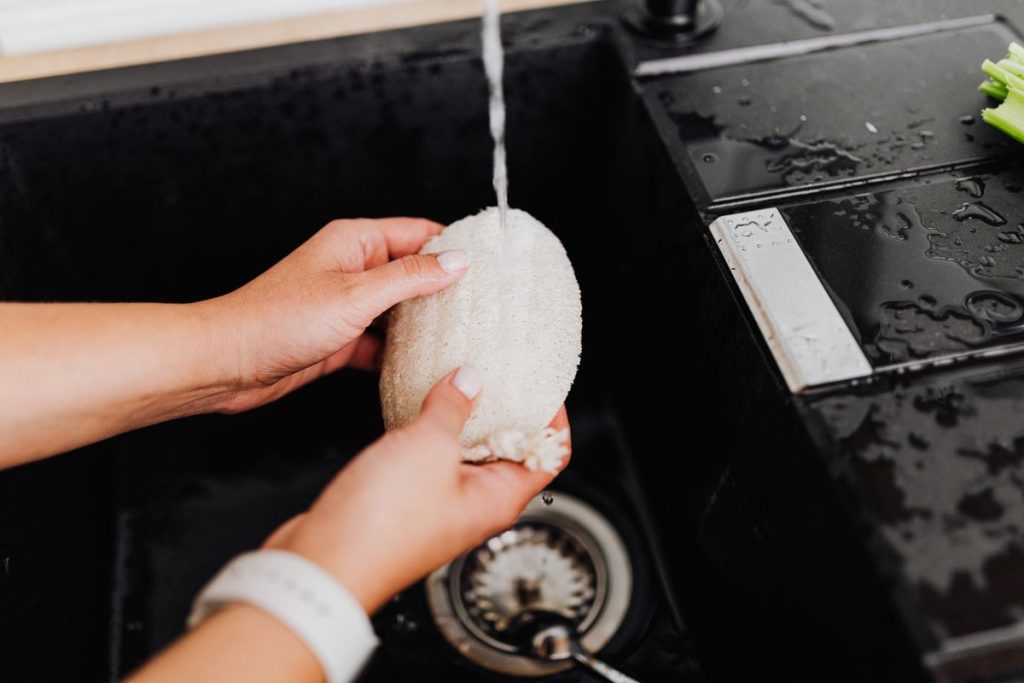
After each cleanse, rinse every trace of cleanser out of the sponge with lukewarm water. A little gentle liquid soap can help if cleanser or makeup is still visible, followed by thorough rinsing. Squeeze out the water gently, without wringing, and let the sponge dry fully in open air.
Replace a sponge according to the manufacturer’s instructions, and sooner if it tears, discolors, smells unpleasant or no longer rinses clean. Sponge, Gauze or Washcloth explains where a facial sponge fits in cleansing.
Gauze squares are discarded
Small sterile gauze squares used with an eye makeup remover are single-use. After you remove your eye makeup, throw each square away. There is nothing to wash, dry or store, and each use starts with a fresh square.
Other tools in your kit
Makeup brushes and sponges follow a similar method. Materials vary, so check the manufacturer’s instructions before using anything stronger than a gentle soap.
When to replace a tool
Some signs mean a tool has reached the end of its life:
- Bristles that shed or no longer return to shape.
- A sponge that tears, crumbles or keeps a smell after washing.
- Cracks, chips or rough edges on a spatula.
- A loose handle or a head that wobbles.
- Discoloration that stays after a proper wash.
There is no universal replacement interval. How often you use a tool, and how well you clean and dry it, decide how long it lasts.
Victoria’s approach
Victoria Nash, founder of Esenté Skincare, has been a licensed aesthetician since 2003. She also owns and operates Younger You Clinique and is an experienced skincare educator. She draws on her professional experience at Younger You Clinique when evaluating skincare products and their performance. For masks, Victoria prefers a mask brush rather than fingers, and a clean cosmetic spatula each time product is taken from an open jar. For facial cleansing she prefers professional facial sponges, and for eye makeup removal she uses small sterile gauze squares that are discarded after use. At home, leave-on products are applied with clean fingertips, following the directions for each product. In professional treatments at Younger You Clinique, she follows strict hygiene protocols, which are separate from home care.
The Esenté range includes the Face Mask Brush, an accessory in the Legacy Collection supplied by another company, and Professional Facial Sponges, also in the Legacy Collection and supplied by another company. They are two options among others that may suit you; for either, follow the manufacturer’s care instructions. If you have a question about keeping your routine hygienic, the Ask Victoria page is the place to send it.
Frequently asked questions
After each use. Work a little gentle liquid soap through the bristles with lukewarm water until the water runs clear, squeeze gently, reshape the head and let it dry flat or bristles down. Follow any care instructions from the brush’s manufacturer.
Rinse all the cleanser out after each use, squeeze out the water gently and let the sponge dry fully in open air. Replace it according to the manufacturer’s instructions, and sooner if it tears, discolors, smells unpleasant or no longer rinses clean.
No. Small sterile gauze squares used for eye makeup removal are discarded after use, so each time starts with a fresh square and there is nothing to wash or store.
A gentle liquid soap and thorough rinsing is the general approach for home tools. Some materials tolerate stronger cleaners and some do not, so check the manufacturer’s care instructions before using alcohol or anything else on a tool.
Keep tools that touch your face or your products to yourself. Sharing a brush, sponge or spatula means sharing whatever it has picked up.
When bristles shed or lose their shape, a sponge tears or keeps a smell, a spatula cracks or chips, or stains stay after washing. There is no universal interval; use and care decide how long a tool lasts.
About the author. Victoria Nash, founder of Esenté Skincare, has been a licensed aesthetician since 2003. She also owns and operates Younger You Clinique and is an experienced skincare educator.
Reviewed by Victoria Nash, licensed aesthetician, founder of Esenté Skincare and owner of Younger You Clinique. This article is educational and is not medical advice. Ask your dermatologist or licensed skincare professional about products appropriate for your own skin and medical history.