

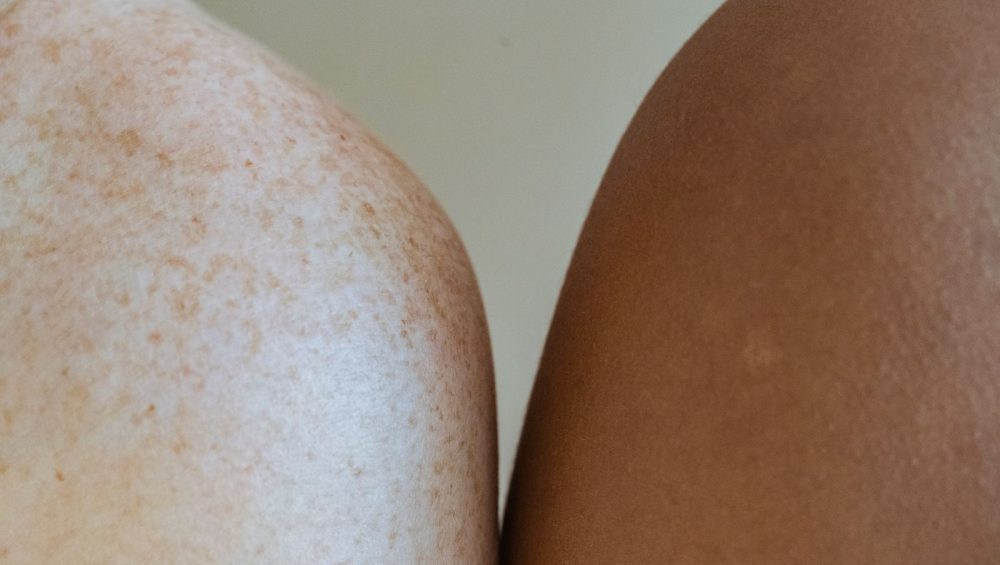
Short answer: Sun damage builds slowly and shows up as a collection of changes rather than one sign: uneven tone and flat brown spots, rough or leathery texture, fine lines that deepen into wrinkles, and a loss of firmness. It tends to collect where skin has had the most sun over the years, often the face, neck, chest, forearms and the backs of the hands. Skincare can improve the appearance of some of these changes over time, and consistent daily sun protection reduces new exposure. Any spot that is new, changing or unusual belongs with a dermatologist, not with a product.
Much of it appears years after the sun that caused it, which is why it can be mistaken for age alone.
The visible signs
These are common signs of long-term sun exposure. Many of them can also have other causes, so read this as a description, not a way to diagnose your own skin.
Uneven tone and spots. Flat tan or brown spots, often called sun spots or age spots, and a blotchy, uneven color across areas that have had years of sun. Dark Spots and Uneven Skin Tone covers the common kinds and what can improve their appearance.
Rough texture. Skin that feels coarse or leathery, especially on the forearms and backs of the hands.
Lines and wrinkles. Fine lines around the eyes and mouth that deepen over time.
Loss of firmness. Years of sun tend to reduce elasticity, so skin can look looser and more crepey, particularly on the neck and chest.
Where it tends to show
Sun damage tends to show where skin has had the most sun over the years. Time outdoors, shade, clothing and how consistently you protect exposed skin all play a part, and sunscreen is one piece of that picture.
Protection is often least consistent on the neck, chest, ears, forearms and backs of the hands. Hands are a good example: out in the sun while driving and gardening, and washed so often that morning sunscreen may not last the day. Why Hands Can Show Age So Easily covers what helps.
UVA can pass through some window glass, so long drives and sunny windows count toward the total. UVA vs UVB explains what each kind of ultraviolet light does.
Why it takes years to show
Most sun damage does not appear the week it happens. A tan is a sign that ultraviolet light has already affected your skin, and when the color fades, that exposure still counts. The changes build over years, so they tend to show later in life.

Prevention starts today
Daytime sun protection. Apply broad-spectrum sunscreen every morning to the face, neck, chest and any other exposed skin, including the backs of the hands. Reapply according to the label directions when you are outdoors. A Broad Spectrum sunscreen with SPF 15 or higher, used as directed with other sun protection measures, decreases the risk of skin cancer and early skin aging caused by the sun. Do You Need Sunscreen Every Day? makes the full case.
More than sunscreen. Shade, a wide-brimmed hat, sunglasses and clothing that covers the skin all reduce exposure. Sun Protection Beyond Sunscreen goes through each.
What can improve the look of existing damage
Improving how existing changes look is a slower job, and it can combine home care with professional treatments.
At home. Hydration can make rough, dry skin look smoother soon after you apply a moisturizer. Gentle exfoliation, used in a way that suits your skin, can help rough texture look more even; how often depends on your age, your skin and how it responds. Retinoid products and certain antioxidant products are commonly chosen for the appearance of fine lines, texture and uneven tone, with consistent use over time. Retinol is generally used at night. Follow your product’s directions, with daily broad-spectrum sunscreen as part of the routine.
In the clinic. Professional treatments are a separate class, selected and administered by qualified practitioners for the individual.
When to see a dermatologist
Any spot, patch or mole that is new, changing or unusual for you, and any sore that does not go away, should be seen by a dermatologist. If you have had a lot of sun over the years, ask a dermatologist how often your skin should be checked.
Victoria’s approach
Victoria Nash, founder of Esenté Skincare, has been a licensed aesthetician since 2003. She also owns and operates Younger You Clinique and is an experienced skincare educator. She draws on her professional experience at Younger You Clinique when evaluating skincare products and their performance. Her perspective on sun damage starts with prevention. In Victoria’s words: “The safest tan is from a bottle, not from the sky.” A cosmetic tan from a self-tanning product does not provide sun protection, so daytime sun protection still applies. As her own preventive practice, not a requirement for everyone, Victoria applies daily broad-spectrum sunscreen to the backs of her hands, and when driving she wears lightweight white linen gloves to help reduce continued sun exposure. For skin that already shows sun, her approach combines a consistent home skincare regimen with professional aesthetic treatments selected for the individual.
Esenté’s tone range includes the Even Tone Set, one example among other Esenté formulations that may suit, depending on your regimen. Esenté works with boutique manufacturers to develop and select formulations that meet the brand’s ingredient, performance and quality criteria. Separately, Esenté offers two sunscreens: Derma-Defense SPF 30 in the Legacy Skincare collection and Derma Defense Z-Cote SPF30 in the Elite Skincare collection. Both are labeled Broad Spectrum SPF 30. Follow the label directions for whichever you use, including reapplication. If you have questions about protecting skin that already shows sun, the Ask Victoria page is open.
Frequently asked questions
Common signs include uneven tone, flat brown spots, rough texture, fine lines, wrinkles and loss of firmness, mostly on skin that has had years of sun.
Skincare can improve the appearance of some signs, such as rough texture, fine lines and uneven tone, with consistent use over time, and professional treatments selected for you can add to that. Any spot that is new or changing should be seen by a dermatologist.
No. The color from a self-tanning product is cosmetic and does not provide sun protection. Keep up daytime sun protection, including broad-spectrum sunscreen applied and reapplied according to the label directions.
Flat sun spots tend to persist. Their appearance can improve gradually with consistent care, and daily sun protection helps protect against further exposure. A spot that changes, grows or looks different from the others should be seen by a dermatologist.
Both often get plenty of sun and less consistent protection than the face, and hands are washed often, so morning sunscreen wears off. Extend your sun protection to both.
About the author. Victoria Nash, founder of Esenté Skincare, has been a licensed aesthetician since 2003. She also owns and operates Younger You Clinique and is an experienced skincare educator.
Reviewed by Victoria Nash, licensed aesthetician, founder of Esenté Skincare and owner of Younger You Clinique. This article is educational and is not medical advice. Ask your dermatologist or licensed skincare professional about products appropriate for your own skin and medical history.