
Short answer: Both loosen the dead cells on the surface of your skin so they come away sooner. An enzyme peel uses fruit enzymes, usually from papaya or pineapple, that break down the protein holding dead cells in place. A chemical peel uses acids, such as glycolic, lactic or salicylic acid, that loosen the glue between the cells. Enzyme peels are often the gentler of the two, though individual tolerance varies. Acids can be gentle or strong depending on the type, the concentration and the pH. A third option, a physical exfoliant, does the same job with fine particles and a little friction.
Whichever you choose, the result people are after is the same: smoother, brighter-looking skin that reflects light better. Here is how to pick.
Why exfoliate at all
Skin renews itself constantly. New cells form at the bottom of the outer layer and move up, and old cells flake away at the top. When that shedding slows down, which it tends to do with age, dead cells build up. Skin looks dull, feels rough, and makeup and moisturizers sit on top instead of settling in.
Exfoliating helps the old cells leave on schedule. Done gently, it is one of the simplest ways to make skin look brighter. Done too hard or too often, it leaves skin red, tight and more sensitive than before. Why Skin Looks Dull covers the bigger picture.
Enzyme peels
Enzyme peels use proteins, most often papain from papaya or bromelain from pineapple, that break down other proteins. Dead skin cells are largely protein, so the enzymes soften them and help them come away. In practice they tend to be gentler on the living skin underneath.
What that means in practice: enzyme peels tend to be gentle and forgiving. They may be a gentler option for some sensitive skin, for anyone new to exfoliating, and for skin that reacts to acids, though individual tolerance varies and any new product is worth patch testing. They are usually applied as a mask, left on for a few minutes and rinsed off. They work at the surface and they do not generally cause the stinging that acids can.
The trade-off is that they are milder. Someone with thick, rough, sun-damaged skin may find an enzyme peel pleasant but not enough.
Chemical peels (acids)
“Chemical peel” covers a wide range, from a mild at-home serum to a professional treatment. The acids fall into two families.
Alpha hydroxy acids (AHAs) are water-soluble and work on the surface. Glycolic acid is the smallest molecule of the group and generally the most active; lactic acid is larger and is often considered gentler, though how any acid product behaves depends on the formulation and your own skin. What a Lactic Acid Peel Does looks at that one in detail.
Beta hydroxy acid (BHA), which in skincare means salicylic acid, is oil-soluble, which is why it is often chosen for oily and congested skin.
How much an acid product exfoliates depends on which acid it is, how much of it there is, and the pH of the product. A low pH makes the acid more active. The FDA notes that adverse reactions to AHA products are most often linked to the products that cause the greatest exfoliation, the high-strength “skin peelers.” For everyday use, the industry’s safety panel concluded that glycolic and lactic acid products are safe for consumers at concentrations of 10% or less, with a pH of 3.5 or higher, and with sun protection.
That last part matters. FDA research found that using an AHA cream for four weeks increased the skin’s sensitivity to sunburn by about 18%, and that the effect went away about a week after stopping. If you use an acid, you wear sunscreen. This is the reason many acid products carry a sunburn alert on the label.
Physical exfoliants
The third category is the oldest: a fine particle and a little friction. Sugar, jojoba beads, and mineral particles all do this. The results depend on the particle. Fine, rounded particles polish; coarse or jagged ones scratch. Applied gently with light pressure, a physical exfoliant is quick and effective. Scrubbed hard, any exfoliant becomes a problem.
At home versus in a clinic
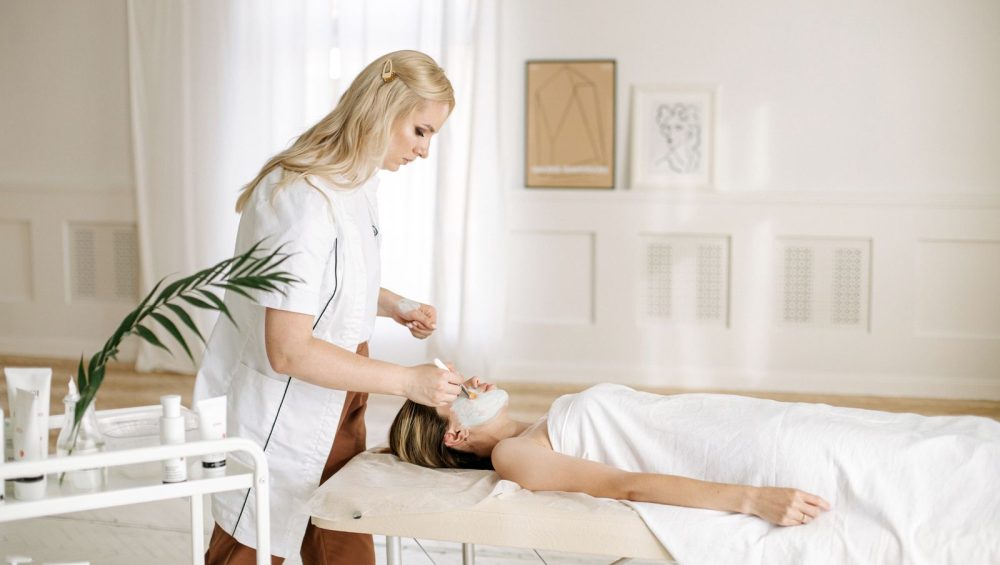
The products you buy for home use are designed to be used without supervision. Professional peels are a separate category, and the difference is not simply a bigger number on the label. Formulations, strengths, pH and treatment protocols can all differ, and professional treatments are selected and administered by qualified, licensed practitioners who assess your skin first. If you are considering a professional peel, that is a conversation with a licensed provider, not something to attempt from a bottle.
Esenté supplies professional peels as well as its retail range. Those are professional-only products, supplied to approved licensed professionals, and are not available for retail purchase.
Which one might suit you
These are general considerations, not rules. Suitability depends on the complete formulation and on your own skin, and a patch test tells you more than any list.
- Sensitive or reactive skin, or new to exfoliating: an enzyme peel may be a gentler place to start.
- Dull, dry or sun-damaged skin: a mild AHA may suit; lactic acid is often considered one of the gentler options.
- Oily or congested skin: a BHA may suit.
- You like a quick, tactile result: a fine physical exfoliant, used gently, may suit.
Whatever you choose, follow the directions on the product for how often to use it, and use sunscreen every morning. Using an exfoliating acid and a retinol on the same night can increase irritation for some people, so take care with the combination and follow the directions for each product.
Victoria’s approach
Victoria Nash, founder of Esenté Skincare and Younger You Clinique, has been a licensed aesthetician since 2004 and is an experienced skincare educator. She draws on her professional experience at Younger You Clinique when evaluating skincare products and their performance.
Esenté offers more than one route to exfoliation. The Liposome Alpha-Beta Serum is an 8% AHA/BHA serum. The Oligo-Peel Exfoliation Crème is a rinse-off exfoliating crème with fine particles, which the product directions describe as suitable for all skin types including sensitive. The Very Berry Exfoliating Cleanser is a cleanser with exfoliation built in. Esenté products are developed collaboratively by our management team and our professional formulation and manufacturing partners, and are manufactured exclusively in the USA.
In the Esenté routine, a toner or antioxidant spray follows every cleanse. Not sure which type suits your skin? The Ask Victoria page is there for that.
Frequently asked questions
Neither is better as a category. Enzyme peels are often gentler and may suit some sensitive skin. Acid peels can be gentle or strong depending on the acid, the concentration and the pH, and may suit dull, sun-damaged or oily skin. Individual tolerance varies.
Often, yes. Enzyme peels may be a gentler option for some sensitive skin because they tend to be mild and rarely sting, but tolerance varies from person to person. Patch test any new product.
Follow the directions on the product you are using. More is not better; over-exfoliated skin is red, tight and more sensitive.
You need sunscreen every day regardless. AHA products in particular carry a specific sun-protection consideration: FDA research found increased sensitivity to sunburn during use, lasting about a week after stopping.
More than strength. Home products are formulated to be used without a professional. Professional peels are a separate professional-use category: formulations, strengths, pH and treatment protocols can differ, and they are selected and administered by qualified, licensed practitioners. They are not interchangeable.
With care. Combining exfoliating acids and retinol can increase irritation for some people. Many people alternate them on different nights. Follow the directions for each product, and ease off if your skin becomes red or sore.
About the author. Victoria Nash, founder of Esenté Skincare and Younger You Clinique, has been a licensed aesthetician since 2004 and is an experienced skincare educator.
Reviewed by Victoria Nash, licensed aesthetician and founder of Esenté Skincare & Younger You Clinique. This article is educational and is not medical advice. Ask your dermatologist or licensed skincare professional about products appropriate for your own skin and medical history.