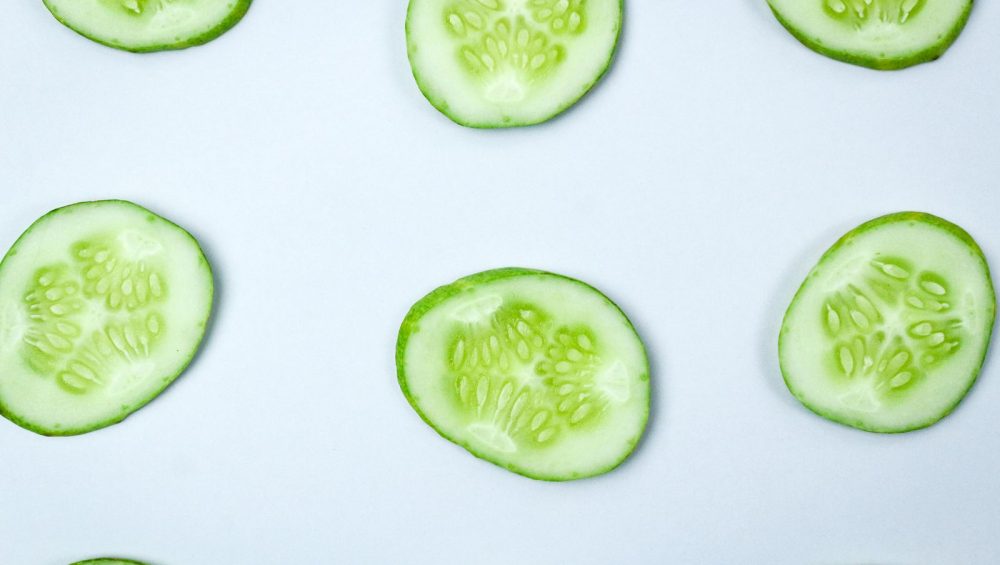
Short answer: A cucumber mask cools, calms and hydrates the surface of the skin. That is a real and pleasant effect, and it is why cucumber has been on faces for generations. What it does not do is shrink pores, erase dark circles or feed the skin with special nutrients. Cucumber is more than 95% water. Its gift is coolness and moisture. A well-made cucumber mask is a complete formulation that builds on that with other functional ingredients, which is a different thing from a slice.
Here is what is actually happening when your face feels wonderful under one.
Why cucumber feels so good
Three things are going on.
It is cold. A cucumber from the fridge, or a mask kept cool, lowers the temperature of the skin’s surface. That calms the feeling of heat and helps puffiness look less obvious for a while, the same way a cool cloth does.
It is wet. Cucumber is mostly water. Resting it on the skin, or spreading a water-rich mask over it, puts moisture at the surface where dry, tight skin wants it.
It is soothing. Cucumber extract is commonly used in soothing skincare formulations, and most cucumber masks are built around other calming ingredients too: aloe, glycerin, plant extracts. Whether the result feels comfortable on your skin depends on the complete formulation and on your own skin, not on the cucumber alone.
That is the whole mechanism, and it is enough.
What a cucumber mask cannot do
It does not shrink pores. Pore size is largely set by your skin. Cooling can make them look tighter for a short while; nothing in a cucumber changes them.
It does not remove dark circles. Under-eye darkness comes from thin skin, blood vessels showing through, pigment and shadow. A cool slice can reduce the look of puffiness for a while. The color stays.
It does not “nourish” the skin from outside. Cucumber contains vitamins in the way any vegetable does, but there is no good evidence that those vitamins do anything in particular once a slice is resting on your cheek. Eat the cucumber for the vitamins. Wear it for the cool.
None of this makes a cucumber mask a gimmick. It makes it exactly what it is: a soothing, hydrating mask that feels lovely and leaves skin calmer and softer. Set your expectations there and you will be happy with it.
Slices versus a mask
A slice of cucumber is free and offers coolness and water for about ten minutes, until it warms up and dries out. A cucumber mask is a different thing: a complete formulation in which cucumber extract sits alongside other functional ingredients, each doing its own job, in a base designed to hold water on the skin and stay comfortable for the time the directions give. It also has a preservative system, which a slice does not, so it is safer to keep on a shelf.
If you want a quick fix after a long day, the slice is fine. If you want a product formulated to calm and hydrate, that is what the mask is for.
Who cucumber masks may suit
That depends on the finished product rather than on cucumber. Cucumber masks are often formulated for sensitive, easily reddened skin, for dry and tight skin, and for skin that has had too much sun or wind, and lighter versions are often comfortable on oilier skin. Whether a particular mask suits you comes down to its complete formulation and your own skin. Check the product’s own description, and patch test if you are prone to reactions or have a known allergy to cucumber or to any other ingredient in it.
How to use one
Cleanse first. Apply a thin, even layer; a mask brush makes this easy and keeps fingers out of the jar. Leave it on for as long as the directions say, then rinse with lukewarm water. Follow with your toner or antioxidant spray and a moisturizer to keep the water the mask put there. How to Use a Mask Brush has the technique.
How often? Follow the product’s directions. Hydrating masks are generally formulated to be mild, and many people use one whenever their skin feels tired, but the label is the guide.
Victoria’s approach
Victoria Nash, founder of Esenté Skincare and Younger You Clinique, has been a licensed aesthetician since 2004 and is an experienced skincare educator. She draws on her professional experience at Younger You Clinique when evaluating skincare products and their performance.
Esenté’s Hydrating Cucumber Mask combines cucumber and melon extracts in a rinse-off mask; its directions call for a thin film on clean skin, left for seven to ten minutes, and describe it as suitable for all skin types and ages, including sensitive. It was developed collaboratively by Victoria Nash with Esenté’s professional formulation and manufacturing partners, with Victoria providing product direction, ingredient research, professional-use feedback and performance requirements. Esenté also offers a Professional Face Mask Brush, and applying with a clean tool keeps fingers out of the jar. Questions about how it fits your routine can go to the Ask Victoria page.
Frequently asked questions
What does a cucumber face mask do?
It cools, calms and hydrates the skin’s surface. Skin feels softer and less tight, and puffiness looks reduced for a while. It does not change pores, dark circles or the structure of the skin.
Is cucumber good for your face?
Yes, as a soothing and hydrating ingredient. Cucumber is more than 95% water. Its benefit is moisture and coolness, not nutrition.
Does cucumber remove dark circles?
No. A cool slice can reduce the look of puffiness for a short time. The darkness itself comes from thin skin, blood vessels and pigment, which cucumber does not affect.
How long should I leave a cucumber mask on?
Follow the directions on the product. Esenté’s Hydrating Cucumber Mask, for example, directs seven to ten minutes.
Can I use a cucumber mask every day?
Hydrating masks are generally formulated to be mild, and many people use them often. Check the product’s directions and let your skin guide you.
Is a cucumber mask better than cucumber slices?
They are different things. A slice is a fine ten-minute source of coolness and water. A formulated mask is a complete product: cucumber extract alongside other functional ingredients, in a base designed to stay on the skin, with a preservative system for shelf life.
About the author. Victoria Nash, founder of Esenté Skincare and Younger You Clinique, has been a licensed aesthetician since 2004 and is an experienced skincare educator.
Reviewed by Victoria Nash, licensed aesthetician and founder of Esenté Skincare & Younger You Clinique. This article is educational and is not medical advice. Ask your dermatologist or licensed skincare professional about products appropriate for your own skin and medical history.
Short answer: Seaweed is a useful skincare ingredient, though not for the reasons the marketing usually gives. Its real strengths are practical. “Seaweed” covers many different algae and extracts, and many seaweed-derived ingredients have useful water-binding, film-forming or texture-giving properties, though what any of them does depends on the specific ingredient and the finished formula. The bigger claims, about detoxifying the skin, are ahead of the evidence. Judge a seaweed product the way you would judge any other: on the whole formula.
That is the honest version. Here is the longer one.
What “seaweed” means on a label
Seaweed is not one thing. It is a broad name for thousands of marine algae, grouped loosely by color: brown, red and green. Different types give skincare different ingredients.
Brown seaweeds, such as kelp, wakame and bladderwrack, are the source of alginate, a thickener you will find in everything from face masks to ice cream, and of a group of sugar-like compounds that hold water well. On a label you may see names such as Laminaria, Undaria pinnatifida, Fucus or Macrocystis.
Red seaweeds give us carrageenan, another thickener and film-former, and various extracts sold as Chondrus crispus or Asparagopsis.
Green seaweeds and microalgae appear as Ulva, Chlorella and Spirulina, and as sources of pigments and antioxidants. Astaxanthin, a red-orange antioxidant pigment, comes from a microalga.
So “seaweed skincare” might mean a hydrating gel built on alginate, a mask thickened with carrageenan, or an antioxidant serum using an algal pigment. Those are quite different products.
What seaweed actually does in a formula
It can help hold water. This is the most common reason seaweed-derived ingredients are used. The long sugar chains in many seaweed extracts are humectants: they attract water and help keep it at the skin’s surface. A gel or mask built on them often feels cool and hydrating for exactly this reason. How much of that you feel depends on the specific extract and on the rest of the formula.
It gives texture. Alginate and carrageenan are what make a mask set, a gel feel bouncy, and a cream feel cushioned. That is not a skin benefit, but it is part of why seaweed products feel pleasant, and feel is part of whether you keep using something.
It is often used in soothing formulas. Many products aimed at calming the skin include seaweed-derived ingredients alongside the hydration. Whether a given product feels soothing on your skin depends on the complete formulation, not on the seaweed alone.
Some algal compounds show antioxidant activity. That activity has mostly been demonstrated in the laboratory, on the compounds themselves, rather than in trials on people’s faces. Antioxidants in a formula can help protect the formula itself. Whether a finished product delivers an antioxidant benefit to the skin depends on the ingredient, the formulation and the evidence behind that specific product, so treat “powerful antioxidant” on a label as a claim to check rather than a given.
What the marketing says that the evidence does not
“Detoxifying.” Skin does not store toxins in a way a mask can pull out. What a “detoxifying” product usually delivers is a clearer-looking surface: a mask that sets lifts surface oil and debris away as it comes off. That is a real, visible result. The word is simply bigger than the mechanism.
“Ocean minerals feed the skin.” Seaweed is rich in minerals, and mineral-rich formulas can feel hydrating and comfortable on the skin. Claims that go beyond that, about feeding or nourishing the skin from outside, are ahead of the evidence.
“Marine collagen.” This usually means collagen from fish, not seaweed, and it is a different topic entirely. Do Collagen Supplements Work? covers it.
Who seaweed products may suit
That depends on the whole product rather than on the seaweed. A light seaweed-based gel may suit dehydrated or oilier skin that wants hydration without weight; a richer seaweed-containing cream may suit drier skin; a cooling mask may appeal to anyone who likes that texture after a day in the sun or the wind. In each case it is the complete formulation, including everything else in the bottle, that decides whether it suits dry, sensitive, dehydrated or oily skin. The caution is the same as for any botanical: if you have a known sensitivity, patch test first.
How to judge one
Look for the seaweed named properly on the ingredient list, not just “marine extract.” Look at what else is in the formula, because the seaweed is usually one part of a hydrating team alongside glycerin or hyaluronic acid. Look at the packaging. And look for a description of what the product does in plain terms. How to Read a Skincare Ingredient List helps.
Victoria’s approach
Victoria Nash, founder of Esenté Skincare and Younger You Clinique, has been a licensed aesthetician since 2004 and is an experienced skincare educator. Victoria draws on her professional experience at Younger You Clinique when evaluating skincare products and their performance.
On the Esenté shelf, the Marine Plus Cleanser and the Red Volcanic Seaweed Complex carry the marine theme in their names, and the Hydrating Cucumber Mask lists Japanese kelp among its ingredients. All are developed collaboratively by our management team and our professional formulation and manufacturing partners, and are manufactured exclusively in the USA.
If you want to know which one fits your skin, the Ask Victoria page is the place.
Frequently asked questions
Is seaweed good for your skin?
It can be, in a practical way. Many seaweed-derived ingredients help bind water, give products a pleasant texture, and are used in soothing formulas. What any one of them does depends on the specific extract and the finished product. Claims about detoxing go beyond what the evidence supports.
What does seaweed do in skincare?
Mostly it helps hydrate the skin’s surface and gives the product its texture. Some algal compounds show antioxidant activity, though most of that evidence is from the laboratory.
Is seaweed good for acne-prone skin?
A seaweed-containing product may suit oily or blemish-prone skin if its complete formulation is light and non-greasy; the seaweed on its own does not decide that. Seaweed products do not treat acne. Acne is a medical condition; persistent breakouts belong with a dermatologist.
Can seaweed skincare cause a reaction?
Any botanical can. Patch test if you have sensitive skin or known allergies.
Is marine collagen the same as seaweed?
No. Marine collagen usually comes from fish. Seaweed contains no collagen.
Does a seaweed mask detox skin?
Not in the literal sense; skin does not store toxins for a mask to remove. What a purifying mask does is hydrate the surface and, if it sets, lift surface oil and debris away when it comes off, which leaves skin looking clearer.
About the author. Victoria Nash, founder of Esenté Skincare and Younger You Clinique, has been a licensed aesthetician since 2004 and is an experienced skincare educator.
Reviewed by Victoria Nash, licensed aesthetician and founder of Esenté Skincare & Younger You Clinique. This article is educational and is not medical advice. Ask your dermatologist or licensed skincare professional about products appropriate for your own skin and medical history.
Short answer: Lactic acid is often considered one of the gentler members of the alpha hydroxy acid family. It loosens the dead cells on the skin’s surface so they shed sooner, and, unlike most exfoliants, it also attracts water, so it hydrates while it exfoliates. That combination is why it may be a gentler option for some people with dry, sensitive or mature skin, though how any acid product behaves depends on the formulation and your own tolerance. It works at the surface, it needs sunscreen alongside it, and it does not need to sting to be working.
Lactic acid has been used on skin for a very long time; the milk-bath stories are about it. Here is what it does in plain terms, and what it does not.
What lactic acid is
Lactic acid is an alpha hydroxy acid, or AHA, the same family as glycolic acid. It occurs naturally in sour milk and in your own body. Skin, in fact, makes and uses lactic acid: it is one of the components of the skin’s own natural moisturizing factor, the mix of substances in the outer layer that holds water.
Compared with glycolic acid, lactic acid is a bigger molecule. Glycolic is the smallest of the AHAs, and it is generally the most active and the most likely to sting. Lactic is larger and is often gentler at the surface, though the formulation, the strength and the pH matter as much as the acid itself. For a lot of people, that gentler profile is exactly the point.
What it does
It helps dead cells let go. Old cells at the surface are held together by a kind of glue. Lactic acid loosens that glue, so the cells shed in an orderly way instead of piling up. The result is skin that looks brighter and feels smoother. Why Skin Looks Dull explains why that buildup makes skin look flat.
It attracts water. This is a quality lactic acid is particularly known for. It is a humectant, so it draws water into the surface of the skin. That is why a lactic acid product often leaves skin feeling softer rather than tight, and why it is often chosen for drier skin.
It can help the look of uneven tone. By speeding up the shedding of surface cells, AHAs can improve the appearance of dullness and surface unevenness over weeks. The FDA lists smoothing fine lines and surface wrinkles, improving skin texture and tone, and unblocking pores among the purposes AHA products are marketed for, and notes that the amount of exfoliation depends on the acid, its concentration, the pH and the other ingredients.
What it does not do
At the strengths sold for home use, it works on the surface. It does not change what the skin is made of underneath. It will not remove wrinkles or undo sun damage. What it does is make the surface look and feel better, which is worth having and is the honest claim.
It also does not need to hurt. A mild tingle for a few seconds is common. Burning, lasting redness or peeling means the product is too strong for your skin or you are using it too often. Discomfort is not evidence that a product is working.
Strength and pH
Two numbers decide how strong a lactic acid product is: the percentage, and the pH. A lower pH makes the acid more active. That is why two products with the same percentage can feel completely different.
For products you use at home, the industry’s safety panel concluded that glycolic and lactic acid are safe for consumers at 10% or less, at a pH of 3.5 or higher, with sun protection. Professional peels are a separate professional-use category, and the difference is not simply a higher concentration. Formulations, strengths, pH and treatment protocols can all differ, and professional peels are selected and administered by qualified, licensed practitioners who assess the skin first. Esenté supplies professional peels to approved licensed professionals only; they are not available for retail purchase.
A brand that tells you how strong its product is intended to feel, and how to introduce it, is giving you something useful, whether or not it publishes the exact numbers.
Sunscreen is part of the deal
AHAs carry a specific sun-protection consideration. FDA research found that four weeks of AHA cream use increased sensitivity to sunburn by about 18%, and that the effect faded about a week after stopping. That is why the FDA recommends a sunburn alert on AHA product labels, and why a lactic acid product and a morning sunscreen go together. Do You Need Sunscreen Every Day? makes the case.
How to use one
Apply to clean, dry skin, usually in the evening. Start with a low percentage and use it as often as the directions say, not more. Follow with a moisturizer. Using an exfoliating acid and retinol on the same night can increase irritation for some people, so take care with that combination and follow the directions for each product. Avoid layering several separate exfoliating products on top of one another; a professionally formulated product that contains more than one acid is a different matter from stacking three bottles. If you also use a scrub or an enzyme peel, go gently and do not pile them up. Enzyme Peel vs Chemical Peel helps you choose one lane.
Victoria’s approach
Victoria Nash, founder of Esenté Skincare and Younger You Clinique, has been a licensed aesthetician since 2004 and is an experienced skincare educator. She draws on her professional experience at Younger You Clinique when evaluating skincare products and their performance.
Esenté’s hydroxy-acid serum is the Liposome Alpha-Beta Serum, an 8% AHA/BHA serum, developed collaboratively by our management team and our professional formulation and manufacturing partners, and manufactured exclusively in the USA. In the Esenté routine, a toner or antioxidant spray follows every cleanse.
If you are choosing between acids for your own skin, the Ask Victoria page is there for you.
Frequently asked questions
What does a lactic acid peel do?
It loosens dead cells at the skin’s surface so they shed sooner, and it draws water into the surface. Skin looks brighter and feels smoother and softer. It works at the surface only.
Is lactic acid better than glycolic acid?
Neither is better as a category. Lactic acid is a larger molecule, often gentler, and also hydrating, which is why it is frequently chosen for drier or more sensitive skin. Glycolic is smaller and generally more active, so it is often chosen where more exfoliation is wanted. Formulation, strength, pH and your own tolerance matter more than the name of the acid.
Can sensitive skin use lactic acid?
Often, yes, at a low percentage. It may be a gentler option for some sensitive skin, but tolerance varies. Patch test, start slowly, and stop if you see lasting redness.
Should lactic acid sting?
A brief tingle is common. Burning or lasting redness is not, and means the product is too strong or being used too often.
Do I need sunscreen with lactic acid?
Yes. AHAs carry a specific sun-protection consideration: FDA research found increased sensitivity to sunburn during use, lasting about a week after you stop. Wear broad-spectrum sunscreen every morning.
Can I use lactic acid with retinol?
With care. Combining exfoliating acids and retinol can increase irritation for some people, and many people alternate them on different nights. Follow the directions for each product, and let your skin tell you how often.
About the author. Victoria Nash, founder of Esenté Skincare and Younger You Clinique, has been a licensed aesthetician since 2004 and is an experienced skincare educator.
Reviewed by Victoria Nash, licensed aesthetician and founder of Esenté Skincare & Younger You Clinique. This article is educational and is not medical advice. Ask your dermatologist or licensed skincare professional about products appropriate for your own skin and medical history.
Short answer: Both loosen the dead cells on the surface of your skin so they come away sooner. An enzyme peel uses fruit enzymes, usually from papaya or pineapple, that break down the protein holding dead cells in place. A chemical peel uses acids, such as glycolic, lactic or salicylic acid, that loosen the glue between the cells. Enzyme peels are often the gentler of the two, though individual tolerance varies. Acids can be gentle or strong depending on the type, the concentration and the pH. A third option, a physical exfoliant, does the same job with fine particles and a little friction.
Whichever you choose, the result people are after is the same: smoother, brighter-looking skin that reflects light better. Here is how to pick.
Why exfoliate at all
Skin renews itself constantly. New cells form at the bottom of the outer layer and move up, and old cells flake away at the top. When that shedding slows down, which it tends to do with age, dead cells build up. Skin looks dull, feels rough, and makeup and moisturizers sit on top instead of settling in.
Exfoliating helps the old cells leave on schedule. Done gently, it is one of the simplest ways to make skin look brighter. Done too hard or too often, it leaves skin red, tight and more sensitive than before. Why Skin Looks Dull covers the bigger picture.
Enzyme peels
Enzyme peels use proteins, most often papain from papaya or bromelain from pineapple, that break down other proteins. Dead skin cells are largely protein, so the enzymes soften them and help them come away. In practice they tend to be gentler on the living skin underneath.
What that means in practice: enzyme peels tend to be gentle and forgiving. They may be a gentler option for some sensitive skin, for anyone new to exfoliating, and for skin that reacts to acids, though individual tolerance varies and any new product is worth patch testing. They are usually applied as a mask, left on for a few minutes and rinsed off. They work at the surface and they do not generally cause the stinging that acids can.
The trade-off is that they are milder. Someone with thick, rough, sun-damaged skin may find an enzyme peel pleasant but not enough.
Chemical peels (acids)
“Chemical peel” covers a wide range, from a mild at-home serum to a professional treatment. The acids fall into two families.
Alpha hydroxy acids (AHAs) are water-soluble and work on the surface. Glycolic acid is the smallest molecule of the group and generally the most active; lactic acid is larger and is often considered gentler, though how any acid product behaves depends on the formulation and your own skin. What a Lactic Acid Peel Does looks at that one in detail.
Beta hydroxy acid (BHA), which in skincare means salicylic acid, is oil-soluble, which is why it is often chosen for oily and congested skin.
How much an acid product exfoliates depends on which acid it is, how much of it there is, and the pH of the product. A low pH makes the acid more active. The FDA notes that adverse reactions to AHA products are most often linked to the products that cause the greatest exfoliation, the high-strength “skin peelers.” For everyday use, the industry’s safety panel concluded that glycolic and lactic acid products are safe for consumers at concentrations of 10% or less, with a pH of 3.5 or higher, and with sun protection.
That last part matters. FDA research found that using an AHA cream for four weeks increased the skin’s sensitivity to sunburn by about 18%, and that the effect went away about a week after stopping. If you use an acid, you wear sunscreen. This is the reason many acid products carry a sunburn alert on the label.
Physical exfoliants
The third category is the oldest: a fine particle and a little friction. Sugar, jojoba beads, and mineral particles all do this. The results depend on the particle. Fine, rounded particles polish; coarse or jagged ones scratch. Applied gently with light pressure, a physical exfoliant is quick and effective. Scrubbed hard, any exfoliant becomes a problem.
At home versus in a clinic
The products you buy for home use are designed to be used without supervision. Professional peels are a separate category, and the difference is not simply a bigger number on the label. Formulations, strengths, pH and treatment protocols can all differ, and professional treatments are selected and administered by qualified, licensed practitioners who assess your skin first. If you are considering a professional peel, that is a conversation with a licensed provider, not something to attempt from a bottle.
Esenté supplies professional peels as well as its retail range. Those are professional-only products, supplied to approved licensed professionals, and are not available for retail purchase.
Which one might suit you
These are general considerations, not rules. Suitability depends on the complete formulation and on your own skin, and a patch test tells you more than any list.
Sensitive or reactive skin, or new to exfoliating: an enzyme peel may be a gentler place to start.
Dull, dry or sun-damaged skin: a mild AHA may suit; lactic acid is often considered one of the gentler options.
Oily or congested skin: a BHA may suit.
You like a quick, tactile result: a fine physical exfoliant, used gently, may suit.
Whatever you choose, follow the directions on the product for how often to use it, and use sunscreen every morning. Using an exfoliating acid and a retinol on the same night can increase irritation for some people, so take care with the combination and follow the directions for each product.
Victoria’s approach
Victoria Nash, founder of Esenté Skincare and Younger You Clinique, has been a licensed aesthetician since 2004 and is an experienced skincare educator. She draws on her professional experience at Younger You Clinique when evaluating skincare products and their performance.
Esenté offers more than one route to exfoliation. The Liposome Alpha-Beta Serum is an 8% AHA/BHA serum. The Oligo-Peel Exfoliation Crème is a rinse-off exfoliating crème with fine particles, which the product directions describe as suitable for all skin types including sensitive. The Very Berry Exfoliating Cleanser is a cleanser with exfoliation built in. Esenté products are developed collaboratively by our management team and our professional formulation and manufacturing partners, and are manufactured exclusively in the USA.
In the Esenté routine, a toner or antioxidant spray follows every cleanse. Not sure which type suits your skin? The Ask Victoria page is there for that.
Frequently asked questions
Is an enzyme peel better than a chemical peel?
Neither is better as a category. Enzyme peels are often gentler and may suit some sensitive skin. Acid peels can be gentle or strong depending on the acid, the concentration and the pH, and may suit dull, sun-damaged or oily skin. Individual tolerance varies.
Can sensitive skin use an enzyme peel?
Often, yes. Enzyme peels may be a gentler option for some sensitive skin because they tend to be mild and rarely sting, but tolerance varies from person to person. Patch test any new product.
How often should I exfoliate?
Follow the directions on the product you are using. More is not better; over-exfoliated skin is red, tight and more sensitive.
Do I need sunscreen after an enzyme peel?
You need sunscreen every day regardless. AHA products in particular carry a specific sun-protection consideration: FDA research found increased sensitivity to sunburn during use, lasting about a week after stopping.
What is the difference between an at-home peel and a professional peel?
More than strength. Home products are formulated to be used without a professional. Professional peels are a separate professional-use category: formulations, strengths, pH and treatment protocols can differ, and they are selected and administered by qualified, licensed practitioners. They are not interchangeable.
Can I use an exfoliant and retinol together?
With care. Combining exfoliating acids and retinol can increase irritation for some people. Many people alternate them on different nights. Follow the directions for each product, and ease off if your skin becomes red or sore.
About the author. Victoria Nash, founder of Esenté Skincare and Younger You Clinique, has been a licensed aesthetician since 2004 and is an experienced skincare educator.
Reviewed by Victoria Nash, licensed aesthetician and founder of Esenté Skincare & Younger You Clinique. This article is educational and is not medical advice. Ask your dermatologist or licensed skincare professional about products appropriate for your own skin and medical history.
Short answer: Yes. Retinol is a fragile ingredient. Light, air and heat all break it down, and once it has broken down, it does less. An unopened product in packaging designed to protect it from light and air keeps well. An opened one in a clear bottle on a sunny bathroom shelf may be losing strength every week. If yours has noticeably changed color, smell or texture since you bought it, that is a reason to stop using it and check with the manufacturer.
That is the useful part. The rest of this article explains why, what the symbols on the packaging mean, and how to make a retinol product last.
Why retinol goes off
Retinol is a form of vitamin A, and vitamin A is fragile. Three things attack it.
Light. Ultraviolet light in particular breaks retinol down. This is one reason retinol is generally used at night and why sensible retinol products come in opaque or dark packaging.
Air. Oxygen reacts with retinol over time. Every time you open any container you let fresh air in; closing it promptly, and keeping fingers out of it, limits the damage.
Heat. Warmth speeds up every chemical reaction, including the ones that degrade retinol. A hot car, a steamy bathroom and a sunny windowsill are all bad places for it.
None of this is unique to one brand. It is the chemistry of the ingredient, and packaging is where a formula is protected from it.
What the dates and symbols mean
In the United States there is no law that requires a cosmetic to carry an expiration date. The FDA leaves shelf life to the manufacturer. So a retinol serum may have a date printed on it, or it may not, and either is legal.
Sunscreens and acne products are a different case. Those are regulated as drugs, and the FDA’s guidance for consumers says drug products must be tested for stability and carry an expiration date. If your retinol product is also an SPF, expect to find one.
Many products carry a small open-jar symbol with a number and the letter M inside it, such as 6M or 12M. That is the manufacturer’s guidance on how many months to use the product after opening. It is a reasonable guide, and it assumes normal storage. A product kept in heat and light will not last as long as the symbol suggests.
The FDA’s own advice on shelf life is worth repeating in plain terms: heat can break down preservatives and let bacteria and fungi grow faster, dipping fingers into a product adds microorganisms, and exposure to sunlight and air can change a product’s color, texture and smell.
How to tell if your retinol has gone off
Use your eyes and nose. None of these signs is proof on its own, but a significant or unexpected change is a good reason to stop using the product and check with the manufacturer.
Color. Many retinol products start out pale. If yours has darkened noticeably since you bought it, toward yellow, orange or brown, that can be a sign the retinol is breaking down.
Smell. A sharp, off or rancid smell that was not there at the start can mean the formula is changing.
Texture. Separation, a watery layer on top, or a texture that has thickened or thinned can mean the emulsion is breaking down.
Time since opening. If it has been open longer than the open-jar symbol suggests, treat it with suspicion even if it looks fine.
If a product has significantly changed, separated or developed an unusual odor, stop using it. You cannot tell from the outside what has happened inside the formula, and a product that has changed that much is not worth the gamble.
How to make retinol last
Store it in a cool, dry place, away from direct light and excessive heat or humidity, and follow the storage directions on the product. A steamy bathroom is not ideal for it; a bedroom drawer or a cool cupboard is often better. The Bathroom Is the Worst Place to Store Skincare covers the details.
Keep the lid on. Close it straight after use.
Keep it out of the sun. Do not leave it on a windowsill or in a car.
Buy sensible packaging in the first place. Opaque or dark packaging that keeps light out is the sensible choice; pumps, droppers and jars each have their place. Esenté’s Elite line uses Miron violet glass, which the manufacturer describes as a filter that reduces the wavelengths that drive degradation while letting some light through; Miron itself notes the glass does not stop change entirely. If you use any product from an open jar, take it out with a clean cosmetic spatula rather than a finger, which keeps the rest of the jar cleaner. Esenté recommends that as good hygiene practice for any jar.
Do not stockpile. Buy what you will use in a few months rather than a year’s supply at a discount.
Does unopened retinol expire?
More slowly. Unopened, in opaque packaging, stored cool and dark, a retinol product keeps well past the point where an opened one would have degraded. Heat is still the enemy, so how it was shipped and stored before it reached you matters too. Heat during shipping or storage can affect a product’s stability, which is one reason to buy from the brand or a trusted retailer.
Victoria’s approach
Victoria Nash, founder of Esenté Skincare and Younger You Clinique, has been a licensed aesthetician since 2004 and is an experienced skincare educator. The Elite collection ships in Miron violet glass rather than plastic, and Esenté recommends a clean cosmetic spatula for any open jar as good hygiene practice.
Esenté’s Retinol Progressive 60-Day Renewal System is a staged system with its own directions, developed collaboratively by Victoria Nash with Esenté’s professional formulation and manufacturing partners, with Victoria providing product direction, ingredient research, professional-use feedback and performance requirements. Storage questions about any Esenté product can go to the Ask Victoria page.
Frequently asked questions
Does retinol expire?
Yes. Retinol breaks down when exposed to light, air and heat, and once it has broken down it does less. A product that has noticeably changed color, smell or texture may have degraded.
How long does retinol last once opened?
It depends on the packaging and where you keep it. Follow the open-jar symbol on the package if there is one, keep the product cool, dark and closed, and stop using it if it changes noticeably in color, smell or texture.
Should I use retinol that is past its date?
If the product has separated, smells off or has visibly changed, stop using it. If it looks and smells normal but is past its date, it may be weaker than it should be; check the manufacturer’s guidance if you are unsure.
Why did my retinol turn yellow or brown?
A darker color can be a sign that the retinol is breaking down from light and air exposure. A significant change is a reason to stop using it and check with the manufacturer.
Should I keep retinol in the fridge?
Not unless the manufacturer says so. A cool, dry place away from direct light is usually enough. Follow the storage directions on the product.
Does unopened retinol go bad?
Slowly, if it has been stored cool and dark. Heat during shipping or storage can shorten that, which is a reason to buy from the brand or a trusted retailer.
About the author. Victoria Nash, founder of Esenté Skincare and Younger You Clinique, has been a licensed aesthetician since 2004 and is an experienced skincare educator.
Reviewed by Victoria Nash, licensed aesthetician and founder of Esenté Skincare & Younger You Clinique. This article is educational and is not medical advice. Ask your dermatologist or licensed skincare professional about products appropriate for your own skin and medical history.
Short answer: Bakuchiol is a plant ingredient that is often called a natural alternative to retinol. In the one published head-to-head study we know of, it performed about as well as retinol on the appearance of wrinkles and dark spots over twelve weeks, and people using it reported less peeling and stinging. That is a promising result from a single small study. Retinol has decades of evidence; bakuchiol has a few years. If retinol suits you, there is no reason to switch. If it does not, bakuchiol is a reasonable thing to try.
That is the whole comparison. Here is the detail behind it, without the hype in either direction.
What bakuchiol is
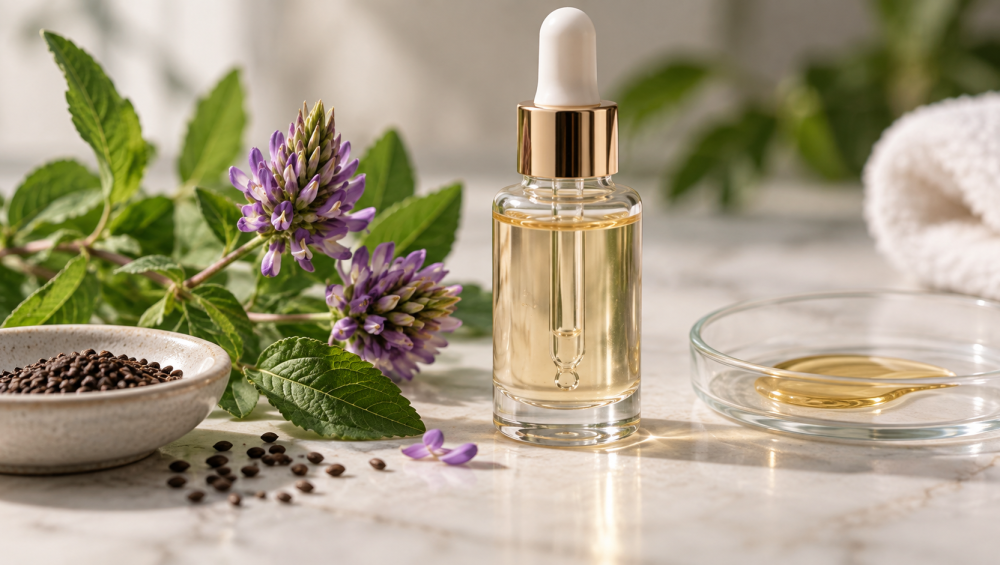
Bakuchiol is extracted from the seeds and leaves of a plant called babchi, which has a long history in traditional medicine in India and China. Chemically it looks nothing like retinol. What caught researchers’ attention is that, in laboratory tests, skin cells exposed to bakuchiol switched on some of the same genes that retinol does. That is why it is described as “retinol-like.”
Retinol is a form of vitamin A. Your skin converts it into retinoic acid, which is the active form and the one prescription products use. How to Choose a Retinol Serum covers that side in more depth.
The study everyone quotes
There is one study that matters, and it is worth knowing exactly what it found.
In 2019, dermatologists at the University of California, Davis ran a randomized, double-blind study of 44 people over twelve weeks. Half used a 0.5% bakuchiol cream twice a day. Half used a 0.5% retinol cream once a day. Photographs were analyzed by a computer system, and a dermatologist who did not know which cream each person was using graded pigmentation and redness.
Both groups improved. Wrinkle surface area went down and dark spots faded, and there was no statistical difference between the two creams. The retinol group reported more scaling and stinging. The authors concluded that bakuchiol was comparable to retinol and better tolerated.
Three things to keep in mind. Forty-four people is a small study. Twelve weeks is a short time. And the bakuchiol group applied their cream twice a day while the retinol group applied theirs once, so the two were not used identically. A promising result, and one study.
Where retinol still has the edge
Evidence. Retinoids have been studied for decades, with prescription-strength versions carrying FDA-approved labels for photoaged skin. Bakuchiol has a handful of studies. When a dermatologist recommends retinol, they are standing on a much deeper pile of paper.
Retinol also comes in a wider range of forms and strengths, so it can be introduced very gently and built up. Bakuchiol products are typically sold at a narrower range of concentrations.
Where bakuchiol has the edge
Comfort. A common reason people give up on retinol is irritation: dryness, flaking, redness, stinging. In the head-to-head study, bakuchiol users reported less of that. For someone whose skin does not tolerate retinol well, or who wants something to use in the morning, bakuchiol is worth a look.
Retinol is generally used at night, with broad-spectrum sunscreen during the day. Bakuchiol is commonly used morning or evening, and you should wear sunscreen every day whichever you choose. Bakuchiol also does not carry the pregnancy warning that retinoids do. That said, “not known to” is not the same as “proven safe,” and anyone pregnant should ask their doctor before using any active ingredient.
What neither of them does
Neither removes wrinkles. Even prescription tretinoin’s own label says it does not eliminate wrinkles, repair sun-damaged skin or reverse photoaging. What both can do, used steadily, is improve the appearance of fine lines, texture and uneven tone. Anything promising more is overselling.
Can you use both?
Yes. Some people use bakuchiol in the morning and retinol at night, or use bakuchiol on nights when their skin needs a break from retinol. There is no known problem combining them, though there is also no study showing the combination is better than either alone.
How to choose
If retinol works for you and your skin is comfortable, stay with it. If you have tried retinol and could not get past the irritation, or you want a daytime option, try bakuchiol. Visible change with either one takes consistent use over time, so do not judge after a week. Apply to clean skin before moisturizer, follow the directions on your product, and wear sunscreen every morning whichever you choose.
Victoria’s approach
Victoria Nash, founder of Esenté Skincare and Younger You Clinique, has been a licensed aesthetician since 2004 and is an experienced skincare educator. She draws on her professional experience at Younger You Clinique when evaluating skincare products and their performance, and Esenté’s approach to any ingredient, new or old, is to judge it on the things you can check rather than on the headline.
Esenté’s retinol offering is the Retinol Progressive 60-Day Renewal System, a staged system with its own directions for gradual introduction. Esenté products are developed collaboratively by our management team and our professional formulation and manufacturing partners, and are manufactured exclusively in the USA.
If you are weighing retinol against an alternative for your own skin, the Ask Victoria page is the place to ask.
Frequently asked questions
Is bakuchiol as good as retinol?
In one twelve-week study of 44 people, it performed about as well on the appearance of wrinkles and dark spots, with fewer reports of peeling and stinging. That is one small study against decades of retinol research. Promising, not proven equal.
Is bakuchiol a retinol?
No. It is a plant extract with a completely different chemical structure. It is called retinol-like because laboratory tests showed it affects some of the same skin genes.
Can I use bakuchiol during the day?
Yes. Bakuchiol is commonly used in the morning or evening, while retinol is generally used at night. Wear broad-spectrum sunscreen every day either way.
Can I use bakuchiol while pregnant?
Ask your doctor. Bakuchiol does not carry the warning that retinoids do, but that is because it has been studied far less, not because it has been proven safe in pregnancy.
Does bakuchiol cause purging or peeling?
Users in the head-to-head study reported less scaling and stinging than retinol users. Some people still notice mild dryness when starting. Any active can bother sensitive skin.
Can I use bakuchiol and retinol together?
Yes, at different times of day or on alternating nights. There is no known conflict, and also no evidence the combination beats either alone.
About the author. Victoria Nash, founder of Esenté Skincare and Younger You Clinique, has been a licensed aesthetician since 2004 and is an experienced skincare educator.
Reviewed by Victoria Nash, licensed aesthetician and founder of Esenté Skincare & Younger You Clinique. This article is educational and is not medical advice. Ask your dermatologist or licensed skincare professional about products appropriate for your own skin and medical history.
Short answer: Not all peptides are the same, and “contains peptides” on a label tells you almost nothing. A peptide serum worth buying names the specific peptides it uses, comes in packaging that protects them, and does not promise to do what an injection does. Then use it consistently for several weeks, because peptide benefits build gradually.
Peptides are everywhere in skincare and widely misunderstood. This is the buying guide. If you want the science first, What Peptides Actually Do is the companion piece.
What a peptide is, in plain words
Proteins are long chains of building blocks called amino acids. A peptide is a short chain of the same blocks. In skincare, peptides are used as messengers: certain short chains resemble fragments the skin already recognizes, and that resemblance is the whole idea.
That is as deep as this article needs to go. The practical point is that “peptide” is a category, like “fruit.” Which fruit matters.
Three kinds you will meet on labels
Signal peptides. The best known is palmitoyl pentapeptide-4, sold under the trade name Matrixyl. It has been studied in people. A 12-week study on photoaged skin reported improvement in the appearance of wrinkles compared with a plain base cream. The study was funded by the company making the product, which is common in this field and worth knowing.
Neuro-peptides. Acetyl hexapeptide-8, sold as Argireline, is often described as “Botox in a bottle.” That phrase has done real harm to peptide credibility. It borrows the idea from a muscle-relaxing injection, but a cream sits on the surface of the skin. When FDA scientists measured how much of it actually got through skin in the lab, the answer was very little. Treat the “Botox” comparison as a figure of speech rather than a description of what it does.
Copper peptides. These came out of wound-healing research and have a long history. The consumer evidence is thinner than the enthusiasm around them. They are usually kept apart from acids and strong vitamin C in a routine, mostly as a formulating convention rather than a proven problem.
What the label should tell you
The actual peptide names. “Peptide complex” is not a peptide name. Palmitoyl tripeptide-1, palmitoyl tetrapeptide-7, acetyl hexapeptide-8: these are. A brand that names them is giving you something you can check.
Where they sit on the list. Ingredients above one percent are listed in order of amount; anything at one percent or less can go in any order. Peptides are used at small amounts by design, so a low position on the list is normal and is not a warning sign. This is an ingredient category where the list position tells you less than usual. How to Read a Skincare Ingredient List explains the one-percent line properly.
What else is in there. Peptides usually share a bottle with hydrators and antioxidants. A good peptide serum is also a good hydrating serum. That is not padding; it is part of why the skin looks better.
Packaging
Peptides are generally less fragile than vitamin C or retinol, but no formula benefits from a clear bottle in a warm bathroom. Opaque or dark packaging with a pump or narrow dropper is the sensible choice. Light and air are two different problems, and packaging tends to address one more than the other. Esenté’s Elite line ships in Miron violet glass, which the manufacturer describes as filtering the wavelengths that drive degradation while letting some light pass; that is light protection. An airless pump addresses air exposure, by limiting how much air reaches the formula each time you dispense it. They are not the same solution, and a product may use one, the other or both.
What a peptide serum cannot do
This is where the category gets oversold, so it is worth saying plainly. A peptide serum is a cosmetic product. It can improve the appearance of fine lines, texture and firmness over weeks. It cannot replace structure the skin has lost or reproduce what a needle does; what it can do is improve the appearance of firmness. If you want the honest comparison with the stronger evidence base, Peptides vs Retinol lays it out.
Give it time
Peptide benefits develop gradually. Hydration tends to show first; the changes in how fine lines look take longer and depend on consistent use over several weeks. The published studies on individual peptides tend to run for a few months, which tells you the researchers expected a slow build. Judge a peptide serum after steady daily use, not after three days.
Victoria’s approach
Victoria Nash, founder of Esenté Skincare and Younger You Clinique, has been a licensed aesthetician since 2004 and is an experienced skincare educator. Victoria draws on her professional experience at Younger You Clinique when evaluating skincare products and their performance.
Esenté’s peptide products include the Penta Peptide Serum, the Bio-Lift Peptide Serum and the Matrix Cell 3000 Concentrate. They are developed collaboratively by Victoria Nash with Esenté’s professional formulation and manufacturing partners, with Victoria providing product direction, ingredient research, professional-use feedback and performance requirements. Product questions go to the Ask Victoria page.
Frequently asked questions
Which peptide is best for wrinkles?
Palmitoyl pentapeptide-4 has published human evidence for improving the appearance of wrinkles, from a 12-week manufacturer-funded study. Other peptides have less. No peptide removes wrinkles.
Do peptide serums really work?
Well-formulated ones can improve the appearance of fine lines and texture with consistent use over several weeks. Their evidence is real but thinner and more industry-funded than the evidence for retinoids. They may be an option for people who do not tolerate retinol well.
Can I use a peptide serum with retinol?
Yes. They are usually applied at different times or layered, peptide first. Many people use both.
Where should peptides be on the ingredient list?
Usually low down, because they are used in small amounts on purpose. A low position is normal for this category and does not mean the product is weak.
Is “Botox in a bottle” real?
No. It refers to acetyl hexapeptide-8, which sits on the skin’s surface and does not do what an injection does. Laboratory testing found very little of it passes through skin.
How long should I use a peptide serum before I see results?
It varies. Peptide benefits build gradually, so plan on consistent daily use over several weeks before judging changes in fine lines or texture. Hydration improves sooner.
About the author. Victoria Nash, founder of Esenté Skincare and Younger You Clinique, has been a licensed aesthetician since 2004 and is an experienced skincare educator.
Reviewed by Victoria Nash, licensed aesthetician and founder of Esenté Skincare & Younger You Clinique. This article is educational and is not medical advice. Ask your dermatologist or licensed skincare professional about products appropriate for your own skin and medical history.
Short answer: The percentage on the front of the bottle matters less than most people think. What matters more is whether the brand gives you useful information about the formula and how to introduce it, whether the packaging is designed to help protect the formula from excessive light and air, and whether the product is built to be introduced slowly. A retinol serum that irritates you into quitting after two weeks does nothing. One you can use for months does a great deal. Choose for tolerance first.
Retinol is one of the few skincare ingredients with decades of real evidence behind it. It is also widely misunderstood, partly because so much attention goes to the percentage on the front. This guide is the plain version.
What retinol is, in one paragraph
Retinol is a form of vitamin A. When you put it on your skin, the skin converts it, step by step, into retinoic acid, which is the form that does the work. Prescription tretinoin is retinoic acid itself, so it skips the conversion and acts faster and harder. Over-the-counter retinol is generally gentler, in part because it has to be converted first. That is the trade: slower, but far easier to live with.
Here the honesty matters, because retinol has been oversold. The best evidence is for prescription-strength retinoids, and even their FDA-approved labels are modest. The prescription tretinoin creams approved for photoaged skin are described as an addition to a full skin-care and sun-avoidance program, for the mitigation of fine facial wrinkles, and their labels state plainly that they do not eliminate wrinkles, repair sun-damaged skin, or reverse photoaging.
If that is what the prescription version says about itself, an over-the-counter serum should not be promising more. What a well-formulated retinol can do, used steadily, is improve the look of fine lines, skin texture and uneven tone over months. That is a real result, and it is enough.
The percentage question
Everyone asks it, so here is the straight answer: a higher number is not automatically better.
One piece of research worth knowing about compared 0.3% and 1% retinol. It had two separate parts. A six-week tolerability study of 218 people found that the 0.3% product caused fewer and milder reactions. A separate and very small biopsy study, involving only a few participants, found that the two concentrations produced similar changes in the skin. The larger group tells us about tolerance, not about results; the results finding rests on a small sample and should be read with that in mind. The work was funded by a retinol brand, which is also worth knowing. The logic still holds: the stronger product is not the more useful one if the people using it stop sooner.
So instead of chasing the biggest number, look for two things. Does the brand tell you something useful about the formula, what it is for and how to use it? “With retinol” on the front, and nothing else, tells you little; many brands, reasonably, keep the exact concentration of a proprietary formula to themselves, and the absence of a percentage is not a mark against a product. And is the product designed to be introduced gradually? A serum you can build up to is more useful than one you have to survive.
Packaging is not a detail
Retinol breaks down when it meets light, air and heat. A retinol serum in a clear bottle is exposed to light every time it sits on the counter. Look for opaque or dark packaging, whether a pump, a dropper or a jar you can close tightly, and a product that has not been sitting in a sunny bathroom window. The Bathroom Is the Worst Place to Store Skincare explains where to keep it instead, and Does Retinol Expire? covers how long it stays good.
Esenté’s Elite line uses Miron violet glass, which the manufacturer describes as a filter rather than a shield: it reduces the wavelengths that drive degradation while letting some light through. It is one reasonable answer to the light problem. Opaque plastic and airless pumps are others.
Retinol and the sun
Retinol is generally used at night. Daily broad-spectrum sunscreen is recommended as part of any retinol routine, and following the directions on your own product is the simplest way to get this right.
What “gentle” retinol products actually do
Some products list retinyl palmitate or other retinol esters instead of retinol. These sit a step further back in the conversion chain, so they are milder and also weaker. They are a reasonable starting point for very sensitive skin and a weak choice for someone who already tolerates retinol well. Encapsulated retinol, where the ingredient is wrapped in a coating intended to release it more slowly, is another approach to the same problem. None of these are gimmicks, but none of them change the basic rule: start low, go slow, and wear sunscreen in the day.
A short checklist
The brand gives useful information about the formula, its intended benefits and how to introduce it.
The packaging is designed to help protect the formula from excessive exposure to light and air.
The product is designed to be introduced gradually, or you are prepared to do that yourself.
The rest of the formula is calm, with little or no fragrance.
You are already using sunscreen every morning.
Victoria’s approach
Victoria Nash, founder of Esenté Skincare and Younger You Clinique, has been a licensed aesthetician since 2004 and is an experienced skincare educator. She draws on her professional experience at Younger You Clinique when evaluating skincare products and their performance.
Esenté’s Retinol Progressive 60-Day Renewal System is sold as a staged system and carries its own directions for gradual introduction. Like the rest of the range, it was developed collaboratively by Victoria Nash with Esenté’s professional formulation and manufacturing partners, with Victoria providing product direction, ingredient research, professional-use feedback and performance requirements. If you are unsure whether retinol suits your skin, or you are already using a prescription retinoid, ask your dermatologist first, and the Ask Victoria page is open for product questions.
Frequently asked questions
What percentage of retinol should I start with?
Lower than you think. A six-week study of 218 people found fewer reactions with 0.3% retinol than with 1%. A separate, much smaller biopsy study suggested the two produced similar changes in the skin, though that finding rests on very few people. The concentration you can use every night for months beats the one you abandon after two weeks. Follow the directions on the product you choose.
Is a retinol serum better than a retinol cream?
Neither is better as a category. Serums are usually lighter and creams usually include more moisturizing ingredients, which some people find easier to tolerate. Choose by how your skin feels and by the packaging, not the word on the label.
Can I use retinol in the morning?
Retinol is generally used at night, and the ingredient itself is sensitive to light. Follow the directions on your product, and wear broad-spectrum sunscreen every day either way.
Why does retinol make my skin peel?
Dryness, flaking and redness are common in the first weeks, especially if the product is strong or used too often. Slowing down, using a moisturizer over it, and giving skin rest nights usually settles it. If it does not settle, stop and ask a professional.
Does retinol get rid of wrinkles?
No. Even prescription tretinoin’s label says it does not eliminate wrinkles, repair sun-damaged skin or reverse photoaging. Retinol can improve the appearance of fine lines and texture over months of steady use. That is the honest claim.
Can I use retinol with vitamin C or acids?
You can, with some care. Many people use vitamin C in the morning and retinol at night, and space out exfoliating acids, because layering several strong actives at once can increase irritation for some skin. Follow the directions on each product and introduce one at a time.
About the author. Victoria Nash, founder of Esenté Skincare and Younger You Clinique, has been a licensed aesthetician since 2004 and is an experienced skincare educator.
Reviewed by Victoria Nash, licensed aesthetician and founder of Esenté Skincare & Younger You Clinique. This article is educational and is not medical advice. Ask your dermatologist or licensed skincare professional about products appropriate for your own skin and medical history.
Short answer: Skin tends to get drier as it gets older, so the moisturizer that worked at 35 often stops feeling like enough at 60. A good moisturizer for mature skin does three jobs at once: it pulls water into the surface, it smooths the surface, and it slows water from leaving. Look for a product with ingredients that do all three; for drier mature skin, that often means a richer cream. Apply it to skin that is still slightly damp. Then give it two or three weeks before you judge it.
That is the whole method. The rest of this article explains why it works and how to read a label without a chemistry degree.
Why skin gets drier with age
Two things change. Skin makes less of its own oil over the years, and the outer layer holds on to water less well than it used to. Neither is a sign that anything is wrong. It is simply what skin does with time, and it is why a moisturizer that once felt heavy can start to feel like water.
For many women, the change becomes noticeable around menopause. We cover what happens and in what order in Menopause and Skin: What Changes, and the bigger picture in Collagen Loss After 50. The short version: the skin has less to work with, so the moisturizer has to work harder.
The three jobs a moisturizer does
Every good moisturizer is a mix of three kinds of ingredient. You do not need to memorize the names, but it helps to know they exist.
Water-attractors. These pull water into the surface of the skin and hold it there. Glycerin and hyaluronic acid are the common ones. On a label they are easy to spot because glycerin is usually near the top.
Smoothers. These fill in the tiny gaps between surface cells so skin feels soft instead of rough. Shea butter, squalane, plant oils and fatty alcohols do this job.
Sealers. These sit on top and slow water from escaping into the air. Petrolatum is the classic example. Dimethicone, waxes and some butters do a gentler version.
A moisturizer built for mature skin usually has all three, with more of the smoothers and sealers than a product made for oily younger skin. That is usually the real difference between “for mature skin” and “for all skin types,” and it is a difference you can feel in the jar. A very light texture is often lighter on the last two.
Cream or lotion?
A lotion has a higher proportion of water. It feels cool and light, which many people like. A cream has more of the smoothing and sealing ingredients, so it tends to feel like it stays on the skin longer. Drier mature skin often does better with the richer texture, but a lotion is not the wrong choice for everyone. Some mature skin, especially combination or oilier skin, is comfortable with a lighter product.
If your skin feels tight an hour after moisturizing, that is a sign a richer product may suit you better, not more of the same one.
Apply it to damp skin
This one change resolves a lot of complaints. Put moisturizer on skin that is still slightly damp after cleansing or after a toner, and it helps hold that water in the surface. Moisturizer still does its job on dry skin; applying it to slightly damp skin is a simple way to get a little more from it.
In the Esenté routine, a toner or antioxidant spray follows every cleanse. Applying moisturizer while the skin is still damp from that step is a simple thing to try. The full order of a routine is in Skincare Order and Product Storage.
What the label can tell you
You do not have to read the whole ingredient list. Look for three things.
First, glycerin near the top. It is inexpensive, well studied, and it is the workhorse of hydration.
Second, something that seals. Shea butter, petrolatum, dimethicone, a plant butter or a wax somewhere in the first half of the list.
Third, fragrance low down or absent. Fragrance adds nothing to hydration and can sting drier, thinner skin. Esenté does not use perfume in its products. Some Esenté formulations do have a scent, which may come from the ingredients themselves or from fragrance added as part of the formulation; the Red Volcanic Seaweed Complex, for example, has an orange-citrus fragrance. Any scent can bother some sensitive skin, so this is worth knowing rather than a guarantee.
It is worth being clear here. A moisturizer is a cosmetic product: it hydrates, softens and smooths. Done well and done daily, it makes fine dry lines look less obvious and skin look more even and comfortable.
It does not replace lost structure below the surface. It does not lift. It does not undo years of sun. Those are different conversations, and the products that make those promises are promising more than a moisturizer can deliver. A good one is still worth having, precisely because it does its own job so well.
Day and night
Many people do well with a lighter cream in the morning under sunscreen and a richer one at night. Skin’s water loss has been measured as higher at night than in the morning, so a heavier product makes sense then. We go into this in Day Cream vs Night Cream.
Give it time
Hydration tends to show first. The softening of fine dry lines takes longer, and consistent daily use is what makes the difference. If a product still leaves you tight after three weeks of applying it to damp skin, it is the wrong product, and it is fine to move on.
Victoria’s approach
Victoria Nash, founder of Esenté Skincare and Younger You Clinique, has been a licensed aesthetician since 2004 and is an experienced skincare educator. She draws on her professional experience at Younger You Clinique when evaluating skincare products and their performance, and Esenté’s approach is to judge a product on the things you can check.
Esenté’s moisturizers, including the Hydra Day Crème, the Hydra-Plus Night Crème, the Hyaluronic Hydration Creme and the Recovery Crème, are developed collaboratively by Victoria Nash with Esenté’s professional formulation and manufacturing partners, with Victoria providing product direction, ingredient research, professional-use feedback and performance requirements. The Elite collection ships in Miron violet glass rather than plastic. Esenté recommends taking product from any open jar with a clean cosmetic spatula, as good hygiene practice.
If you are not sure which texture suits your skin, the Ask Victoria page is there for exactly that question.
Frequently asked questions
What is the best moisturizer for mature skin?
There is no single best one. The right one contains a water-attractor like glycerin, a smoother like shea butter or squalane, and a sealer like petrolatum or dimethicone, and has little or no fragrance. For drier mature skin, that often means a richer cream. Applied to damp skin, that combination does the job for most mature skin.
Should mature skin use a cream or a lotion?
Often a cream, but not always. Mature skin tends to make less oil and hold water less well, so many people find a richer texture more comfortable. A lotion can still suit mature skin that is combination or oilier, or anyone who prefers a lighter feel. Let how your skin feels an hour after applying decide.
Is hyaluronic acid enough on its own?
No. Hyaluronic acid attracts water but does little to keep it there. On its own, in dry air, some people find it leaves skin feeling tighter. Use it under a moisturizer, not instead of one. Hyaluronic Acid Is Not a Moisturizer explains why.
Does a more expensive moisturizer work better?
Price tells you very little on its own. What matters is the formula and how it suits your skin. Some expensive moisturizers are excellent and some inexpensive ones are too. Judge the ingredients, the texture, the packaging and how your skin feels after a few weeks. Is Expensive Skincare Worth It? goes into the question properly.
When should I apply moisturizer?
After cleansing and after any toner or serum, while the skin is still slightly damp. Morning and night.
Can a moisturizer get rid of wrinkles?
No. A moisturizer can reduce the appearance of fine dry lines by hydrating and smoothing the surface. It cannot remove wrinkles or replace what the skin has lost underneath. Anything promising that is overselling.
About the author. Victoria Nash, founder of Esenté Skincare and Younger You Clinique, has been a licensed aesthetician since 2004 and is an experienced skincare educator.
Reviewed by Victoria Nash, licensed aesthetician and founder of Esenté Skincare & Younger You Clinique. This article is educational and is not medical advice. Ask your dermatologist or licensed skincare professional about products appropriate for your own skin and medical history.
Short answer: There is no universal routine. The fixed part is short, and in the Esenté approach it comes to four things — cleanse properly at night, follow every cleanse with a toner or antioxidant spray, protect against UV every morning, and introduce one active at a time. Everything else is decided by variables that belong to you: how your skin behaves rather than how it is labeled, how it responds to sun, your age and life stage, the sun exposure already recorded in it, and any injectable, filler or surgical work, where the timing belongs to the provider who performed it and to nobody else.
Build the spine first. Then change one thing at a time and give it long enough to tell you something.
The part that does not change
Four things are Esenté’s foundational principles for building an individualized routine, and getting them right makes the rest adjustment. They are Esenté’s recommendation rather than an established universal requirement, but they are the spine we would build any routine on.
Cleanse properly at night, and not with your hands. Cleansing is the step people economize on, and it is the wrong place to do it. A harsh or poorly pH-balanced cleanser can compromise the lipid barrier, and the redness, blotchiness and reactivity that follows often gets attributed to whatever was applied afterward. Our recommendation is aesthetic facial sponges or gauze pads rather than your hands, and we leave facial scrubbing brushes out of the routine entirely — we consider them too harsh for facial skin. Take product out of jars with a cosmetic spatula.
Morning is warm water for most skin, in Esenté’s approach. If the evening routine was done properly there is little left to remove eight hours later. A morning cleanser suits oily skin; for dry, sensitive or normal skin, water is often the better choice, and cleansing twice a day is a frequent cause of the tightness people then try to fix with a heavier moisturizer.
Toner or antioxidant spray after every cleanse, morning and night. Esenté treats this as its recommended preparatory step after cleansing — part of the routine rather than an optional extra — and it is nothing like the astringent your mother used.
Esenté makes two products that occupy this slot — Octet Herbal Toner, which contains no alcohol, and Hydro-Mist Emulsion antioxidant spray — both developed collaboratively by Victoria Nash with Esenté’s professional formulation and manufacturing partners. Any well-formulated, alcohol-free equivalent occupies the same place in the sequence.
Broad-spectrum sunscreen every morning. UV exposure accounts for a large majority of visible facial aging. The figure usually quoted is up to 80%, and it is worth knowing that it traces back to a single 2013 study of a few hundred women in the south of France rather than to a broad measurement across populations — so read it as an estimate of scale, not a measured split. The direction of the finding is not seriously disputed. Daily protection remains the highest-return habit available.
Note what is not on that list. No ten-step sequence: three to five products used every day beat nine used when you remember, and every layer you add is another variable to account for when something changes.
Variable one: how your skin behaves, not what it is called
The four-box model — oily, dry, combination, sensitive — is a starting point most people misapply, usually because they classified themselves during a bad month. Behavior is more useful than a label. Does your skin feel tight within minutes of washing? Is there visible shine by midday, and where? Do new products sting? Does the picture change with the season?
Tight after washing may point to a barrier being stripped, and such skin may benefit from a gentler cleanser and a richer moisturizer rather than more exfoliation. Shine on the forehead and nose with tightness on the cheeks may benefit from different products in different places rather than one compromise product everywhere.
Reactive skin changes the whole approach: fewer products, slower introductions, barrier support ahead of actives. It can also be self-inflicted — over-exfoliated, over-layered skin can behave like sensitive skin, and often settles once you stop.
Dehydration is not dryness. Dry skin lacks oil; dehydrated skin lacks water, and oily skin can be badly dehydrated. A heavy cream on dehydrated oily skin can make it worse; such skin may benefit from water-based hydration under a lighter seal.
Variable two: how your skin responds to UV, and why Fitzpatrick is not a proxy for race
The Fitzpatrick scale gets quoted constantly and understood rarely, so it is worth being precise about it.
Thomas Fitzpatrick published the classification in 1975 to solve a dosing problem. Patients starting oral methoxsalen photochemotherapy — PUVA, then new for psoriasis — needed a starting dose of ultraviolet A that would not burn them, and hair and eye color turned out to be a poor guide. So he asked instead about behavior under sun exposure. It asks two questions: how easily does this skin burn, and how readily does it tan. That is all it measures.
The original scheme ran to four types and was built for patients with white skin. Types V and VI were added later, in a 1988 paper that extended it to the six categories now in use. That history is worth knowing, because it is the plainest evidence available that the scale was never designed as a map of human variation.
It is not a race classification and it is not an ethnicity classification. Two people from the same ethnic background can sit at different points on it, and people at the same point can look nothing like each other. It is a self-reported measure of sun reactivity — which is why it works for its intended job and fails for any other.
A separate consideration for a routine is post-inflammatory hyperpigmentation. Skin can respond to cutaneous inflammation — acne, eczema, a burn, an aggressive peel, friction, a procedure — by depositing pigment where the inflammation was, and the mark outlasts the cause, sometimes by months. It occurs across all skin types; the dermatology literature reports that it is more common and more severe in darker skin, where melanocytes are larger, transfer more melanosomes and show higher tyrosinase activity. That much is well established.
So anything that inflames carries a pigment cost that is not evenly distributed: aggressive exfoliation, fast-introduced actives, physical scrubbing and heat all become higher-risk, and introductions go slower rather than faster. Clearing the cause comes before treating the mark, because anything applied to pigment while the irritation continues is working against a live source. And sunscreen matters at every point on the scale — melanin provides measurable but partial UV protection, it does not prevent photoaging, and UV worsens existing pigment. The general pattern is that skin with more melanin burns less readily and pigments more readily. The second half of that sentence is the one a routine has to plan around.
None of this is a diagnosis. Persistent or spreading pigment, or any pigmented lesion that changes shape, color or size, is a question for a physician rather than for a shelf of products.
Variable three: age and life stage
Skin does not change on birthdays, but priorities shift, and pretending otherwise sells a lot of unnecessary product.
In the twenties and thirties, prevention beats correction and almost all of the return sits in sun protection and not wrecking the barrier. Through the forties, texture and tone shift before laxity does, and most people benefit from one well-chosen active rather than five. From the fifties, barrier support moves to the front: skin retains water less readily and the routine that worked at forty can start to sting. The temptation is to escalate actives; the better move is to strengthen the base first. What changes structurally after fifty is worth reading alongside this.
Hormonal transitions — pregnancy, postpartum, perimenopause, menopause — change skin behavior independently of age, and some ingredients are avoided during pregnancy and breastfeeding. Those decisions belong with your physician.
Variable four: the sun damage already in the skin
Existing photodamage changes what you should expect and how fast you should move. Damage accumulated over decades does not reverse on a schedule, and any routine promising it will is telling you about the brand rather than about your skin. What a well-built routine does is improve the appearance of texture and tone over months, and stop the account being added to.
Sun-damaged skin can also be more reactive than it looks, which argues for slower introductions. And with existing damage, daily broad-spectrum sunscreen stops being the least interesting step and becomes the most important one. It goes on last in the morning, after moisturizer, every day.
Anything resembling a changing lesion goes to a doctor. That is not a routine question.
Variable five: injectables, fillers and surgery
The boundary between a skincare routine and post-procedure care is the boundary between a cosmetic and medical care, so this section needs the clearest handling in the article.
The timing rule is not ours to set. After any injectable, filler, thread, laser or surgical procedure, the aftercare instructions from the provider who performed it govern everything: when cleansing resumes, when actives go back on, what pressure and heat are permitted, for how long. Those instructions vary by procedure, product, technique and patient. Ask your injector or surgeon, and do not substitute a timeline found online — which is why there is no timeline in this article.
Around that, a routine can do sensible things. Keep the barrier in good condition beforehand, because irritated skin is a worse canvas. Expect to pause actives around the procedure window — retinoids and exfoliating acids are the usual candidates — and let the provider set the dates. Reduce mechanical pressure over treated areas for as long as you are told. And take sun protection seriously afterwards.
What a routine cannot do. No topical product replaces a procedure, and no procedure removes the need for daily care. Professional treatments carried out by an appropriately qualified and licensed professional where required — the needling and laser work performed in a clinical setting — are a separate class of intervention, and nothing sold in a bottle for home use does what they do. What a well-formulated topical can legitimately do is improve the appearance of texture, tone, smoothness and firmness over time, which is a different claim and a real one.
How to change a routine and actually learn something
Most people run the experiment badly and then conclude nothing works.
One new active at a time, because two changes at once means a reaction tells you nothing about its cause. Follow the product’s own guidance on introduction, tolerance testing and how long to give it before evaluating. Write it down: a phone note with the start date and what happened afterward turns a routine into information.
The order everything goes in — thinnest to thickest, sunscreen last in the morning — is covered step by step here, and it does not change with skin type. What changes is what occupies the treatment step.
The words on the box will not help you personalize anything: “medical grade”, “clinical grade” and “cosmeceutical” are not regulatory categories. Judge ingredient selection, formulation quality, packaging, and who is responsible for the product’s development and formulation and what expertise supports that process — then judge how your own skin responds over time, which is the only test that is actually about you.
Frequently asked questions
How do I build a skincare routine for my skin type?
Start with the spine Esenté recommends: an evening cleanse using an aesthetic facial sponge or gauze pad, a toner or antioxidant spray after every cleanse, moisturizer, and broad-spectrum sunscreen every morning. Warm water is generally enough in the morning unless your skin is oily. Then adjust the treatment step for your concern, one active at a time, following each product’s introduction and evaluation guidance.
What is the Fitzpatrick scale, and does it tell me my ethnicity?
No. Thomas Fitzpatrick published it in 1975 to set safe starting doses of ultraviolet A for PUVA photochemotherapy, and it measures two things: how easily skin burns and how readily it tans. The original version had four types and covered white skin only; types V and VI were added in 1988. It is not a race or ethnicity classification. Pigmentation risk, including post-inflammatory hyperpigmentation, is a separate consideration from what the scale measures.
Should I use a cleanser in the morning?
Esenté’s recommendation is a morning cleanser for oily skin, and warm water for dry, sensitive and normal skin. If the evening routine was done properly there is little left to remove, and cleansing twice daily is a frequent cause of tightness and reactivity.
Is toner really necessary?
Esenté treats it as part of the routine rather than an optional extra — its recommended preparatory step after every cleanse, morning and night, before the next layers go on.
When can I resume my skincare routine after fillers or injectables?
Ask the provider who performed the procedure and follow their aftercare instructions. Timing varies by procedure, product, technique and patient, and no general article can give you a safe number.
Do darker skin tones need sunscreen?
Yes, daily. Melanin provides partial UV protection, but it does not prevent photoaging, and UV exposure worsens existing pigmentation.
Victoria Nash, founder of Esenté Skincare and Younger You Clinique.
About the author. Victoria Nash, founder of Esenté Skincare and Younger You Clinique, has been a licensed aesthetician since 2004 and is an experienced skincare educator.
Reviewed by Victoria Nash, licensed aesthetician and founder of Esenté Skincare & Younger You Clinique. This article is educational and is not medical advice. It does not diagnose any condition. Post-procedure timing is set by the provider who performed the procedure; persistent, changing or unexplained skin changes should be assessed by a physician.