

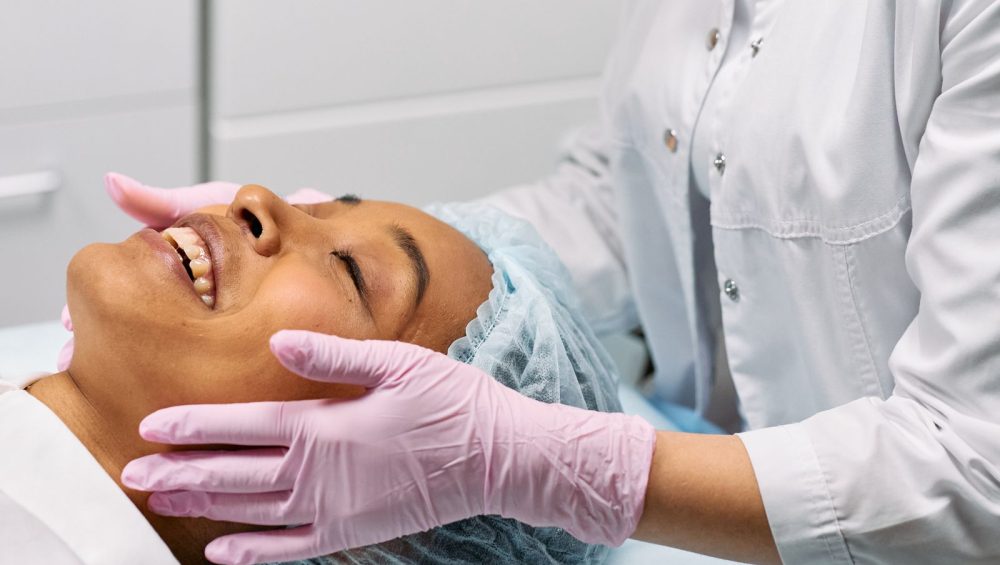
Short answer: Lactic acid is often considered one of the gentler members of the alpha hydroxy acid family. It loosens the dead cells on the skin’s surface so they shed sooner, and, unlike most exfoliants, it also attracts water, so it hydrates while it exfoliates. That combination is why it may be a gentler option for some people with dry, sensitive or mature skin, though how any acid product behaves depends on the formulation and your own tolerance. It works at the surface, it needs sunscreen alongside it, and it does not need to sting to be working.
Lactic acid has been used on skin for a very long time; the milk-bath stories are about it. Here is what it does in plain terms, and what it does not.
What lactic acid is
Lactic acid is an alpha hydroxy acid, or AHA, the same family as glycolic acid. It occurs naturally in sour milk and in your own body. Skin, in fact, makes and uses lactic acid: it is one of the components of the skin’s own natural moisturizing factor, the mix of substances in the outer layer that holds water.
Compared with glycolic acid, lactic acid is a bigger molecule. Glycolic is the smallest of the AHAs, and it is generally the most active and the most likely to sting. Lactic is larger and is often gentler at the surface, though the formulation, the strength and the pH matter as much as the acid itself. For a lot of people, that gentler profile is exactly the point.
What it does
It helps dead cells let go. Old cells at the surface are held together by a kind of glue. Lactic acid loosens that glue, so the cells shed in an orderly way instead of piling up. The result is skin that looks brighter and feels smoother. Why Skin Looks Dull explains why that buildup makes skin look flat.
It attracts water. This is a quality lactic acid is particularly known for. It is a humectant, so it draws water into the surface of the skin. That is why a lactic acid product often leaves skin feeling softer rather than tight, and why it is often chosen for drier skin.
It can help the look of uneven tone. By speeding up the shedding of surface cells, AHAs can improve the appearance of dullness and surface unevenness over weeks. The FDA lists smoothing fine lines and surface wrinkles, improving skin texture and tone, and unblocking pores among the purposes AHA products are marketed for, and notes that the amount of exfoliation depends on the acid, its concentration, the pH and the other ingredients.
What it does not do
At the strengths sold for home use, it works on the surface. It does not change what the skin is made of underneath. It will not remove wrinkles or undo sun damage. What it does is make the surface look and feel better, which is worth having and is the honest claim.
It also does not need to hurt. A mild tingle for a few seconds is common. Burning, lasting redness or peeling means the product is too strong for your skin or you are using it too often. Discomfort is not evidence that a product is working.
Strength and pH
Two numbers decide how strong a lactic acid product is: the percentage, and the pH. A lower pH makes the acid more active. That is why two products with the same percentage can feel completely different.
For products you use at home, the industry’s safety panel concluded that glycolic and lactic acid are safe for consumers at 10% or less, at a pH of 3.5 or higher, with sun protection. Professional peels are a separate professional-use category, and the difference is not simply a higher concentration. Formulations, strengths, pH and treatment protocols can all differ, and professional peels are selected and administered by qualified, licensed practitioners who assess the skin first. Esenté supplies professional peels to approved licensed professionals only; they are not available for retail purchase.
A brand that tells you how strong its product is intended to feel, and how to introduce it, is giving you something useful, whether or not it publishes the exact numbers.
Sunscreen is part of the deal
AHAs carry a specific sun-protection consideration. FDA research found that four weeks of AHA cream use increased sensitivity to sunburn by about 18%, and that the effect faded about a week after stopping. That is why the FDA recommends a sunburn alert on AHA product labels, and why a lactic acid product and a morning sunscreen go together. Do You Need Sunscreen Every Day? makes the case.
How to use one
Apply to clean, dry skin, usually in the evening. Start with a low percentage and use it as often as the directions say, not more. Follow with a moisturizer. Using an exfoliating acid and retinol on the same night can increase irritation for some people, so take care with that combination and follow the directions for each product. Avoid layering several separate exfoliating products on top of one another; a professionally formulated product that contains more than one acid is a different matter from stacking three bottles. If you also use a scrub or an enzyme peel, go gently and do not pile them up. Enzyme Peel vs Chemical Peel helps you choose one lane.
Victoria’s approach
Victoria Nash, founder of Esenté Skincare and Younger You Clinique, has been a licensed aesthetician since 2004 and is an experienced skincare educator. She draws on her professional experience at Younger You Clinique when evaluating skincare products and their performance.
Esenté’s hydroxy-acid serum is the Liposome Alpha-Beta Serum, an 8% AHA/BHA serum, developed collaboratively by our management team and our professional formulation and manufacturing partners, and manufactured exclusively in the USA. In the Esenté routine, a toner or antioxidant spray follows every cleanse.
If you are choosing between acids for your own skin, the Ask Victoria page is there for you.
Frequently asked questions
It loosens dead cells at the skin’s surface so they shed sooner, and it draws water into the surface. Skin looks brighter and feels smoother and softer. It works at the surface only.
Neither is better as a category. Lactic acid is a larger molecule, often gentler, and also hydrating, which is why it is frequently chosen for drier or more sensitive skin. Glycolic is smaller and generally more active, so it is often chosen where more exfoliation is wanted. Formulation, strength, pH and your own tolerance matter more than the name of the acid.
Often, yes, at a low percentage. It may be a gentler option for some sensitive skin, but tolerance varies. Patch test, start slowly, and stop if you see lasting redness.
A brief tingle is common. Burning or lasting redness is not, and means the product is too strong or being used too often.
Yes. AHAs carry a specific sun-protection consideration: FDA research found increased sensitivity to sunburn during use, lasting about a week after you stop. Wear broad-spectrum sunscreen every morning.
With care. Combining exfoliating acids and retinol can increase irritation for some people, and many people alternate them on different nights. Follow the directions for each product, and let your skin tell you how often.
About the author. Victoria Nash, founder of Esenté Skincare and Younger You Clinique, has been a licensed aesthetician since 2004 and is an experienced skincare educator.
Reviewed by Victoria Nash, licensed aesthetician and founder of Esenté Skincare & Younger You Clinique. This article is educational and is not medical advice. Ask your dermatologist or licensed skincare professional about products appropriate for your own skin and medical history.