
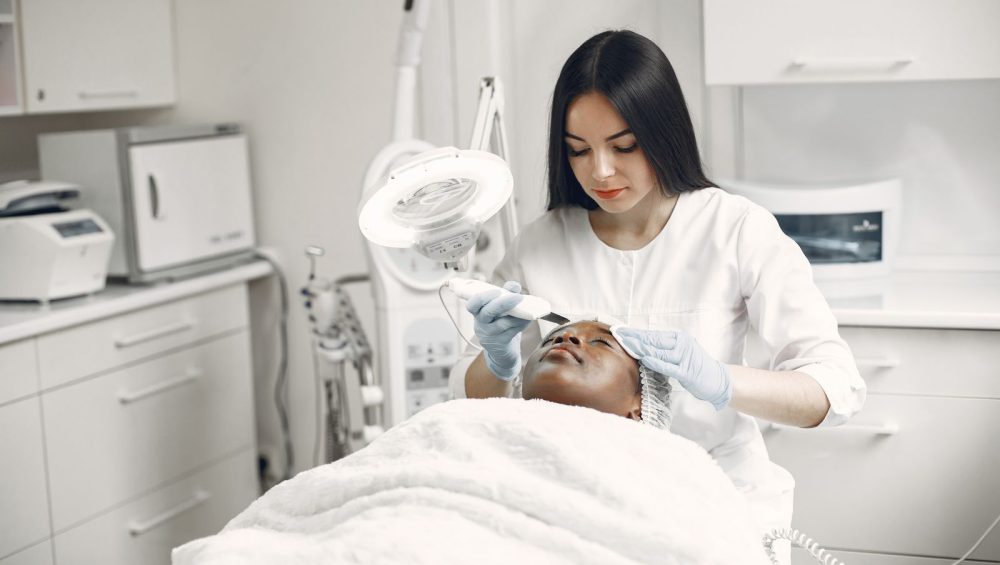
Esthetician performing a facial treatment in a treatment roomCategoriesEsente Skincare

How to Choose a Professional Skincare Line for Your Treatment Room

Short answer: Judge a professional line on four things, in this order: what the back bar actually costs you as a share of your service price, whether the retail margin and territory protection let you make money on resale, whether the education is real training rather than a product pitch, and whether the formulations hold up when a client asks you a hard question. Brand prestige comes fifth, and most estheticians weight it first.

Getting this wrong is expensive in a way that compounds. You carry the inventory, you absorb the training time, and if you switch lines in eighteen months you take your clients through the disruption with you.

Start with the number that decides profitability

Back bar cost is what you consume per treatment. It is also the number most treatment rooms have never actually measured — back bar rarely gets its own line in the chart of accounts, so it hides inside general supplies and nobody notices it drifting.

Where the published benchmarks land: spa financial consultant Lisa Starr’s departmental figures put professional inventory for skincare at 5% to 8% of service revenue, against 6% to 7% for hair and 4% for nails, and worked spa P&Ls tend to come out around 7% to 9% in practice. Treat those as useful operating benchmarks rather than an industry standard — the best-sourced figures in this area are older than anyone would like, and the trade associations that could refresh them do not publish back bar percentages. There is no published threshold for “too high,” but the arithmetic is unforgiving: if the target is 5% to 8% and you are running north of 15%, you are either underpricing the service or dispensing more product than the treatment requires. Check dispensing discipline before you touch price.

Run the math before you sign anything. Take a signature facial. List every product it consumes: cleanser, exfoliant, mask, serum, moisturizer, SPF, plus disposables. A facial typically moves through six to ten products, and what that costs depends entirely on the line — a published spa model puts it around $7 on a $100 service, while a ten-step private-label protocol can land under $3. Cost it for your own menu rather than trusting anyone’s benchmark, then divide by your service price.

A $150 facial with $12 of product sits at 8%. Healthy.

A $95 facial with $22 of product sits at 23%. That line will quietly eat your margin every day you use it.

Ask the distributor for back bar sizes and per-treatment cost in writing. A line that only sells retail sizes for professional use has just doubled your cost of goods, and any rep who cannot produce a per-treatment cost breakdown does not know their own product economics.

Then look at what you actually earn on retail

Retail is where treatment rooms make margin, and where most lines quietly fail you.

Professional lines generally sell to licensed accounts at roughly keystone — wholesale around half of suggested retail — with strong accounts pushing into the 50% to 60% margin range. Say that precisely, because the two ways of expressing it get mixed up constantly: half of retail is a 50% margin, which is a 100% markup on your cost. Margin divides by the selling price; markup divides by what you paid. The 200% to 300% figures circulating online generally describe private label, where you own the manufacturing cost outright, not a branded professional line. And the headline number matters less than four details buried in the agreement:

Minimum opening order. Requirements vary enormously and most brands do not publish them. Where they are published, the range is wider than the rumours suggest: some lines state a $1,000 to $1,500 opening order with a reorder minimum attached, while others publish no minimum at all. For most lines the number comes from a rep after your license clears, and it is often negotiable — ask about opening-order flexibility, testers and samples before you commit. Whatever you agree to is capital sitting on a shelf, and if the line does not move it is capital you cannot get back.

Territory protection. If the brand sells to the med spa four blocks away and to Amazon, your retail advantage disappears. Ask specifically: what is the radius, is it contractual, and who enforces it?

Direct-to-consumer policy. Most brands now sell direct as well as through professionals, and how they price and structure that determines whether it competes with you or complements you. Some handle it with professional pricing, affiliate credit and MAP enforcement. Ask what the professional discount is, what the brand’s own retail price will be, and whether you are credited when a client of yours buys direct.

Diversion. Professional-only products turning up discounted on Amazon and eBay is a documented reality, and most major lines now publish authorized-retailer lists in response. Courts have found real cases of batch codes and authenticity holograms stripped from grey-market goods. What it costs you is less settled than the industry implies: guarantees genuinely are void on unauthorized purchases and that is enforceable, but the harder claim — that seeing your line at a discounter erodes your clients’ trust in you — has not been measured. Treat diversion as a pricing and exclusivity problem to negotiate around. Ask what the brand’s enforcement actually looks like, and treat vagueness as an answer.

Restocking and returns. What happens to product that does not sell? Return policies turn on a lot of commercial factors and are not a measure of how confident a manufacturer is in its products, but knowing the policy before you order tells you what your downside looks like.

Test the education, not the brochure

Every line promises training. The distinction that matters is whether they teach you skin or teach you their catalog.

Real education looks like protocol training you can adapt, ingredient science that explains mechanism rather than reciting benefits, contraindication guidance, and technical support you can actually reach when a client has a problem with a product. To be clear about the boundary: product support is not clinical support. When an adverse reaction warrants medical attention, that is a matter for a physician, not a brand’s trainer.

Product-pitch education looks like a two-hour session on the product ladder, laminated upsell scripts, and a rep who visits when there is a promotion.

Ask three questions in the first meeting:

  1. Who trains, and what are their credentials?
  2. Is training included, and does it repeat when you hire someone new?
  3. When a client has a reaction to a product, who do I call for technical support and how fast do they respond?

The answers separate serious brands from distribution operations quickly.

Understand the formulations

You will be asked hard questions by clients who have read a great deal on the internet and understood some of it. Your line needs to survive that.

Review the published ingredient list alongside the product’s stated benefits and intended use. Then check where the headline active sits. Ingredients are listed in descending concentration down to 1%, and at or below that they may appear in any order — so position stops being informative below that line. That is a limit on what the list can tell you, and a reason to ask a further question, rather than a verdict on the brand: some genuinely effective ingredients belong below one percent.

Worth asking about chiral correction. Some molecules exist in two mirror-image forms, and which form is present usually decides whether the ingredient does its job — L-lactic acid raises the skin’s own ceramide levels where its mirror image does not, and D-panthenol is the active form while L-panthenol is inert. That relationship is specific to each compound rather than a general rule, and it is about activity rather than irritation. In Esenté’s experience, sourcing and processing the form that does the work costs more than using uncorrected material. Reading it off an ingredient list is not straightforward, because the naming convention usually leaves optical isomers undesignated — the convention has documented exceptions, so a designator that is printed is meaningful, while its absence tells you nothing either way. Ask the brand directly. Esenté’s own ingredient declarations, supplied through its formulation and manufacturing sources, carry the applicable chiral designators.

Ask about packaging. L-ascorbic acid degrades with light, air, heat, and trace metals, and how quickly depends on the complete formulation, the packaging and how the client stores it. Retinoids degrade under UV. A professional line selling photosensitive actives in clear bottles is worth asking about, because light is the variable most likely to cost your client the active they paid for. The difference between amber and violet glass is larger than most reps can explain.

Look at what evidence a line publishes on its finished products, and who funded it. Ingredient-level studies are more readily available and more commonly cited. Evidence on the actual finished formula is rarer, and it tells you more about that specific product.

Ask about the expertise behind the line. Product development is often collaborative, bringing together brand experience with professional formulation and manufacturing expertise. A reputable brand should be able to explain its development philosophy and quality standards without necessarily disclosing confidential supplier or manufacturing relationships.

Be skeptical of the label itself. “Medical grade,” “clinical grade,” and “cosmeceutical” have no regulatory definition. The FDA does not recognize “cosmeceutical” under the Federal Food, Drug, and Cosmetic Act, and no agency defines or certifies the others. That is not the same as nobody policing them — an implied claim that a product is clinically proven still has to be substantiated, and the FTC, the National Advertising Division and state consumer-protection law all provide routes to challenge one. The terms describe a formulation philosophy at best. Verify the philosophy.

Match the line to your actual clientele

The best line for a medical spa doing post-procedure protocols is not the best line for a suburban studio doing relaxation facials, and neither is right for a studio built on clean-beauty positioning.

Answer honestly before you shop:

  • What do your clients actually come in for? Aging, acne, pigmentation, sensitivity, or a break from their week?
  • What do they spend on retail now?
  • Do they want clinical results or a sensory experience? Both are legitimate businesses. They need different lines.
  • What is your treatment menu in two years?

A line that cannot support where you are going means switching again, and every switch costs you retraining, dead inventory, and clients who liked the old products.

Consider carrying two, carefully

Many established treatment rooms run a clinical line for results-driven work and a second line for sensitive skin or clean-preference clients. This works when the lines are clearly differentiated and you can explain to a client in one sentence why you chose one over the other.

It gets harder when the lines overlap. Two similar lines means double inventory, double training, split volume, and a retail story you have to work to explain. If you cannot name the specific client each line serves, there is a good case for carrying one.

The questions to ask before you sign

Bring this list to the meeting.

  1. What is the back bar cost per treatment, in writing, for each protocol?
  2. What is the minimum opening order, and what are the reorder minimums?
  3. What is my retail margin, and is there a MAP policy that protects it?
  4. What territory protection do I get, and is it contractual?
  5. Do you sell direct to consumers, and at what price?
  6. How do you handle diversion to Amazon and other marketplaces?
  7. What training is included, who delivers it, and does it repeat for new hires?
  8. What is the expertise behind the line, and how would you describe your development philosophy and quality standards?
  9. What is the return or restocking policy on product that does not move?

How readily a brand answers these is itself information. Hesitation on the commercial terms in particular is worth understanding before you sign rather than after.

Frequently asked questions

What should back bar cost be as a percentage of service price?

Published benchmarks put professional skincare inventory at roughly 5% to 8% of service revenue, and working spa P&Ls tend to land around 7% to 9%. Treat those as operating benchmarks rather than a standard — they vary by treatment type, and the best-sourced figures in this area are dated. Well above 15% usually means the service is underpriced or product is being over-dispensed.

How much should estheticians mark up retail skincare?

Professional lines commonly sell to licensed accounts at roughly keystone — wholesale around half of suggested retail — with strong accounts reaching 50% to 60% margin. Keep the terms straight: half of retail is a 50% margin and a 100% markup. Margin divides by the selling price; markup divides by your cost. The workable number depends on your positioning, local competition, and whether the brand maintains a MAP policy.

Can estheticians buy professional skincare wholesale?

Yes. Verifying licensure is close to universal. The paperwork beyond it varies widely: some lines take a current license and will approve students working toward one, others want your sales tax and resale ID numbers, and at the heavier end some ask for a license, tax-exempt confirmation, proof of liability insurance and a seller’s permit, or require a physical location. Assume you will need a current license and a resale certificate, and increasingly proof of liability insurance.

What is the difference between back bar and retail products?

Back bar products are larger, professional-size formats used during treatments and generally not sold to clients. Retail products are consumer sizes for home use. Some brands formulate the two identically at different sizes; others use different concentrations, which is a question worth asking directly.

How many product lines should an esthetician carry?

One well-chosen line for most single-operator rooms. Two only when they serve clearly different clients, such as a clinical line alongside a sensitive-skin or clean-preference option, and when you can explain the difference to a client in one sentence.

Is “medical grade” skincare a real category for professionals?

No. The FDA does not recognize “medical grade,” “clinical grade,” or “cosmeceutical” as regulatory categories, and no agency defines or certifies them — though an implied claim that a product is clinically proven still has to be substantiated. Evaluate the formulation, packaging, concentration, and evidence rather than the phrase on the box.

About the author. Victoria Nash, founder of Esenté Skincare and Younger You Clinique, has been a licensed aesthetician since 2004 and is an experienced skincare educator.

Written for licensed professionals. Reviewed by Victoria Nash, licensed aesthetician and founder of Esenté Skincare & Younger You Clinique. Business figures are published industry benchmarks, not financial advice. Scope-of-practice rules vary by state; check your state board.
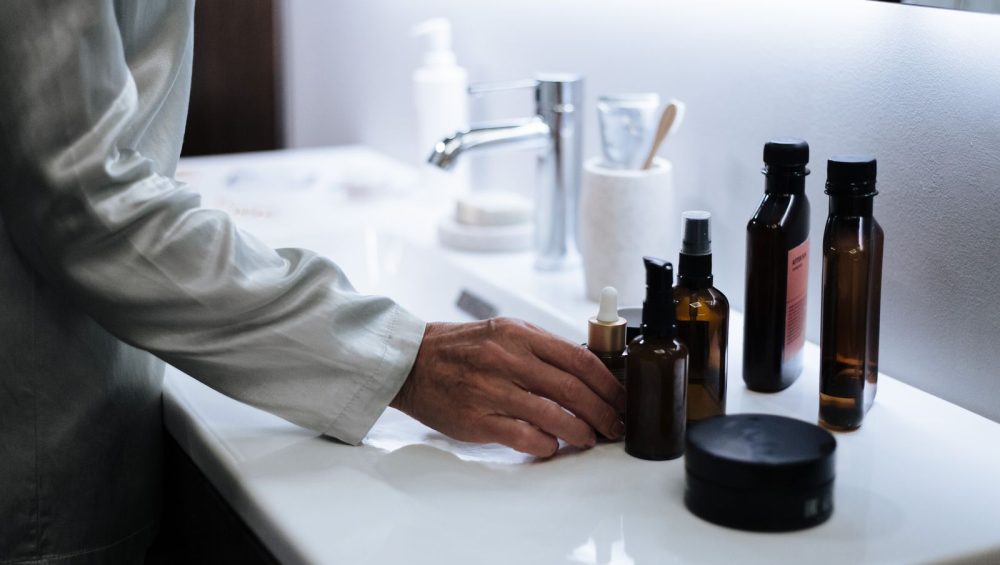
Skincare products stored on a bathroom shelfCategoriesEsente Skincare

The Order You Apply Skincare Changes Whether It Works, and So Does the Bottle It Came In

Short answer: Apply thinnest to thickest: cleanser, toner, water-based serums, moisturizer, then sunscreen last in the morning. A thin serum spreads and absorbs better on bare skin than over a layer of cream. Beyond order, storage decides how much active is left by the time you apply anything: light, air, and heat degrade retinoids and vitamin C, and how fast depends on the formulation, the packaging and where you keep it. You can follow a perfect routine with a degraded formula and see nothing.

Two variables, both invisible, both easy to fix.

Esenté formulations use a high percentage of botanical ingredients, which are prone to oxidation and lose efficacy over time. That is the reason for Miron violet glass packaging and its selective light-filtering properties. If you are unsure what oxidation looks like, cut an apple in half and leave it on a plate in daylight. The cut surfaces brown within a short time, and keep browning. The chemistry in an apple is not the chemistry in a serum — enzymatic browning is its own reaction — but it makes the general point visible: exposure to air and light changes things, and it changes them inside a bottle too, where you cannot see it.

Why order matters at all

Skincare products are built around a practical constraint. The outermost layer of your skin exists to keep things out, and different formulas behave differently against it. Some ingredients work at or within that surface layer and never need to go further; others do their job deeper in the epidermis.

Thin, water-based formulas tend to spread and absorb. Thick, occlusive formulas sit on top and seal. Applied over an occlusive layer, a thin serum has a harder time getting where it is going.

That gives you the working rule: thinnest to thickest. It is good practical guidance rather than a law of physics — how much any ingredient penetrates depends on the ingredient, the formulation and what it is layered with.

It also gives you the exception people miss. Sunscreen goes last in the morning regardless of texture, because it is designed to form a continuous film across the surface. Applying moisturizer over it disrupts that film and reduces the protection you measured on the bottle.

The morning routine, in order

1. Cleanser. Dermatology guidance is to wash your face morning and night. Esenté’s own approach, from Victoria Nash’s experience with skincare clients, is that if the evening routine was done properly there is little left to remove, so many people do well with warm water in the morning and a full cleanser reserved for oilier skin. Treat that as a preference worth trying rather than a rule; if your skin feels tight after a morning wash, a gentler cleanser is the more sensible fix. Whenever you cleanse, Esenté’s preference is an aesthetic facial sponge or a gauze pad. Dermatologists generally recommend washing with light pressure rather than scrubbing, because rubbing irritates skin — and independent testing has not shown that a motorized cleansing brush damages the skin barrier more than washing by hand, so treat the sponge-or-gauze recommendation as Esenté’s professional approach to keeping pressure low rather than as a universal finding.

2. Toner or antioxidant spray. Esenté treats this as a standard step rather than an optional one. Today’s hydrating toners and antioxidant sprays can help refresh and condition the skin while preparing it for the products that follow. Esenté Octet Herbal Toner or a high-quality antioxidant spray both work well here.

3. Water-based serum. This is the active step. Vitamin C in the morning, because it works as an antioxidant against daytime environmental exposure. Apply to slightly damp skin.

4. Eye product. Thinner skin, different formulation. Pat, do not rub.

5. Moisturizer. Seals in the layers below and supplies the barrier lipids your skin needs.

6. Sunscreen. Broad-spectrum SPF 30 or higher, every morning, last. Sun exposure is the largest driver of visible facial aging you can control — the commonly repeated “80%” figure comes from a single industry-authored study and should be read as an estimate of scale rather than a measured split — which makes this the step with the strongest preventive evidence behind it, and the one most often skipped in winter.

The evening routine, in order

1. Cleanse and tone. If you wore eye makeup or lipstick, use a quality oil-based makeup remover on those areas — Esenté Eye-Onizer Gentle Makeup Remover is designed for it. Follow with a gentle cleanser, then a toner or antioxidant spray, which is a standing step in Esenté’s routine.

2. Exfoliate, once or twice a week. Chemical rather than physical, using a micro-exfoliation product. Separating it from retinoid nights is sensible conservative practice for most people, particularly on reactive skin — it is not that the two can never appear in the same regimen, and some routines combine them under professional guidance.

3. Treatment serum. Retinoid, peptides, or targeted actives. This is the step where the actives you chose the routine for actually go on.

4. Eye product.

5. Moisturizer or night cream. Richer than the daytime version. Skin loses water faster overnight, and this is where a heavier occlusive earns its place.

The rules that actually change results

Wait between layers, but not long. There is no research behind waiting a specific number of seconds. Wait long enough that products do not pill — that is a texture problem, not a biological one. The commonly repeated advice to wait ten to twenty minutes between steps has little support and mostly guarantees people abandon the routine. The real exception is prescription tretinoin, whose labeling tells you to let skin dry fully after washing before applying.

Damp skin, with a caveat. Applying moisturizer to slightly damp skin to trap water is a reasonable habit. Treating “damp skin” as a way to boost every serum is not supported: wet skin can let some ingredients through more readily, but it depends on the ingredient, more penetration is not automatically better, and water on the face also dilutes whatever goes on top.

Introduce one active at a time. Give each a few weeks before adding another. That is not a biological threshold — no study has established one — it is so that if your skin reacts, you know what caused it.

More layers do not mean more results. Three effective products used consistently beat nine used erratically. Each additional step adds another chance to irritate the barrier.

Esenté does not recommend facial oils. This is Victoria Nash’s professional position rather than a general finding, and the research on oils is genuinely mixed: they are not one category. Olive oil is the one with real evidence against it — a controlled study found four weeks of it measurably weakened the skin barrier — while sunflower seed oil did the opposite in the same study. The comedogenic ratings circulating online descend from decades-old rabbit-ear testing rather than human skin, and a study in the Journal of the American Academy of Dermatology found that finished products made with so-called comedogenic ingredients are not necessarily comedogenic. If you are acne-prone, patch test and judge by what your own skin does.

The part nobody checks: what happens between applications

Here is where a perfectly ordered routine still fails.

Actives are chemicals, and chemicals degrade. Four things drive it: light, oxygen, heat, and water. Every one of them is present in a normal bathroom.

L-ascorbic acid is the most studied form of topical vitamin C and one of the least stable ingredients in common use. Light degrades it. Oxygen oxidizes it. Trace metals catalyse the reaction. Pure vitamin C needs an acidic formula — below about pH 3.5, a figure that comes from a 2001 Duke study performed on pig skin — to get through the skin’s surface, and that acidity is not a trade-off against shelf life, since acidic conditions actually keep the molecule more stable. How long any given serum holds up depends on the complete formulation, the packaging and where you store it, so treat “within weeks” as what can happen to a water-based formula left warm and exposed rather than a schedule that applies to every product. Colour is a poorer guide than most people assume: some formulas start out gold or amber because ferulic acid is a tan powder to begin with, and the first breakdown products are colorless, so a serum can lose potency while still looking fine. A deep brown shift in something that started clear is a fair reason to replace it. Pale yellow is not.

Retinoids degrade under UV exposure. That is why retinoid products belong in opaque or light-filtering packaging, and why a photosensitive active in a clear bottle is worth asking a brand about — the point is the photochemistry, not an inference about anyone’s intentions.

Fingers are the contamination route people forget. For products in open jars, use a cosmetic spatula to remove the amount you need rather than dipping in. Pumps, droppers and airless packaging already solve the problem; the broader principle is clean hands and not introducing anything into the container that does not belong there.

What good packaging actually does

Brands that take stability seriously use three defenses.

Light filtering. This is where amber glass and violet glass are commonly assumed to be interchangeable, and they are not. They solve different problems, and violet glass costs more.

Miron’s own description of its glass is that it acts as a filter rather than a shield: it reduces or blocks the wavelengths that drive degradation while letting a balanced range of light through, with performance depending on the glass’s composition, thickness and structure. That selectivity is the whole design. It is not a blackout across the spectrum, and the manufacturer is explicit that the glass does not stop change entirely.

Amber glass takes the broader approach, blocking light across the ultraviolet range and into the blue, while still passing a significant portion of the visible spectrum above that.

So the two are not solving the same problem, and neither is simply better. Amber blocks more; violet filters more selectively. For a formula built on botanicals, which of those matters depends on what is in the bottle.

Oxygen control. Chelating agents and careful filling both limit how much oxygen the formula meets. Nitrogen purging displaces oxygen before sealing.

Chelating agents in the formula. EDTA and similar molecules bind trace copper and iron, which otherwise catalyze oxidation from inside the bottle.

Esenté packages its Elite collection in Miron violet glass for the first of those reasons. The argument is a photochemical one: light drives the degradation of photosensitive actives, and packaging that filters the wavelengths responsible reduces how much of it reaches the formula.

Storage: five things to change today

  1. Keep actives away from excessive heat, humidity and direct light. A cool, dry location away from windows and shower steam is preferable.
  2. Keep vitamin C cool and dark, and follow the label. Refrigeration is not required and no major brand asks for it, though cold does slow the chemistry a little for water-based pure vitamin C. Light and trace metals matter more than heat: an opaque, air-tight bottle kept out of a sunny bathroom does more than the fridge does. Follow the manufacturer’s own storage directions over any general rule.
  3. Close things properly and quickly. Every minute a bottle stands open is oxygen exposure.
  4. Use a spatula for anything in an open jar. Pumps, droppers and airless packaging already keep fingers out.
  5. Watch for the signals. A marked color shift, separation, or a changed smell are reasons to stop using a product and check with the manufacturer. Not every color or texture change means a formula has expired — but a clear serum that has gone deep brown has told you something.

Frequently asked questions

Do you apply serum before or after moisturizer?

Serum first. Serums are thin and formulated to be absorbed; moisturizers are thicker and formulated to seal. Applied over a moisturizer, a serum has a harder time getting where it is going.

What order should you apply skincare?

Thinnest to thickest: cleanser, toner, water-based serum, eye product, moisturizer, then sunscreen in the morning. Sunscreen always goes last in the daytime routine.

How many serums can you layer?

Two or three is a sensible practical limit for most routines. It is a matter of diminishing returns and rising irritation risk rather than a measured rule about penetration. Rotating actives across days tends to work better than stacking them all at once.

Does retinol expire?

Yes. Retinoids degrade with UV exposure, air, and heat, which is why they are packaged in opaque or light-filtering containers. Check the period-after-opening symbol on the packaging, and treat a marked color or texture change as a reason to stop using it and check with the manufacturer.

How should you store skincare?

Cool, dark, dry, and sealed. Keep photosensitive actives such as vitamin C and retinoids away from windows and out of steamy bathrooms, and follow the storage directions on the product itself. Prefer light-filtering glass over clear bottles, and use a spatula rather than your fingers with anything in an open jar.

Does violet glass really preserve skincare better?

Violet glass filters light selectively, which is how Miron itself describes it: reducing the wavelengths that drive degradation while letting a balanced range through, with performance depending on the glass’s composition, thickness and structure. Be aware of what the evidence base is. There is no independent peer-reviewed study comparing violet glass against amber for preserving cosmetics; what exists is manufacturer-supplied, and Miron states plainly that its glass does not stop change entirely. What is well established in the published literature is the underlying principle — light drives photo-oxidation, and protective glass measurably slows it.

About the author. Victoria Nash, founder of Esenté Skincare and Younger You Clinique, has been a licensed aesthetician since 2004 and is an experienced skincare educator.

Reviewed by Victoria Nash, licensed aesthetician and founder of Esenté Skincare & Younger You Clinique. This article is educational and is not medical advice.

Two serum bottles side by side, one peptide and one retinoidCategoriesEsente Skincare

Peptides vs. Retinol: Which One Does Your Skin Actually Need?

Short answer: Retinoids have the strongest evidence of any topical anti-aging ingredient, and if your skin tolerates one, it should be the foundation of your routine. Peptides are gentler, better tolerated, and useful for skin that reacts badly to retinoids, but their independent evidence base is thinner and much of the published research is funded by the companies selling them. For most people the honest answer is not either/or. Retinoid at night, peptides to complement the routine, sunscreen every morning without exception.

The marketing frames these as rivals. Your skin does not.

What each one actually does

They work through completely different mechanisms, which is why comparing them by strength alone misses the point.

Retinoids are vitamin A derivatives. They bind to nuclear retinoic acid receptors and change how skin cells behave. In controlled trials of prescription tretinoin, turnover sped up, fibroblasts activated, type I procollagen rose in photodamaged skin, and the matrix metalloproteinases that degrade existing collagen were suppressed. Tretinoin also reduces epidermal melanin, which is why it improves uneven pigment alongside texture.

That is a broad, well-documented set of effects, measured on the ingredient rather than inferred from it.

Peptides are short chains of amino acids, usually between two and fifty. Some function as messengers: certain sequences appear to act on the fibroblast signaling the body uses when collagen breaks down. The evidence differs sharply by peptide. Copper peptides have a solid record in wound healing — a randomized placebo-controlled trial in diabetic foot ulcers showed faster closure and fewer infections — while the anti-wrinkle case is much weaker; the study usually cited for it was a conference poster never published in full, and the one independent blinded trial in cosmetic use found no measurable difference in wrinkles or skin quality. Acetyl hexapeptide-8 is sold as “topical Botox,” and that claim does not survive contact with the evidence: FDA laboratory work found that after 24 hours on human skin, about 0.2% of the applied peptide had reached the outer layer and none passed through, nowhere near the muscle it is supposed to relax.

Retinoids change what the cell does. Peptides send a signal, and how much the cell listens depends heavily on which peptide you are talking about.

The evidence, weighed honestly

This is where most comparison articles get soft, so here is the direct version.

Retinoids win on evidence, and it is not close. Two topical retinoids carry FDA-approved anti-aging indications, and both are narrower than the marketing implies: tretinoin, as Renova or Refissa rather than Retin-A — which is approved for acne only — is indicated as an adjunctive agent for the mitigation of fine facial wrinkles, and at 0.05% also mottled hyperpigmentation and tactile roughness, in people already using comprehensive skin care and sun avoidance. Tazarotene 0.1% cream carries a comparable indication. Each label also states that the drug does not eliminate wrinkles, repair sun-damaged skin, or reverse photoaging. Beyond the approved indications, systematic reviews and meta-analyses of randomized controlled trials consistently find significant improvement in clinical signs of facial photodamage versus vehicle, and decades of independent, non-industry research back this up. Over-the-counter retinol converts to retinoic acid in the skin more slowly and at lower potency, so it works less dramatically, but through the same validated pathway.

Peptides provide promising support, with the evidence varying enormously by peptide. Palmitoyl pentapeptide-4 has the best case: a 12-week, 93-person, double-blind, split-face, placebo-controlled trial found modest improvement in fine lines, at a concentration of three parts per million, run by the company selling the ingredient. Some manufacturer-sponsored research reports peptides performing comparably to retinol on skin thickening without the irritation. Take that comparison with real caution: it comes largely from industry sources, independent replication is limited, and “peptides” is a category containing hundreds of molecules with wildly different levels of support. Matrixyl 3000, for instance, is a different ingredient from palmitoyl pentapeptide-4, and its headline figures come from the supplier’s own laboratory rather than published trials. A serum labeled “peptide complex” tells you almost nothing about what is in it or whether that specific sequence has ever been studied.

Neither one competes with sunscreen. Sun exposure is the largest driver of visible facial aging that you can control — the widely repeated “80%” figure is weaker than it sounds, but the direction is not in dispute, and twin studies confirm that people with more sun exposure look older. A retinoid at night while you skip SPF in the morning is bailing water with the tap running. Sunscreen every morning without exception has better preventive evidence behind it than either ingredient on this page.

Diet belongs in the same conversation and rarely gets there. Sugar contributes to skin aging through glycation, a reaction in which sugar molecules bind to proteins including collagen and elastin, forming advanced glycation end products. The effect is not that collagen breaks down faster — it is arguably worse than that. Cross-linked fibers become stiff and brittle, and harder for the body to clear and replace, which shows up over time as reduced elasticity. The visible effect measured in people is modest: in a study of 602 adults, each step up in blood glucose corresponded to roughly five months of additional perceived age. It is one of the few dietary factors with a clear mechanism behind it.

The tolerability problem, and why it decides the answer

Retinoids should be introduced gradually. Published protocols start at twice a week and reach nightly over about six weeks, stepping up concentration as tolerance builds; irritation tends to peak in the first two weeks and settle afterwards. Esenté’s own Retinol Progressive 60-Day Renewal System steps through concentrations on a longer, structured schedule of its own — that is a formulation approach with its own directions to follow, not a universal requirement applying to every retinoid on the market. The adjustment period brings dryness, flaking, redness, and for some sensitive skin a degree of irritation. Some people never get through it, and post-menopausal skin with a compromised barrier has a harder time than skin at thirty.

Peptides are generally well tolerated. The molecules themselves have a clean safety record — patch testing on 52 people found no irritation or sensitization, and they are typically used at concentrations under ten parts per million. What irritates is usually everything else in the bottle. One exception worth naming: copper is a weak contact allergen, with roughly 3.8% of patch-tested people reacting, so patch-test a copper peptide product before committing to it.

This changes the practical recommendation considerably. The best anti-aging ingredient is the one you keep using. A peptide serum that is well tolerated and used consistently may provide greater practical benefit than a retinoid that is quickly abandoned.

If retinoids work for you, use them. If they never have, peptides are a legitimate primary strategy rather than a consolation prize.

Can you use both?

Yes, and for most people this is the right answer. Nobody has published evidence that retinol and peptides cancel each other out; they work through different routes, and products combining them have performed well in controlled trials — one 196-person study found a peptide-and-retinoid regimen matched prescription tretinoin over 24 weeks.

Two practical approaches:

Alternate nights. Retinoid on some nights, peptides and barrier repair on the others. This gives the skin recovery time and is the easiest way to start. Where a product comes with its own schedule, follow that rather than a general pattern.

Layer in one routine. Peptide serum first, retinoid after, moisturizer over both. Some people prefer the reverse, buffering the retinoid by applying moisturizer first. That makes a retinoid considerably more tolerable, and the evidence does not suggest you pay for it in results — in a split-face study, women who moisturized before starting tretinoin and kept going had both an easier adjustment and a better outcome.

Copper peptides are worth a note. Copper and pure vitamin C do react in solution — copper speeds vitamin C’s breakdown, which is why formulators keep them out of the same bottle. Whether that matters on skin, applied minutes apart, has not actually been measured. Vitamin C in the morning and copper peptides at night solves it for free. Acids are a different story: copper peptides are stable across the normal pH range of skincare and are more vulnerable to alkaline products than to a glycolic serum, so the common instruction never to use them with exfoliants overstates the case.

How to choose, based on your skin

Choose a retinoid first if: you have visible photodamage, uneven pigment, or established fine lines; your barrier is intact; you tolerate actives well; and you are willing to work through an adjustment period of several weeks.

Choose peptides first if: you have rosacea, eczema, or reactive skin; you are pregnant, where the standard advice is to stop topical retinoids and talk to your clinician; you have tried retinoids twice and quit both times; or your main concern is firmness and barrier quality rather than pigment.

Use both if: you have the patience for a routine with two steps and want to work on more than one thing at once. This is where most people over 50 land. Nobody has run the comparison that would establish whether the combination produces faster visible results than either alone.

What to look for on the label

For retinoids: the specific form and concentration should appear on the packaging. Retinaldehyde and encapsulated retinol are gentler routes to the same endpoint. Retinoids degrade under UV, so opaque or light-filtering packaging matters a great deal here — a photosensitive active in a clear bottle is a fair thing to ask a brand about.

For peptides: the specific peptide should be named. “Palmitoyl tripeptide-1” is a claim you can research. “Peptide blend” is not. Check where it falls on the ingredient list, remembering that anything present at 1% or less may be listed in any order, so position stops being informative below that line. That is a limit on what a label can tell you rather than evidence about the brand — some effective ingredients genuinely belong below one percent.

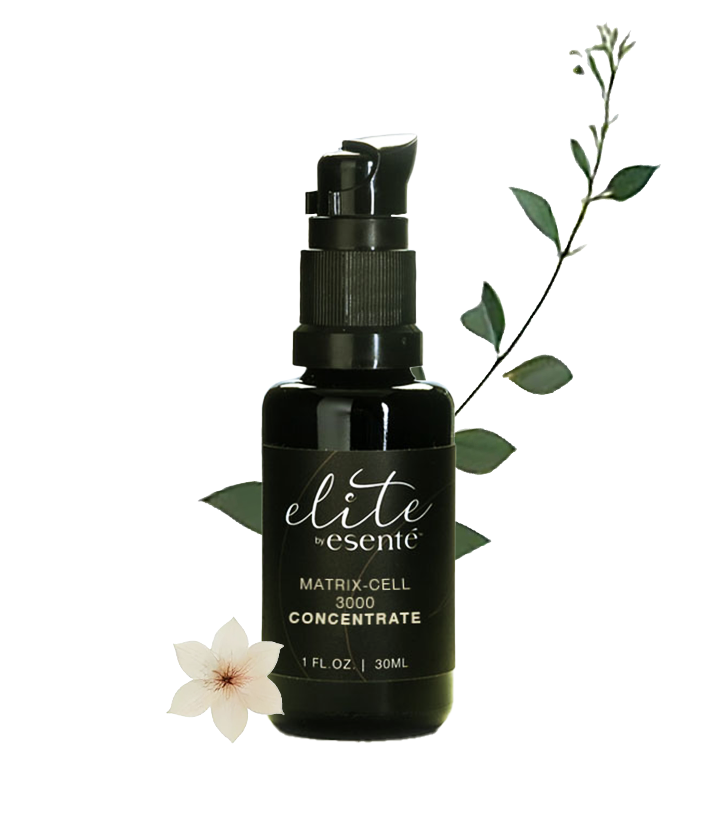
Esenté formulations cross both categories. Penta Peptide Serum and Matrix-Cell 3000 Concentrate provide peptide-focused options, while the Retinol Progressive 60-Day Renewal System and Retinol Serum provide Esenté’s new retinoid options.

Frequently asked questions

Are peptides better than retinol?

No. Retinoids have substantially stronger and more independent clinical evidence. Peptides are better tolerated, which makes them the better choice for skin that cannot sustain retinoid use.

Does peptide serum actually work?

Some peptides have published evidence for reducing wrinkle appearance and improving elasticity, with palmitoyl pentapeptide-4 among the most studied. Results are generally modest and slower than retinoids, and a meaningful share of the research is manufacturer-funded. Effects also vary widely between specific peptides, so the named ingredient matters more than the word “peptide.”

Can you use peptides and retinol together?

Yes. No published evidence shows mutual deactivation, and both layering and co-formulation are common. Alternating nights is the gentlest way to combine them if you are still building retinoid tolerance.

How long before peptide serum shows results?

The published peptide trials that found an effect ran for around twelve weeks, so give it months rather than weeks and judge it against a photograph rather than a memory. Hydration and surface smoothness may improve sooner. Anything visible within days is temporary surface plumping.

When should you apply peptide serum, morning or night?

Either works. Peptides are not photosensitive and do not increase sun sensitivity. Many people use peptides in the morning and a retinoid at night, which keeps the two on separate schedules without extra effort.

Are peptides safe during pregnancy?

Peptides are generally considered well tolerated, but pregnancy and breastfeeding require additional consideration when choosing skincare ingredients. Retinoids are generally avoided during pregnancy. If you are pregnant or breastfeeding, discuss retinoid use and any other active skincare ingredients with your physician.

About the author. Victoria Nash, founder of Esenté Skincare and Younger You Clinique, has been a licensed aesthetician since 2004 and is an experienced skincare educator.

Reviewed by Victoria Nash, licensed aesthetician and founder of Esenté Skincare & Younger You Clinique. This article is educational and is not medical advice. Consult your dermatologist or physician about ingredients appropriate for your skin and medical history.

CategoriesEsente Skincare

Collagen Loss After 50: What’s Actually Happening to Your Skin, and What Actually Helps

Short answer: The most-cited estimate is that women lose roughly 30% of the collagen in the dermis in the first five years after menopause, then about 2% per year for the next fifteen — though that 30% figure is re-cited review material rather than a measurement from the original study, which reported a decline of 1 to 2% per year. Estrogen withdrawal drives that first steep drop, which is why skin can seem to change overnight in your early fifties. You cannot restore what has already gone by applying a cream. What you can do is slow the ongoing loss, improve the quality and appearance of the skin at the surface, and rebuild the barrier — and the evidence for how to do that is much clearer than the marketing suggests.

Here is what the research actually shows, and where most anti-aging advice goes wrong.

The number that explains everything

In 1987, Brincat and colleagues measured skin collagen in postmenopausal women and found a decline tied to years since menopause. What that paper actually reports is a fall of roughly 1 to 2% per year (Obstet Gynecol 1987;70(6):840–5). The widely quoted “30% within five years of menopause” is not a figure from that paper. It entered the literature through later reviews citing one another, and it is now repeated almost everywhere — including, until we checked, here. It is worth knowing what it rests on. The study was cross-sectional: it compared different women at different stages rather than following the same women over time, and the slope was fitted by regression. No longitudinal study has replaced it. The literature re-cites it rather than reproducing it. Treat the numbers as the best available estimate, not a measured trajectory.

Collagen makes up roughly 70-80% of the dermis by dry weight — the load-bearing layer under the surface, not the whole thickness of skin. It is the scaffolding. If the commonly quoted estimate is anywhere near right, close to a third of it can go inside five years — and skin that behaved predictably at 48 becomes thinner, drier, slower to bounce back, and creased in places that used to smooth out overnight.

This is not vanity and it is not imagination. It is a measurable structural event with a hormonal cause.

Two other things happen at the same time and get less attention. Sebum production falls, so skin that was oily for forty years turns dry and stays dry. And the barrier weakens, which means the products you tolerated in your thirties can start to sting.

Why estrogen matters more than birthdays

Skin ages on two tracks at once.

Intrinsic aging is the clock. It runs at a steady, unremarkable pace in everyone and shows up as fine lines and gradual thinning.

Extrinsic aging is everything you have been exposed to, and sun exposure is the largest part of it you can control. The often-repeated figure attributing up to 80% of visible facial aging to UV is shakier than it sounds: it traces to a single 2013 study by researchers at a cosmetics company, which arrived at the number by summing the aging measurements it had already classified as sun-related. Studies of identical twins, which hold genetics constant, tell a more grounded story — sun exposure clearly makes people look older, but so do smoking and weight change, and genes account for roughly half the variation in wrinkling and sun damage. Deep wrinkles, uneven pigment, broken capillaries, leathery texture: that is photodamage, not the calendar.

Menopause adds a third track, and it is the one that compresses years of change into months. Estrogen supports fibroblast activity, collagen synthesis, skin thickness, and hydration. When it withdraws, all four fall together. That is why the change feels abrupt rather than gradual, and why women often describe it as their skin “falling off a cliff.”

It also explains something useful: because the cause is specific, so is the intervention. This is not a generic anti-aging problem.

What can and cannot be undone

Set expectations honestly, because the industry will not.

A topical skincare product cannot simply replace the dermal collagen and volume lost over time. Any product claiming to reverse decades of loss in six weeks is selling temporary surface hydration, which plumps fine lines for a few hours and then leaves.

You can slow further loss. Daily sun protection has the best evidence of anything available for this, and it is the step most often skipped.

Retinoids are the topical category with the strongest evidence behind them. In controlled trials, prescription tretinoin increased type I procollagen in photodamaged skin, and decades of independent research support the class. In-office procedures such as microneedling, radiofrequency, and laser resurfacing work more aggressively, and are performed by an appropriately licensed or qualified professional, subject to applicable state requirements, rather than bought in a bottle.

You can rebuild the barrier, and it matters more than it sounds. A repaired barrier holds water, tolerates actives better, and makes skin look immediately better while the slower structural work happens underneath.

Worth saying plainly, because the industry rarely does: none of this competes with a filler or a facelift, and it is not trying to. Injectables add volume. Surgery repositions tissue. Topical actives change the quality of the skin itself, which is the thing neither of those addresses. Plenty of women want the third option without the first two, and the honest version of that promise is better skin, not a different face.

Systemic hormone therapy also affects skin collagen, and the original Brincat work found less decline in the women receiving hormone replacement. That is a conversation for your physician, weighed against your full medical history, not a decision to make from a skincare article.

The actives with real evidence behind them

Six things earn their place in a routine after 50. Everything else is optional.

Retinoids. The most studied topical anti-aging ingredient in existence, and it is worth being precise about what is actually approved. Two topical retinoids carry FDA-approved anti-aging indications, both narrower than the marketing suggests: tretinoin, as Renova or Refissa rather than Retin-A — which is approved for acne only — is indicated as an adjunctive agent for the mitigation of fine facial wrinkles, and at 0.05% also mottled hyperpigmentation and tactile roughness, in people already using comprehensive skin care and sun avoidance. Tazarotene 0.1% cream carries a comparable indication. Each of those labels states plainly that the drug does not eliminate wrinkles, repair sun-damaged skin, or reverse photoaging. In controlled trials the class activates fibroblasts, increases type I procollagen in photodamaged skin, and reduces the matrix metalloproteinases that break collagen down. Over-the-counter retinol converts to the same active form in the skin, more slowly and less potently, which for thinning post-menopausal skin is often an advantage rather than a compromise. Retinoids carry more supporting evidence than any other topical category, but they need to be introduced gradually. Published protocols start at twice a week and reach nightly over about six weeks; irritation tends to peak in the first two weeks and settle after that. As for results, trials have detected differences at four weeks, but a change you notice in the mirror usually takes several months.

Sunscreen. Given how much of visible facial aging traces to UV, broad-spectrum SPF 30 or higher every morning is the step with the strongest preventive evidence behind it. It is also usually the cheapest step in the routine. Nothing you apply at night outruns unprotected daylight.

Vitamin C. A topical antioxidant that defends against daily environmental damage, and a cofactor in the body’s own collagen chemistry, which is why it appears in every discussion of aging skin. L-ascorbic acid is the best-documented form. It needs an acidic formula — below about pH 3.5 — to get through the skin’s surface, a figure that comes from a 2001 Duke study performed on pig skin, and the vitamin E and ferulic acid pairing is the best-documented formulation approach rather than a demonstrated winner over every alternative. It is also unstable: light, air, heat and trace metals all degrade it, and how quickly depends on the formulation, the packaging and where you keep it. The same formula lasts differently in a clear bottle on a warm shelf than in light-filtering packaging. Packaging is part of the ingredient.

Peptides. Short amino-acid chains, some of which act as messengers in the skin. Palmitoyl pentapeptide-4 has the best evidence of any cosmetic peptide: a 12-week, 93-person placebo-controlled split-face trial found modest improvement in the appearance of fine lines, at a concentration of three parts per million. That trial was run by the company selling the ingredient, and “modest” is the operative word. Peptides are generally well tolerated and a reasonable fit for reactive skin that cannot handle a retinoid every night. The independent evidence base is thinner than for retinoids and much of the published work is manufacturer-funded, so treat peptides as a supporting player rather than the lead.

Niacinamide. Strengthens the barrier, calms redness, improves tone, and plays well with almost everything else. After 50, barrier repair stops being optional.

Ceramides and hyaluronic acid. Unglamorous and essential. Ceramides help replenish and support the skin barrier, while hyaluronic acid helps attract and retain moisture. Together they make every other active work better and irritate less.

A routine that fits into real life

You do not need twelve steps. You need a few real actives applied consistently, which is the part most people get wrong.

Morning. Dermatology guidance is to wash your face morning and night. Esenté’s own approach, from Victoria Nash’s experience across more than two decades of working with skincare clients, is that many people do well with a gentle cleanse using warm water and a facial sponge or gauze pad in the morning, with a full cleanser reserved for oilier skin. Treat that as a preference worth trying rather than a rule — if your skin feels tight after a morning wash, a gentler cleanser is the more sensible fix, and individual needs vary. Follow with a high-quality antioxidant spray such as Esenté Hydro-Mist, or a toner — Esenté Octet Herbal Toner is a good choice. Then a serum suited to your skin type, a light daytime moisturizer with ceramides or peptides, and a broad-spectrum SPF 30 or higher every morning, without exception.

Evening. A gentle cleanser such as Esenté Orchid Reviving Cleanser, then an antioxidant spray or toner. If you wear waterproof eye makeup or lipstick, use a quality makeup remover on those areas only. Follow with a serum suited to your needs and a hydrating night creme.

Weekly. One gentle exfoliation with a micro-exfoliation scrub. Mature skin turns over more slowly, so a small amount of chemical exfoliation — including periodic professional treatment, at a frequency your own aesthetician sets — can improve texture and how well the rest of the routine spreads and absorbs. Physical scrubs on thinning skin may, for some people, cause micro-damage you do not need.

Two habits that matter more than product choice. Introduce one new active at a time and give it a few weeks before adding another — that is not a biological threshold, it is so that if your skin reacts you know what caused it. And apply thinnest to thickest, which is practical best practice rather than a physical law: a thin serum spreads and absorbs better on bare skin than over a layer of cream.

Where to spend and where to save

Cleanser is not the place to economize, and the advice to treat it as a throwaway step is wrong. Victoria Nash’s position, from more than two decades of working with skincare clients, is direct: inexpensive cleansers are often too harsh for sensitive skin, rarely pH balanced, and can strip the lipid barrier outright. Clients who arrive with red, blotchy, reactive skin — including rosacea and acne — frequently improve on a good cleanser and toner before anything else changes. In Esenté’s routine the cleanser is followed by an antioxidant spray or toner as a matter of course, and it is a foundational step rather than a disposable one.

Spend on the actives and on the packaging that keeps them alive. A well-formulated retinoid or vitamin C in light-protective packaging holds up better than the same formula in a clear bottle on a warm counter — how well any formula lasts depends on the complete formulation, the packaging, and how it is stored and used. That is why Esenté packages its Elite line in Miron violet glass, which the manufacturer describes as filtering light selectively rather than blocking it outright, reducing the wavelengths that drive degradation in light-sensitive formulations. That is a photochemistry argument, not a wellness one.

Spend on sunscreen you will actually wear every day, which usually means the texture matters more than the brand.

Frequently asked questions

How much collagen do you lose after menopause?

The most-cited estimate is about 30% of dermal collagen in the first five years after menopause, then roughly 2% per year afterwards. Treat the 30% with caution: it is re-cited review material rather than a measurement from the original study, which reported a decline of roughly 1 to 2% per year. It traces to Brincat and colleagues’ 1987 cross-sectional study, which no longitudinal work has replaced — a well-founded estimate rather than a measured trajectory.

Can collagen loss be reversed?

A topical skincare product cannot simply replace the dermal collagen and volume lost over time. Retinoids have the strongest evidence of any topical category for improving photodamaged skin, and in-office procedures such as microneedling, radiofrequency and fractional laser — performed by an appropriately licensed or qualified professional, subject to applicable state requirements — work more aggressively. Further loss can be slowed, and daily sun protection is the most effective way to do it.

Do collagen supplements help skin?

Some randomized trials report modest improvements in skin hydration and elasticity readings with oral collagen peptides. The trials are mostly small, short and funded by the companies selling the product. When a 2025 review in The American Journal of Medicine separated 23 trials by who paid for them, the independently funded ones showed no benefit. Larger 2026 analyses land somewhere narrower than the marketing: modest hydration and elasticity gains, with wrinkle and skin-density results largely disappearing once outlier trials are removed. Treat supplements as a possible small addition, not a replacement for topical actives and sun protection.

What causes collagen loss besides age?

Sun exposure is the largest external driver you can control. Smoking has the strongest evidence of the lifestyle factors and works at both ends — it lowers new collagen production and raises the enzymes that break down what is already there; in a study of 79 identical twin pairs where only one twin smoked, blinded assessors consistently picked the smoker. High blood sugar does something different rather than more of the same: sugar molecules cross-link collagen fibers, and the linked fibers become stiff and harder for the body to clear and replace. Sleep and everyday stress are weaker cases than they are usually given credit for — poor sleepers repair a damaged barrier more slowly, but no study has shown that ordinary sleep loss or stress breaks collagen down.

Is it too late to start a skincare routine at 60 or 70?

No. Studies of topical retinoids show measurable improvement in photodamaged skin across age groups, and barrier repair improves comfort and appearance at any age. The gains are real, they simply build more slowly.

Which anti-aging product has the best evidence behind it?

Broad-spectrum sunscreen, used every morning. In a four-and-a-half-year randomized trial in Queensland, Australia, adults assigned to apply broad-spectrum SPF 15+ daily showed 24% less measurable skin aging on the back of the hand than adults left to use it at their own discretion, and no detectable increase across the study period. It is one of very few randomized controlled trials to test whether a daily-use product slows visible photoaging in people. It prevents damage rather than correcting what is already there.

About the author. Victoria Nash, founder of Esenté Skincare and Younger You Clinique, has been a licensed aesthetician since 2004 and is an experienced skincare educator.

Reviewed by Victoria Nash, licensed aesthetician and founder of Esenté Skincare & Younger You Clinique. This article is educational and is not medical advice. Discuss hormone therapy and any medical treatment with your physician.

Formulation being prepared in a development laboratoryCategoriesEsente Skincare

What “Medical Grade Skincare” Actually Means (And When It’s Worth the Money)

Short answer: “Medical grade” is a marketing term, not a regulatory one. No agency defines it or certifies who may print it on a box. What it usually signals in a serious brand is a cluster of checkable differences: higher concentrations of proven actives, ingredient quality you can ask about, packaging that protects those actives, and formulation designed to deliver them into the upper layers of the skin. Those differences are worth paying for. The words on the label are not.

That distinction is the whole game, and most shoppers never learn it.

Victoria Nash, founder of Esenté Skincare and Younger You Clinique
Victoria Nash, founder of Esenté Skincare and Younger You Clinique.

The regulatory reality nobody mentions at the counter

U.S. law does not sort face products by what they are. It sorts them by what they are sold to do. A product marketed to cleanse, beautify, or change how skin looks is a cosmetic. A product marketed to treat a condition, or to change how skin works, is a drug. Plenty of products are both at the same time, and have to satisfy both sets of rules: a moisturizer sold with a sun protection claim is a cosmetic because it moisturizes and an over-the-counter drug because it helps prevent sunburn.

What does not exist is a comfortable category in between. The FDA states plainly that the term “cosmeceutical” has no meaning under the Federal Food, Drug, and Cosmetic Act. “Medical grade,” “clinical grade,” “physician grade,” and “pharmaceutical grade” carry the same legal weight, which is none. No agency defines them, and nobody certifies who may print them on a box.

That is not the same as nobody policing them. There is no standard behind the words. But the moment they imply that a product is clinically proven, or that it works the way a prescription does, that implied claim has to be backed up — the FTC can act on it, the FDA can read it as evidence the product is really an unapproved drug, a competitor can take it to the National Advertising Division, and state consumer-protection law gives private plaintiffs their own route.

Read that again before you spend $180 on a serum.

Cosmetics also do not require FDA approval before they reach the market. Color additives are the exception. Everything else goes on sale, and regulators act after the fact if something goes wrong.

So why does anyone pay more?

What the term signals when a serious brand uses it

Strip away the legal void and a pattern remains. Brands that sell through dermatologists, plastic surgeons, and licensed estheticians tend to formulate differently from brands that sell through a department store. Four differences show up repeatedly, and you can verify all four yourself.

Appropriate active concentrations. Most retinol sold in the United States falls between about 0.1% and 1%, and several drugstore lines ship 0.5% to 1% for under twenty dollars. Anything advertised at 2% or higher is usually quoting a diluted blend rather than that much actual retinol. Price does not tell you the dose, and the dose on its own settles very little. Concentration has to be considered alongside the formulation it sits in, the delivery system carrying it, how stable it is in the bottle, and how well your skin tolerates it. A well-formulated, stabilized 0.3% retinol can serve you better than a 1% that oxidized on the shelf or that your skin cannot tolerate often enough to use. In one company-funded study, 0.3% retinol produced the same structural changes in skin as 1% while causing far fewer reactions — 35% of people using 1% reported a moderate reaction against 8% at 0.3%. That study measured biopsies of forearm skin rather than wrinkles on a face, so treat “a lower well-formulated dose is usually enough” as a sensible starting position rather than a settled fact.

Raw material purity. “Pharmaceutical grade” does not mean a vaguely purer version of the same thing. It means the material was made and tested against a published monograph: a specific identity test, a named list of impurities with numeric ceilings, limits on residual solvents and trace metals, a microbial specification, and documentation proving each batch was checked. “Cosmetic grade” is not a legal category anywhere — it is a supplier’s assurance that the material is fit for use on skin, which sometimes means testing for things a drug monograph ignores entirely. You will never see any of this on a label. Where a brand publishes information about its raw material sourcing and grade, that is worth reading. Most do not publish it at all.

There is a further layer here that almost no brand discusses, and it is worth knowing because it separates formulation philosophies. Some molecules exist in two mirror-image forms, a left hand and a right hand. Which form is present usually decides whether the ingredient does its job at all: L-lactic acid raises the skin’s own ceramide levels where its mirror image does not, and D-panthenol is the active form while L-panthenol is inert. That relationship is specific to each compound rather than a general law. Chiral correction means sourcing and processing the form that does the work, and in Esenté’s experience that costs more than using the uncorrected material. Reading it off a label is not straightforward, because the naming convention behind ingredient lists usually leaves optical isomers undesignated — which is why L-ascorbic acid is normally declared simply as “Ascorbic Acid.” The convention has documented exceptions, so a designator that is printed is meaningful, while its absence tells you nothing either way. Esenté’s own ingredient declarations, supplied through its formulation and manufacturing sources, carry the applicable chiral designators. Esenté uses chirally corrected ingredients where the formulation calls for them.

Packaging that protects the formula. This one is measurable and almost nobody checks it. L-ascorbic acid, the most studied form of topical vitamin C, degrades on exposure to light, oxygen, heat, and water. A water-based vitamin C serum kept warm, with regular light and air exposure, can lose meaningful potency within weeks, though how quickly depends on the formulation, the packaging and where it is stored. Color is a poorer guide than most people assume, since some formulas start out gold or amber and the first breakdown products are colorless. Retinoids degrade under UV. A photosensitive active in clear plastic or clear glass is losing ground between applications, whatever the bottle cost.

Evidence on the finished product. Ingredient studies are more readily available and more commonly cited. Studies on the actual finished formula are rarer and more expensive, and not every well-made cosmetic has one. They do not carry the weight of an FDA drug trial, and many are funded by the manufacturer, so read them with that in mind. Where they exist, they tell you more about that specific product than an ingredient study does. And note what an appearance claim like “reduces the appearance of fine lines” actually means: it keeps the product on the cosmetic side of the FDA line, but it does not excuse the brand from having evidence. Nobody approves cosmetic claims before launch, and the FTC still expects a company to hold a reasonable basis for a performance claim before the advertising runs.

What a prestige price does and does not tell you

Department store skincare is often beautiful. The textures are gorgeous, the jars are heavy, and buying it feels like an occasion. Some prestige houses fund serious research and have a genuinely excellent hero product or two.

The trap is that price is not evidence. A high price can reflect research and formulation, and it can equally reflect the glass, the campaign and the retail experience. Nothing on the box tells you which, so you can pay a clinical price for a cosmetic formula and never find out.

Three specific things to check:

  • Clear packaging. Clear glass and clear plastic let in the wavelengths that break photosensitive actives apart. For retinol and vitamin C this matters more than anything else on the outside of the bottle. Light-filtering glass costs more and photographs less well than clear glass — a real commercial trade-off, and one worth knowing about when you are looking at a bottle.
  • Fragrance high in the ingredient list. Added fragrance is a recognized source of sensitivity for some people, and it contributes nothing to aging skin. On a thinning, reactive barrier that is a risk without a return. Worth knowing that a scent arising naturally from botanical ingredients is not automatically gentler — naturally occurring fragrant constituents can provoke a reaction in susceptible skin too.
  • Marquee actives in trace amounts. A label can name an impressive peptide that sits second-to-last on the ingredient list, below the preservative. On its own that is a question rather than a verdict: whether an ingredient does anything depends on concentration, formulation and delivery, and some genuinely effective ingredients belong below one percent.

The reverse trap is just as real. Several drugstore lines developed with dermatologists deliver excellent barrier repair, hydration, and sun protection for a fraction of the price. No amount of clinical branding beats a well-made $18 moisturizer that you use every night. Price predicts quality in neither direction.

The honest test: five questions before you buy

Skip the label. Ask these instead.

  1. Which actives are in it, and where do they sit on the ingredient list? Ingredients appear in descending order of concentration down to 1%. Below that threshold they may be listed in any order, so position stops being informative. That is a limit on what a label can tell you, not a verdict on the brand.
  2. How is it packaged? Opaque or light-filtering glass, a small opening, a pump rather than an open mouth. A photosensitive active in a clear container is a fair thing to ask a brand about, because light is the variable most likely to be quietly costing you the active you paid for.
  3. What expertise stands behind it? Product development is often collaborative, bringing together brand experience with professional formulation and manufacturing expertise. A serious brand can explain its development philosophy and quality standards clearly, and the credentials of the people behind it. An unnamed “team of experts” and nothing further tells you less.
  4. What does the brand claim, and in what language? Appearance claims keep a product on the cosmetic side of the line. Specific mechanism claims invite scrutiny.

    Worth understanding why the language sounds careful even on products that work, because there is no magic word here. Adding “helps” or “may” does not move a claim across the line, and the FDA has cited plenty of companies whose copy was already hedged. What matters is what the product is sold to do, judged from the label, the website, the advertising and the ingredient story taken together. A claim about how skin looks is a cosmetic claim. A claim about what happens inside the skin — building collagen, rebuilding tissue, treating a condition — is a drug claim however gently it is phrased. The dependable construction is “improves the appearance of fine lines,” and it has to be true and supportable either way.

  5. What does the brand say about testing the finished product, and who ran it? Look at what is published. A brand that describes how a finished formula was evaluated, and by whom, is on firmer ground than one whose evidence is a shelf of awards and press mentions.

So is it worth it?

For skin that is actively losing structure, usually yes, on one condition: you are buying the formula, not the phrase.

The case for spending more is straightforward. Higher active concentrations, cleaner raw materials, packaging that keeps the actives alive, and formulation designed to be absorbed into the upper layers of the skin produce visible change that surface hydration cannot touch. Concentrated formulas can also go further per drop, though whether that offsets the price depends on the product and how you use it.

The case against is equally straightforward. A high price is not evidence of any of that, and nothing on the box separates a formulation budget from a marketing one. The label will not tell you which you are paying for. Only the formula will.

Esenté uses the phrase “clinical grade,” and we hold ourselves to the checkable version of it: concentrations that do work, Miron violet glass, which the manufacturer describes as filtering light selectively rather than blocking it outright, reducing the wavelengths that drive degradation in light-sensitive formulations, chirally corrected ingredients where the formulation calls for them, and formulations developed collaboratively by Victoria Nash with our professional formulation and manufacturing partners rather than to a marketing brief. Esenté formulations are also used in the company’s own treatment clinic, Younger You Clinique, where working professionals apply them on real skin.

You should still ask us all five questions above. Any brand worth your money will answer them.

Elite by Esenté Matrix-Cell 3000 Concentrate in Miron violet glass with a pump top
Esenté’s Elite collection ships in Miron violet glass.

Frequently asked questions

Is medical grade skincare FDA approved?

No. The FDA does not approve cosmetics before they go to market, and it does not recognize “medical grade,” “clinical grade,” or “cosmeceutical” as regulatory categories. Only color additives and over-the-counter drug products such as sunscreen go through pre-market review.

Is medical grade skincare just marketing?

The phrase is marketing. The formulation differences it usually points to are real and verifiable: active concentration, raw material purity, protective packaging, and how well the formula is designed to be absorbed. Judge those four, not the phrase.

Why is medical grade skincare so expensive?

Higher active concentrations, carefully specified raw materials, stability testing, and protective packaging can all increase formulation and production costs. Chirally corrected ingredients cost more again, in Esenté’s experience. Distribution through professionals also carries training and support costs. Some of the price reflects genuine formulation cost, and some may reflect branding, packaging, distribution and positioning.

Does medical grade skincare actually work better than drugstore products?

Sometimes. It depends entirely on the specific products being compared, and the comparison has rarely been run head to head. A well-formulated professional retinol that discloses its concentration and protects it from light gives you more to go on than an undisclosed drugstore version — but a dermatologist-developed drugstore ceramide moisturizer can equally outperform a prestige cream at several times the price. Judge the formula, not the channel it sells through.

Can estheticians sell medical grade skincare?

Licensed estheticians can retail professional and clinical lines, and many brands sell exclusively through them. Scope-of-practice rules vary by state and govern what treatments an esthetician may perform, not which cosmetics they may resell. Check your state board for specifics.

How long does it take to see results?

It depends on what you are trying to change. Hydration and barrier comfort often improve within one to two weeks. Changes in fine lines, firmness and tone move far more slowly: retinol trials have detected differences as early as four weeks, but a difference you notice in the mirror usually takes several months of consistent use, and some things — skin texture in particular — may never shift much. Any product promising visible wrinkle reversal in days is describing temporary surface plumping.

About the author. Victoria Nash, founder of Esenté Skincare and Younger You Clinique, has been a licensed aesthetician since 2004 and is an experienced skincare educator.

Reviewed by Victoria Nash, licensed aesthetician and founder of Esenté Skincare & Younger You Clinique. This article is educational and is not medical advice. Ask your dermatologist or licensed skincare professional about your own skin.

blog featured imgCategoriesEsente Skincare

All You Need to Know About Peptides in Your Skincare Routine

Be it a new ingredient or some new skincare range, the skincare specialists have something new to talk about every day. Some ingredients are more hyped than they actually work, on the other hand, some are really worth all the buzzes. One such product that we are going to talk about today is Peptides. Well, peptides are amino acids that make up certain proteins needed by the skin. Serums, moisturizers, as well as hair care staples, are now promoting the use of peptides. While skincare professionals recommend the use of peptides in the skincare routine, skincare enthusiasts are a bit dicey about whether they should incorporate peptides in their skincare or not. Well, polypeptides used in skincare are fragmented pieces of protein that signal the skin to produce more collagen. The skin absorbs these peptides easily. These peptides boost the natural collagen factor within the skin, and this is what makes the skin look supple, tight, and blemish-free. Not known to many, polypeptides naturally occur on the skin and are essential amino acids that contain protein. They are responsible for the skin’s texture and elasticity. However, with age, the collagen produced by the skin decreases, due to which wrinkles, and fine lines become more visible. This is why nowadays skincare experts recommend the use of peptides in multiple skincare products.

How Beneficial Are Peptides?

  • Reduces Appearance of Wrinkles – Peptides produce collagen that helps in plumping the skin, and this reduces the appearance of fine lines and wrinkles making the skin look younger.
  • Enhances The Elasticity of The Skin – Elastin fibers are one of the proteins made by peptides, which work in fixing the firmness of the skin and ensure that the skin doesn’t sag over time.
  • Eases Inflammation – Peptides usually help in easing inflammation, repairing damaged skin, and even out the skin tone.
  • Help In Clearing Breakouts – Some of the peptides are antimicrobial and can kill the bacteria that cause acne.
  • Improved Skin Barrier – The skin barrier is a line of defense against bacteria, UV rays, pollution, etc. and when this gets damaged due to various reasons like poor sleep and pollution, peptides help in building up a stronger barrier.

In a nutshell, peptides are great for your skin. Using serum or moisturizer containing peptides can lead to younger-looking and supple skin. If you are looking for some skincare options that would help your skin to glow and stay healthy, then feel free to check out the complete skincare range at https://esenteskincare.com/, and add some effective skincare products to your skincare routine.

eye gelsCategoriesEsente Skincare

Why Eye Gels and Serums Are a Must in Your Skincare Routine?

Even the simplest skincare routines should consist of eye gels. Often eyes are the most neglected area when we talk about pampering our skin. Have you noticed how after a long night, you get baggy, dark, and puffy eyes the next morning? Well, the skin around your peepers is more fragile than the rest of your face and body and needs extra care. It has very few oil glands to hydrate it and is highly sensitive. Often, we make the mistake of using normal moisturizers for this area too, but have you ever thought that the moisturizers aren’t formulated for this fragile area? This is why you need eye gels or serums. Eye serums are formulated to target the delicate skin around the eyes. They moisturize your under-eye skin and have just the right amount of specific ingredients to help and not hurt. Eye gels and serums are meant to lessen the puffiness, bags, and uneven tone keeping the area nourished and supple. Still dicey why do you need eye gels? Here are some compelling benefits of using an eye gel.

  • Lessens The Appearance of Wrinkles – Eye gels and serums contain antioxidants, vitamins, and hydrators that help with lessening the appearance of wrinkles.
  • Eliminates Puffiness – Fluid buildup often causes puffiness which can be due to sleep deprivation, allergies, and aging. The eye serums and gels are made in a way to eliminate puffiness.
  • Hydrates the Skin – These gels give apt hydration needed by your eyes. They have the right ingredients that won’t irritate your skin and dry it out later.
  • Reduces Dark Circles – Eye serums are full of beneficial botanicals that minimize discoloration and help to even out the skin tone.
  • Prepares Your Skin for Makeup – After applying eye gels, the concealer usually blends evenly, and these gels keep it from building up in expression lines over the day.
  • Strengthens And Protects Delicate Skin – Your undereye skin is fragile and needs extra care. Eye serums or gels usually boast ingredients that target adding resilience to the area.

Now that you know why you need an eye gel or a serum, order it for yourself today from https://esenteskincare.com/ and pamper your eyes.

Why Using a Toner Daily Is RecommendedCategoriesEsente Skincare

Why Using a Toner Daily Is Recommended?

An ideal daily skincare regime is purely based on the CTM i.e., Cleansing, Toning, and Moisturizing, or talking about nighttime skincare, one might use Night Renewal Set  However, the first and the last steps are non-negotiable, but can we skip the toning step? Well, toners are often taken for granted. They have been a confusing skincare product for many of us. While some of us feel it is a skippable step, others swear by its pH-balancing benefits. But is toning really necessary? Well, let us find it out!

What is a Skin Toner?

Before you dig in deep to find out whether you can skip a skin toner or not, it is essential to first understand what a skin toner is and what it does. Well, a toner is basically a water-based product that is designed to remove whatever’s left of makeup, dirt, and oil after cleansing. It usually helps in closing pores and brightening the skin. Toner offers extra hydration, keeps the face clean and refreshed, minimizes the appearance of pores, and much more.

Talking about what a toner usually does, its basic function is to prep skin for the serums and creams applied after. It also balances the skin’s pH levels and restores it to an acidic state.

Some of the Best Toners You Can Use: 

  • Hydro-Derm Infusion – This is a light alcohol-free analgesic botanical tonic that infuses the skin with hydration while enhancing the permeability of the skin, to improve the effects of the skincare regime.
  • Mineral Plus Toner – It is a multi-functional hydrating and revitalizing toner with aromatic scents of Ginseng, Chamomile, and Geranium, to warm the senses. It further enhances the skin’s natural regeneration process and helps in maintaining elasticity.
  • Octet Herbal Toner – This is a synergistically blended formulation of eight cold-pressed extracts and helps in balancing the skin’s pH level and tone, as well as clarifying the delicate skin. It is an infusion of natural extracts, delicately scented with lavender, lemon, and geranium essential oils.

So, the next time you swab your face with a toner-soaked cotton ball, no need to worry whether you should do it or not. Using a good toner will definitely maximize the results. Get your hands on a good toner at https://esenteskincare.com/. Elite by Esente is your ultimate destination for superior skincare and clinical-grade products that provide the finest and most effective results. For more details, visit our website today.

acneCategoriesEsente Skincare

Skincare Tips For Hormonal Acne

Having acne isn’t just uncomfortable — it can also be a sign of hormonal imbalance. Acne is a common skin condition that causes you to get many pimples at once. Several causes include pollution, UV rays, stress, medications, or pore-clogging cosmetics. You can address these causes with extra protection and the right skincare products. However, hormonal acne — caused by an imbalance of hormones like estrogen, progesterone, and testosterone — can be much more challenging.

When the causes are all happening in your body, your treatment must be holistic. Here are some ways you can regulate hormonal acne immediately.

Regularly cleanse your face

While hormonal acne is caused by many things, you can avoid exacerbating your skin problems by cleansing your skin regularly. Acne is caused by pores blocked by dead skin cells, dirt, bacteria, and oil. To remove these irritating substances from your skin, you should cleanse your face regularly, especially when you’ve put on makeup, to avoid clogging.

Cleansers with benzoyl peroxide or salicylic acids are known to facilitate exfoliation and remove these irritating substances. Be careful about what products you use on your face, and ensure that they don’t contain fragrances, synthetic chemicals, or oils that can irritate your skin further.

Observe a balanced diet

Your diet influences your hormonal balance because of its impact on the gut microbiome. This is particularly true if you’ve noticed a sudden growth of acne after a rapid weight change. It may signal a shift in your hormones and poor nutritional quality. So the first step to beating hormonal acne is ensuring you’re putting all the right stuff in your body by having a nutritionally balanced diet.

Fortunately, there is a wealth of resources available online that can help you without the need to radically overhaul your diet. Research-based weight loss programs are designed to promote nutritional balance instead of eliminating entire food groups. To encourage a balanced diet these programs prioritize choosing healthier alternatives to common ingredients. For instance, you can choose skimmed milk instead of full cream milk or natural sugars instead of artificial sweeteners. This helps you enjoy foods you love, allowing you to sustain a balanced diet, which in turn helps your gut microbiome balance out your hormones. When maintained, this should do wonders for your skin.

Practice good sleep hygiene

Stress and lack of sleep go hand-in-hand. And unfortunately, both of these things can contribute to hormonal acne. Poor sleep quality and irregular sleeping patterns can take a toll on your emotions and impair your ability for proper cognitive function in the short term. This could lead to greater stress. Additionally, the stress hormone cortisol increases at night, so it can trigger inflammation when you lack sleep and stay up late. When you get a night of proper sleep, you reduce stress levels and help your body repair skin.

Proper sleep hygiene involves going to sleep and waking up at the same time every day. You can encourage this consistency by standardizing sleep rituals, like showering, turning down the lights, and cooling your sleeping area. You should also avoid using your phone an hour or so before bedtime. In doing this, you lower the chances of stress that could lead to a hormonal imbalance. This in turn will help your body repair damaged skin due to dermatological conditions.

Dealing with hormonal acne requires a holistic approach. By practicing these three techniques, you can naturally address your skin condition. If you’re looking for more tips on how to care for your skin, you can check us out here at Esenté Skincare.

blog featured imgCategoriesEsente Skincare

Best Skincare Products to Help Sagging Skin

Ever thought about what causes droopy skin? Well, you might be thinking that it is a sign of aging. But what actually causes loose skin? As you grow older, the skin loses its youthful and plump appearance, and this is due to the loss of skin elasticity. The appearance of wrinkles and fine lines on the skin indicates that your skin’s elasticity is deteriorating. When your skin is firm, it bounces back to its original place when stretched, but as your skin loses its elasticity, it droops and becomes dull. Consider a brand-new rubber band, when you stretch it, the rubber band will immediately bounce back to its original shape, but once it loses its elasticity, it will droop. In a nutshell, your skin becomes saggy due to loss of elasticity, but what skin elasticity means? Let us find it out!

What is Skin Elasticity?

There are basically two key fiber proteins in the skin responsible for keeping skin firm and elastic namely: collagen, and elastic. While collagen contributes to keeping the skin supple and firm, elastin gives skin flexibility. This influential duo is considered to be the gatekeepers to youthful skin and are essential for preserving the skin’s structure.

Skin with high elasticity is plump, firm, and youthful in appearance. And as we age, our skin produces and retains less elastin and collagen, which in turn leads to sagging and wrinkling skin.

What Causes Loss of Skin Elasticity?

One of the major causes of loss of skin elasticity can be aging, but that’s not it. Due to a lot of other factors as well, one might end up losing skin elasticity.

  • Sun exposure
  • Poor lifestyle
  • Pollution
  • Dehydration
  • Extensive weight loss
  • Smoking

All the factors result in slowing down the production of elastin resulting in a loss of firmness combined with gravity ultimately causing the skin to sag around the cheeks, jaws, and eyes. But the Best Skincare Products to help Sagging Skin can help indealing with this issue easily.

Improving Skin Elasticity

Even though losing skin elasticity is a natural phase that every individual has to face, there are certain ways that can be implemented to improve or restore skin elasticity. Let us find it out:

  • Don’t step out without a sunscreen
  • Cleanse your face with a good cleanser
  • Moisturizing skin daily
  • Using anti-aging products
  • Follow a good skincare routine

As you age, your skin needs extra care and nourishment. Thus, make sure to follow a dedicated skincare regime and make your skin look healthy and firm. You can check out the complete skincare range at https://esenteskincare.com/, and get your hands on quality skincare products for youthful and glowing skin.