

Short answer: “Medical grade” is a marketing term, not a regulatory one. No agency defines it or certifies who may print it on a box. What it usually signals in a serious brand is a cluster of checkable differences: higher concentrations of proven actives, ingredient quality you can ask about, packaging that protects those actives, and formulation designed to deliver them into the upper layers of the skin. Those differences are worth paying for. The words on the label are not.
That distinction is the whole game, and most shoppers never learn it.

The regulatory reality nobody mentions at the counter
U.S. law does not sort face products by what they are. It sorts them by what they are sold to do. A product marketed to cleanse, beautify, or change how skin looks is a cosmetic. A product marketed to treat a condition, or to change how skin works, is a drug. Plenty of products are both at the same time, and have to satisfy both sets of rules: a moisturizer sold with a sun protection claim is a cosmetic because it moisturizes and an over-the-counter drug because it helps prevent sunburn.
What does not exist is a comfortable category in between. The FDA states plainly that the term “cosmeceutical” has no meaning under the Federal Food, Drug, and Cosmetic Act. “Medical grade,” “clinical grade,” “physician grade,” and “pharmaceutical grade” carry the same legal weight, which is none. No agency defines them, and nobody certifies who may print them on a box.
That is not the same as nobody policing them. There is no standard behind the words. But the moment they imply that a product is clinically proven, or that it works the way a prescription does, that implied claim has to be backed up — the FTC can act on it, the FDA can read it as evidence the product is really an unapproved drug, a competitor can take it to the National Advertising Division, and state consumer-protection law gives private plaintiffs their own route.
Read that again before you spend $180 on a serum.
Cosmetics also do not require FDA approval before they reach the market. Color additives are the exception. Everything else goes on sale, and regulators act after the fact if something goes wrong.
So why does anyone pay more?
What the term signals when a serious brand uses it
Strip away the legal void and a pattern remains. Brands that sell through dermatologists, plastic surgeons, and licensed estheticians tend to formulate differently from brands that sell through a department store. Four differences show up repeatedly, and you can verify all four yourself.
Appropriate active concentrations. Most retinol sold in the United States falls between about 0.1% and 1%, and several drugstore lines ship 0.5% to 1% for under twenty dollars. Anything advertised at 2% or higher is usually quoting a diluted blend rather than that much actual retinol. Price does not tell you the dose, and the dose on its own settles very little. Concentration has to be considered alongside the formulation it sits in, the delivery system carrying it, how stable it is in the bottle, and how well your skin tolerates it. A well-formulated, stabilized 0.3% retinol can serve you better than a 1% that oxidized on the shelf or that your skin cannot tolerate often enough to use. In one company-funded study, 0.3% retinol produced the same structural changes in skin as 1% while causing far fewer reactions — 35% of people using 1% reported a moderate reaction against 8% at 0.3%. That study measured biopsies of forearm skin rather than wrinkles on a face, so treat “a lower well-formulated dose is usually enough” as a sensible starting position rather than a settled fact.
Raw material purity. “Pharmaceutical grade” does not mean a vaguely purer version of the same thing. It means the material was made and tested against a published monograph: a specific identity test, a named list of impurities with numeric ceilings, limits on residual solvents and trace metals, a microbial specification, and documentation proving each batch was checked. “Cosmetic grade” is not a legal category anywhere — it is a supplier’s assurance that the material is fit for use on skin, which sometimes means testing for things a drug monograph ignores entirely. You will never see any of this on a label. Where a brand publishes information about its raw material sourcing and grade, that is worth reading. Most do not publish it at all.
There is a further layer here that almost no brand discusses, and it is worth knowing because it separates formulation philosophies. Some molecules exist in two mirror-image forms, a left hand and a right hand. Which form is present usually decides whether the ingredient does its job at all: L-lactic acid raises the skin’s own ceramide levels where its mirror image does not, and D-panthenol is the active form while L-panthenol is inert. That relationship is specific to each compound rather than a general law. Chiral correction means sourcing and processing the form that does the work, and in Esenté’s experience that costs more than using the uncorrected material. Reading it off a label is not straightforward, because the naming convention behind ingredient lists usually leaves optical isomers undesignated — which is why L-ascorbic acid is normally declared simply as “Ascorbic Acid.” The convention has documented exceptions, so a designator that is printed is meaningful, while its absence tells you nothing either way. Esenté’s own ingredient declarations, supplied through its formulation and manufacturing sources, carry the applicable chiral designators. Esenté uses chirally corrected ingredients where the formulation calls for them.
Packaging that protects the formula. This one is measurable and almost nobody checks it. L-ascorbic acid, the most studied form of topical vitamin C, degrades on exposure to light, oxygen, heat, and water. A water-based vitamin C serum kept warm, with regular light and air exposure, can lose meaningful potency within weeks, though how quickly depends on the formulation, the packaging and where it is stored. Color is a poorer guide than most people assume, since some formulas start out gold or amber and the first breakdown products are colorless. Retinoids degrade under UV. A photosensitive active in clear plastic or clear glass is losing ground between applications, whatever the bottle cost.
Evidence on the finished product. Ingredient studies are more readily available and more commonly cited. Studies on the actual finished formula are rarer and more expensive, and not every well-made cosmetic has one. They do not carry the weight of an FDA drug trial, and many are funded by the manufacturer, so read them with that in mind. Where they exist, they tell you more about that specific product than an ingredient study does. And note what an appearance claim like “reduces the appearance of fine lines” actually means: it keeps the product on the cosmetic side of the FDA line, but it does not excuse the brand from having evidence. Nobody approves cosmetic claims before launch, and the FTC still expects a company to hold a reasonable basis for a performance claim before the advertising runs.
What a prestige price does and does not tell you
Department store skincare is often beautiful. The textures are gorgeous, the jars are heavy, and buying it feels like an occasion. Some prestige houses fund serious research and have a genuinely excellent hero product or two.
The trap is that price is not evidence. A high price can reflect research and formulation, and it can equally reflect the glass, the campaign and the retail experience. Nothing on the box tells you which, so you can pay a clinical price for a cosmetic formula and never find out.
Three specific things to check:
- Clear packaging. Clear glass and clear plastic let in the wavelengths that break photosensitive actives apart. For retinol and vitamin C this matters more than anything else on the outside of the bottle. Light-filtering glass costs more and photographs less well than clear glass — a real commercial trade-off, and one worth knowing about when you are looking at a bottle.
- Fragrance high in the ingredient list. Added fragrance is a recognized source of sensitivity for some people, and it contributes nothing to aging skin. On a thinning, reactive barrier that is a risk without a return. Worth knowing that a scent arising naturally from botanical ingredients is not automatically gentler — naturally occurring fragrant constituents can provoke a reaction in susceptible skin too.
- Marquee actives in trace amounts. A label can name an impressive peptide that sits second-to-last on the ingredient list, below the preservative. On its own that is a question rather than a verdict: whether an ingredient does anything depends on concentration, formulation and delivery, and some genuinely effective ingredients belong below one percent.
The reverse trap is just as real. Several drugstore lines developed with dermatologists deliver excellent barrier repair, hydration, and sun protection for a fraction of the price. No amount of clinical branding beats a well-made $18 moisturizer that you use every night. Price predicts quality in neither direction.
The honest test: five questions before you buy
Skip the label. Ask these instead.
- Which actives are in it, and where do they sit on the ingredient list? Ingredients appear in descending order of concentration down to 1%. Below that threshold they may be listed in any order, so position stops being informative. That is a limit on what a label can tell you, not a verdict on the brand.
- How is it packaged? Opaque or light-filtering glass, a small opening, a pump rather than an open mouth. A photosensitive active in a clear container is a fair thing to ask a brand about, because light is the variable most likely to be quietly costing you the active you paid for.
- What expertise stands behind it? Product development is often collaborative, bringing together brand experience with professional formulation and manufacturing expertise. A serious brand can explain its development philosophy and quality standards clearly, and the credentials of the people behind it. An unnamed “team of experts” and nothing further tells you less.
- What does the brand claim, and in what language? Appearance claims keep a product on the cosmetic side of the line. Specific mechanism claims invite scrutiny.
Worth understanding why the language sounds careful even on products that work, because there is no magic word here. Adding “helps” or “may” does not move a claim across the line, and the FDA has cited plenty of companies whose copy was already hedged. What matters is what the product is sold to do, judged from the label, the website, the advertising and the ingredient story taken together. A claim about how skin looks is a cosmetic claim. A claim about what happens inside the skin — building collagen, rebuilding tissue, treating a condition — is a drug claim however gently it is phrased. The dependable construction is “improves the appearance of fine lines,” and it has to be true and supportable either way.
- What does the brand say about testing the finished product, and who ran it? Look at what is published. A brand that describes how a finished formula was evaluated, and by whom, is on firmer ground than one whose evidence is a shelf of awards and press mentions.
So is it worth it?
For skin that is actively losing structure, usually yes, on one condition: you are buying the formula, not the phrase.
The case for spending more is straightforward. Higher active concentrations, cleaner raw materials, packaging that keeps the actives alive, and formulation designed to be absorbed into the upper layers of the skin produce visible change that surface hydration cannot touch. Concentrated formulas can also go further per drop, though whether that offsets the price depends on the product and how you use it.
The case against is equally straightforward. A high price is not evidence of any of that, and nothing on the box separates a formulation budget from a marketing one. The label will not tell you which you are paying for. Only the formula will.
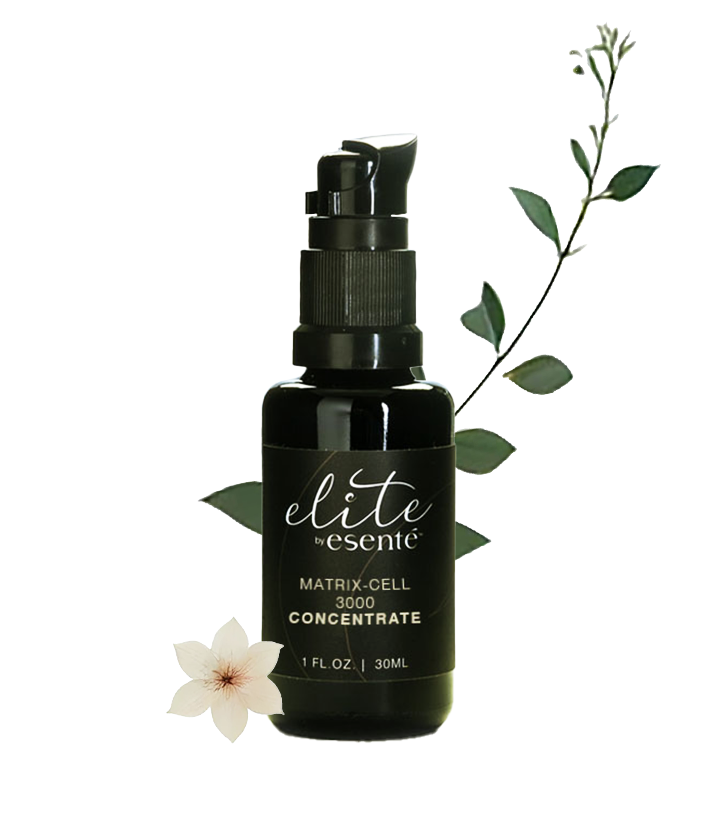
Esenté uses the phrase “clinical grade,” and we hold ourselves to the checkable version of it: concentrations that do work, Miron violet glass, which the manufacturer describes as filtering light selectively rather than blocking it outright, reducing the wavelengths that drive degradation in light-sensitive formulations, chirally corrected ingredients where the formulation calls for them, and formulations developed collaboratively by Victoria Nash with our professional formulation and manufacturing partners rather than to a marketing brief. Esenté formulations are also used in the company’s own treatment clinic, Younger You Clinique, where working professionals apply them on real skin.
You should still ask us all five questions above. Any brand worth your money will answer them.
Frequently asked questions
No. The FDA does not approve cosmetics before they go to market, and it does not recognize “medical grade,” “clinical grade,” or “cosmeceutical” as regulatory categories. Only color additives and over-the-counter drug products such as sunscreen go through pre-market review.
The phrase is marketing. The formulation differences it usually points to are real and verifiable: active concentration, raw material purity, protective packaging, and how well the formula is designed to be absorbed. Judge those four, not the phrase.
Higher active concentrations, carefully specified raw materials, stability testing, and protective packaging can all increase formulation and production costs. Chirally corrected ingredients cost more again, in Esenté’s experience. Distribution through professionals also carries training and support costs. Some of the price reflects genuine formulation cost, and some may reflect branding, packaging, distribution and positioning.
Sometimes. It depends entirely on the specific products being compared, and the comparison has rarely been run head to head. A well-formulated professional retinol that discloses its concentration and protects it from light gives you more to go on than an undisclosed drugstore version — but a dermatologist-developed drugstore ceramide moisturizer can equally outperform a prestige cream at several times the price. Judge the formula, not the channel it sells through.
Licensed estheticians can retail professional and clinical lines, and many brands sell exclusively through them. Scope-of-practice rules vary by state and govern what treatments an esthetician may perform, not which cosmetics they may resell. Check your state board for specifics.
It depends on what you are trying to change. Hydration and barrier comfort often improve within one to two weeks. Changes in fine lines, firmness and tone move far more slowly: retinol trials have detected differences as early as four weeks, but a difference you notice in the mirror usually takes several months of consistent use, and some things — skin texture in particular — may never shift much. Any product promising visible wrinkle reversal in days is describing temporary surface plumping.
About the author. Victoria Nash, founder of Esenté Skincare and Younger You Clinique, has been a licensed aesthetician since 2004 and is an experienced skincare educator.
Reviewed by Victoria Nash, licensed aesthetician and founder of Esenté Skincare & Younger You Clinique. This article is educational and is not medical advice. Ask your dermatologist or licensed skincare professional about your own skin.