

Short answer: Seaweed is a useful skincare ingredient, though not for the reasons the marketing usually gives. Its real strengths are practical. “Seaweed” covers many different algae and extracts, and many seaweed-derived ingredients have useful water-binding, film-forming or texture-giving properties, though what any of them does depends on the specific ingredient and the finished formula. The bigger claims, about detoxifying the skin, are ahead of the evidence. Judge a seaweed product the way you would judge any other: on the whole formula.
That is the honest version. Here is the longer one.
What “seaweed” means on a label
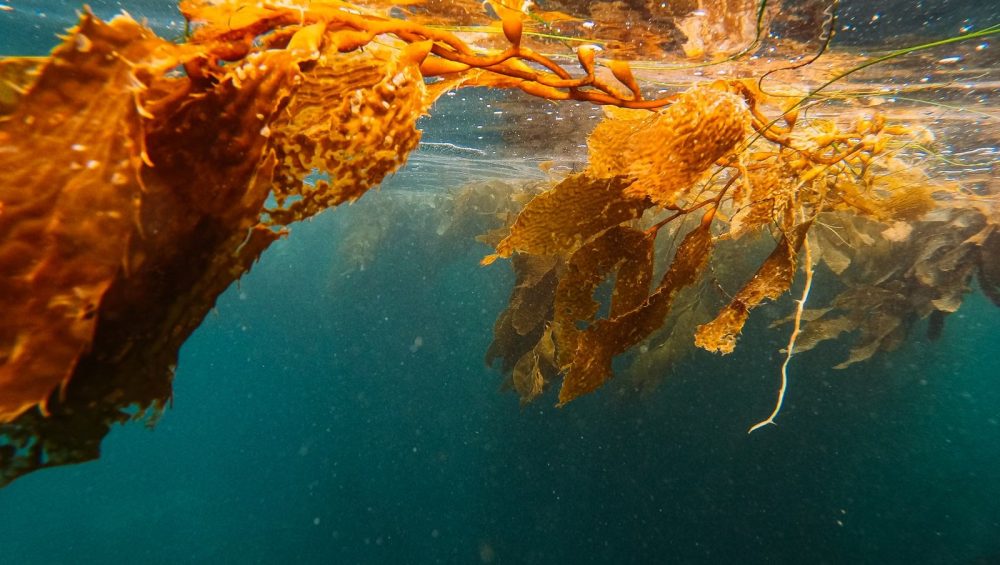
Seaweed is not one thing. It is a broad name for thousands of marine algae, grouped loosely by color: brown, red and green. Different types give skincare different ingredients.
Brown seaweeds, such as kelp, wakame and bladderwrack, are the source of alginate, a thickener you will find in everything from face masks to ice cream, and of a group of sugar-like compounds that hold water well. On a label you may see names such as Laminaria, Undaria pinnatifida, Fucus or Macrocystis.
Red seaweeds give us carrageenan, another thickener and film-former, and various extracts sold as Chondrus crispus or Asparagopsis.
Green seaweeds and microalgae appear as Ulva, Chlorella and Spirulina, and as sources of pigments and antioxidants. Astaxanthin, a red-orange antioxidant pigment, comes from a microalga.
So “seaweed skincare” might mean a hydrating gel built on alginate, a mask thickened with carrageenan, or an antioxidant serum using an algal pigment. Those are quite different products.
What seaweed actually does in a formula
It can help hold water. This is the most common reason seaweed-derived ingredients are used. The long sugar chains in many seaweed extracts are humectants: they attract water and help keep it at the skin’s surface. A gel or mask built on them often feels cool and hydrating for exactly this reason. How much of that you feel depends on the specific extract and on the rest of the formula.
It gives texture. Alginate and carrageenan are what make a mask set, a gel feel bouncy, and a cream feel cushioned. That is not a skin benefit, but it is part of why seaweed products feel pleasant, and feel is part of whether you keep using something.
It is often used in soothing formulas. Many products aimed at calming the skin include seaweed-derived ingredients alongside the hydration. Whether a given product feels soothing on your skin depends on the complete formulation, not on the seaweed alone.
Some algal compounds show antioxidant activity. That activity has mostly been demonstrated in the laboratory, on the compounds themselves, rather than in trials on people’s faces. Antioxidants in a formula can help protect the formula itself. Whether a finished product delivers an antioxidant benefit to the skin depends on the ingredient, the formulation and the evidence behind that specific product, so treat “powerful antioxidant” on a label as a claim to check rather than a given.
What the marketing says that the evidence does not
“Detoxifying.” Skin does not store toxins in a way a mask can pull out. What a “detoxifying” product usually delivers is a clearer-looking surface: a mask that sets lifts surface oil and debris away as it comes off. That is a real, visible result. The word is simply bigger than the mechanism.
“Ocean minerals feed the skin.” Seaweed is rich in minerals, and mineral-rich formulas can feel hydrating and comfortable on the skin. Claims that go beyond that, about feeding or nourishing the skin from outside, are ahead of the evidence.
“Marine collagen.” This usually means collagen from fish, not seaweed, and it is a different topic entirely. Do Collagen Supplements Work? covers it.
Who seaweed products may suit
That depends on the whole product rather than on the seaweed. A light seaweed-based gel may suit dehydrated or oilier skin that wants hydration without weight; a richer seaweed-containing cream may suit drier skin; a cooling mask may appeal to anyone who likes that texture after a day in the sun or the wind. In each case it is the complete formulation, including everything else in the bottle, that decides whether it suits dry, sensitive, dehydrated or oily skin. The caution is the same as for any botanical: if you have a known sensitivity, patch test first.
How to judge one
Look for the seaweed named properly on the ingredient list, not just “marine extract.” Look at what else is in the formula, because the seaweed is usually one part of a hydrating team alongside glycerin or hyaluronic acid. Look at the packaging. And look for a description of what the product does in plain terms. How to Read a Skincare Ingredient List helps.
Victoria’s approach
Victoria Nash, founder of Esenté Skincare and Younger You Clinique, has been a licensed aesthetician since 2004 and is an experienced skincare educator. Victoria draws on her professional experience at Younger You Clinique when evaluating skincare products and their performance.
On the Esenté shelf, the Marine Plus Cleanser and the Red Volcanic Seaweed Complex carry the marine theme in their names, and the Hydrating Cucumber Mask lists Japanese kelp among its ingredients. All are developed collaboratively by our management team and our professional formulation and manufacturing partners, and are manufactured exclusively in the USA.
If you want to know which one fits your skin, the Ask Victoria page is the place.
Frequently asked questions
It can be, in a practical way. Many seaweed-derived ingredients help bind water, give products a pleasant texture, and are used in soothing formulas. What any one of them does depends on the specific extract and the finished product. Claims about detoxing go beyond what the evidence supports.
Mostly it helps hydrate the skin’s surface and gives the product its texture. Some algal compounds show antioxidant activity, though most of that evidence is from the laboratory.
A seaweed-containing product may suit oily or blemish-prone skin if its complete formulation is light and non-greasy; the seaweed on its own does not decide that. Seaweed products do not treat acne. Acne is a medical condition; persistent breakouts belong with a dermatologist.
Any botanical can. Patch test if you have sensitive skin or known allergies.
No. Marine collagen usually comes from fish. Seaweed contains no collagen.
Not in the literal sense; skin does not store toxins for a mask to remove. What a purifying mask does is hydrate the surface and, if it sets, lift surface oil and debris away when it comes off, which leaves skin looking clearer.
About the author. Victoria Nash, founder of Esenté Skincare and Younger You Clinique, has been a licensed aesthetician since 2004 and is an experienced skincare educator.
Reviewed by Victoria Nash, licensed aesthetician and founder of Esenté Skincare & Younger You Clinique. This article is educational and is not medical advice. Ask your dermatologist or licensed skincare professional about products appropriate for your own skin and medical history.