

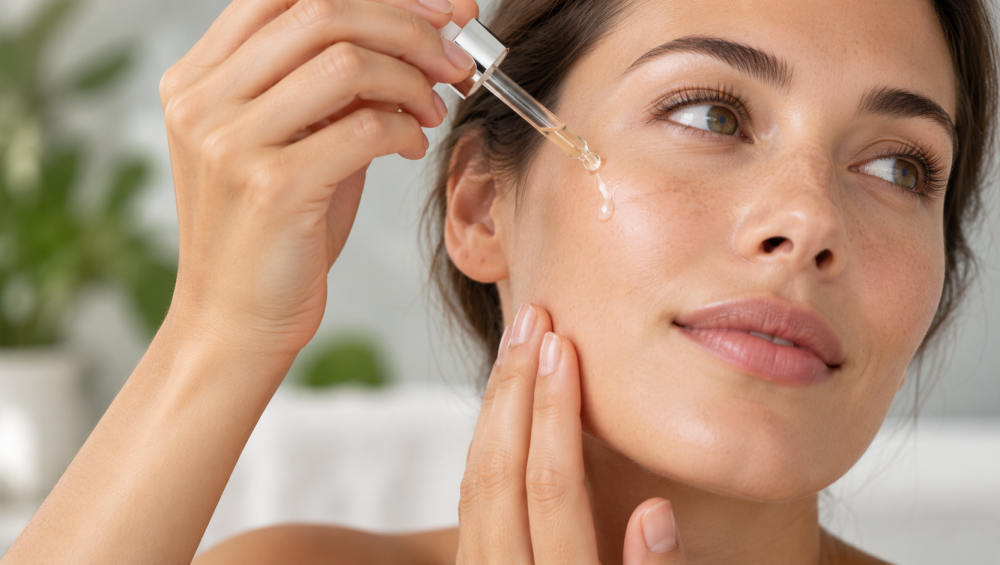
Short answer: Not all peptides are the same, and “contains peptides” on a label tells you almost nothing. A peptide serum worth buying names the specific peptides it uses, comes in packaging that protects them, and does not promise to do what an injection does. Then use it consistently for several weeks, because peptide benefits build gradually.
Peptides are everywhere in skincare and widely misunderstood. This is the buying guide. If you want the science first, What Peptides Actually Do is the companion piece.
What a peptide is, in plain words
Proteins are long chains of building blocks called amino acids. A peptide is a short chain of the same blocks. In skincare, peptides are used as messengers: certain short chains resemble fragments the skin already recognizes, and that resemblance is the whole idea.
That is as deep as this article needs to go. The practical point is that “peptide” is a category, like “fruit.” Which fruit matters.
Three kinds you will meet on labels
Signal peptides. The best known is palmitoyl pentapeptide-4, sold under the trade name Matrixyl. It has been studied in people. A 12-week study on photoaged skin reported improvement in the appearance of wrinkles compared with a plain base cream. The study was funded by the company making the product, which is common in this field and worth knowing.
Neuro-peptides. Acetyl hexapeptide-8, sold as Argireline, is often described as “Botox in a bottle.” That phrase has done real harm to peptide credibility. It borrows the idea from a muscle-relaxing injection, but a cream sits on the surface of the skin. When FDA scientists measured how much of it actually got through skin in the lab, the answer was very little. Treat the “Botox” comparison as a figure of speech rather than a description of what it does.
Copper peptides. These came out of wound-healing research and have a long history. The consumer evidence is thinner than the enthusiasm around them. They are usually kept apart from acids and strong vitamin C in a routine, mostly as a formulating convention rather than a proven problem.
What the label should tell you
The actual peptide names. “Peptide complex” is not a peptide name. Palmitoyl tripeptide-1, palmitoyl tetrapeptide-7, acetyl hexapeptide-8: these are. A brand that names them is giving you something you can check.
Where they sit on the list. Ingredients above one percent are listed in order of amount; anything at one percent or less can go in any order. Peptides are used at small amounts by design, so a low position on the list is normal and is not a warning sign. This is an ingredient category where the list position tells you less than usual. How to Read a Skincare Ingredient List explains the one-percent line properly.
What else is in there. Peptides usually share a bottle with hydrators and antioxidants. A good peptide serum is also a good hydrating serum. That is not padding; it is part of why the skin looks better.
Packaging
Peptides are generally less fragile than vitamin C or retinol, but no formula benefits from a clear bottle in a warm bathroom. Opaque or dark packaging with a pump or narrow dropper is the sensible choice. Light and air are two different problems, and packaging tends to address one more than the other. Esenté’s Elite line ships in Miron violet glass, which the manufacturer describes as filtering the wavelengths that drive degradation while letting some light pass; that is light protection. An airless pump addresses air exposure, by limiting how much air reaches the formula each time you dispense it. They are not the same solution, and a product may use one, the other or both.
What a peptide serum cannot do
This is where the category gets oversold, so it is worth saying plainly. A peptide serum is a cosmetic product. It can improve the appearance of fine lines, texture and firmness over weeks. It cannot replace structure the skin has lost or reproduce what a needle does; what it can do is improve the appearance of firmness. If you want the honest comparison with the stronger evidence base, Peptides vs Retinol lays it out.
Give it time
Peptide benefits develop gradually. Hydration tends to show first; the changes in how fine lines look take longer and depend on consistent use over several weeks. The published studies on individual peptides tend to run for a few months, which tells you the researchers expected a slow build. Judge a peptide serum after steady daily use, not after three days.
Victoria’s approach
Victoria Nash, founder of Esenté Skincare and Younger You Clinique, has been a licensed aesthetician since 2004 and is an experienced skincare educator. Victoria draws on her professional experience at Younger You Clinique when evaluating skincare products and their performance.
Esenté’s peptide products include the Penta Peptide Serum, the Bio-Lift Peptide Serum and the Matrix Cell 3000 Concentrate. They are developed collaboratively by Victoria Nash with Esenté’s professional formulation and manufacturing partners, with Victoria providing product direction, ingredient research, professional-use feedback and performance requirements. Product questions go to the Ask Victoria page.
Frequently asked questions
Palmitoyl pentapeptide-4 has published human evidence for improving the appearance of wrinkles, from a 12-week manufacturer-funded study. Other peptides have less. No peptide removes wrinkles.
Well-formulated ones can improve the appearance of fine lines and texture with consistent use over several weeks. Their evidence is real but thinner and more industry-funded than the evidence for retinoids. They may be an option for people who do not tolerate retinol well.
Yes. They are usually applied at different times or layered, peptide first. Many people use both.
Usually low down, because they are used in small amounts on purpose. A low position is normal for this category and does not mean the product is weak.
No. It refers to acetyl hexapeptide-8, which sits on the skin’s surface and does not do what an injection does. Laboratory testing found very little of it passes through skin.
It varies. Peptide benefits build gradually, so plan on consistent daily use over several weeks before judging changes in fine lines or texture. Hydration improves sooner.
About the author. Victoria Nash, founder of Esenté Skincare and Younger You Clinique, has been a licensed aesthetician since 2004 and is an experienced skincare educator.
Reviewed by Victoria Nash, licensed aesthetician and founder of Esenté Skincare & Younger You Clinique. This article is educational and is not medical advice. Ask your dermatologist or licensed skincare professional about products appropriate for your own skin and medical history.