
Short answer: Some things, yes, and fewer than the marketing suggests. Face massage feels good, which is not nothing. It can make morning puffiness look less obvious for a while. It spreads product evenly over the skin. What it does not do is lift tissue, change the bone underneath, or produce the result of a procedure. The evidence for lasting change is thin, and the visible effect is temporary. Done gently, it is a pleasant part of a routine. Done heavily, especially around the eyes, it is a way to irritate very thin skin.
Here is what is reasonable to expect from it, and what is not.
What people mean by face massage
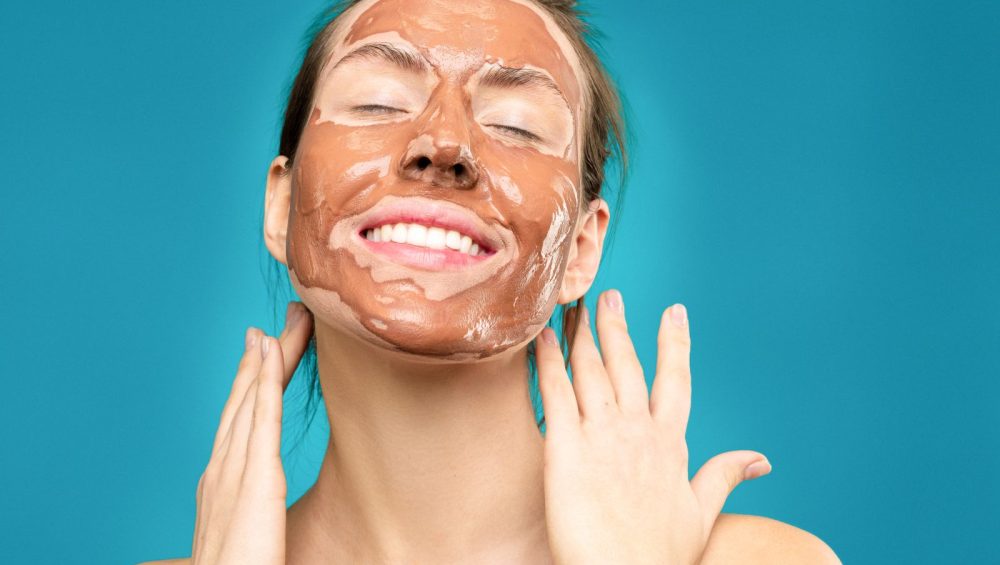
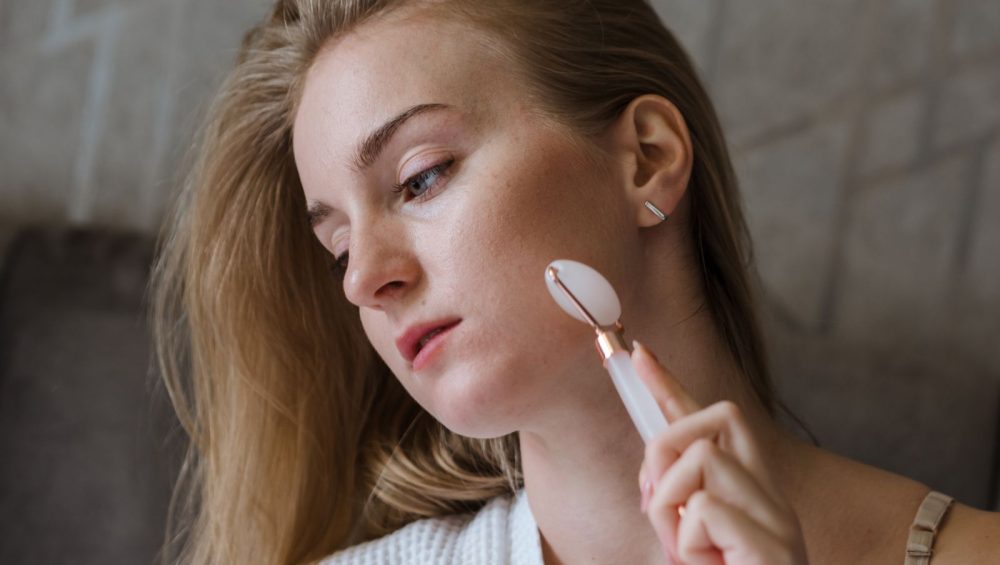
The phrase covers several different things: fingertips moving over skin while a cream or oil is applied, a roller, a flat stone, a small powered device, and professional treatments given in a clinic. They get discussed as one practice with one set of results. They are not.
Professional treatments performed in a clinic are a separate class from anything you do at home, selected and administered by qualified practitioners. Nothing in this article is about those.
What it plausibly does
It feels good. Your own hands on your face at the end of a day is pleasant, and a routine you enjoy is one you keep. That is a modest claim and a true one.
It can make morning puffiness look less obvious. Gentle massage may temporarily make morning puffiness look less noticeable. The important word is temporarily: morning puffiness usually eases on its own as the day goes on, and it can be back the next morning.
It gets product where you want it. This is the quietly useful one. A cream spread evenly sits in a thin film instead of three thick spots and a dry patch by your ear. If a serum seems to sit on the surface, several things can be involved: the formulation, the amount used, how products are layered, the condition of your skin and how it was applied. Why Your Serum Is Not Absorbing covers those in more detail.
What it does not do
It does not lift anything. How firm a face looks depends on structures beneath the skin. Moving skin around from the outside does not reposition them. The word sculpting describes a temporary look, not a change to your face.
It does not change bone. No amount of pressure alters the shape of a cheekbone or a jaw.
It does not stand in for a procedure. Clinic treatments and home routines are different categories with different results, and no roller is a smaller version of a treatment.
It does not flush toxins. Manual lymphatic drainage is a real technique used by trained practitioners in specific medical situations. As a bathroom-mirror routine, the claims run well ahead of the evidence. Any change you see after gentle massage is temporary. Crepey Skin on the Neck and Décolleté covers what does and does not change the look of loose skin.
Rollers and gua sha stones, fairly
They are pleasant, inexpensive and hard to get badly wrong. A cool stone on the face on a hot morning is a nice thing, and people who enjoy the ritual get something real from it.
The honest position is narrower than the claims. The evidence that either produces lasting change is thin, and the immediate cosmetic effect on puffiness is temporary. That does not make them a waste of money if you enjoy them. It makes them a pleasant habit rather than a treatment. The risk is not the tool, it is the pressure.
The part worth being careful about
Heavy dragging is the thing to avoid. Skin around the eye is particularly thin, and pulling at it repeatedly is the wrong kind of stress on skin that shows every bit of irritation. Keep contact light, use enough slip from a serum or cream that nothing tugs, and if your skin is red or sore afterward, you pressed too hard. Do Eye Creams Work? covers that area in more detail.
If your skin is reactive, if you have redness that flares, active blemishes, or a recent professional treatment, ask the practitioner who looks after your skin first. That is also why there is no schedule here. How often and how long depend on your skin and on the directions for what you are using.
Applying products at home
At home, leave-on products such as serums and crèmes are generally applied with clean fingertips, following the directions for the individual formulation. Wash your hands first, use the amount the directions give, and spread it with light contact rather than pressure. Some products are meant to be patted in, some smoothed, and some kept away from the eye area, so the directions for each one matter more than any general technique.
Professional treatments are different. In treatments at Younger You Clinique, Victoria follows strict hygiene protocols, including protective gloves while products are applied.
Victoria’s approach
Victoria Nash, founder of Esenté Skincare and Younger You Clinique, has been a licensed aesthetician since 2004 and is an experienced skincare educator. She draws on her professional experience at Younger You Clinique when evaluating skincare products and their performance.
Her advice on massage comes down to three things. Use gentle pressure, especially around the eyes. Keep your expectations realistic: massage can be a pleasant part of applying skincare, and any visible effect on puffiness is temporary. And follow the directions for each individual formulation, because how a product should be applied is part of how it was designed to be used. If you want to know how to apply something you already own, the Ask Victoria page is the place to ask.
Frequently asked questions
For some things. It feels good, it can make morning puffiness look less obvious for a while, and it spreads product evenly. It does not lift tissue or change the structure of your face, and the effects are temporary.
No. How firm a face looks depends on structures beneath the skin, and pressing or stroking from the outside does not move them. Marketing that says lift is describing a temporary appearance.
They feel pleasant and a cool surface can briefly make puffiness look less obvious. The evidence for lasting change in how skin looks is thin. Use them if you enjoy them, and keep the pressure light.
Gentle massage may temporarily make morning puffiness look less noticeable. Morning puffiness usually eases on its own through the day, and it may be back the next morning.
Gentle work is not a known cause. Repeated heavy dragging on thin skin, particularly around the eyes, is worth avoiding for irritation reasons alone. Light contact with enough slip is the sensible default.
Light contact is generally fine for most people. The skin there is particularly thin, so no pulling and enough product that nothing drags. Stop if the area looks red or feels sore.
About the author. Victoria Nash, founder of Esenté Skincare and Younger You Clinique, has been a licensed aesthetician since 2003 and is an experienced skincare educator.
Reviewed by Victoria Nash, licensed aesthetician and founder of Esenté Skincare & Younger You Clinique. This article is educational and is not medical advice. Ask your dermatologist or licensed skincare professional about products appropriate for your own skin and medical history.