


Short answer: It may for some people, but the evidence is limited. Hard water carries more dissolved calcium and magnesium, and soap reacts with those minerals to form a residue, the familiar “soap scum”. Most research has involved people with eczema, and the key study tested a single cleansing ingredient, so it cannot tell you how every cleanser behaves. For most people, the useful steps suit any water: a gentle cleanser that fits your skin and your budget, lukewarm water, a thorough rinse and a moisturizer your skin is comfortable with.
The habits you control matter as much as the water that comes out of the tap.
What hard water is
Water hardness is the amount of dissolved calcium and magnesium in the water. As water moves through soil and rock, it dissolves small amounts of naturally occurring minerals and carries them along. Hardness varies a great deal from one area to another.
You may already know if yours is hard. White, chalky scale in a kettle or around taps is a common sign, and so is soap that seems to take more effort to rinse away.
What happens when soap meets hard water
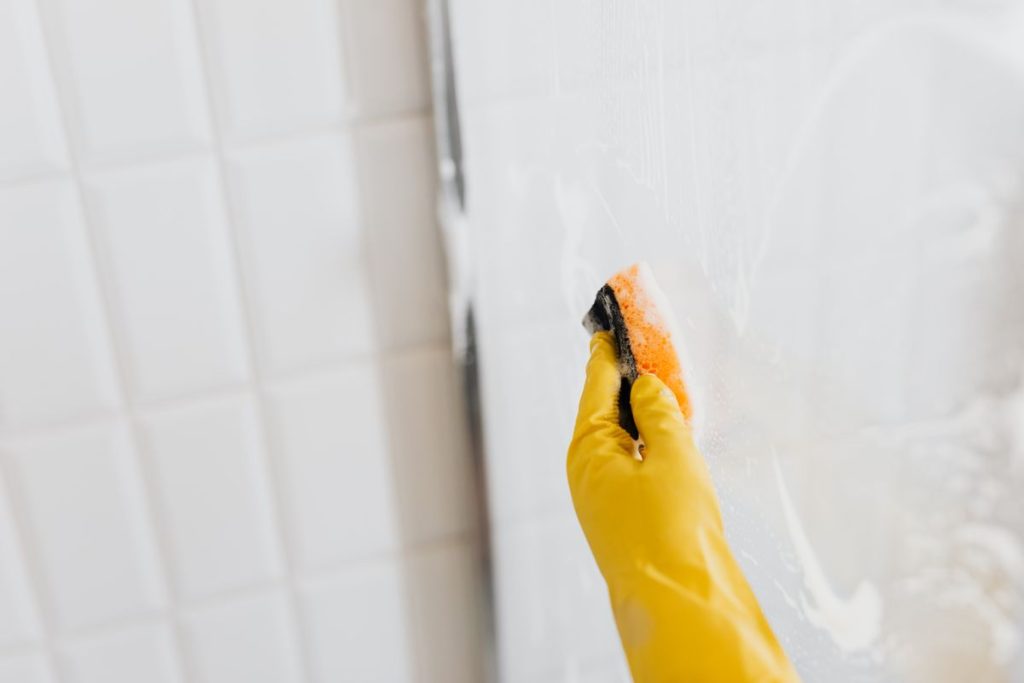
Soap reacts with the calcium in hard water and forms a residue, the familiar soap scum. In hard water it also takes more soap or detergent to get things clean. That is why washing in hard water can leave your hands feeling as though a film is still on them.
What the research shows, and what it does not
In a 2018 study of 80 people, some with eczema (atopic dermatitis) and some without, small patches of skin were washed with one common cleansing ingredient, sodium lauryl sulfate, in water of different hardness. Hard water left more of the ingredient on the skin, with more irritation, especially in people with eczema who carried certain gene variants linked to the skin barrier. Softened water reduced those effects. Because the study tested one ingredient on small areas under controlled conditions, it does not tell you how any particular cleanser behaves at home.
A 2011 UK trial asked whether a home water softener helps. Among 336 children with moderate to severe eczema in hard water areas, a softener plus usual care did no better after 12 weeks than usual care alone on the trial’s main measure of eczema severity.
Together, these studies suggest hard water may leave more cleansing residue on skin, and that this matters most for skin already prone to reacting. They do not show that hard water harms everyone’s skin. If you have eczema or skin that reacts easily, ask a dermatologist about your own situation.
Softeners and filters are not the same thing
A water softener, usually an ion-exchange unit, swaps the calcium and magnesium in hard water for sodium or potassium. Filters are a different category, and what they remove depends on the type. Activated carbon filters, for example, can reduce chlorine and some other substances, but they do not remove the calcium and magnesium that make water hard.
Installing either is a household decision with many factors beyond skin, and evidence for a skin benefit from softening is limited. If you are considering one, ask the supplier what it is designed to remove.
What you can do
Most of what helps with hard water is what helps with any water.
Choose a gentle cleanser that suits you and your budget. If your face feels tight long after washing, the cleanser is worth reconsidering. Suitability depends on the complete formulation and on your skin, not on price or on whether it foams. Why Your Cleanser Matters More Than You Think goes further, and Why Does Your Skin Feel Tight After Washing? covers that feeling in detail.
Use the amount the directions suggest. Hard water can make soap feel less effective, which tempts people to use more, and more cleanser means more to rinse away.
Rinse thoroughly. Take the time to rinse until your skin no longer feels slippery or filmy.
Use lukewarm water and a gentle touch. Hot water takes more of the skin’s natural oils with it, and rubbing adds friction. Choosing a cleansing tool compares the options, including the facial sponge Victoria prefers.
Pat dry, then continue your routine. Apply moisturizer after cleansing or bathing and any appropriate preceding steps, following the product’s directions.
Victoria’s approach
Victoria Nash, founder of Esenté Skincare, has been a licensed aesthetician since 2003. She also owns and operates Younger You Clinique and is an experienced skincare educator. She draws on her professional experience at Younger You Clinique when evaluating skincare products and their performance. Professional facial sponges are her preferred tool for facial cleansing and general makeup removal, used gently with an appropriate cleanser. Fingertips are acceptable, but she prefers sponges for more thorough cleansing. For eye makeup, she uses small sterile, non-impregnated gauze squares with a dedicated eye makeup remover, then discards them, before cleansing the face. Esenté regards the cleanser as a vital step, and Victoria believes an appropriate one can be found within your budget; the spending decision is yours. If you live with hard water and want to talk through your own cleansing routine, the Ask Victoria page is open.
Frequently asked questions
The evidence is limited. Research suggests hard water may leave more cleansing residue on skin, and that this matters most for people with eczema or easily irritated skin. It does not show harm for everyone. A gentle cleanser and a thorough rinse suit any water.
White, chalky scale in a kettle or around taps is a common sign, as is soap that seems harder to rinse off. Your water supplier may be able to tell you how hard your water is.
That is a household decision with many factors. In one trial, children with eczema whose homes received a water softener did no better on the main eczema measure than those on usual care alone. If skin concerns are your reason, speak to a dermatologist first.
No. A softener, usually an ion-exchange unit, swaps calcium and magnesium for sodium or potassium. What a filter removes depends on its type, and activated carbon filters, for example, do not remove the minerals that make water hard.
A gentle one that leaves your skin comfortable rather than tight and fits your budget. Judge a cleanser by how your face feels after washing, and rinse it off thoroughly.
About the author. Victoria Nash, founder of Esenté Skincare, has been a licensed aesthetician since 2003. She also owns and operates Younger You Clinique and is an experienced skincare educator.
Reviewed by Victoria Nash, licensed aesthetician, founder of Esenté Skincare and owner of Younger You Clinique. This article is educational and is not medical advice. Ask your dermatologist or licensed skincare professional about products appropriate for your own skin and medical history.