

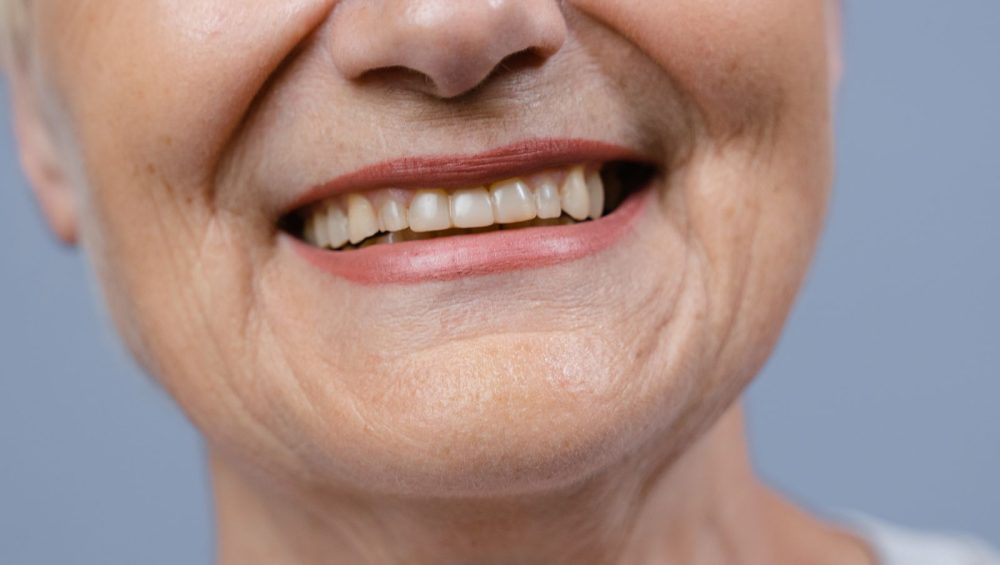
Short answer: Lips dry out more easily than the rest of your face. The red part of the lips has a thin outer layer and no sweat glands, and it holds water less well than the skin of your cheek. With age, many people also notice lips looking thinner and fine lines forming around the mouth. Lip care fits naturally into a daily routine: a suitable lip product used as directed, gentle habits, and sun protection for the lips with a lip product that carries an SPF. Lips that stay cracked, sore or changed despite that care should be seen by a dermatologist.
Lips deserve a regular place in your routine, alongside the care you give the rest of your face.
Why lips dry out so easily
The skin of the lips is built differently from the skin of your cheek. The red part has a thin outer layer and no sweat glands, and it holds water less well than the surrounding skin.
In one study of Japanese women published in 2004, researchers compared the lips with the cheek in winter. They found that the lips lost water faster and held noticeably less of it at the surface. In cold wind, dry indoor air or on a long flight, lips are often quick to feel dry. Winter Skin covers the season when that is common.
Where lip care fits in your routine
Lip care fits beside the steps you already take for your face.
Daily care. A lip product that suits you, applied according to its directions, helps keep lips comfortable. How a product suits you depends on its complete formulation and on your own lips. If you have known sensitivities, check the complete ingredient list, not only the key ingredients.
Less is best. Use the amount your daily lip product’s directions call for. More, or more often, does not bring faster results.
Daytime sun protection. Include the lips, using a lip product that carries an SPF.
Habits that help
Licking. When lips feel dry, licking them can feel soothing for a moment, but it may worsen dryness and irritation. Keeping a suitable lip product within reach can make the habit easier to drop.
Biting and picking. Biting or picking at dry, flaking skin can irritate the lips. Leave peeling skin alone.
Notice what stings. If a lip product stings or burns, stop using it.
How lips change with age
Many people notice that their lips look thinner and less defined over the years, and that fine lines appear around the mouth, particularly above the upper lip. Several things contribute, and this article covers common ones rather than every cause.
Time. The skin and tissue of the lips and the area around them change with age, as the rest of the face does.
Sun. Lips and the skin around them get years of sun exposure, often with less protection than the rest of the face.
Expression and habits. Repeated expressions, such as pursing the lips, can leave lines over time, and smoking speeds up visible skin aging, including lines around the mouth.
Dryness. Dry lips and dry skin around the mouth make fine lines look more obvious. Fine Lines vs Wrinkles explains why hydration changes how shallow lines look.
Good lip care can soften the look of dryness-related lines. It should not be expected to remove deep creases around the mouth. Procedures that change the shape or volume of the lips are a separate category, performed by licensed practitioners, and outside the scope of this article.

Sun and your lips
Lips get sun every time your face does, and they are easy to leave out of sun protection.
In the United States, a lip balm or lipstick marketed with an SPF is regulated as an over-the-counter sunscreen drug, as well as a cosmetic. Look for Broad Spectrum on the label, and follow the label directions, including reapplication. Eating and drinking can remove product from the lips, so check the label directions on outdoor days. What SPF Measures, and What It Does Not explains what the number on the label tells you.
Shade and a wide-brimmed hat help too, and Do You Need Sunscreen Every Day? makes the wider case.
Exfoliation and the lips
Some exfoliating masks and crèmes are appropriate for the lip area. Where a product’s directions include the lips, you may include them, following those directions. Keep lactic acid and other AHA peels off the lips. Leave exfoliation out entirely while lips are cracked, sore or irritated.
When to see a dermatologist
Lips that stay dry, cracked, scaly or sore despite gentle care, a sore on the lip that does not go away, or a patch that changes in color or texture should be seen by a dermatologist. Dry lips have many possible causes, some of which need a professional to identify.
Victoria’s approach
Victoria Nash, founder of Esenté Skincare, has been a licensed aesthetician since 2003. She also owns and operates Younger You Clinique and is an experienced skincare educator. She draws on her professional experience at Younger You Clinique when evaluating skincare products and their performance. Victoria views good skincare as a lifelong commitment to improving and maintaining healthy-looking, well-conditioned skin, and as skin changes throughout life, the care it needs may change as well. Her “Mindful Living, Ageless Skin” philosophy counts sensible sun protection and appropriate hydration among the habits that support skin over a lifetime, alongside a well-designed skincare routine.
One example from Esenté’s range is the Bio-Boost Lip Enhancer. It nourishes, protects and hydrates, supporting a plumper appearance and helping soften dryness-related lip lines. Other Esenté formulations may suit your lips, depending on your regimen. Follow its directions. Esenté works with boutique manufacturers to develop and select formulations that meet the brand’s ingredient, performance and quality criteria. If you have a question about caring for your lips as they change, the Ask Victoria page is the place to ask it.
Frequently asked questions
Lips hold water less well than the skin of your face. Licking, dry air, wind and sun can make dryness worse. Lips that stay dry despite gentle care should be seen by a dermatologist.
It can. Licking may feel soothing for a moment, but it may worsen dryness and irritation. Keeping a suitable lip product within reach can make the habit easier to break.
Lips get sun whenever your face does. A lip product marketed with an SPF is regulated as a sunscreen in the United States. Look for Broad Spectrum on the label and follow its directions, including reapplication.
Common contributors include age, sun exposure, repeated pursing of the lips and smoking. Dryness makes fine lines look more obvious, so keeping the area hydrated can soften their appearance. Lip care should not be expected to remove deep creases.
Only with a product whose directions include the lip area, used as directed. Keep lactic acid and other AHA peels off the lips, and leave exfoliation out while lips are cracked, sore or irritated. Do not rub or pick at peeling skin.
About the author. Victoria Nash, founder of Esenté Skincare, has been a licensed aesthetician since 2003. She also owns and operates Younger You Clinique and is an experienced skincare educator.
Reviewed by Victoria Nash, licensed aesthetician, founder of Esenté Skincare and owner of Younger You Clinique. This article is educational and is not medical advice. Ask your dermatologist or licensed skincare professional about products appropriate for your own skin and medical history.