
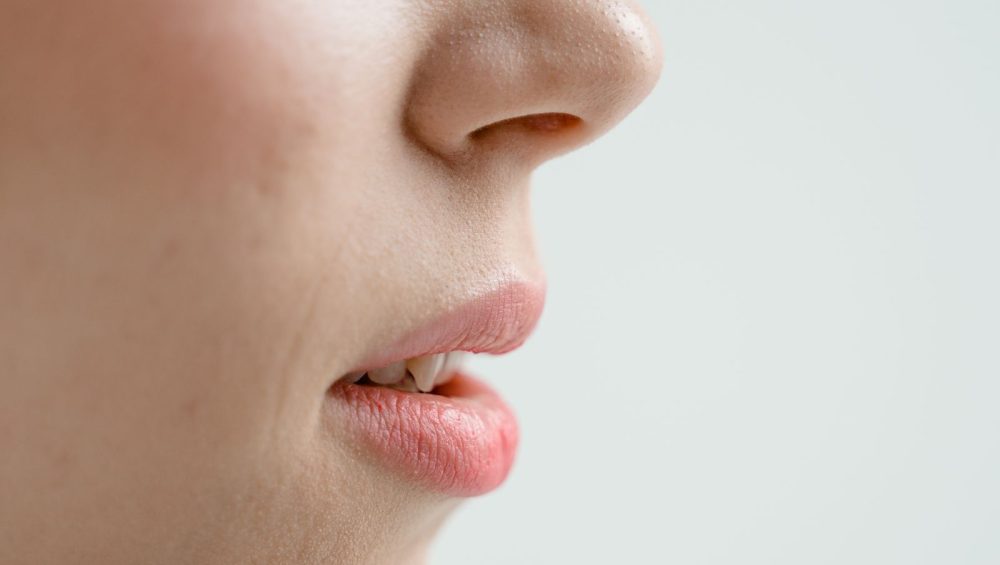
Short answer: Many of the small gray dots across the nose that people call blackheads are sebaceous filaments. Filaments are a normal part of pores that have oil glands: a lining that helps carry oil to the surface. They look flat, small and gray, light brown or yellowish, and they fill again after you press them out. A blackhead is a clogged pore whose exposed contents darken where they meet the air, and it tends to look darker. Both are common. Squeezing at home is discouraged. Gentle cleansing and suitable exfoliation help both look less obvious, and professional extraction is a separate option for blackheads.
Color, shape and pattern are what set them apart in the mirror.
What a sebaceous filament is
Pores with an oil gland beneath them have a thin lining that helps move oil up to the surface. That lining is a sebaceous filament. Everyone has them, and they are a normal part of skin.
You notice them most on the nose, inner cheeks, chin and forehead.
They also refill. Press one out and the pore fills again, because the lining is doing its job. Nothing went wrong: the filament came back because it belongs there.
What a blackhead is
A blackhead forms when oil and dead skin cells build up inside a pore. The top of the plug stays open to the air, and that exposed material darkens.
In the United States, a product intended to clear or prevent acne is regulated as an over-the-counter drug, so this article sticks to cosmetic care: how to tell the two apart, what gentle cleansing and exfoliation can do for how skin looks, and where a qualified professional comes in. If breakouts are a wider concern, see a dermatologist.
How to tell them apart
Look closely, in good daylight, without pressing.
Color. Filaments usually look gray, light brown or yellowish. Blackheads usually look darker, closer to black.
Shape. Filaments sit flat with the skin and look like a fine, even dotting. A blackhead often looks like a single darker dot.
Pattern. Filaments tend to appear evenly across an area, pore after pore. Blackheads are often scattered and uneven.
None of this is a diagnosis. If you are unsure, or something on your skin is changing, sore or spreading, show it to a dermatologist.
Why squeezing at home is discouraged
Squeezing can push material deeper into the skin, increase inflammation, irritate or damage the skin and leave lasting marks. With filaments, squeezing gains you nothing: they refill.
Pore strips can lift sebaceous filaments along with what sits in a blackhead, and the filaments fill again. Pulling them out this way can also leave skin dry.
Scrubbing harder does not help either. The dark surface of a blackhead is not dirt, and rough handling tends to leave skin red.
What helps both look less obvious
Gentle, thorough cleansing. Taking off sunscreen, makeup and the day’s oil in the evening leaves less material sitting in pore openings. Lukewarm water and light pressure are enough. Whether a cleanser suits you depends on the complete formulation and your skin, not on whether it foams. Why Your Cleanser Matters covers how to judge one.
Exfoliation that suits your skin. Removing built-up dead cells at the surface can help pore openings look clearer. There is no universal schedule; the interval depends on your age, skin condition, the method and how your skin responds. Some chemical exfoliants use a beta hydroxy acid, which is oil-soluble and can reach into the opening of a pore. AHA vs BHA explains the difference. Avoid combining multiple exfoliating products unless their directions or your skincare professional specifically recommend doing so, and follow the directions for each product.
Realistic expectations. Filaments come back because they are meant to be there. The aim is for them to look less obvious, not to disappear for good. Large Pores: What You Can Change and What You Cannot covers the same limit for pore size.
Where professional extraction fits
Extraction performed by a qualified, licensed professional is a separate category from anything you do at home. The practitioner prepares the skin, uses clean technique and appropriate instruments, and works within the scope their license allows. What a licensed aesthetician may do is set by each state’s rules, and What Aestheticians Can and Cannot Legally Do explains how that works. Ask what a practitioner will and will not do before a treatment begins.
Victoria’s approach
Victoria Nash, founder of Esenté Skincare, has been a licensed aesthetician since 2003. She also owns and operates Younger You Clinique and is an experienced skincare educator. She draws on her professional experience at Younger You Clinique when evaluating skincare products and their performance. For blackheads, Victoria’s preferred approach is professional extraction by a qualified practitioner, and she discourages squeezing at home. Day to day, she favors gentle cleansing. Professional facial sponges, used gently with an appropriate cleanser, are her preferred tool for cleansing the face; fingertips are acceptable, but she prefers sponges for a more thorough cleanse. Eye makeup comes off first, and the face should be completely clean at bedtime. On exfoliation, she considers the individual’s age, skin condition, method of exfoliation and how the skin is responding.
The Citrisal Purifying Cleanser is most appropriate for oily skin rather than a cleanser for everyone. The Liposome Alpha-Beta Serum is an 8% AHA/BHA serum. For eye makeup, Victoria uses Eye-Onizer Gentle Makeup Remover with small sterile, non-impregnated gauze squares, which are discarded after use. These are examples from a broader range, chosen for the individual’s needs, preferences and budget. Follow the directions for each. Esenté works with boutique manufacturers to develop and select formulations that meet the brand’s ingredient, performance and quality criteria. Esenté’s Professional Facial Sponges are supplied by another company. If you want help deciding what your own pores need, the Ask Victoria page is the place to start.
Frequently asked questions
No. Sebaceous filaments are a normal lining inside pores with oil glands, and everyone has them. A blackhead is a clogged pore whose exposed contents have darkened. Filaments usually look flatter and lighter, gray, light brown or yellowish.
They are a normal part of skin, and they refill after being pressed out. Gentle cleansing and exfoliation that suits your skin can help them look less obvious.
It is better not to. Squeezing can push material deeper into the skin, increase inflammation, irritate or damage the skin and leave lasting marks. Victoria’s preferred approach is professional extraction by a qualified practitioner, which is a separate category from squeezing at home.
The plug is oil and dead skin cells, and its exposed surface darkens where it meets the air. Scrubbing will not remove that color and tends to irritate skin.
They can lift some surface material, but they can also pull out sebaceous filaments, which refill. Removing filaments this way can leave skin dry.
About the author. Victoria Nash, founder of Esenté Skincare, has been a licensed aesthetician since 2003. She also owns and operates Younger You Clinique and is an experienced skincare educator.
Reviewed by Victoria Nash, licensed aesthetician, founder of Esenté Skincare and owner of Younger You Clinique. This article is educational and is not medical advice. Ask your dermatologist or licensed skincare professional about products appropriate for your own skin and medical history.