
Short answer: The names sound alike, but the procedures differ in equipment, intensity and who performs them. Microdermabrasion is a controlled professional mechanical exfoliation of the skin’s surface, using a handheld device. Dermaplaning uses an appropriate sterile blade or tool in trained hands to remove surface cells and fine facial hair. Dermabrasion is a substantially more aggressive medical resurfacing procedure, performed by physicians with numbing or anesthesia. Who may perform the first two depends on your state. Recovery and aftercare vary by procedure and by person, so follow your provider’s directions.
The differences come down to the tool, the depth and the professional oversight.
Three procedures, three levels of intensity
Two are professional exfoliation procedures offered in dermatology practices and, depending on the state, by licensed aestheticians. The third is a medical procedure. One way to keep them straight is by intensity: microdermabrasion and dermaplaning work on the surface, while dermabrasion goes considerably further and belongs in a physician’s hands.
Microdermabrasion
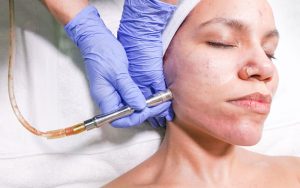
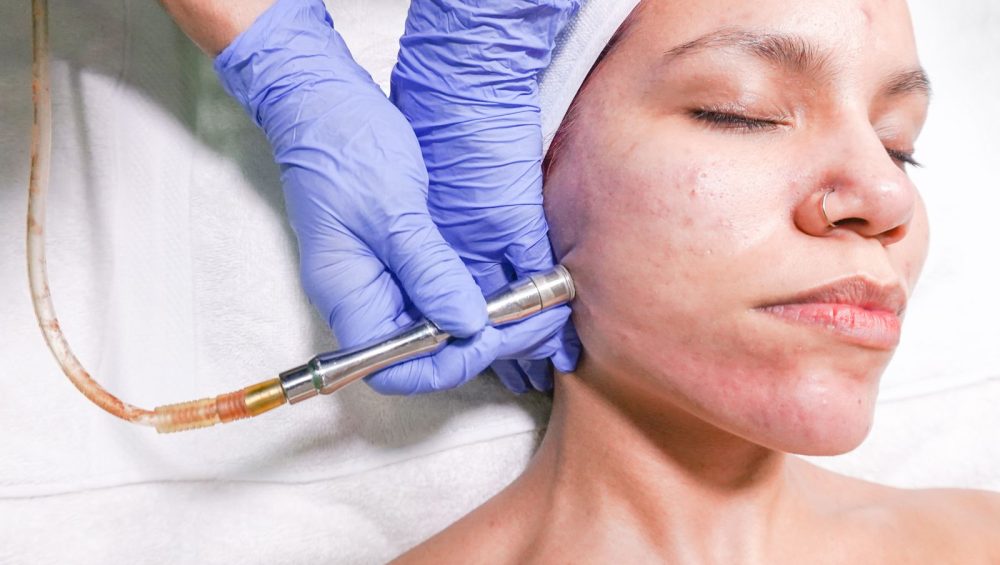
Microdermabrasion is a controlled form of professional mechanical exfoliation. A practitioner passes a handheld device over the skin to remove the outermost layer of surface cells. Some devices propel fine abrasive crystals against the skin with gentle suction; others use a tip with an abrasive diamond surface.
It is performed in dermatology practices, and in salons and spas where state rules allow. Temporary redness or mild swelling for a day or two can occur. Home devices are not the same as the procedure a dermatologist performs.
Dermaplaning
Dermaplaning is a professional mechanical exfoliation technique in which a trained practitioner uses an appropriate sterile blade to remove superficial dead skin cells and fine vellus hair, often called peach fuzz.
It should not be performed on skin with open wounds, abrasions, sunburn or other irritation. The hair grows back, and removing it with a blade does not change its thickness or color.
Dermabrasion
Dermabrasion is a substantially more aggressive medical resurfacing procedure. A dermatologist or plastic surgeon uses a high-speed rotary instrument, such as an abrasive diamond wheel or a wire brush, to remove the outer layers of skin to a much greater depth than either procedure above. The area is numbed first, and some cases involve sedation or general anesthesia.
Physicians use it for concerns such as certain scars and deeper lines. Recovery takes considerably longer than after the other two, with aftercare, such as ointments or dressings, set by the physician.

Professional procedures and home devices
A home exfoliating or cleansing device is not a smaller version of any of these procedures. The equipment differs: professional devices, sterile blades and high-speed medical instruments are not consumer tools. The intensity differs: dermabrasion in particular reaches far deeper than anything meant for routine home use. And the oversight differs: a trained, licensed professional assesses your skin, performs the procedure and sets your aftercare.
This article therefore focuses on professional treatment. Esenté does not recommend automatic bristled facial cleansing devices for routine cleansing because of unknown bristle firmness, pressure and friction, and the potential for unintended repeated mechanical exfoliation.
Who can perform what depends on your state
Scope of practice for aestheticians is set state by state. Some state boards allow dermaplaning under an aesthetics license, while others have ruled it outside that license. Arizona’s barbering and cosmetology rules, for example, limit licensees’ skin-removal techniques to the non-living, uppermost layer of skin, apart from procedures otherwise allowed under state law. What Aestheticians Can and Cannot Legally Do explains how boards draw those lines.
Ask who will perform the procedure and what license they hold; How to Choose an Aesthetician lists other questions.
Before and after
Tell your provider beforehand about any retinoid or exfoliating formulations you use, prescription skincare or other medications, and whether your skin is irritated or sunburned.
There is no single recovery timeline for any of the three, and your provider’s aftercare directions come first. Sun protection matters after all three, but what to apply to freshly resurfaced skin, and when, should follow those directions. Once your provider confirms your skin is ready, daily broad-spectrum sunscreen remains part of your routine.
Home exfoliation is a different category
Retail exfoliants are either physical, using fine particles or texture, or chemical, using acids or enzymes. Physical vs Chemical Exfoliation: What Is the Difference? covers both, and Enzyme Peel vs Chemical Peel: What’s the Difference? compares the chemical routes. Go gently, follow the product’s directions and do not exfoliate skin that is cracked, irritated or sore. Having a professional procedure is not a reason to exfoliate more often at home.
Victoria’s approach
Victoria Nash, founder of Esenté Skincare, has been a licensed aesthetician since 2003. She also owns and operates Younger You Clinique and is an experienced skincare educator. She draws on her professional experience at Younger You Clinique when evaluating skincare products and their performance. There is no universal exfoliation schedule. Victoria considers the individual’s age, skin condition, method of exfoliation and how the skin is responding. Skin-cell turnover generally changes with age, so an appropriate interval for one person may be entirely inappropriate for another. The objective is to exfoliate when needed, not because a certain number of days has passed. At Younger You Clinique, professional-strength peels and exfoliating treatments are among the products reserved for professional use.
For home care, Oligo-Peel Exfoliation Crème provides physical exfoliation with aluminum oxide, in a formulation that also includes botanical extracts and skin-conditioning ingredients. It is a rinse-off retail product, distinct from every procedure above, and one example among options that may suit your skin and budget. Follow its directions, and do not use it on skin that is currently irritated or compromised. Esenté works with boutique manufacturers to develop and select formulations that meet the brand’s ingredient, performance and quality criteria. If you are weighing a professional procedure against home care, you can Ask Victoria first.
Frequently asked questions
Microdermabrasion uses a handheld device to remove surface cells. In dermaplaning, a trained practitioner uses an appropriate sterile blade to remove superficial dead skin cells and fine vellus hair. Both are professional surface exfoliation.
No. Dermabrasion is a substantially more aggressive medical resurfacing procedure performed by a dermatologist or plastic surgeon, with numbing or anesthesia and a longer recovery.
No. Removing fine facial hair with a blade does not change its thickness or color. The hair does grow back.
It depends on the state. Some allow one or both under an aesthetics license and others restrict them. If you are unsure, check with your state board.
It varies with the procedure, the depth and your skin. Ask your provider what to expect. Dermabrasion involves considerably more recovery than the other two.
Follow your provider’s aftercare directions, which depend on the procedure and your skin. Sun protection matters after all three, and your provider can tell you when to resume daily broad-spectrum sunscreen.
About the author. Victoria Nash, founder of Esenté Skincare, has been a licensed aesthetician since 2003. She also owns and operates Younger You Clinique and is an experienced skincare educator.
Reviewed by Victoria Nash, licensed aesthetician, founder of Esenté Skincare and owner of Younger You Clinique. This article is educational and is not medical advice. Ask your dermatologist or licensed skincare professional about products appropriate for your own skin and medical history.