
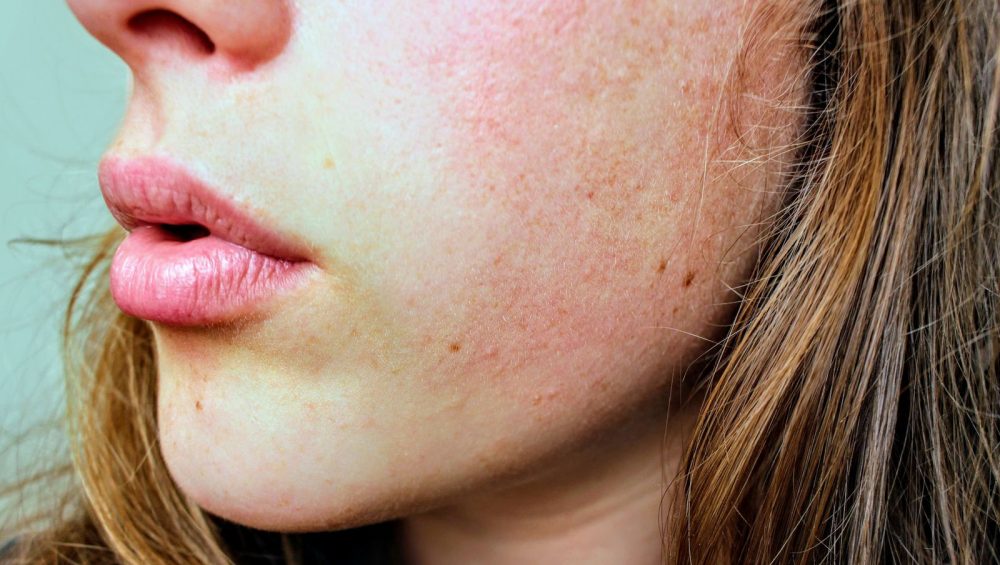
Short answer: Rough, uneven texture usually has an ordinary cause. Dry skin, a buildup of dead surface cells, dehydration, years of sun exposure and pores that look more obvious can all leave the surface feeling rough and catching the light unevenly. What helps is gentle care matched to the reason: exfoliation at an interval that suits your skin, a moisturizer used consistently, and daily broad-spectrum sunscreen applied as its label directs. Bumps that persist, itch, spread or look unusual are a question for a dermatologist, not a reason to scrub harder.
Texture is a description, not a diagnosis, and care depends on the cause.
The common causes
Dryness. Skin short on its own oils can feel rough, look flaky and show fine dry lines. Dry air, wind and heated or air-conditioned rooms tend to make it worse.
Dead cells that have not shed. Old cells flake away from the surface all the time. Skin-cell turnover generally changes with age, and when shedding slows or becomes uneven, dead cells can collect into a rough layer.
Dehydration. Skin can be low in water whatever its oil level, and it tends to look flat and feel less supple. Dehydrated Skin vs Dry Skin explains the difference.
Years of sun. Rough, uneven texture is one of the visible signs associated with long-term sun exposure, along with wrinkles and uneven tone. It builds slowly and changes slowly.
Pores that look more obvious. Oil and dead skin collecting in pore openings can make the nose and inner cheeks look uneven. Large Pores: What You Can Change and What You Cannot covers what is realistic.
The routine itself. Harsh cleansing, very hot water and too much exfoliation can all leave skin rough. Over-exfoliated skin often flakes, which is easy to mistake for a reason to exfoliate again.
Several of these often sit together. This article covers common causes, not every cause.
Exfoliation, at the interval your skin needs
Exfoliation removes built-up dead cells from the surface, which tends to leave skin feeling smoother. There is no universal schedule for how often. That depends on your age, your skin’s condition, the method and how your skin responds.
Physical exfoliants use texture, such as fine particles in a rinse-off crème, to lift loose cells. Chemical exfoliants use acids or enzymes to loosen the bonds between surface cells. Neither is gentler by definition; the complete formulation and how you use it decide that. Physical vs Chemical Exfoliation compares the two.
A few things hold either way:
- Follow the directions for the individual product.
- Avoid combining multiple exfoliating products unless their directions or your skincare professional specifically recommend doing so.
- Exfoliating while you use a non-prescription retinol product can increase dryness or irritation for some people. Check the directions for each. If you use a prescription retinoid, follow the guidance of the healthcare professional who prescribed it.
- Do not exfoliate skin that is cracked, sore or currently irritated. Generally sensitive skin is a different case from skin that is irritated right now.
- If skin starts to sting, tighten or redden, pause. When you start again, exfoliate less often or less intensely. How Often Should You Exfoliate? goes further.
Moisture matters too
Apply moisturizer after cleansing or bathing and any appropriate preceding steps, following the product’s directions, with clean fingertips. A sensible order is cleanse, an appropriate toner or mist, serum, then moisturizer, each according to the product’s directions, plus daytime sun protection. Use it consistently, not only on the days skin feels rough. Which moisturizer suits you depends on the complete formulation and on your own skin, not on whether it is labeled a cream, a lotion or a gel.

Sun protection is the slow part
Daily broad-spectrum sunscreen helps protect against further sun exposure, one of the long-term contributors to rough texture. Apply and reapply it as its label directs. Do You Need Sunscreen Every Day? makes the case.
How soon you notice a difference depends on the cause. Dry roughness can feel softer soon after moisturizer goes on. Texture tied to sun or slow shedding needs consistent care over time, and the timeline varies from person to person. Why Skin Looks Dull covers where texture and a flat-looking complexion overlap.
When texture is not a skincare question
Some raised bumps are not a skincare matter. Bumps that persist, itch, spread, bleed or look unusual, and rough patches that do not respond to gentle care, should go to a dermatologist or another appropriate healthcare professional. Do not scrub at them.
Victoria’s approach
Victoria Nash, founder of Esenté Skincare, has been a licensed aesthetician since 2003. She also owns and operates Younger You Clinique and is an experienced skincare educator. She draws on her professional experience at Younger You Clinique when evaluating skincare products and their performance. There is no universal exfoliation schedule. Victoria considers the individual’s age, skin condition, method of exfoliation and how the skin is responding. Skin-cell turnover generally changes with age, so an appropriate interval for one person may be entirely inappropriate for another. The objective is to exfoliate when needed, not simply because a certain number of days has passed.
Esenté’s range includes two different exfoliating approaches. Oligo-Peel Exfoliation Crème provides physical exfoliation with aluminum oxide, in a formulation that also includes botanical extracts and skin-conditioning ingredients. It is a rinse-off product. The Liposome Alpha-Beta Serum is an 8% AHA/BHA serum. They are alternative approaches; avoid combining them unless their directions or your skincare professional specifically recommend doing so. Follow the directions for whichever you choose, at an interval that suits your skin, and keep both off skin that is currently irritated or compromised. Both are examples from a broader range; the right choice depends on your skin, preferences and budget. Esenté works with boutique manufacturers to develop and select formulations that meet the brand’s ingredient, performance and quality criteria. If you are unsure which approach suits you, put the question to Victoria on the Ask Victoria page.
Frequently asked questions
Common causes include dryness, a buildup of dead surface cells, dehydration, long-term sun exposure and pores that look more obvious. A harsh routine, including too much exfoliation, can add to it.
Match your care to the cause. Moisturize consistently after cleansing, following the product’s directions. Exfoliate when your skin needs it, following the directions for your exfoliating product, cleanse gently with lukewarm water, and wear daily broad-spectrum sunscreen as its label directs.
Yes. Too much exfoliation can leave skin tight, flaky and red, and the flaking can look like a reason to exfoliate again. Pause, keep cleansing gently and moisturizing, and exfoliate less often or less intensely when you resume.
Avoid combining multiple exfoliating products unless their directions or your skincare professional specifically recommend doing so. Combining them can increase irritation for some people. Follow the directions for the product you choose, and ask a licensed skincare professional if you are unsure.
Much of it responds to consistent care, especially texture from dryness or slow shedding. Texture linked to years of sun tends to change more slowly, and results vary with the cause and the person.
About the author. Victoria Nash, founder of Esenté Skincare, has been a licensed aesthetician since 2003. She also owns and operates Younger You Clinique and is an experienced skincare educator.
Reviewed by Victoria Nash, licensed aesthetician, founder of Esenté Skincare and owner of Younger You Clinique. This article is educational and is not medical advice. Ask your dermatologist or licensed skincare professional about products appropriate for your own skin and medical history.