

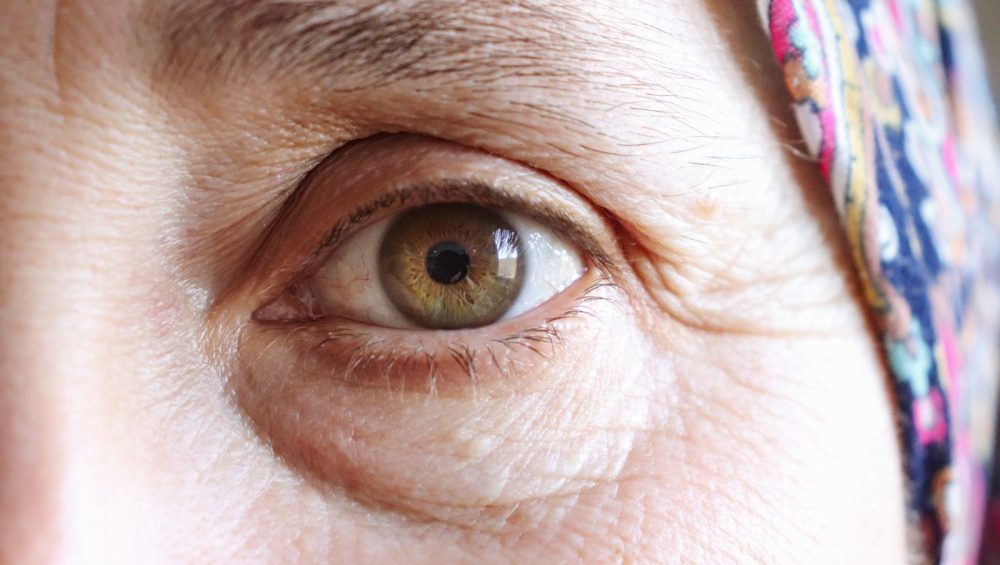
Short answer: Fine lines are shallow lines at the surface of the skin. Many of them look more obvious when skin is dry and softer when it is well hydrated. Wrinkles are deeper creases that tend to stay put, shaped by years of facial expression, sun exposure and the ordinary changes of age. The two sit on one scale rather than in separate boxes. Skincare can soften the appearance of both. Shallow lines tend to show change sooner, and skincare should not be expected to remove deep creases.
Most faces carry both, and telling them apart helps you judge any product fairly.
Two names for one scale
There is no official line between a fine line and a wrinkle. In everyday use, the words describe how deep a line is and whether it stays when your face is at rest.
Fine lines are shallow. They often appear first around the eyes, across the forehead and above the lip. Many come and go: more visible at the end of a dry day, less visible once the skin is well moisturized.
Wrinkles are deeper and more fixed. A line that was once visible only when you smiled or frowned can, over years, remain when your face is still. Sun-exposed skin tends to show them more.
What makes a fine line look deeper
Dryness. When the surface is short of water, it looks crinkled, and shallow lines stand out. It is a common reason fine lines vary from one morning to the next. Dehydrated Skin vs Dry Skin explains the two kinds of dryness.
Light. Overhead and harsh side light throw shadows into every line, so two mirrors can show you two different faces.
Expression. Lines around the eyes and on the forehead follow the way your face moves.
What makes a wrinkle form
Deeper creases build over time from several things acting together. This article covers common ones rather than every cause.
Years of expression. The same movement, repeated over years, can leave a crease in the same place.
Sun. Ultraviolet exposure over many years changes how skin looks and behaves, and sun-exposed areas generally show more lines than protected ones.
Age. Skin tends to become thinner, drier and less springy as the years pass, so it holds a crease more readily and smooths out less readily.
Habits. Smoking speeds up visible skin aging, including lines and wrinkles. Sleeping pressed into a pillow can leave creases that some people notice more with age.

What skincare can change
Moisturizing helps fine lines look softer. A moisturizer that suits your skin helps it hold water at the surface, and fine lines tend to look softer when it does. Regular use helps keep skin feeling smoother day to day. Apply it to clean skin with clean fingertips, following its directions.
Retinoid and peptide products are chosen for change over time. Both are commonly used for the appearance of fine lines and wrinkles. What they can do depends on the formulation and on consistent, appropriate use, and how long any change takes varies with the cause, the product and the person. Peptides vs Retinol compares the two, and How to Choose a Retinol Serum covers what to look for in one.
Retinol has its own routine. Retinol is generally used at night. Follow the directions for your individual product, and daily broad-spectrum sunscreen is recommended as part of the routine.
Daytime sun protection matters. Daily broad-spectrum sunscreen helps protect skin from further sun exposure, one of the causes of wrinkles you have real say over.
Keep the routine steady. The usual order is cleanse, an appropriate toner or mist, serum, then moisturizer, each according to the individual product’s directions, plus daytime sun protection. If you have known sensitivities, check each product’s complete ingredient list, not only its key ingredients.
Setting realistic expectations
Skincare can soften the appearance of lines and wrinkles and improve how smooth and even skin looks. It should not be expected to remove deep creases, reposition tissue or match an in-clinic procedure. Professional treatments are a separate class, selected and administered by qualified practitioners, and they differ from retail products in formulation, protocol and purpose.
Shallow, dryness-related lines tend to change most in appearance with good care, and deep, fixed creases tend to change least.
Victoria’s approach
Victoria Nash, founder of Esenté Skincare, has been a licensed aesthetician since 2003. She also owns and operates Younger You Clinique and is an experienced skincare educator. She draws on her professional experience at Younger You Clinique when evaluating skincare products and their performance. Victoria’s approach combines a consistent home skincare regimen with professional aesthetic treatments selected for the individual. Together, they can produce noticeable improvements in the appearance of lines, wrinkles and overall skin texture. Treatment choice and frequency depend on the person’s skin, goals and response. Her “less is best” philosophy concerns the appropriate amount and frequency of each product. Retinol is a good example: increasing the amount or frequency beyond the directions can lead to excessive dryness, flaking, redness or sensitivity rather than faster results.
Examples from Esenté’s range include the Penta-Peptide Serum, the Hyaluronic Hydration Crème and the Retinol Progressive 60-Day Renewal System. The Retinol Progressive 60-Day Renewal System consists of three 20-day stages, with Step 3 reaching the full-strength retinol stage during the 60-day system. Retinol Serum can then be used as the ongoing product as appropriate. Other Esenté formulations may suit the same goal, depending on your regimen. Follow the directions for whichever you use, apply them with clean fingertips, and use a clean spatula to take the crème from its jar. Esenté works with boutique manufacturers to develop and select formulations that meet the brand’s ingredient, performance and quality criteria. If you want help deciding where your own lines fit, the Ask Victoria page is the place to start.
Frequently asked questions
Fine lines are shallow and often look more obvious when skin is dry. Wrinkles are deeper creases that tend to remain when the face is at rest. There is no official dividing line between the two; they are points on one scale of depth.
Yes. A moisturizer that suits your skin helps it hold water at the surface, so fine lines tend to look softer, and regular use helps keep skin looking smoother. Deeper wrinkles respond less to moisturizing than shallow, dryness-related lines do.
Retinol is commonly used for the appearance of fine lines and wrinkles. Results depend on the formulation and on consistent, appropriate use. It is generally used at night. Follow your product’s directions, and daily broad-spectrum sunscreen is recommended as part of the routine.
Skincare can soften the appearance of wrinkles, but it should not be expected to remove deep creases. For deeper lines, a consultation with a qualified professional can explain which treatments might suit your skin and goals.
You cannot stop skin aging, and expression lines are part of having a face. Daily broad-spectrum sunscreen protects against further sun exposure, and not smoking, a consistent moisturizer and a gentle routine all support how skin looks over the years.
About the author. Victoria Nash, founder of Esenté Skincare, has been a licensed aesthetician since 2003. She also owns and operates Younger You Clinique and is an experienced skincare educator.
Reviewed by Victoria Nash, licensed aesthetician, founder of Esenté Skincare and owner of Younger You Clinique. This article is educational and is not medical advice. Ask your dermatologist or licensed skincare professional about products appropriate for your own skin and medical history.