
Short answer: Dark spots and uneven tone, which dermatologists group under the word hyperpigmentation, have many possible causes. Three of the most common on adult skin are sun spots, marks left behind by a blemish, and melasma. Hyperpigmentation can also follow other UV exposure including tanning beds, inflammation, injury or surgical scarring, and it can be influenced by hormones, medications, skin conditions and your individual skin type and tone. Sun makes most kinds darker, so sunscreen is the first step for nearly all of them. Beyond that, gentle exfoliation and a few well-studied ingredients can improve the appearance of spots over time. Nothing works in days, and anything that promises to is overselling. This article is about the common cosmetic forms; it is not a way to diagnose your own skin, and any spot that changes shape or color, or any pattern you are unsure about, belongs with a dermatologist.
Here is how the three common kinds differ, what helps the look of each, and what to expect.
Three common kinds of dark spot
These are three of the most common forms, not a complete list, and they can overlap. If you are not sure which you are looking at, a dermatologist can tell you; guessing from an article is not a substitute.
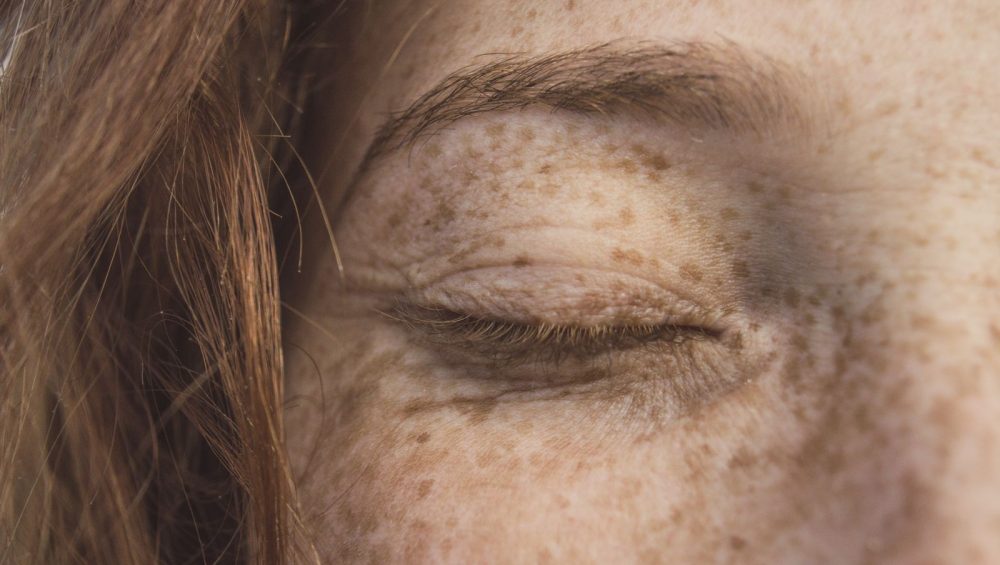
Sun spots. Flat, tan-to-brown, usually on the face, chest, shoulders and backs of the hands, the places that have had the most sun over the years. They are the most common kind on mature skin, and they are what most people mean by “age spots.” They are less about age than about sun, accumulated over time.
Marks left by inflammation. After a blemish, a scratch, an injury, a procedure or any irritation, the skin can leave a flat brown or reddish mark that outlasts the original problem by weeks or months. These are more common and last longer on deeper skin tones. Picking makes them worse. Breakouts After 40 covers one common cause.
Melasma. Larger, symmetrical patches, often across the cheeks, forehead or upper lip. Melasma has more than one cause: hormonal influences can contribute, and exposure to UV and visible light is also important. It is a chronic pigmentary condition that tends to come back, and it often benefits from a dermatologist’s evaluation; skincare and diligent sun protection can be part of managing it. If your pattern looks like this, see a dermatologist before spending on products.
One more category matters: any spot that is new, growing, changing color, irregular in shape, or itching or bleeding should be seen by a doctor. This article is about cosmetic appearance, and that kind of spot is not a cosmetic question.
Step one, always: sunscreen
Most common kinds of dark spot are made darker by ultraviolet light. That means the first and cheapest step is the same for nearly all of them: broad-spectrum sunscreen, SPF 30 or higher, every morning, on the face, neck, chest and hands. Without it, whatever else you do is working against the sun. Do You Need Sunscreen Every Day? makes the full case.
What can improve the appearance of spots
These are the ingredients with real evidence, and honest expectations for each.
Niacinamide. In a 12-week study, a 5% niacinamide cream applied to one side of the face reduced the appearance of hyperpigmented spots compared with the plain cream on the other side, and was well tolerated by the people in that study. How well any niacinamide product is tolerated depends on its formulation and your own skin. Niacinamide: The Percentage That Matters goes into it.
Retinoids. Prescription tretinoin cream at 0.05% carries an FDA-approved use, as an addition to a full skin-care and sun-avoidance program, for the mitigation of mottled facial hyperpigmentation, and its label states it does not repair sun damage or reverse photoaging. Over-the-counter retinol is a gentler cousin; it is a cosmetic ingredient rather than the drug, and its own evidence is for the appearance of tone and texture over months. How to Choose a Retinol Serum explains the difference.
Vitamin C. An antioxidant widely used for the appearance of brightness and evenness. Its evidence for tone is modest, and the formula matters more than the percentage. Buying a Vitamin C Serum That Still Works explains why.
Gentle exfoliation. Speeding up the shedding of surface cells can help marks near the surface fade sooner and make tone look more even. An appropriately formulated exfoliating product may help; which one, and how often, depends on the formulation and on your own tolerance. What a Lactic Acid Peel Actually Does covers one commonly used option.
Time. Marks left by blemishes fade on their own over months, faster with sunscreen and gentle care. Sun spots rarely fade on their own, but their appearance can be improved with steady use of the ingredients above, and keeping the sun off stops new ones being added.
What to expect
Improvement in the appearance of spots usually takes consistent care over months rather than weeks, and the timeline varies a great deal with the cause, how deep the pigment sits, the approach you are using and your own skin. Products that promise results in days are either exfoliating the surface, which changes how light reflects and can look like brightening, or promising something they cannot deliver.
Deeper skin tones need particular care. The same ingredients work, but anything that irritates the skin can itself leave a mark, so gentle and gradual is the rule.
When to see a professional
If the pattern looks like melasma, if spots are not improving after several months of steady care, or if any spot has changed, see a dermatologist. Prescription treatments and in-office procedures exist that no over-the-counter product matches, and they are performed by licensed practitioners in a setting that is separate from anything sold for home use.
Victoria’s approach
Victoria Nash, founder of Esenté Skincare and Younger You Clinique, has been a licensed aesthetician since 2004 and is an experienced skincare educator. She draws on her professional experience at Younger You Clinique when evaluating skincare products and their performance, and daily sun protection is a standing part of the Esenté approach.
Esenté’s range includes the Bio-Vitale Lightening Serum, the Fade-Away Lightening Serum and the Even Tone Set, each developed collaboratively by Victoria Nash with Esenté’s professional formulation and manufacturing partners, with Victoria providing product direction, ingredient research, professional-use feedback and performance requirements. If you are unsure which kind of spot you are looking at, the Ask Victoria page is a good first step, and a dermatologist is the right second one.
Frequently asked questions
What causes dark spots on the face after 50?
Often sun, accumulated over years, showing up as flat brown sun spots on the face, chest and hands. Marks left by inflammation and melasma are two other common causes, and hyperpigmentation can also be influenced by hormones, medications, skin conditions and individual skin type. A dermatologist can tell you which you have.
Can dark spots be removed?
Their appearance can often be improved over time with daily sunscreen, gentle exfoliation and ingredients such as niacinamide and retinoids. Stubborn spots and melasma are a dermatologist’s territory. No cream removes them in days.
Does sunscreen help dark spots fade?
It is the first step for nearly all of them. Ultraviolet light darkens most common kinds of spot, so nothing else works well without it.
Does vitamin C get rid of dark spots?
It can help the appearance of brightness and evenness over time. Its evidence for tone is modest, and the formula matters more than the percentage.
How long does it take for dark spots to fade?
It varies. Marks left by inflammation often fade over months with sunscreen and gentle care. Sun spots can improve in appearance with steady use of the right ingredients, usually over months. The timeline depends on the cause, the depth of the pigment, the approach and your own skin.
When should I see a doctor about a dark spot?
If it is new, growing, changing color, irregular in shape, or itching or bleeding, or if a symmetrical patchy pattern suggests melasma. If you are unsure what a spot is, that is itself a reason to ask.
About the author. Victoria Nash, founder of Esenté Skincare and Younger You Clinique, has been a licensed aesthetician since 2004 and is an experienced skincare educator.
Reviewed by Victoria Nash, licensed aesthetician and founder of Esenté Skincare & Younger You Clinique. This article is educational and is not medical advice. Ask your dermatologist or licensed skincare professional about products appropriate for your own skin and medical history.