
Short answer: Yes. Retinol is a fragile ingredient. Light, air and heat all break it down, and once it has broken down, it does less. An unopened product in packaging designed to protect it from light and air keeps well. An opened one in a clear bottle on a sunny bathroom shelf may be losing strength every week. If yours has noticeably changed color, smell or texture since you bought it, that is a reason to stop using it and check with the manufacturer.
That is the useful part. The rest of this article explains why, what the symbols on the packaging mean, and how to make a retinol product last.
Why retinol goes off
Retinol is a form of vitamin A, and vitamin A is fragile. Three things attack it.
Light. Ultraviolet light in particular breaks retinol down. This is one reason retinol is generally used at night and why sensible retinol products come in opaque or dark packaging.
Air. Oxygen reacts with retinol over time. Every time you open any container you let fresh air in; closing it promptly, and keeping fingers out of it, limits the damage.
Heat. Warmth speeds up every chemical reaction, including the ones that degrade retinol. A hot car, a steamy bathroom and a sunny windowsill are all bad places for it.
None of this is unique to one brand. It is the chemistry of the ingredient, and packaging is where a formula is protected from it.
What the dates and symbols mean
In the United States there is no law that requires a cosmetic to carry an expiration date. The FDA leaves shelf life to the manufacturer. So a retinol serum may have a date printed on it, or it may not, and either is legal.
Sunscreens and acne products are a different case. Those are regulated as drugs, and the FDA’s guidance for consumers says drug products must be tested for stability and carry an expiration date. If your retinol product is also an SPF, expect to find one.
Many products carry a small open-jar symbol with a number and the letter M inside it, such as 6M or 12M. That is the manufacturer’s guidance on how many months to use the product after opening. It is a reasonable guide, and it assumes normal storage. A product kept in heat and light will not last as long as the symbol suggests.
The FDA’s own advice on shelf life is worth repeating in plain terms: heat can break down preservatives and let bacteria and fungi grow faster, dipping fingers into a product adds microorganisms, and exposure to sunlight and air can change a product’s color, texture and smell.
How to tell if your retinol has gone off
Use your eyes and nose. None of these signs is proof on its own, but a significant or unexpected change is a good reason to stop using the product and check with the manufacturer.
Color. Many retinol products start out pale. If yours has darkened noticeably since you bought it, toward yellow, orange or brown, that can be a sign the retinol is breaking down.
Smell. A sharp, off or rancid smell that was not there at the start can mean the formula is changing.
Texture. Separation, a watery layer on top, or a texture that has thickened or thinned can mean the emulsion is breaking down.
Time since opening. If it has been open longer than the open-jar symbol suggests, treat it with suspicion even if it looks fine.
If a product has significantly changed, separated or developed an unusual odor, stop using it. You cannot tell from the outside what has happened inside the formula, and a product that has changed that much is not worth the gamble.
How to make retinol last
Store it in a cool, dry place, away from direct light and excessive heat or humidity, and follow the storage directions on the product. A steamy bathroom is not ideal for it; a bedroom drawer or a cool cupboard is often better. The Bathroom Is the Worst Place to Store Skincare covers the details.
Keep the lid on. Close it straight after use.
Keep it out of the sun. Do not leave it on a windowsill or in a car.
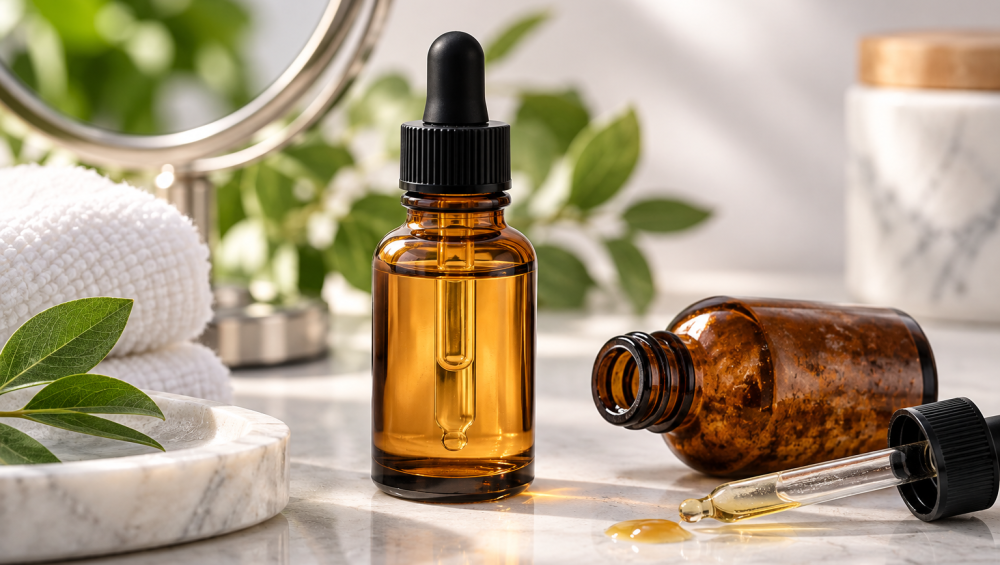
Buy sensible packaging in the first place. Opaque or dark packaging that keeps light out is the sensible choice; pumps, droppers and jars each have their place. Esenté’s Elite line uses Miron violet glass, which the manufacturer describes as a filter that reduces the wavelengths that drive degradation while letting some light through; Miron itself notes the glass does not stop change entirely. If you use any product from an open jar, take it out with a clean cosmetic spatula rather than a finger, which keeps the rest of the jar cleaner. Esenté recommends that as good hygiene practice for any jar.
Do not stockpile. Buy what you will use in a few months rather than a year’s supply at a discount.
Does unopened retinol expire?
More slowly. Unopened, in opaque packaging, stored cool and dark, a retinol product keeps well past the point where an opened one would have degraded. Heat is still the enemy, so how it was shipped and stored before it reached you matters too. Heat during shipping or storage can affect a product’s stability, which is one reason to buy from the brand or a trusted retailer.
Victoria’s approach
Victoria Nash, founder of Esenté Skincare and Younger You Clinique, has been a licensed aesthetician since 2004 and is an experienced skincare educator. The Elite collection ships in Miron violet glass rather than plastic, and Esenté recommends a clean cosmetic spatula for any open jar as good hygiene practice.
Esenté’s Retinol Progressive 60-Day Renewal System is a staged system with its own directions, developed collaboratively by Victoria Nash with Esenté’s professional formulation and manufacturing partners, with Victoria providing product direction, ingredient research, professional-use feedback and performance requirements. Storage questions about any Esenté product can go to the Ask Victoria page.
Frequently asked questions
Does retinol expire?
Yes. Retinol breaks down when exposed to light, air and heat, and once it has broken down it does less. A product that has noticeably changed color, smell or texture may have degraded.
How long does retinol last once opened?
It depends on the packaging and where you keep it. Follow the open-jar symbol on the package if there is one, keep the product cool, dark and closed, and stop using it if it changes noticeably in color, smell or texture.
Should I use retinol that is past its date?
If the product has separated, smells off or has visibly changed, stop using it. If it looks and smells normal but is past its date, it may be weaker than it should be; check the manufacturer’s guidance if you are unsure.
Why did my retinol turn yellow or brown?
A darker color can be a sign that the retinol is breaking down from light and air exposure. A significant change is a reason to stop using it and check with the manufacturer.
Should I keep retinol in the fridge?
Not unless the manufacturer says so. A cool, dry place away from direct light is usually enough. Follow the storage directions on the product.
Does unopened retinol go bad?
Slowly, if it has been stored cool and dark. Heat during shipping or storage can shorten that, which is a reason to buy from the brand or a trusted retailer.
About the author. Victoria Nash, founder of Esenté Skincare and Younger You Clinique, has been a licensed aesthetician since 2004 and is an experienced skincare educator.
Reviewed by Victoria Nash, licensed aesthetician and founder of Esenté Skincare & Younger You Clinique. This article is educational and is not medical advice. Ask your dermatologist or licensed skincare professional about products appropriate for your own skin and medical history.