


Short answer: Your 30s are a good time to put prevention at the center of a routine built around your own skin. The habits that tend to pay back are daily broad-spectrum sun protection, removing eye makeup and cleansing thoroughly so you go to bed with a clean face, and a moisturizer that suits your skin. An antioxidant step and retinol are options, not requirements. Choose each product for a clear reason and expect your routine to change as your skin and circumstances do.
None of it needs to be complicated.
Why prevention fits this decade
Many visible changes people notice later, such as uneven tone and sun-related lines, build up through years of ordinary daily exposure. Habits that limit that exposure have time on their side.
Individual needs, not a birth year, decide what belongs in your routine. Add one new product at a time so you can tell how your skin responds.
Daily sun protection comes first
The sun plays a major role in premature skin aging, and exposure adds up, including on days that do not feel sunny. In an Australian trial published in 2013, 903 adults under 55 were followed for four and a half years; those assigned to daily sunscreen showed less skin aging on the backs of their hands than those who used sunscreen at their own discretion.
In the United States, sunscreen is regulated as an over-the-counter drug. A Broad Spectrum sunscreen with SPF 15 or higher, used as directed with other sun protection measures, decreases the risk of skin cancer and early skin aging caused by the sun. For exposed skin, including the face, ears, neck and backs of the hands, use broad-spectrum sunscreen according to its label directions, including directions for application and reapplication. Do You Need Sunscreen Every Day? covers cloudy days and winter.
A clean face at bedtime
By night your skin holds sunscreen, makeup and the day’s oil, and none of it belongs on your pillow.
Eye makeup first. Remove it with a dedicated eye makeup remover before you cleanse your face. Victoria uses small sterile, non-impregnated gauze squares for this step and discards each one after use. Removal should never turn into scrubbing.
Then the face. Cleanse with the appropriate cleanser and lukewarm water. Victoria’s preferred tool is a professional facial sponge, used gently; fingertips are acceptable. If you reapplied makeup for an evening out, cleanse again before bed. Sponge, Gauze or Washcloth explains the tools, and How to Remove Makeup goes through the steps.
A moisturizer that suits your skin
A better guide than the age on a label is how your skin feels through the day. Texture is not a reliable shortcut: suitability depends on the complete formulation and on your own skin, as Lotion, Cream, Gel or Balm: What Is the Difference? explains. Apply moisturizer after cleansing and any appropriate preceding steps, with clean fingertips, following the product’s directions.
A typical routine runs cleanse, an appropriate toner or mist, serum, moisturizer, each according to the product’s directions, plus daytime sun protection. If you want eye care, use an appropriate eye product according to its directions.
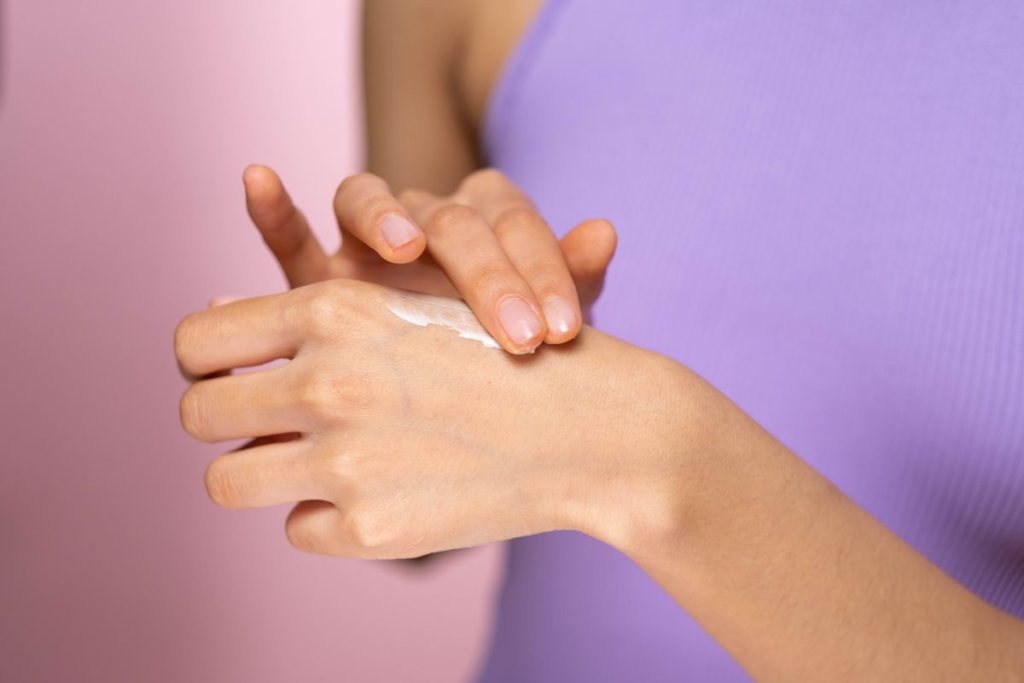
An antioxidant step, if you want one
Antioxidants are ingredients intended to help defend the skin against everyday environmental stress, such as sunlight and pollution. Vitamin C and vitamin E are familiar examples. An antioxidant product complements sunscreen and never replaces it.
Retinol is an option, not a requirement
Retinol is a form of vitamin A used in cosmetics for the look of fine lines and uneven texture. Some people try it in their 30s, some later, and some not at all.
If you use it, retinol is generally used at night. Follow the directions for your individual product, and daily broad-spectrum sunscreen is recommended as part of the routine. Using more than directed, or more often, can lead to excessive dryness, flaking, redness or sensitivity rather than faster results. Combining exfoliating products and non-prescription retinol can increase irritation for some people, so check each product’s directions. If you use a prescription retinoid, follow the guidance of the healthcare professional who prescribed it. Starting Retinol Without Wrecking Your Barrier goes further.
Expect your routine to evolve
Climate, season, hormones and the way your skin matures can all change what it needs. A product that continues to suit you does not need replacing because time has passed, and a new need may call for a new step.
Victoria’s approach
Victoria Nash, founder of Esenté Skincare, has been a licensed aesthetician since 2003. She also owns and operates Younger You Clinique and is an experienced skincare educator. She draws on her professional experience at Younger You Clinique when evaluating skincare products and their performance. Victoria views good skincare as a lifelong commitment to improving and maintaining well-conditioned skin. As skin changes throughout life, the products and professional treatments used to support it may change as well, and a professional can recognize changing needs and advise on changes along the way. Her “less is best” philosophy means purposeful, individualized care: each product chosen for your skin and used in the appropriate amount and frequency.
Examples from Esenté’s range include the Vital Rx – Vitamin C+E Serum, which its directions say to use morning and night beneath your moisturizer, and Eye-Onizer Gentle Makeup Remover for the evening eye makeup step. They are examples, not the only suitable choices, and good care can fit different budgets; the spending decision is yours. Esenté works with boutique manufacturers to develop and select formulations that meet the brand’s ingredient, performance and quality criteria. For sun protection, Esenté offers Derma-Defense SPF 30 in the Legacy Skincare collection and Derma Defense Z-Cote SPF30 in the Elite Skincare collection. Both are labeled Broad Spectrum SPF 30; follow the label directions for either, including reapplication. If you are deciding where to begin, Ask Victoria.
Frequently asked questions
A gentle cleanser, a moisturizer that suits your skin and daily broad-spectrum sun protection cover the essentials. An antioxidant step, an eye product or retinol may suit you as well, introduced one at a time and used as directed.
Only if it suits your skin and goals. Retinol is an option, not a requirement. If you use it, it is generally used at night, its directions come first, and daily broad-spectrum sunscreen belongs alongside it.
No. Daily sun protection and a thorough evening cleanse are worth starting at any age. Starting in your 30s gives preventive habits more time, but there is no cutoff.
There is no set number. Each product should have a clear purpose for your skin and be used in the appropriate amount and frequency.
It may. Skin changes with age, hormones, climate and season, so a routine that suits you now may need new steps later, and a licensed skincare professional can help you recognize when.
About the author. Victoria Nash, founder of Esenté Skincare, has been a licensed aesthetician since 2003. She also owns and operates Younger You Clinique and is an experienced skincare educator.
Reviewed by Victoria Nash, licensed aesthetician, founder of Esenté Skincare and owner of Younger You Clinique. This article is educational and is not medical advice. Ask your dermatologist or licensed skincare professional about products appropriate for your own skin and medical history.