


Short answer: In skincare, “dry” usually describes a skin type that makes relatively little oil, so it tends to feel tight, rough or flaky much of the time. “Dehydrated” describes a temporary condition where the surface is short of water, and any skin type can have it, oily included. The clue is behavior over time: dry skin tends to stay that way, while dehydration comes and goes with hot water, harsh cleansing, dry air and weather. Both respond to gentle cleansing and a suitable moisturizer applied to clean skin. Your skin’s pattern over several ordinary days is the better guide.
Shine is a poor clue on its own, because skin can be oily and short of water at once.
Two words, used in two ways
In medicine, “dry skin” is a broad term for skin that lacks enough moisture to feel soft, whatever the cause. The split between “dry” and “dehydrated” is a skincare shorthand rather than a medical diagnosis, and the two overlap.
Dry, as a type, means skin that makes relatively little oil. It is shaped by your genes and your age, and it tends to be there most of the time.
Dehydrated, as a condition, means the surface is short of water. It depends on what is happening to your skin now: your cleanser, the water temperature, the air around you. It can happen to any type, including skin that is shiny by lunchtime.
How to Tell Your Skin Type covers how to observe your type.
Signs that point toward each
These are common patterns, not a diagnosis, and many people have both.
Pointing toward dry:
- Skin feels tight or rough most days, whatever the season.
- Flaking or rough patches, often on the cheeks.
- Little or no shine anywhere, even late in the day.
Pointing toward dehydrated:
- Skin feels tight but can still look shiny in places.
- It looks dull and a little flat.
- Fine lines appear more obvious than usual and soften after a moisturizer.
- It comes and goes: worse after a hot shower, a harsh cleanse, a flight or a spell of dry weather, better when those change.
What leaves skin short of water
Water leaves the skin’s outer layer all the time. Some things speed that up.
Hot water and long showers. Hot water can take oil from the surface.
Harsh or frequent cleansing. A cleanser that leaves skin squeaky and tight has taken more than it needed to. Why Your Cleanser Matters covers how to judge one.
Over-exfoliating. Exfoliating beyond what your skin tolerates can leave the surface tight and reactive.
Dry air, wind and sun. Cold, windy weather, very dry climates, indoor heating, air conditioning and aircraft cabins can all add to water loss from exposed skin.
What helps each
The foundation is the same for both, with each product used according to its directions.
Cleanse gently. Lukewarm water, a gentle cleanser, light pressure, and pat dry rather than rub. In the evening, remove eye makeup with a dedicated eye makeup remover before you cleanse, and go to bed with a completely clean face. After a thorough evening cleanse, a morning warm-water rinse may be enough for some skin.
A toner or mist suited to you. Cleansing and toning are separate but complementary steps. Depending on its formulation, a toner or mist may contribute to how hydrated your skin feels; how much depends on the particular product and the rest of your routine.
A serum, if it suits your skin. A suitable hydrating serum may complement your moisturizer when used according to its directions. Hyaluronic Acid Is Not a Moisturizer explains how the two differ.
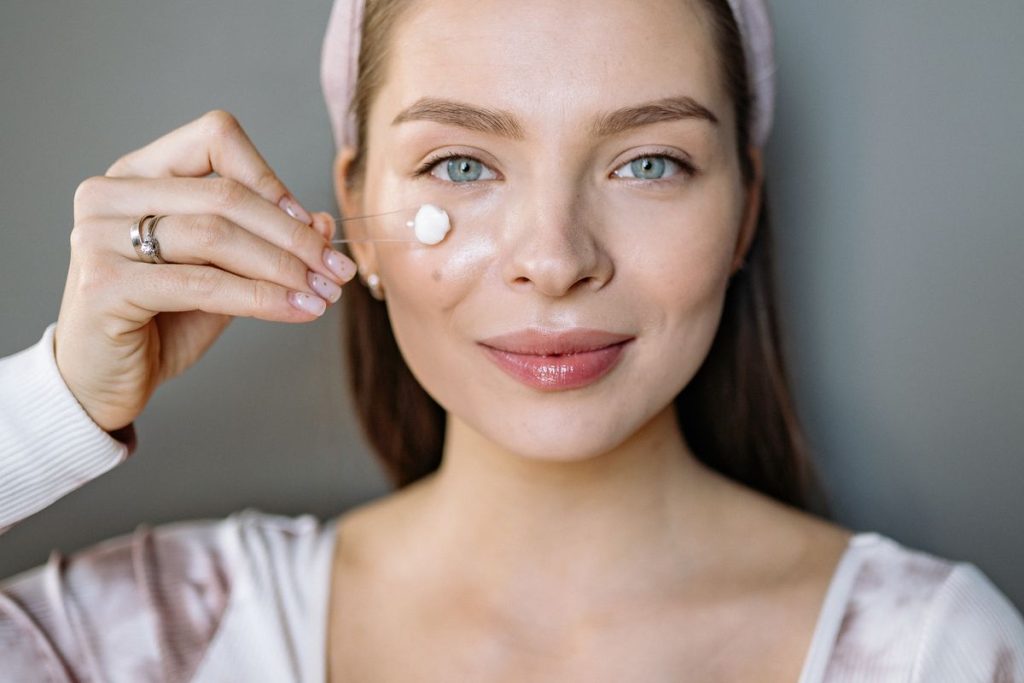
Moisturize clean skin. Apply moisturizer to clean skin with clean fingertips. A moisturizer usually combines ingredients that attract water with ingredients that soften the surface and slow water loss; Humectants, Emollients and Occlusives explains the three jobs.
Daytime sun protection. Finish the morning routine with it, following the label.
Mind the air. In particularly dry indoor environments, a humidifier may help increase the moisture in the air.
Dehydrated skin often settles once the cause changes. Dry skin tends to want this care year round.
Water you drink and water in your skin
Adequate fluid intake is part of looking after your health. It belongs alongside your skincare, the condition of your skin barrier and your environment, and no single one of them decides how hydrated your skin looks. Does Drinking Water Hydrate Your Skin? looks at the question in full.
When it is more than dryness
If dryness comes with persistent itching, cracking, bleeding, a rash, or patches that do not settle, see a dermatologist or other healthcare professional. Do not try to diagnose it yourself, and do not exfoliate skin that is cracked, sore or irritated.
Victoria’s approach
Victoria Nash, founder of Esenté Skincare, has been a licensed aesthetician since 2003. She also owns and operates Younger You Clinique and is an experienced skincare educator. She draws on her professional experience at Younger You Clinique when evaluating skincare products and their performance. Victoria considers a toner or appropriate antioxidant mist after cleansing an important step for most skin. Any pH-support or hydration benefit depends on the particular formulation, so it is not something every toner or mist provides. Which one, and how often, depends on the individual. Her “less is best” approach applies to moisturizing too: use the appropriate amount and frequency of each product, applied to clean skin with clean fingertips according to its directions.
Esenté formulations for this part of a routine include the Hyaluronic Hydration Crème, a moisturizer, and Hydro Mist, an antioxidant spray. They are examples, and other Esenté formulations may suit your skin depending on your regimen. Follow the directions for each. The Hyaluronic Hydration Crème comes in a jar, so take it out with a clean spatula. Esenté works with boutique manufacturers to develop and select formulations that meet the brand’s ingredient, performance and quality criteria. Unsure whether your skin is dry or dehydrated? Ask on the Ask Victoria page.
Frequently asked questions
In skincare shorthand, dry skin is a type that makes relatively little oil, and dehydrated skin is a temporary condition where the surface is short of water. Any type can be dehydrated, and the two overlap.
Yes. Skin can make plenty of oil and still be short of water at the surface, often after harsh cleansing, hot water or dry air.
Look at the pattern. Tightness, dullness and fine lines that soften after moisturizer, coming and going with hot water, harsh cleansing or dry weather, point toward dehydration. These are common signs, not a diagnosis.
Adequate fluid intake supports your overall health, and it works alongside your skincare, the condition of your skin barrier and your environment.
Many people with dry skin prefer a richer texture, but suitability depends on the complete formulation and on your skin, not on the texture. Choose one your skin finds comfortable and apply it to clean skin.
About the author. Victoria Nash, founder of Esenté Skincare, has been a licensed aesthetician since 2003. She also owns and operates Younger You Clinique and is an experienced skincare educator.
Reviewed by Victoria Nash, licensed aesthetician, founder of Esenté Skincare and owner of Younger You Clinique. This article is educational and is not medical advice. Ask your dermatologist or licensed skincare professional about products appropriate for your own skin and medical history.