

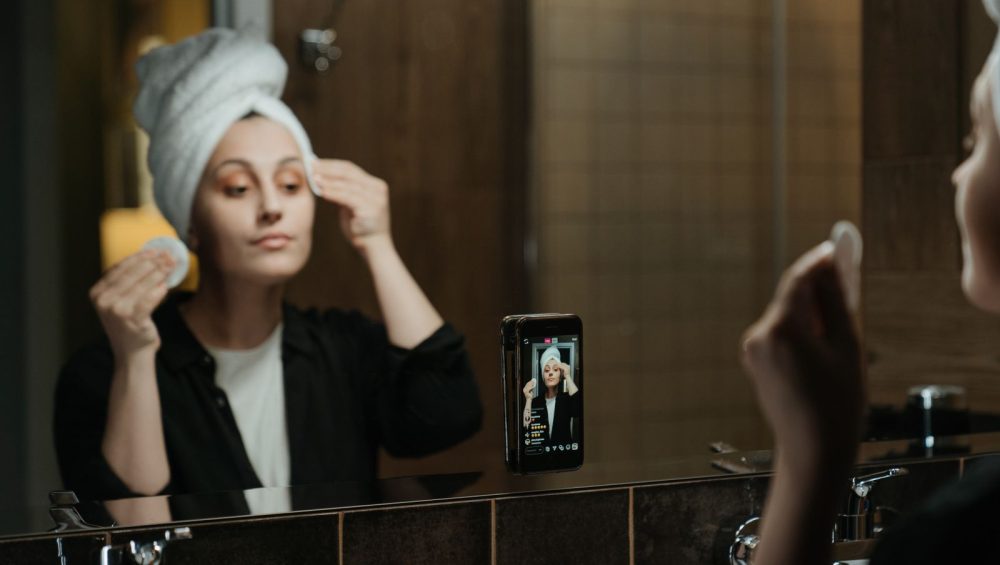
Short answer: Take it off in the right order, with the right pressure, and never go to sleep wearing it. Start with the eyes, using a dedicated eye makeup remover and a gentle hand, because the skin there is particularly thin. Then remove makeup from the rest of the face in sections, and finish with a gentle cleanse. Use a soft sponge or gauze with light pressure instead of dragging at your skin, and rinse until the water runs clear. Wipes are a convenience for emergencies, not the everyday method: they work by friction and leave residue behind.
The method matters more than the product. Here is the order that works.
Why leaving it on is a problem
Makeup is designed to stay where you put it. Left on overnight, it sits on your skin with the day’s oil and airborne dirt, and a good deal of it ends up on your pillowcase.
Eye makeup is its own case. Mascara and liner migrate as you sleep: into the lash line, into the corners of the eyes, onto the pillow. That is why removal starts at the eyes rather than rushing them.
The eyes come first, and they want a lighter hand
The skin around the eyes is particularly thin, and it shows friction sooner than the rest of the face. So slow down here.
Soak a pad or a folded piece of gauze with a remover made for the eye area. Hold it closed over the lid and lashes for a few seconds before you move it. That pause is the part most people skip, and it is the part that does the work. The remover softens the makeup so it lifts instead of needing to be scrubbed off.
Then draw the pad downward and outward, once, with almost no pressure. Repeat with a clean side rather than working the same patch harder. Waterproof and long-wearing mascara asks for patience, not force.
If the area around your eyes stays irritated, itchy or sore, or something about it concerns you, have it looked at by a medical professional rather than guessing at the cause.
What Do Eye Creams Actually Do? covers why that area gets treated differently in the rest of the routine too.
Why wipes make a poor everyday method
A wipe removes makeup by dragging. You push pigment around your face with a cloth and hope it comes away on the fabric. Some does. The rest gets spread, along with whatever the wipe was soaked in, and stays there unless you rinse.
That is the honest trade-off: friction and residue. On a hotel night or after a late flight, a wipe beats leaving a full face on. As the everyday method, it asks your skin to tolerate rubbing every single night, and it leaves a film that the next products have to sit on top of.
If you use one, treat it as a first pass and follow with a proper cleanse and a rinse.
Work in sections
Do not smear everything at once. Makeup pushed around a face ends up where you did not want it: the hairline, the jaw, the corners of the eyes.
Eyes first, then lips, then forehead, cheeks, nose and jaw. Use a clean surface of the sponge or gauze for each section so you are lifting makeup away rather than redistributing it. Short, light strokes in one direction beat circular scrubbing every time. Once the makeup is off, cleanse the whole face gently with the same light touch.
Mind the edges: along the jaw, under the chin, in front of the ears, around the nostrils. That is where foundation quietly stays behind.
Rinse properly, and then check
Rinse with lukewarm water until it runs clear, and keep going a little longer than feels necessary. Cleanser residue is its own problem, and so is the film a remover leaves.
Wipe a clean damp pad over your jaw and hairline afterward. If it comes away colored, you are not finished, and it is worth deciding whether that night’s makeup warranted a second cleanse. Do You Need to Double Cleanse? covers when it does and when it does not.
Pat dry rather than rubbing. Then the step that follows cleansing in the Esenté routine: a toner or an appropriate antioxidant mist, as its own distinct step. What Does Toner Actually Do? explains what it is for, and it is not there to pick up what the cleanser missed.
The tool matters less than the pressure
Victoria’s preferred approach is a soft facial sponge or a gauze pad used gently, because a soft tool lifts makeup off the surface instead of working it in. Esenté does not recommend automatic facial brushes for this, because they add friction to a job that should involve very little. Whatever you reach for, the pressure is what counts, and removal should never turn into scrubbing. If your skin is pink when you finish, ease off the pressure next time. Why Your Cleanser Matters goes further into gentle cleansing.
Victoria’s approach
Victoria Nash, founder of Esenté Skincare and Younger You Clinique, has been a licensed aesthetician since 2004 and is an experienced skincare educator. She draws on her professional experience at Younger You Clinique when evaluating skincare products and their performance. Her central message on this subject is simple: whatever your routine, don’t go to sleep wearing makeup. Remove eye makeup thoroughly, cleanse the face gently, and go to bed with clean skin.
For the eye area, Esenté makes the Eye-Onizer Gentle Makeup Remover. For the face, there is the Orchid Reviving Cleanser, a non-foaming cleanser. They are developed collaboratively by Victoria Nash with Esenté’s professional formulation and manufacturing partners, with Victoria providing product direction, ingredient research, professional-use feedback and performance requirements. The range also includes Professional Facial Sponges, supplied by another company, for the gentle sponge approach described above. If you are not sure what your own routine should look like, the Ask Victoria page is the place to ask.
Frequently asked questions
What is the best way to remove makeup?
Eyes first, with a dedicated eye makeup remover held in place for a few seconds before you move it. Then the rest of the face in sections, light strokes in one direction, a clean surface for each part, followed by a gentle cleanse. Rinse with lukewarm water until it runs clear, then pat dry.
Are makeup wipes bad for your skin?
They are not a disaster, but they are a convenience rather than the preferred everyday method. Wipes remove makeup by friction and leave residue behind unless you rinse afterward. Keep them for travel and emergencies, and follow with a proper cleanse when you can.
Can I just use my face cleanser to remove makeup?
Often yes, particularly with lighter makeup. Waterproof and long-wearing formulas, water-resistant sunscreen and eye makeup usually come off more easily with a dedicated remover first, which also means less rubbing.
How do I remove waterproof mascara without pulling out my lashes?
Patience rather than pressure. Hold a soaked pad over closed lashes for a few seconds so the makeup softens, then draw it downward and outward in one light stroke. Repeat with a clean side of the pad instead of scrubbing the same spot.
Should I remove makeup before or after washing my face?
Before. Take the makeup off first, then cleanse. Washing over a full face mostly moves makeup around rather than lifting it.
Do I need to remove makeup if I am only wearing a little?
Yes. Even light makeup sits on your skin with the day’s oil and airborne dirt. A light day simply needs a lighter removal, not none. How Often Should You Wash Your Face? covers what the evening cleanse is really for.
About the author. Victoria Nash, founder of Esenté Skincare and Younger You Clinique, has been a licensed aesthetician since 2004 and is an experienced skincare educator.
Reviewed by Victoria Nash, licensed aesthetician and founder of Esenté Skincare & Younger You Clinique. This article is educational and is not medical advice. Ask your dermatologist or licensed skincare professional about products appropriate for your own skin and medical history.