
Short answer: Pore size is mostly out of your hands. It is largely genetic, set by how big your oil glands are and how thick your skin is, and nothing you put on your face shrinks a pore permanently. Pores also do not open and close, because they have no muscle to do it with, so the hot-water-opens, cold-water-closes idea is a myth. What you can change is how noticeable they look: keep them clear so they do not read as dark dots, exfoliate at an interval that suits your skin, manage surface oil, wear sunscreen, and watch how light and makeup work on your skin.
That is the honest version. Here is the reasoning behind each part of it.
What a pore actually is
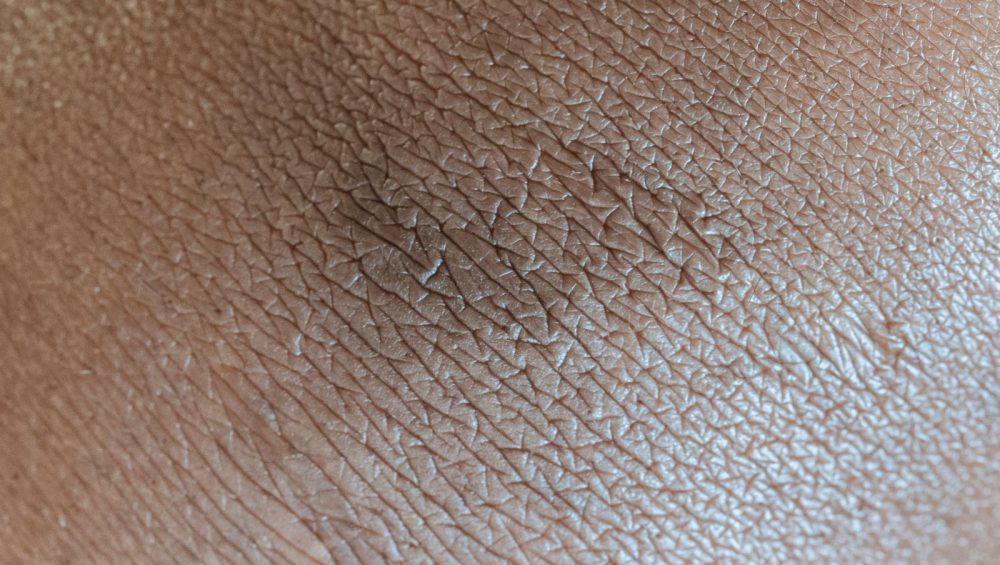
A pore is an opening. Specifically it is the opening of a hair follicle, and most of the ones you notice on your nose and cheeks have an oil gland emptying into them. That is why they are biggest and busiest in exactly the places people complain about.
Two things mainly decide how big yours look. The first is the size of the oil gland underneath, which is largely inherited. The second is the thickness and support of the surrounding skin, which holds the opening in shape. Neither is something a cream changes.
This is not a counsel of despair. It does mean the honest goal is appearance, and appearance responds to quite a lot.
Pores do not open and close
They are openings, not doors. There is no muscle around the opening that widens it with heat and shuts it with cold, so steam does not open your pores and a splash of cold water does not close them.
The myth survives because warm water does something real: it softens the oil and dead skin sitting in the opening, which makes that material easier to clear. Cold water briefly tightens the look of skin overall, which people read as closed pores. Neither changes the size of anything.
The same logic applies to products. Anything promising to shrink or close pores is describing an appearance, whether or not it says so.
What makes them look larger
A pore that is full. Oil and dead skin collect in the opening, stretch it slightly, and the surface of that plug darkens as it meets the air. That is why blackheads are dark. It is not dirt, and scrubbing harder does not help.
Years of sun. Sun exposure gradually reduces the support in the surrounding skin. With less support, openings look larger and more stretched, often along the cheeks. This is slow and cumulative, and daily habits can influence it.
Age. Skin thins and loses firmness over time, and pores tend to look more obvious as it does.
Light and makeup. Raking side light throws a shadow into every opening. Heavy foundation settles into them and makes them more obvious rather than less.
What genuinely changes the look
Keep them clear. Regular cleansing that suits your skin, and taking makeup off properly, are the foundation of the whole thing. Whether a cleanser suits you depends on the complete formulation rather than on whether it foams. Why Your Cleanser Matters covers how to judge one.
Exfoliate when your skin needs it. Removing built-up dead skin makes openings look smaller and less shadowed. There is no universal schedule: the right interval depends on your age, your skin’s condition, the method and how your skin responds, and more often is not better. Follow the directions for your individual product, and choose one exfoliating approach rather than layering several separate exfoliating products. Combining exfoliating acids with retinoids can increase irritation for some people, so go by the directions for each. How Often Should You Exfoliate and Physical vs Chemical Exfoliation go further into both.
Manage surface oil. Oil sitting in and around the opening catches light and makes it more visible. Blotting during the day and a matte finish under makeup both reduce the look of it, with no promises about tomorrow.
Wear sunscreen. This is the long game. Daily broad-spectrum sunscreen is a preventive habit that helps protect against the accumulated exposure that leaves skin with less support. It will not change how your pores look this week. Do You Need Sunscreen Every Day makes the case.
Use light and makeup deliberately. A smoothing primer, a lighter hand with foundation, and softer light all reduce how obvious pores look. Cosmetic, immediate, and honest about what it is.
Pore strips lift some of the surface plug and the effect is temporary. Some people find them irritating. They do not change the size of anything.
What no product can do
It cannot shrink a pore permanently, close one, or give you someone else’s skin. Esenté’s retail products, like other cosmetics, act on the surface layers of the skin, and a cosmetic that claimed to resize a follicle would be claiming something a cosmetic does not do.
Visible improvement in how pores look comes from consistent care over time, and how much you see depends on the cause, the product and the person.
Victoria’s approach
Victoria Nash, founder of Esenté Skincare and Younger You Clinique, has been a licensed aesthetician since 2004 and is an experienced skincare educator. She draws on her professional experience at Younger You Clinique when evaluating skincare products and their performance. Where pores are the concern, exfoliation is often part of the answer, but Victoria does not work to a fixed schedule. She considers the individual’s age, skin condition, method of exfoliation and how the skin is responding, because skin-cell turnover generally changes with age and an interval that suits one person may not suit another.
For skin where pores are the concern, the Esenté range includes the Citrisal Purifying Cleanser; the Very Berry Exfoliating Cleanser; the Oligo-Peel Exfoliation Crème, a rinse-off exfoliant with fine particles; and the Liposome Alpha-Beta Serum, an 8% AHA/BHA serum. These represent different approaches, not a routine to use together, and choosing one that suits your skin is better than stacking several exfoliating products. Each is developed collaboratively by Victoria Nash with Esenté’s professional formulation and manufacturing partners, with Victoria providing product direction, ingredient research, professional-use feedback and performance requirements. If you are deciding which approach fits your skin, the Ask Victoria page is there.
Frequently asked questions
How do I minimize pores?
You minimize the appearance, not the pore. Keep them clear with cleansing that suits your skin and proper makeup removal, exfoliate when your skin needs it and according to your product’s directions, manage surface oil, wear daily sunscreen, and use lighter makeup and softer light.
Can you shrink pore size permanently?
No topical product does that. Pore size is largely inherited, set by oil gland size and the thickness and support of the surrounding skin. What changes is how noticeable pores look, which responds to a good deal.
Does hot water open pores and cold water close them?
No. Pores have no muscle to open and shut with. Warm water softens the oil and dead skin inside the opening, which makes it easier to clear, and cold water briefly tightens the look of skin. Neither changes pore size.
Why do my pores look bigger as I get older?
Skin thins and loses firmness with age, and years of sun exposure reduce the support around each opening. With less support, pores look larger and more stretched. Daily sun protection is the part of this you can influence.
Are blackheads dirt in my pores?
No. A blackhead is oil and dead skin filling the opening, and the surface darkens when it meets the air. Scrubbing harder will not remove it and tends to irritate skin instead.
About the author. Victoria Nash, founder of Esenté Skincare and Younger You Clinique, has been a licensed aesthetician since 2004 and is an experienced skincare educator.
Reviewed by Victoria Nash, licensed aesthetician and founder of Esenté Skincare & Younger You Clinique. This article is educational and is not medical advice. Ask your dermatologist or licensed skincare professional about products appropriate for your own skin and medical history.